Amidst escalating crackdown, international community must stand with the people of Belarus

Amidst escalating crackdown, international community must stand with the people of Belarus

August 19, 2021 disabled comments

Amidst escalating crackdown, international community must stand with the people of Belarus

We, the organisations, firmly condemn the Belarusian government’s rapidly escalating crackdown on Belarusian civil society and its increasingly brazen abuses of the Belarusian people’s right to freedom of expression and information.

We further call on officials of the European Union, Council of Europe, Organization for Security and Cooperation in Europe, and the United Nations to step up their use of diplomatic and economic levers to pressure the Belarusian authorities to reverse course and to respect the Belarusian people’s human right to freedom of expression and information, including freedom of the press and cultural freedoms.

Since the August 2020 presidential election, the authorities under President Aliaksandr Lukašenka have detained tens of thousands of peaceful protestors. According to the Belarusian Association of Journalists (BAJ), the authorities have also blocked more than 100 news and media websites, and forced 10 publications to stop publishing.

To date, BAJ has recorded the arrests of 497 journalists and media workers; 29 are still in detention. There have also been 68 cases of physical violence against journalists resulting in injury. A recent report by Reporters Without Borders and the World Organisation Against Torture describes systematic government repression aimed at silencing journalists.

The Belarusian PEN Centre recorded 621 cases of cultural rights violations and human rights violations against cultural workers between January and June 2021. Just recently, Belarusian fantasy-folk music group Irdorath was detained for performing as part of demonstrations in 2020. To date, 39 out of more than 500 political prisoners are cultural workers.

Over the past month, the authorities’ onslaught on Belarusian civil society has dramatically intensified. In mid-July, Belarusian security forces conducted over a dozen raids on independent media outlets, human rights organisations, and think tanks. Most recently, the homes of several staff members of the independent news agency BelaPAN were searched on 18 August, and a number of their employees taken into custody for questioning. They also launched legal proceedings to liquidate dozens of organizations that work on a wide array of issues ranging from freedom of expression to disability rights to providing assistance to senior citizens.

On 9 August, the Belarus Supreme Court dissolved the Belarusian PEN Centre, one of the country’s most prominent champions of free expression and cultural freedom, and whose president is the Nobel prize-winning writer Svetlana Alexievich.

On 27 August, the Belarus Supreme Court will hold a hearing on the dissolution of another prominent freedom of expression organization, BAJ. For over 25 years, BAJ and its membership of over 1300 media workers has promoted freedom of expression and independent journalism in Belarus, facilitating the exercise of civil, social, and cultural rights.

BAJ and the Belarusian PEN Centre are among dozens of organisations targeted for liquidation, with others including environmental and heritage protection groups, the Office for the Rights of Disabled People, the National Youth Council, the Belarus Press Club, organisations focusing on gender rights, and groups that support older people.

The authorities’ use of the courts to crush its critics is cynical but unsurprising — a report published last year by Anaïs Marin, UN Special Rapporteur on the human rights situation in Belarus, highlighted that “For almost three decades, Belarus has failed to ensure the independence of its judiciary, implying that the rule of law remains unguaranteed, and human rights unprotected.”

President Aliaksandr Lukašenka has openly acknowledged that “a purge is underway”, smearing the groups affected as “gangsters and foreign agents.”

These steps amount to a serious escalation of the Belarus authorities’ efforts to constrict civic space, silence critics, and deny the Belarusian people their democratic aspirations, as well as access to reliable information about the human rights violations being perpetrated by their own government since the fraudulent election just over a year ago.

We call on the Belarusian authorities to end their crackdown on civic society and immediately reverse the dissolution of NGOs and professional organisations that play an essential role in enabling Belarusian citizens to exercise their civic, cultural, economic, and political human rights.

Further, we reiterate our demand for the unconditional, immediate release of all detained journalists, activists, cultural and human rights defenders, and for an end to all harassment, detentions, and assaults directed against them.

At this critical juncture, the international community needs to urgently show solidarity with all Belarusian individuals and organisations struggling for their basic human rights, often at great cost to their own lives and livelihoods.

The government’s escalating crackdown must be met with intensified international efforts to pressure the Lukašenka administration to change course and respect the human rights of the Belarusian people.

Accordingly, we call on the international community to:

  • Condemn the government’s escalation of attacks on civic society and professional organisations, and call for the dropping of all court cases against civil society organisations, activists, journalists, and cultural and human rights defenders.
  • Call for the immediate and unconditional release of all imprisoned journalists, activists, cultural workers, and rights defenders, and all others detained for exercising their human rights.
  • Ensure that their diplomatic representatives within Belarus monitor court cases directed against civil society organisations, activists, journalists, cultural workers, and rights defenders.
  • Hold accountable the Belarusian politicians, security forces, and private, foreign and state-run entities who are responsible for abuses, through targeted sanctions and support for international efforts to document and collect evidence of rights violations, including for the purpose of eventual criminal investigation and prosecution.
  • Demonstrate firm support for the democratic aspirations of Belarusians and provide emergency visas, safe passage, and refuge and humanitarian assistance for Belarusian journalists, media workers, cultural workers, and other activists and dissidents fleeing persecution for their expression
  • Provide direct, long-term practical support to all Belarusian organisations, media workers, cultural actors, and individuals who are striving to defend their basic rights in such difficult circumstances.

Signed,

IFEX

European Federation of Journalists (EFJ)
European Centre for Press Media Freedom (ECPMF)
International Press Institute (IPI)
International Media Support (IMS)
PEN International
ARTICLE 19
Human Rights Watch
South East Europe Media Organisation (SEEMO)
Free Press Unlimited
PEN America
Index on Censorship
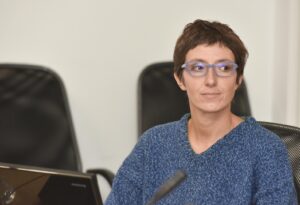
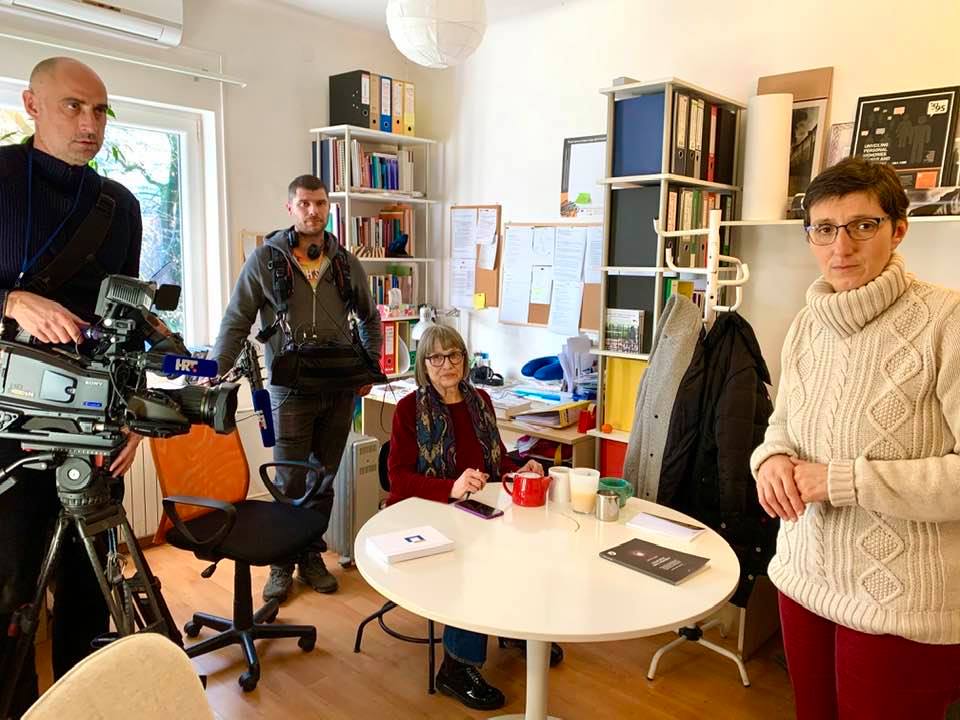
Interview with SEEMO Member Maja Sever (August 2021)

August 8, 2021 disabled comments

How and when did you start your journalistic career?
I started working on Croatian Radio Television at the very beginning of my studies in the children’s and entertainment program on the third channel, more like a side job while studying journalism. Then the war started and many of us reported on the war. So in September 1991, at the age of 20, I became a war reporter. After a couple of dreadful years, I returned to Zagreb and started learning in practice what journalism actually is. 

Where have you worked in the past?
I have always worked on public television. In addition to my journalistic work, I occasionally did summer jobs during high school and journalism studies, but in fact I spent my entire working life on Croatian Radio Television (Hrvatska radiotelevizija – HRT).

What motivated you to become a journalist?
My whole family is in some way connected to journalism, even though I originally wanted to be a theatre actress because I’ve been in love with theatre since I was little. But somehow I ended up studying journalism and it all led me to this job that I’m still doing. I believe that journalism is very important and that with the help of journalism we can change the world.

Can you tell us a bit more about the situation in your media house at the moment?
Croatian Radio Television is going through a big crisis. Not only this burning, ongoing one, because our director general is in custody on suspicion of being involved in some criminal activities, but also because of the slowness of the system to adapt to the changes that public services are going through across Europe.
We are failing to open up to new ways of functioning, educate journalists in new digital skills, and transform Radio Television into a new media environment. We are not free from political pressure and we are not provided with completely independent work, which is oppressing. I believe that the struggle for the survival of the public service is important in all parts of Europe. In a society like Croatia, which recently joined the EU community, and which sometimes suffers from a lack of democracy, public service is extremely important.

Public services are influenced by politics in many countries. Do you notice this in your work and, if so, in what form?
Yes. As with other public services, the critical point is how to ensure the independence of work and independence from politics. The political majority elects the management. In the case of Croatian Radio Television, the general director is elected by the political majority in Parliament. The majority in the Program Council which oversees the program is elected by the political majority in Parliament. The members of the Electronic Media Council are elected by the political majority, as well. This is counterproductive to overall development and can be felt in practise.

At the same time you are active in the journalists’ union – you run the union in Croatia. What are the biggest problems of journalists through the eyes of a labor rights fighter?
Only a journalist whose existence is protected can be a free journalist and that is the key to the problem. The position of journalists is reflected in the level of freedom of the media. In Croatia, there are only two signed collective agreements. There is no security for journalists. They have not company employment contracts that guarantee their safety, insurance and work without fear of retaliation and punishment. In local media, dependence on local politics, which mainly finances these media, definitely stifles their independence, and journalists are forced to work as they see fit for local leaders because their existence depends on it. Freelancers are completely unprotected; for them there is no legal regulation that would guarantee the protection of the minimum of their rights.
Through the union, we first try to make our colleagues aware that they have some rights guaranteed by the law and that they can and must fight for them. The Union is here to help. This basic protection of workers’ rights is followed by many things – the union wants to connect colleagues, offer additional education, help find funds for work, offer consultations on EU funds … We are mainly trying to respond to the demands of this modern media environment.

And how do you see the general media situation in your country Croatia in 2021?
It’s getting harder. We didn’t get out of that big crisis in 2008 when the number of journalists in Croatia almost halved because people couldn’t make a living from journalism, and here we are in a new big crisis. As in the whole of Europe, the press is in big trouble and we shall yet see how it will get out of this Covid 19 crisis. Money for the work is decreasing, so we are trying to motivate and help our colleagues to turn to European funds, as the EU has decided to open up to journalism through the Recovery plan, and through the Creative Europe program.
As in the whole world, we are struggling with a decline in citizens’ trust in journalism. In Croatia this often goes to extremes, such as attacks and insults of journalists, and we are among the champions in Europe for Slapp lawsuits – a form of pressure on journalists when strategic lawsuits exhaust journalists and newsrooms and drag them to the courts for insults. Basically, it is not easy to be a journalist in Croatia today, but I repeat – somehow we have to change the world for the better.

How professional are the media and journalists in Croatia? Do you see problems?
With the rise of new media, which are no longer new, the old rules of who can be a journalist and what a journalist must do have changed … Within the Croatian Journalists’ Association there is a Council of Honor of Journalists that works hard and reacts to irregularities and publicly points out how journalists must work and act. Of course, that is not enough, but that is what a professional organization can do. There is a lot that could change. For example, many owners and editors do not adhere to the rule that advertising texts must be signed as such and that a journalist is not obliged to sign an advertising text in their own name. This is, however, largely done in many media. Therefore professionalism and trust in the media decline. A journalist is not a public relations associate, he is in fact on the other side.

When we talk about the safety of journalists, what are the biggest problems in 2021?
Attacks on journalists linked to protests against corona measures; unfortunately we have seen several cases. Also, hate speech and threats to which journalists are often exposed, but also inappropriate behaviour of politicians towards journalists.

You have also received some threats in the past. Can you tell us a bit more about it and how it all affected your professional and private life?
It is not pleasant to receive a message in which someone threatens to kill you and your family, but I think it is important to report such things and thus fight them. Personally, provocations that I hate my country or anyone else used to hurt me, because they were just not true. However, my family supports me and that is in fact the most important thing in such moments. It gives me strength to continue further.

Has Covid-19 influenced your journalistic work?
Aside from a couple of self-isolations and absences due to illness, I worked normally. I didn’t work from home, but Covid drastically changed my life like everyone’s else in the world. We have done a lot in the Union to help people. We agreed that the state would open a fund for journalists who lost their jobs, we advised people, and helped to procure equipment in the first days.

Finally, you are a journalist and a public figure, how much does it affect your private life?
I actually live one ordinary life in a family with three children. I cook, I wash, I shout that they have to clean their rooms. My “dramas” are common to them, and I don’t think my people at home see any difference from other families’ lives.

23 July 2021: Turkey: Concern over proposals to introduce new regulation of “fake” and “foreign-funded” news

August 5, 2021 disabled comments

23 July 2021
Turkey: Concern over proposals to introduce new regulation of “fake” and “foreign-funded” news

The Media Freedom Rapid Response (MFRR) and undersigned partner organisations are
concerned about and condemn recent statements by Turkish President Erdoğan and other government officials pertaining to the introduction of new regulation of so-called fake news and “foreign-funded” news in the country. Officials’ targeting several critical and independent media outlets for securing funds abroad is a clear move to stifle further the free media in Turkey by controlling content. We call on the Turkish legislators to ensure that any new measures are fully in line with Turkey’s obligations under domestic and international law that protect free speech and media pluralism.

On 21 July, President Erdoğan in an interview was asked whether there is a law that envisages serious criminal sanctions for disseminating fake news through traditional and social media. In response, he announced that a study will be carried out in Parliament in October, after the summer recess, that will address the issue, building on the social media law that was passed last year. Erdoğan characterised fake news as a threat to Turkish democracy on par with terrorism, in which opposition parties are implicated. The same day, the Presidential Communications Directorate announced that Parliament will take new legal steps against foreign funding of local media outlets “to ensure the people’s access to accurate news”.

These statements were followed by a social media campaign targeting specific independent outlets such as Medyascope for receiving funds from the US-based Chrest Foundation. Medyascope received the 2016 IPI Free Media Pioneer Award for its progressive and critical news coverage in Turkey.

Taken together, these statements create the impression that the Turkish government is preparing to introduce new legal measures that will further undermine media freedom and pluralism in the country.

In relation to so-called fake news, we are concerned that enacting any kind of legal duty of “truth” will in practice amount to the creation of a new tool for government censorship: empowering public officials to decide what is true and what is not entails accepting that the authorities have a right to silence voices with whom they disagree. This prospect is especially worrisome in light of Turkey’s poor track record in respecting freedom of speech and legitimate criticism of the authorities. Accordingly, as we recognise that the spread of disinformation and propaganda is indeed of concern, we urge that any measures to counter it must be based on international freedom of expression law and standards, such as those set out in the 2017 Joint Declaration on Freedom of Expression and “Fake News”, Disinformation and Propaganda.

Furthermore, we note that funding media via (foreign) project funding has become an important source of income for many independent outlets in Turkey, as government pressure has intensified, including through the lack of local funds for media outlets critical of the government and uneven distribution of public advertising, as well as the imposition of fines and advertisement bans by media regulator Radio & TV Higher Council (RTÜK) and public advertising agency BIK. We are concerned that measures to restrict foreign funding, or to paint its recipients as foreign propagandists, are a clear move to demonise the free media and will further increase the pressure on the few remaining independent outlets. Currently, more than 90% of domestic media are directly or indirectly controlled by the government or the ruling AKP.

Signed:
ARTICLE 19
Articolo21
Association of Journalists, Ankara
Broadcast and Printing Press Workers Union of Turkey / DİSK Basın-İş
Committee to Protect Journalists (CPJ)
Danish PEN
English PEN
European Centre for Press and Media Freedom (ECPMF)
Free Press Unlimited (FPU)
IFEX
IFoX Initiative for Freedom of Expression – Turkey
IPS Communication Foundation
International Press Institute (IPI)
Journalists’ Union of Turkey (TGS)
Media and Law Studies Association (MLSA)
Media Research Association (MEDAR)
OBC Transeuropa (OBCT)
PEN International
PEN Netherlands
PEN Vlaanderen
South East Europe Media Organisation (SEEMO)
Swedish PEN

23 Temmuz 2021
Türkiye: “Yalan haber” ve “yabancı fonlu” haber mecraları ile ilgili yeni düzenleme önerisi büyük endişe yaratıyor

Medya Özgürlüğü Acil Müdahale (MFRR) partnerleri ve aşağıda imzası bulunan kurumlar, Türkiye Cumhurbaşkanı Erdoğan ve diğer hükümet yetkililerinin yakın zamanda vermiş oldukları demeçlerde “yalan haber” ve “yabancı fonlu” haber mecralarına dair yeni bir yasal düzenleme yapılması ile ilgili söylemlerinin son derece endişe uyandırıcı olduğunu belirterek eleştirel haber yapan kurumları hedef gösteren açıklamaları kınamaktadır.

Yetkililerin birçok eleştirel ve bağımsız medya kurumunu yurtdışından fon aldıkları gerekçesiyle hedef göstermesi, Türkiye’de özgür medyayı daha da boğmak ve haber içeriğini kontrol altına almak adına atılan açık bir adımdır. Türkiye’deki yasama merciilerini, yeni yapılacak herhangi bir düzenlemenin Türkiye’nin ulusal ve uluslararası hukuk standartlarına uygun, ifade hürriyeti ve medyada çoğulculuğu gözetmesine özen
göstermeye davet ediyoruz.

Cumhurbaşkanı Erdoğan, 21 Temmuz’da verdiği bir röportajında geleneksel ve sosyal medya mecralarında yalan haber yayınlamaya karşı cezai yaptırımlar içeren bir kanun olup olmadığına dair bir soru sorulduğunda, meclisin Ekim ayında açılmasıyla ilk iş, geçtiğimiz yıl kanunlaşan Sosyal Medya Yasası’nın üzerinden ilerlenerek bu konuda da bir çalışma yapılacağını belirtti. Erdoğan, yalan haberi Türkiye’de demokrasiye karşı bir tehdit olarak gördüğünü, terörizmle eş düzeyde olduğunu ifade ederek muhalefet partilerini bu ifadelerde hedef aldı. Aynı gün Cumhurbaşkanlığına bağlı İletişim Başkanlığı, meclisin aynı zamanda “yurttaşların doğru habere ulaşabilmesini güvence altına almak için” yabancı fon kuruluşlarından destek alan yerel medya kuruluşlarına karşı bir yasa hazırlayacağını açıkladı.

Bu açıklamalar, sosyal medyada ABD’nin Chrest Vakfı’ndan fon alan Medyascope gibi bağımsız kuruluşları hedef alan bir kampanyayla devam etti. Medyascope 2016 yılında ilerici ve eleştirel haberciliği nedeniyle Uluslararası Basın Enstitüsü’nün (IPI) Bağımsız Medya Öncüsü Ödülü’ne layık görülmüştü.

Bu açıklamalar birlikte değerlendirildiğinde Türkiye’de hükümetin medya özgürlüğü ve çoğulculuğunu daha da zora sokacak yeni yasal düzenlemeler yapmaya hazırlandığını göstermektedir.

“Yalan haberle” mücadele ile ilgili olarak, “hakikatin” denetlenmesine yönelik getirilecek herhangi bir yasal düzenleme, kamu görevlilerine neyin doğru ve gerçek olduğuna karar verme yetkisi atayıp bu yetkililerin beğenmedikleri sesleri susturma hakkı tanınmasına, ve pratikte hükümet kaynaklı yeni bir sansür mekanizmasının yaratılmasına yol açacaktır. Bu öngörü, özellikle de Türkiye’nin ifade hürriyetinde ve yetkililerin meşru çerçeve sınırlarında eleştirilmesine toleransındaki zayıf performansı ışığında son derece kaygı uyandırıcıdır. Kitlesel dezenformasyon ve propagandanın ciddi bir kaygı unsuru olduğuna katılmakla birlikte; buna karşı atılacak tüm adımların 2017 tarihli İfade Hürriyeti ve “Yalan Haber”, Dezenformasyon ve Propaganda ortak açıklamasında belirtildiği gibi uluslararası ifade hürriyeti hukuku ve ölçülerinde olmak zorunda olduğunun bir kez daha altını çizmek istiyoruz.

Dahası, hükümete dair eleştirel içeriğe sahip yerel medyaya sağlanan yerel fonların eksikliği, kamu reklam ve ilan harcamalarının orantısız bir biçimde dağıtılması, Radyo ve Televizyon Üst Kurulu (RTÜK) ve Basın İlan Kurumu (BİK) gibi medya düzenleyicilerin verdikleri keyfi ceza ve reklam yasakları şeklinde kendini gösteren hükümet baskısı yoğunlaştıkça Türkiye’de faaliyet gösteren bağımsız medya kuruluşları için (yabancı) fon kaynakları önemli bir gelir kalemi haline gelmiştir. Uluslararası vakıflardan alınacak fonları kısıtlamak ya da bu fonları alanları yabancı ülkelerin propagandasını yapmakla suçlamak adına atılan tüm adımların açıkça bağımsız medyayı düşmanlaştırmak için atıldığı barizdir ve halen zorlu şartlarda faaliyet gösteren birkaç bağımsız medya kuruluşu üzerindeki baskıyı daha da artırmaya yöneliktir. Şu an Türkiye’de faaliyet gösteren medya kuruluşlarının yüzde 90’ından fazlası doğrudan ya da dolaylı biçimde iktidar ya da hükümetteki AKP tarafından kontrol edilmektedir.

İmzalayanlar:
ARTICLE 19
Articolo21
Association of Journalists, Ankara
Broadcast and Printing Press Workers Union of Turkey / DİSK Basın-İş
Committee to Protect Journalists (CPJ)
Danish PEN
English PEN
European Centre for Press and Media Freedom (ECPMF)
Free Press Unlimited (FPU)
IFEX
IFoX Initiative for Freedom of Expression – Turkey
IPS Communication Foundation
International Press Institute (IPI)
Journalists’ Union of Turkey (TGS)
Media and Law Studies Association (MLSA)
Media Research Association (MEDAR)
OBC Transeuropa (OBCT)
PEN International
PEN Netherlands
PEN Vlaanderen
South East Europe Media Organisation (SEEMO)
Swedish PEN
—————————————————-
This statement has been coordinated by the Media Freedom Rapid Response (MFRR), which tracks, monitors and
responds to violations of press and media freedom in EU Member States and Candidate Countries. This project provides legal
and practical support, public advocacy and information to protect journalists and media workers. The MFRR is organised by a
consortium led by the European Centre for Press and Media Freedom (ECPMF) including ARTICLE 19, the European
Federation of Journalists (EFJ), Free Press Unlimited (FPU), the Institute for Applied Informatics at the University of Leipzig
(InfAI), International Press Institute (IPI) and CCI/Osservatorio Balcani e Caucaso Transeuropa (OBCT). The project is
co-funded by the European Commission.

Interview with SEEMO Member Jorgos Papadakis (June 2021)

July 28, 2021 disabled comments

Jorgos Papadakis has been a professional journalist for more than 25 years. He has worked for some of the biggest media outlets in his native Greece as well as regional and international media. He has also worked as a communications professional for human rights NGOs, international organizations like the UNDP, private corporations and political parties in the European Parliament. He is currently the Comms + Marketing director for a Brussels-based major European association, active in the field of social investment. He is the author of several publications and also co-authored the SEEMO Safety Net Manual.

Tell us a little about yourself, your family, including how you got started as a journalist?
Well, I believe I was predestined to become a journalist. My grandfather’s brother was the first Greek journalist to be killed in the Albanian front during the Italian invasion in Greece (November 1940) while reporting for Athens daily Elefthero Vima. My uncle is the founder of a local newspaper in my native Crete, where I also published my first article at the age of 12. So, as you can see, my career path was already set before I was even born (smile).

Your professional work…
My professional work started at Antenna TV, Greece’s leading TV station back in 1993, while still a student. I worked for both Antenna TV and Radio until 1998 when I moved to Vienna as a Central Europe correspondent or Express daily, Athens. It was there when I first got in touch with IPI and the plans to establish SEEMO and I am really glad I was on board almost from the very beginning

You worked for years in Greece as journalist, but also you have a lot of experience outside Greece.What is the difference working in Greece and in some other countries?
Greece was and remains a very difficult country to work as a journalist. From the boom of private TV and radio in the early nineties, when journalists were perceived almost as gods, we reached now a point when they are abused, attacked or even murdered in cold blood. The extremes are a main characteristic of the media landscape in Greece and I would say this is maybe the main difference between Greek media and, let’s say the BBC, where I currently work part time as a freelance editor

What was your biggest challenge in your work?
Reporting about diversity and about what is not mainstream in general

How you see the media situation in Greece today?
I live outside Greece for many years now. Honestly, every time I return and switch on my TV set to watch the news, I switch it back off in less than 2-3 minutes. The quality has dramatically dropped, new media and social networks prevail and as almost everywhere, real journalism is nowadays very hard to find.

You are active in supporting the rights of minorities. What is the motivation for you?
I guess it is empathy. Ever since I was a child, I was always supporting the weaker ones, felt compassion and enormous understanding for their position. This translated to a drive, both professionally and personally, to investigate about the minorities in Greece first and in Europe at a later stage. You know that my country still refuses the existence of ethnic minorities in its territory, something that for the Balkans and the 21st century is a paradox, not to say a joke. Journalism-wise, this can be a source for great stories too, albeit they are rarely or not published at all (smiles)

Since years you are supporting North Macedonia and the people living in North Macedonia, as also the Macedonian minority in Greece. It is not typical for a person from Greece. What inspires you for this love for North Macedonia?
Macedonia is a very unlucky country, stuck between three greedy and politically retarded neighbors that always had claimed over it. And whereas Serbia, also due to the Yugoslav federation, gave some ground to Macedonia, Greece and Bulgaria did not. Greece even forced a name change to allow NATO membership whereas Bulgaria stubbornly insists that the Macedonian language is a dialect of Bulgarian. How can you not sympathies with these people? On the Macedonian minority in Greece, it was a revelation from me since they are not recognized and isolated. I felt i had the duty to assist in bringing their sad stories to the spotlight. We have moved a bit forward since my initial involvement in the mid-nineties but we still have a lot of things to do to change the majority perception about Macedonians, Turks and others.

How hard it was to stay always professional as journalists?
It is tough, no doubt about it. Sometimes emotions are too strong and you have to control them so that the reader/audience gets an unbiased report and not a summary of your wishful thinking.

In the past years your work was not more directly in the media. First you were active in a political group in Brussels. Can you tell us a little more about this period of your life, please.
Yes, I was Head of Communications for the European Free Alliance (EFA), a political party sitting together with the Greens in the European Parliament. For me as a journalist and communicator, this was an exciting opportunity to be more active inside the EP and throughout Europe supporting a very progressive, people-oriented agenda. In addition, EFA is the European political home of the Macedonian minorities in Greece and Bulgaria and many others in similar situation all around Europe. So it was an easy choice at the end.

Does it mean that you were also by emotions and membership connected to this political group?
Absolutely! I could have never done the same for a political party that openly opposes self determination and minority rights in many EU member states.

Today you have a totally different job. What made you to choose your new profession.
Well, I am Communications director at EVPA, a pan-European association of social investors, so it is not a totally different job. It is sometimes refreshing to try new things, it gives you a new perspective. And of course, societal change, just transition, sustainable development are concepts very deep in my heart and pursued full speed by the members of this association. I also know that this engagement has an expiry date, though. Once a journalist, always a journalist (smiles)

How important is the work of SEEMO as a press freedom organisation?
Very important. Being around SEEMO in various functions since 2000-2001. I watched it grow and become the leading Central and Eastern Europe media watchdog. We have faced many challenges of all kinds, and yet here we are still. I am very proud of SEEMO, I consider it partly my own. (smiles)

Please walk us through a typical workday. How do you manage your time today?
The pandemic has changed everything. A typical day is much longer now, lots of conference calls, occasionally also reports for BBC, another book in the making…not easy to cope sometimes. But hopefully the new normal will be different from what we all experience now

Finally, as press freedom, human rights and democracy are very important in your life, can you give please some advice for younger journalists?
I am terrible in giving advice, especially to younger colleagues who are so much more advanced than we were in their years! The only thing I would suggest is never to compromise, never self-censor themselves. It might cost a job but they will sleep peacefully at night. And principles, especially in journalism, since they are so hard to find nowadays, will always be appreciated and rewarded at the end.

JOINT CALL CONDEMNING THE BELARUSIAN REGIME’S RAIDS ON JOURNALISTS AND HUMAN RIGHTS ACTIVISTS AND DEMANDING THE RELEASE OF THOSE DETAINED

July 16, 2021 disabled comments

15 July 2021

The raids and detentions conducted by Belarusian authorities on independent media outlets, human rights organizations and think tanks are a harsh escalation of attacks against human rights activists and independent journalists in Belarus.

The undersigned organizations condemn the government of Aliaksandr Lukashenka’s relentless crackdown on these groups and demand that Belarusian authorities cease their raids on press and rights organizations and release all those detained. The raids, which started on the 8th and culminated on the 14th of July are yet another escalation in an ongoing repression campaign undertaken by the Belarusian authorities to eliminate civil society in Belarus. The day before the raids Lukashenka promised to “deal with” NGOs he claims instigate unrest in the country.

Over a dozen raids were carried out by Belarusian security forces the morning of 14 July, affecting individuals who are members or leaders of civic organizations including Viasna, Lawtrend, the Association of the World’s Belarusians Batskaushchyna (“Homeland”), the IMENA project, the Territory of Rights group, the Union of Belarusian Writers, the Movement “For Freedom”, the Belarusian Association of Journalists, the Belarusian Helsinki Committee, the Belarusian Schools Association, the Human Constanta in Brest, the Polatsk Human Rights Association, Leu Sapieha Foundation, “Third Sector”, and the offices of the Belarusian People’s Front Party, the BEROC Centre for Economic Research, NOVAK sociological laboratory and the human rights organization Gender Perspectives, as well as the apartment of the director of SYMPA.

This flagrant action against civil society and independent media in Belarus is a gross violation of the fundamental human rights to freedom of expression and association, and to freedom of the press, and must cease immediately. The international community must speak with a unified voice against Lukashenka’s attacks on civil society by condemning these disturbing raids, calling for the release of journalists and activists, and holding accountable the Belarusian politicians and security forces who are responsible for these abuses.

As members of civil society across the globe, we, the undersigned, demand the immediate and unconditional release of all detained or imprisoned journalists and activists and an end to raids, detentions, harassment, and attacks on journalists, artists, activists, and all those exercising their right to freedom of expression and association.

Signed,
PEN America
PEN International
ARTICLE 19
European Centre for Press and Media Freedom (ECPMF)
European Federation of Journalists (EFJ)
Free Press Unlimited
Human Rights Watch (HRW)
IFEX
Index on Censorship
Reporters Without Borders (RSF)
South East Europe Media Organisation (SEEMO)

UK whistleblower Jonathan Taylor finally freed from extradition torment almost one year on

July 11, 2021 disabled comments

We are delighted to announce that on Wednesday 7 July 2021, Croatian Justice Minister Ivan Malenica formally rejected the request by Monaco to extradite UK whistleblower Jonathan Taylor. Jonathan Taylor’s Support Group extends its gratitude to the Minister for taking the right decision.

The move comes following sustained calls for the past 11 months from human rights and civil liberties campaigners across Europe – and UK MPs – for his immediate release and safe return home. Legal experts backing the release of Jonathan Taylor said there was no proper legal basis for Monaco to seek Mr. Taylor’s extradition and the process was retaliatory in nature. Lawyers acting on behalf of Jonathan Taylor argued that it constituted an abuse of process.

Jonathan Taylor was arrested whilst on a family holiday in Croatia last July, and has been restrained there since. He has been isolated, away from his family, and unable to support himself or his family, all of which have taken an extreme toll on his mental wellbeing.
A former in-house lawyer for oil firm SBM Offshore based in Monaco, Jonathan Taylor blew the whistle in 2013 on a massive bribery scheme. Jonathan’s whistleblowing disclosures led to SBM Offshore paying over $800 million in fines in the US, Netherlands and Brazil and investigations which led to successful prosecutions of two former CEOs for fraud-related offences.

Yet nine years later, he was arrested on a questionable Interpol Red Notice whilst on holiday, and wanted for questioning in Monaco over allegations made by his former employer over his settlement. The Red Notice was withdrawn by Monaco last December on the eve of Interpol making a determination on its validity. Jonathan denies wrongdoing and his lawyers have long argued there is no legal basis for extraditing him for questioning as he is neither charged nor convicted of any offences.

“I am of course elated that justice has finally prevailed and I am appreciative that Minister of Justice Ivan Malenica was able to pay regard to the salient legal arguments of my lawyers that were seemingly overlooked by the Courts in making his decision to reject Monaco’s flawed attempt at extraditing me,” states Jonathan Taylor.

“Special thanks go to all my supporters in Europe, overseas and in Croatia who somehow kept me sane in my year of need! Be assured that I remain resolute and proud of exposing serious wrongdoing at SBM Offshore and I will never be intimidated by the corrupt and those that shamefully seek retaliation against me for exposing them. I continue to stand ready to assist the Monaco Prosecutor in the event that a decision is made to pursue those responsible for SBM Offshore’s illicit business practices instead of me.”

We agree with Jonathan. The Minister of Justice of Croatia, Ivan Malenica, carefully considered the position of Jonathan Taylor as a whistleblower and a protected witness. His decision in this case has wider implications for the rule of law in Europe: it is a victory for the public’s right to know about wrongdoing by protecting the messengers of that information. Whistleblowers play a vital role in Europe’s fight against global corruption. Croatia has demonstrated its commitment to the rule of law and to the protection of whistleblowers.

We now call on Monaco to drop any further proceedings against Jonathan Taylor and to focus on the actions of SBM Offshore as a proper target for their investigations.

We wish Jonathan a safe return to the UK where he can begin to rebuild his life.

European Centre for Press and Media Freedom (ECPMF)
Whistleblowing International Network (WIN)
Martin Bright, Editor, Index on Censorship (United Kingdom)
Protect (United Kingdom)
Guernica 37 International Justice Chambers (United Kingdom)
Centre for Free Expression (Canada)
Free Press Unlimited
The Government Accountability Project (USA)
ARTICLE 19
The Platform to Protect Whistleblowers in Africa (PPLAAF)
Transparency International EU
The Daphne Caruana Galizia Foundation
Pištaljka (Serbia)
Blueprint for Free Speech (Germany and Australia)
The Signals Network (USA/France)
Transparency International – Bulgaria
Transparency International Italy
SpeakOut SpeakUp Ltd
European Organisation of Military Associations and Trade Unions (EUROMIL)
Transparency International Secretariat
Access Info Europe
GlobaLeaks
European Federation of Journalists (EFJ)
Eurocadres – Council of European Professional & Managerial Staff
Professor David Lewis, Middlesex University (UK)
Osservatorio Balcani Caucaso Transeuropa (OBCT)
WhistleblowersUK (UK)
Baroness Kramer, Co-Chair of the All Party Parliamentary Group on Whistleblowing (UK)
Mary Robinson MP, Co-Chair of the All Party Parliamentary Group on Whistleblowing (UK)
Transparency International – Slovenia
Jóhannes Stefánsson – Fishrot Whistleblower
Cathy James – Legal Expert on Whistelblower Protection & WIN Trustee
Maison des Lanceurs d’Alerte – France
South East Europe Media Organisation (SEEMO)
Campax – Switzerland

Anonymous source (SEEMO knows the identity of the source), Pristina, Kosovo (February 2021)

July 4, 2021 disabled comments

Q: Please if you can introduce yourself:
A: I am a whistleblower from Kosovo and I would like to stay anonymous.

Q: Why?
A: Whistleblower protection is according to a to a 2016 OECD report the ultimate line of defence for safeguarding the public interest. However, I do not have a feeling that I have a protection. That is why I like to stay anonymous. We still have to do a lot, so that everybody can easily set up a secure and anonymous whistleblowing initiative.

Q: How is to be a whistleblower in Kosovo?
A: I will describe it with the situation of one other whistleblower, his name is. Murat Mehmeti. In the year 2016, he blew the lid off of an elaborate tax-evasion scheme that existed for many years. He presented the problems in the TV show “Jeta në Kosovë” in a talk with the famous journalist Jeta Xharra. We all know Jeta, who received also the SEEMO Busek award some years ago and she did as always a great job. But the officials were very slowly. It took 3 years till the case was closed. Three years that were not easy in his life. In December 2019 Special Prosecution Office charged a former high-ranking official at the Tax Administration, with abusing his official position. According to the Prosecutor this person failed to investigate for 6 years the businesses known to be evading taxes by generating suspicious invoices. Instead to solve the problem in some weeks or months, the officials needed 3 years.

Q: What would you say about corruption in Kosovo?
A: It is a big problem and we have also numerous reports on the high level of corruption in Kosovo.

Q: What is the legal position of a whistleblower in Kosovo?
A: Kosovo has adopted some important legal regulations. The law meets international standards, including the latest EU Directive. I would say, it is in line with the Council of Europe’s Recommendation on Protection of Whistleblowers. Expectations for the results of the law are very high, but I think it will need time till we have real results. Many people in Kosovo still have to understand what a whistleblower is, and how important this perons for the society and democracy and fight against corruption is. We should not forget, that in Kosovo, especially because of strong family connections and connectionts between business and politics, many peoplse see a whistleblower as a traitor.

Positive is, that according to the legal regulations, a public employer with over 15 employees, and a private employer, which has more than 50 employees, are obliged to appoint a responsible official

I think that for understanding the situation in Kosovo is important the document “Public Whistleblowing” for non-implementation of Law for protection of whistleblowers: (Analysis of implementation of Law on the Protection of Whistleblowers by public institutions).”. This document was published by Kosovo Law Institute (KLI) in 2020. In this document KLI has monitored the implementation and non-implementation of the legal obligations. From all the institutions that have responded to the requests, at least one of them has not appointed the responsible official for whistleblowing cases. In at least 7 cases, public institutions have appointed the official responsible for the cases of whistleblowing only after KLI has sent a request for information. A number of 23 institutions have violated the legal deadline of six months. Positive is that 51 legal sujbects have announced that they have provided written instructions to the staff regarding the procedures of whistleblowing. but in general, it is clear that we had still one year after the new regulations lot of problems for whistleblowers in Kosovo.

All information and reference, which are contained in this webpage, were compiled after best knowledge and examined with greatest possible care. This disclaimer informs readers / users of the web and information that the views, thoughts, and opinions expressed in an interview by the interview partner or in a statement by the author belong solely to the interview partner / author and do not necessarily reflect the official policy or position of the South East Europe Media Organisation (SEEMO) Assumptions made within an interview-analysis are not reflective of the position of SEEMO. The visitors / users of the SEEMO webpage should take all steps necessary to ascertain that information you receive from SEEMO is correct. We ask every user to check references, double-check information from additional independent sources. SEEMO assumes no responsibility or liability for any errors or omissions, or for the results obtained from the use of information published on the SEEMO website / SEEMO partners website.

Anuška Delić (September 2021)

July 4, 2021 disabled comments

Photo: Oliver Abraham)

She was taken by investigative journalism in 2006, when she was a journalist of the daily Delo, that she divorced at the end of March 2018. Until today she has acquired extensive experiences and specialized skills in investigative and data journalism, and she will continue to build on those as a the founder of Oštro, Center for investigative journalism in the Adriatic region.
She spent the year 2015 in courtrooms, because she was persecuted for allegedly publishing clasified information in stories about neo-Nazis in the ranks of the party SDS. She faced a three year prison sentence, but was eventually acquitted of all charges. In the same year she founded The MEPs Project which brought together journalists that represent all 28 EU member states. They demand the European Parliament releases data on how Membersa of the European Parliament spend their professional allowances.
She works for OCCRP as a regional editor. She is a member of the International Consortium of Investigative Journalists (ICIJ) and the network of journalists behind Forbidden Stories. For her work and that of her colleagues she received the Websi award in the media category, and the Watchdog award for exceptional achievements given by the Slovene Association of Journalists. For her work on The MEPs Project the European online media outlet Politico Europe ranked her 6th among 28 most influential Europeans in 2018.
Her heart is divided to Slovenian on her mother’s side, and Croatian on her father’s side.

As a long year investigative journalist in Slovenia how you see the relation between journalists and whistleblowers in your country?

Slovenia has had only a few whistleblowers coming to the fore to highlight grave wrongdoing in the public sector. In a recent example, a now former employee of the Agency for Commodity Reserves that was tasked with coordinating emergency Covid-19 related public procurement revealed serious issues with the process, conflicts of interests, political pressures to procure equipment from specific providers and similar. His name is Ivan Gale and he revealed this information when he was a guest of the public broadcaster’s evening news show. For many reporters this was a first. I believe that they readily accepted that Gale was a good guy and perused many of the information that he disseminated via Facebook and elsewhere in their reporting.

Are state institutions, police and courts protecting whistleblowers in Slovenia?

The only comprehensive whistleblowers’ protection is afforded by the Integrity and Prevention of Corruption Act, however, we do not have a special law — Slovenia has not yet implemented the EU Whistleblowing Directive.

What is the situation with NGOs and protection of whistleblowers?

Some NGOs are quite active in this area, such as Transparency International Slovenia and the recently established Center for the Protection of Whistleblowers whose co-founder is the previously mentioned whistleblower Ivan Gale. But that’s pretty much it.

Connected to Covid19, how transparent were Slovenian officials in giving information? Did, like in some other countries, some investigative journalist stories or information from whistleblowers helped that the public in your country is better informed?

Apart from Gale we haven’t really seen others come to the forefront about Covid-19 topics other than emergency public procurement.

According to Eurobarometer on the topic of corruption, the number of people in Slovenia who know where to report a case of corruption is declining. Slovenia is a small country with a good system of internet and education. What are the reason for this negative developments connected to corruption-reporting?

Precisely because it’s a small country. With a population of 2 million our social networks regularly converge, even across party lines as the main opposing parties, SDS and SD, often demonstrate. The absence of a critical mass of people also functions as a deterrent whereby any report about what one perceives as wrongdoing could easily backfire or worse, anyone from that person’s family can become fair game for smears, pressures and eventually repercussions at their place of work. Also, less than a handful of cases with serious consequences for the public interest or public budget has ever been thoroughly investigated and successfully prosecuted. A good example of that was the Patria arms deal and suspected bribery where the accused was found guilty giving bribes but no one in Slovenia was found guilty of receiving them. Together all this significantly lowers the public’s sensitivity and incentive to report white-collar crime, people also don’t trust institutions and the police, thus they don’t feel that reporting wrongdoing is going to bring them anything but trouble.

Speaking about corruption, in which area of the daily life corruption is especially a problem in Slovenia?

Politics, especially the local level. Slovenia has 212 municipalities, two of which have less than 400 inhabitants. In such tiny settings corruption and conflicts of interest are rife and continue unabridged due to the media’s blind spot when it comes to hyper local rule of law.

How you comment the OECD 2021 report Implementing the OECD Anti-Bribery Convention- Phase 4 Report: Slovenia and following quote: “The Working Group therefore reiterates Phase 3 recommendation that Slovenia seriously step up its enforcement of the foreign bribery offence and prioritise improving detection of foreign bribery”. What should be done?

Wait for another government? To think that the present one will do something about bribery is like hoping that it will do something to protect journalists and ensure that freedom of speech, and by extension of the media, is respected. But even if Slovenia did implement some additional measures to tackle bribery offences, by nationals of foreigners, I really doubt that we would be successful. Slovenia is in many ways a country with an analogue mind while contemporary bribing schemes are very digital, opaque and often span offshore jurisdictions. The latter presents a big problem for almost any law enforcement worthy of its name. But in Slovenia the disconnect between what is wrong and what is prosecutable is even greater. This again is a consequence of our smallness. Too many people depend on corruption or took part in various schemes, thus it is wiser to stay mum or “adjust your view” of what happened according to whichever side you are on. This means survival. Speaking out means destruction.

The EU Whistleblower Protection Directive was adopted in 2019 and the 27 members have until December 2021 to put it into national legal regulations. Do you think Slovenia will manage to finish the obligation in this year?

Unfortunately I don’t. The justice ministry promised to provide a draft law by the end of last year and to run a comprehensive public debate about it in the beginning of this year. It is now July and I see only two options: either the government decided that it will not respect the 17 December deadline for implementation or it intends to push through a half-baked, bad law in blitzkrieg fashion which could signal a disregard for public opinion and participation. It could also be both.

Speaking about Slovenia and media situation in Slovenia, can you please describe the situation in 2021 in some points. What are the main problems?

There are way too many points to talk about. For a long time Slovenia has not been the model country that many people in the region, especially in the countries of the former Yugoslavia, believe it was. If I am happy about one thing under this government, it is that the region, EU and the world now finally know that democratic standards and norms have been dying a slow death under the polished exterior of a picturesque Alpine state. Janez Janša’s third and most damaging mandate could not have happened had we had a strong, vigorous and healthy democracy. Instead, the parallel state that his party has established in the public sector activated itself almost immediately after political calculations brought Janša to power yet again. This is why in just a year and a half this government was able to attack and sometimes conquer the media, NGOs, especially environmental ones, the prosecution, the audit court, the police, including the specialized bureau which is running a very problematic investigation for SDS — a suspected money laundering and tax evasion network allegedly run from Banja Luka by the PM’s advisor. It’s a case of the wolf guarding the sheep and that is incidentally also a suitable paraphrase for the current European presidency. A converted communist who suffers from disregard of human rights and rule of law but speaks about finally enforcing it to crush the communist underbelly of Slovenian media, courts and law enforcement is leading the EU while his party’s satellites are subsidized by a foreign malign power that disregards human rights and the rule of law. What could possibly go wrong?

All information and reference, which are contained in this webpage, were compiled after best knowledge and examined with greatest possible care. This disclaimer informs readers / users of the web and information that the views, thoughts, and opinions expressed in an interview by the interview partner or in a statement by the author belong solely to the interview partner / author and do not necessarily reflect the official policy or position of the South East Europe Media Organisation (SEEMO) Assumptions made within an interview-analysis are not reflective of the position of SEEMO. The visitors / users of the SEEMO webpage should take all steps necessary to ascertain that information you receive from SEEMO is correct. We ask every user to check references, double-check information from additional independent sources. SEEMO assumes no responsibility or liability for any errors or omissions, or for the results obtained from the use of information published on the SEEMO website / SEEMO partners website.

Saša Leković (2021)

July 4, 2021 disabled comments

Sasa Lekovic (Source media.ba)

Saša Leković is a Croatian freelance investigative journalist, trainer and media advisor. Born in 1959, he used to work as journalist and editor in Croatian media. Since 2003 he has been working as a freelance investigative reporter, lecturer and trainer in Southeastern European countries as well as director of the Investigative Reporting Center (IJC) in Croatia. As licensed investigative reporting trainer and lecturer he has worked with a hundreds of journalists and journalism students, not only in South East Europe, also in Armenia, Bangladesh, Israel/ Palestine, Nigeria… From 2015 to 2018 he was a president of the Croatian Journalists Association. Since 2005 he is SEEMO member and advisor to SEEMO Secretary General.

1. As a long year investigative journalist how you see the relation between journalists and whistleblowers ?

Whistleblowers are important allies of journalists without whom the most important secrets that protect “bad guys” would remain undiscovered.

2. Are the whisleblowers today more in public focus than 20 or 30 year ago ?

Today, it is harder to keep secrets and whistleblowers are generally more protected but often still do not get enough support given how much they help society.

3. Speaking about your country, are state institutions, police and courts protecting whistleblowers in Croatia?

Two years ago, a law was passed in Croatia that protects whistleblowers, but the number of whistleblowers has not increased because potential whistleblowers do not feel safe given the bad experiences of whistleblowers in the past.

4. with experience from Croatia, but also with your international experience, how you see the position of whistleblowers in Croatia compared to some other part of the world?

Croatia is a highly corrupt country where many people think it’s okay to behave badly if they benefit from it, and they look at whistleblowers as snitches doing something they shouldn’t care about. The international whistleblower protection project in which I participated as a coordinator in Croatia has just been completed. The idea was to allow whistleblowers to report anonymously but neither the mayor nor the director of the public company wanted to use the online platform to report illegalities.

5. You spent a good part of your life in Zagreb, the capital of Croatia. Now you live in a small town in Istria in Croatia. Do you see a difference of the work of journalists, but also of the position of whistleblowers between this two places in Croatia.

There is no significant difference. The biggest difference is that in a small town it is harder to hide an irregularity in work, but people find it harder to choose to be whistleblowers because everyone knows each other and whistleblowers have to meet people every day who are directly or indirectly affected by their actions.

6. Connected to Covid19, now after one and half year of the changes that happened with Covid 19, how transparent were Croatian officials? Did some investigative journalist stories or information from whistleblowers helped that the public in your country is better informed?

Officials in Croatia generally verbally advocate transparency but do not act transparently. More than a dozen ministers and heads of state-owned companies have had to step down in recent years due to journalistic revelations, but authorities continue to claim they are fighting corruption and other illegal behavior. Covid 19 has not changed anything for the better.

7. And how you see the situation connected to Covid 19 and governments in some other countries in this part of Europe?

Like the authorities in Croatia and the authorities in many other countries, they used Covid 19 as an excuse for non-transparent behavior and nationalist populism. It’s not a stimulating environment for whistleblowers.

All information and reference, which are contained in this webpage, were compiled after best knowledge and examined with greatest possible care. This disclaimer informs readers / users of the web and information that the views, thoughts, and opinions expressed in an interview by the interview partner or in a statement by the author belong solely to the interview partner / author and do not necessarily reflect the official policy or position of the South East Europe Media Organisation (SEEMO) Assumptions made within an interview-analysis are not reflective of the position of SEEMO. The visitors / users of the SEEMO webpage should take all steps necessary to ascertain that information you receive from SEEMO is correct. We ask every user to check references, double-check information from additional independent sources. SEEMO assumes no responsibility or liability for any errors or omissions, or for the results obtained from the use of information published on the SEEMO website / SEEMO partners website.

2 July 2021: Joint Statement on Journalist and Human Rights Defender Andrei Aliaksandrau

July 3, 2021 disabled comments

Thirteen Organisations Call for the Immediate and Unconditional Release

Index on Censorship and 12 other human rights, freedom of expression, media freedom, and journalists’ organisations unreservedly condemn the arbitrary detention and judicial harassment of human rights defender and journalist Andrei Aliaksandrau, who is now facing up to 15 years in prison on baseless charges of “treason to the state”.

Aliaksandrau has long been a defender of freedom of expression in Belarus and beyond, having previously held positions at the Belarusian Association of Journalists, Index on Censorship, and Article 19 among other media and free speech organisations.

Aliaksandrau was detained in January 2021. The Investigative Committee, Belarus’s criminal investigation service, indicted him on public order offences, for which he was facing up to three years in prison. The charges stem from allegations that Aliaksandrau paid the fines of journalists and protesters whom authorities detained during last year’s pro-democracy protests, triggered by the highly disputed August 2020 presidential election. The Belarusian Investigative Committee and other law enforcement agencies wrongly equated this with financing unlawful protests.

On 30 June, Belapan reported that Aliaksandrau has now been charged with “treason to the state” based on the same set of allegations.

“More than €530,000 worth of fines were imposed on protesters between 9 August and the end of 2020. It is absurd to conflate efforts to help pay those fines with a public order offense, let alone treason,” the organisations said.

“Belarusian authorities created a new mark of tyranny by laying treason charges against Aliaksandrou. While we urge the release of all 529 political prisoners currently detained in Belarus, which include at least 15 journalists, we are at this point in time expressing special concern for Aliaksandrau. To date, he is the only detainee facing the fabricated charge of treason.”

“Aliaksandrau has already spent 172 days in prison for his alleged “crime”. We call for his immediate and unconditional release,” the organisations said.


Signed by:

Article 19

East European Democratic Centre (EEDC) 

European Centre for Press and Media Freedom

European Federation of Journalists (EFJ)

Free Press Unlimited (FPU)

Human Rights House Foundation (HRHF)

Human Rights Watch

IFEX

Index on Censorship

International Media Support (IMS)

PEN America

Reporters Without Borders (RSF)

South East Europe Media Organisation (SEEMO)

Совместное заявление по поводу журналиста и правозащитника Андрея Александрова

13 организаций призвали немедленно и без всяких условий освободить Александрова

Index on Censorship и еще 12 организаций, которые работают в области прав человека, свободы выражения мнений, свободы СМИ и прав журналистов, безоговорочно осуждают произвольное задержание и судебное давление в отношении правозащитника и журналиста Андрея Александрова, которому в настоящее время грозит до 15 лет лишения свободы по безосновательному обвинению в «измене государству».
Александров известен своей многолетней деятельностью в защиту свободы выражения мнений в Беларуси и за ее пределами. Ранее он работал в Белорусской ассоциации журналистов, Index on Censorship, Article 19 и других организациях, работающих в области СМИ и свободы слова.
Его задержали в январе 2021 года. Следственный комитет РБ предъявил ему обвинение в организации действий, грубо нарушающих общественный порядок, максимальное наказание по которому составляет три года лишения свободы. Александрову вменяется уплата штрафов за журналистов и участников протестов, которых задерживали на митингах и демонстрациях, проходивших по всей стране в прошлом году после объявления крайне спорных итогов августовских президентских выборов. По версии Следственного комитета и других правоохранительных структур, уплата штрафов за протестующих приравнивается к финансированию незаконных протестов.
30 июня агентство БелаПАН сообщило, что Александрову по тем же основаниям предъявлено обвинение в «измене государству».
«С 9 августа до конца 2020 года протестующим были вынесены штрафы в эквиваленте более 530 тысяч евро. Абсурдно приравнивать инициативы по оказанию помощи в уплате этих штрафов к нарушению общественного порядка, тем более – к государственной измене», – заявили 13 организаций.
«Обвинив Александрова в государственной измене, власти Беларуси подняли градус тирании на новую высоту. Настоятельно призывая освободить всех 529 политзаключенных, которые в настоящее время находятся за решеткой (в их числе – как минимум 15 журналистов), мы в данный момент выражаем особую обеспокоенность судьбой Александрова. На сегодняшний день он единственный из задержанных, кому предъявлено сфабрикованное обвинение в госизмене».
«За свою якобы ‘преступную деятельность’ Александров уже провёл под стражей 172 дней. Мы призываем немедленно и без всяких условий освободить его», – заявили 12 организаций.

ПОДПИСАНТЫ
Article 19
East European Democratic Centre (EEDC)
European Centre for Press and Media Freedom
European Federation of Journalists (EFJ)
Free Press Unlimited (FPU)
Human Rights House Foundation (HRHF)
Human Rights Watch
IFEX
Index on Censorship
International Media Support (IMS)
PEN America
Reporters Without Borders (RSF)
South East Europe Media Organisation (SEEMO)