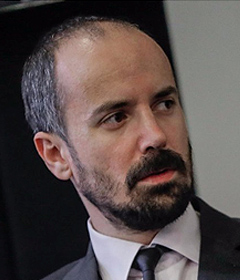
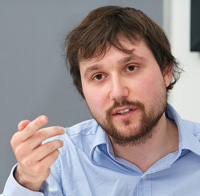
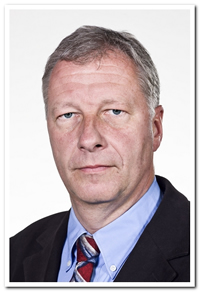
Mike Harris

Mike Harris

June 20, 2012 disabled comments

Mike Harris
Head of Advocacy
for Index on Censorship

Hungary is the only European state whose guide to their media law includes an entire appendix dealing with international criticism.
The country needed a new media law to replace outdated regulations enacted before the fall of the Berlin Wall, and a second series of provisions in 1996. Yet in the interim, whilst politicians debated regulation, Hungary’s journalists did a disservice to their profession, by failing to provide a model for self-regulation. With reform on the agenda, the newly elected Fidesz government stepped in and imposed one of the most draconian media models anywhere in Europe. As the international partnership mission to Hungary (which Index on Censorship is part of) found, the new law is broad, uncertain and inconsistent with basic standards of media freedom.
The Hungarian government is keen to export its model of regulation – as a way of seeing off criticism from bodies including the European Parliament and OSCE. If it is successful, media freedom across Europe will be under threat.
Hungary’s model of “co-regulation” is a peculiarity. The new media law created the National Media and Infocommunications Authority which has statutory powers to fine media organisations up to €727,000, oversees regulation of all media including online news websites, and acts as an extra-judicial investigator, jury and judge on public complaints. It is portrayed as an arm’s length government agency. Yet Annamaria Szalai, the President of the Media Authority is a known Fidesz supporter and all five members of the Media Council were delegated by exclusively by the Fidesz majority in Parliament. Members of the Media Council serve a nine-year term (over 2 parliamentary cycles) so even in the event of a change of government the media authority will still be dominated by Fidesz delegates.
Co-regulation is neither statutory regulation nor self-regulation. Those bound by the Media Authority include the Hungarian Association of Internet Content Providers, all TV stations and major newspapers. All volunteered to enter co-regulation which allows the Media Council to rule on received complaints. Yet, there was little choice. For organisations that remain outside the code, the Media Authority can levy fines of up to €727,000 for breaches of the new national media law. Inside co-regulation, fines cannot be levied, but the grounds for censor journalists are exactly the same as the national media law — and both are broad and uncertain. Hungary has forced the press to internalise a code that is far stricter than in other European countries.
One of the strongest provisions is that media owners should be “fit and proper”. In Hungary under Articles 185 – 189 of the new law, media owners who have previously been the subject of complaints upheld by the Media Council cannot bid for further licenses. Whilst it’s fashionable to suggest such provisions in the UK after phone-hacking, the result in Hungary is chilling. Journalists told our mission that media owners are keen to avoid any possible transgressions of the law and their contracts of employment are being edited to include reference to the new law.
Miklos Haraszti, the Hungarian former OSCE representative on freedom of the media is damning: “It is outsourcing media censorship to the owners.”
Protecting the audience
Article 4 (3) The exercise of the freedom of the press may not constitute or encourage any acts of crime, violate public morals or the moral rights of others – Freedom of the Press
Article 14 (1) The media content provider shall, in the media content published by it and while preparing such media content, respect human dignity – Obligations of the Press
Article 17 (1) The media content may not incite hatred against any nation, community, national, ethnic, linguistic or other minority or majority as well as any church or religious group – Obligations of the Press
At the heart of the new media law is a requirement to protect the audience from insult, threats to public morality, and hatred whether against a minority, or the majority. Its terms are broad and the grounds for investigation by the Media Authority uncertain. As Dr Judit Bayer points out, the law “may restrict any critical statement about any person or organisation”. Even defamation of religions is now an actionable offence.The media code embodies a wide set of protections for the audience. This includes an obligation for broadcasters to warn viewers before the transmission of “any image or sound effects in media services that may hurt a person’s religious, faith-related or other ideological convictions or which are violent or otherwise disturbing” (Article 14 – Requirements regarding the content of media services).
Typically, the most restrictive sections of national media codes (such as the UK’s Ofcom regulations) apply to media that exists in a limited spectrum – such as analogue TV or radio where there are a fixed number of possible stations. Hungary’s code applies to any for-profit media, whether within a limited spectrum, in print, or online.
The mission raised with the Media Council’s President the possible imbalance between the positive obligation Hungary has to protect freedom of expression and the breadth of the grounds for complaint under the media code. Annamaria Szalai was keen to emphasize that ‘not a single forint’ of fines have been levied to date. This is of cold comfort to journalists writing on controversial matters, where a single complaint to the Media Authority could mean the end of their career.
Protection of sources
At the same time, the government’s new media law initiated measures that remove protections for journalistic sources, which the mission found to be incompatible with European law.
Even under Communism, the 1986 Press Act allowed the denial of testimony for journalists. Article 6 (3) — Freedom of the Press — contains a worrying revision to this allowing journalists to be forced to reveal their sources “in order to protect national security and public order or to uncover or prevent criminal acts”. Whilst there is a public interest clause, as the European Court of Human Rights has found in past cases, the protection of journalistic sources is taken very seriously and the “public order” proviso is highly unlikely to pass this threshold.
Tamas Bodoky, the founder of investigative website Atlatszo.hu is currently facing the possibility of 5 years in prison for refusing to reveal the source of a leak to his website. He has been questioned by the police who told him he had to reveal his source. He alleges that his home was entered without a warrant. Bodoky is prepared to take his case to Strasbourg — in the meantime, a hard drive storing the contents of his website has been seized by the police.
Hungary’s new media law allows individuals to take action against journalists and online content for non-criminal offences through co-regulation. With media owners likely to discipline or sack journalists who attract complaints, we can see that co-regulation is likely to deliver the privatisation of state censorship. With partisan reporting on the rise to curry favour with the government — for example, see this TV report on MEP Daniel Cohn-Bendit’s criticisms of the new media law that gratuitously made reference to past allegations — journalists were keen to emphasize to our mission that the independence of the media is under serious threat.
Hungary has pushed back on press freedom in the face of widespread criticism but little action from European institutions; the real concern is that their model may be exported.

All information and reference, which are contained in this webpage, were compiled after best knowledge and examined with greatest possible care. This disclaimer informs readers / users of the web and information that the views, thoughts, and opinions expressed in an interview by the interview partner or in a statement by the author belong solely to the interview partner / author and do not necessarily reflect the official policy or position of the South East Europe Media Organisation (SEEMO) Assumptions made within an interview-analysis are not reflective of the position of SEEMO. The visitors / users of the SEEMO webpage should take all steps necessary to ascertain that information you receive from SEEMO is correct. We ask every user to check references, double-check information from additional independent sources. SEEMO assumes no responsibility or liability for any errors or omissions, or for the results obtained from the use of information published on the SEEMO website / SEEMO partners website.

Irada Guseynova

June 20, 2012 disabled comments

Irada Guseynova,
editor, analyst of CIS countries, Centre for Journalism in Extreme Situations

Among the so-called European post-Soviet space, neither journalists in Moldova nor Ukraine experience such problems and difficulties as those in Belarus. With regret to note, Belarus is becoming more and more similar to countries with restrictive press freedoms such as Uzbekistan and Turkmenistan.

Looking ahead, we denote that the electronic media in Belarus is completely under the brutal control of the authorities. Everything is subjected not only to censorship, but self-censorship. Attempts from all other electronic media to fully operate in Belarus do not work. In particular, the satellite television channel BelSat can not obtain a license in the country because President Alexander Lukashenko considered it a “silly, stupid and unfriendly” project. TV stations, in turn, broadcast via satellite from Poland. In Belarus itself, journalists who cooperate with BelSat are prosecuted for collaborating with unlicensed media. Moreover, the pressure is on those who give comments on the individual situation. It got to the point where people were forced to file complaints against journalists for not warning them about which media they are interviewed for.

The biggest pressure is subjected to non-state print media. Let’s start with the fact that in Belarus the registration procedure is extremely difficult for media. Among the many documents for registration, editors must show the Ministry of Justice proof that they’ve gained permission from local officials to operate in the district. In the case of objections, the media was forced to find another address for registration. Fortunately, this anachronism was recently abolished, but it is not much easier for the registration and activities of the print media since the government already has enough levers of pressure on the newspaper.

Even with registration, non-governmental publications may not have access to printing, as many presses prefer not to deal with such publications. There are cases when printing houses refuse to replicate the newspaper, Way Out – they were published in Russia, in particular, in Smolensk. Delivery of the printed edition to Belarus posed another problem. Typically, such cases were recorded in the period before elections or opposition activities. There were several seizures of circulation by law enforcement officials for the purpose of reviewing the text. Newspapers were eventually returned, but in that period, the article had already lost its relevance. And who needs a semifresh issue?

Another problem is distribution. As the country’s main distributor, “Belposhta” is a monopolist and maintains a small circulation. It attempted to distribute the newspapers with the help of individual distributors, but the latter were periodically checked and deprived of newspapers, so many of them refused to deal with the independent press. It is also periodically expelled from the subscription catalog. After some pressure from international organizations, catalogs would include it again but usually not for long. This undermines the financial component of non-state media. After an increase in prices for newsprint, it became even harder to make ends meet. Thus, unequal conditions for state and private press emerged which also substantially undermined the budgets of private enterprise.

In early July, it was reported that Shklovsky Plant of Newsprint Paper refused to sell paper to non-state media. Then the regionals “Intex-press” and “Brest Courier” faced the problems. Deputy director of the plant, Oleg Podobed, said that the approach of providing public and private media with paper would be different. “All the media outlets that were previously in the state order, of course, we will provide with paper; for the rest we will put our products on a stock exchange,” he said. “Now we get more profit by selling the paper for export than the dealers in Belarus.”

Another important method of pressure on the media are warnings for any infraction. Non-government newspapers are to receive a warning from the Ministry of Information if they forget to specify the number of copies or did not have time to change the address data. However, any faults are forgiven to government publications.

The saddest aspect is that the editors of independent newspapers tend to not seek justice in the courts. In particular, on 8 August, the Supreme Economic Court decided the case of the newspaper “People’s Will.” The newspaper filed an administrative case for multiple violations of law during the year. Under violations, they imply a warning that the newspaper received. The court decided that the newspaper must pay the state a fine of 14 million rubles. The newspaper lawyer Harry Pahanyaila said, “There is no sense in appealing against the verdict; it is a mere formality. The Supreme Court will review the case and simply will not change anything. Reasons for the fine are formal, so we can say that the state introduced economic sanctions against us. As you can see, independent publications supplement the budget by 14 million each.” Another non-governmental newspaper “Nasha Niva” is subjected to the same penalty for the three warnings.

It is worth talking about access to information and obstructing the work of journalists. The fact that independent press are not invited to meetings or gatherings and its members are denied accreditation is not so bad because the reporters still manage to get information by hook or by crook. It is much more dramatic when they interfere with the work during the protests, flash mobs, and other public appearances. Thugs in civilian clothes obstruct reporters, jostle them from the street, cover their cameras with their hands, and steal mobile phones to erase the pictures. Journalists are often detained by law-enforcement agencies for frivolous reasons, from foul language in public to taking part in an unsanctioned rally.

A particularly acute situation occured before the presidential election. Journalists were detained, staged raids occurred in their offices, computers were confiscated and some were imprisoned for “hooliganism” for several days. The impression was that the authorities deliberately behaved as if they intended to drive the most active and prominent journalists out of the Republic. It would be so much easier to accuse them of treason and Motherland aspersion. Search and seizure of equipment share the same goal–to paralyze the work of journalists and publications.

The apotheosis was reached during the election itself, which took place on 19 December 2010. On Election Day and the following day in Belarus, according to our data, 18 journalists were detained. According to the Belarusian Association of Journalists, about 20 journalists, including those working for foreign publications, had been beaten during a protest on 19 December. Then opposition media house searches began. The search and seizure of equipment took place in the Internet edition of charter97.org, which already received a third criminal case brought against it. According to the head of the investigation at the prosecutor’s office in Minsk, Sergei Ivanov, the new criminal case was initiated based on information found in the art confiscated from Natalie Radin, as well as Russian journalist of “Novaya Gazeta” Irina Khalip, the journalists of the newspaper “People’s Will” Svetlana Kalinkina and Marina Koktysh. But the law sections which brought the case were not named.

The searches also took place in the newsroom of the international station, European Radio for Belarus, which was deprived of its entire equipment. The Minsk office of BelSat was stormed on the night of 25 to 26 December. The unknown perpetrators even had to cut the door with a saw to gain access.

“We are reforming the Internet, bringing it in line with Western models. We have not done so before the election. That was my position: Do not touch, I said, they will think that we pressured someone,” said President Alexander Lukashenko. “That’s enough to mock the authorities and the people. For every printed word, you will take full responsibility!” Lukashenko warned the journalists.

This is an open challenge to the national journalism. So far the situation with the media can be described as serious but stable.

Journalist Andrew Gazety Wyborczej Poczobut, who was accused of defaming Lukashenko, received a suspended sentence. In this case, the prosecution has failed to present substantial evidence of his guilt.

Spokesman for presidential candidate Sannikov, Alexander Atroshchenko, received four years in prison. The journalist was accused of Part 2 of Article 293 of the Penal Code or participation in the riots.

One can not ignore the fact that the Belarusian journalism industry, especially the parts which are in opposition, is extremely politicized. In some cases, journalists have come under pressure not only as members of the media, but as activists of the protest movement. The arrest and conviction of journalist Irina Khalip, wife of presidential candidate Andrei Sannikov, confirms this. In our opinion, the authorities targeted her not so much because of her journalistic work, but because she was an active participant in the opposition movement. In this case it was strange to read comments by Khalip herself who said she had not expected “such cruelty from the tyrant,” even though she repeatedly stated the despotism of the president in her articles. There have been situations where the activists of the protest movement were issued membership cards from the Belarusian Association of Journalists, even while they were indirectly related to journalism. We are against any form of pressure and violence, however, in such situations. Each must decide for himself who he is: a journalist, human rights activist or a participant in the protest, because the tasks and functions are different. Perhaps this somehow would reduce the force of repression against them and would not give authorities another reason to blame the private media in provocations.

Be that as it may, according to experts in Belarus, the country suffers from its lowest level of media freedom in the past 16 years. It turns out that the government have achieved its goal.

All information and reference, which are contained in this webpage, were compiled after best knowledge and examined with greatest possible care. This disclaimer informs readers / users of the web and information that the views, thoughts, and opinions expressed in an interview by the interview partner or in a statement by the author belong solely to the interview partner / author and do not necessarily reflect the official policy or position of the South East Europe Media Organisation (SEEMO) Assumptions made within an interview-analysis are not reflective of the position of SEEMO. The visitors / users of the SEEMO webpage should take all steps necessary to ascertain that information you receive from SEEMO is correct. We ask every user to check references, double-check information from additional independent sources. SEEMO assumes no responsibility or liability for any errors or omissions, or for the results obtained from the use of information published on the SEEMO website / SEEMO partners website.

FREDY GSTEIGER (2012)

June 20, 2012 disabled comments

Fredy Gsteiger
Diplomatic Correspondent, Swiss Broadcasting Corp., Switzerland;
IPI Board Member

When Hungary joined the European Union it was an extremely welcomed entry. As Hungarian friends living in Switzerland always mentioned, there had been a little bit more openness in their native country compared to elsewhere in the then Warsaw Pact. Hungary, known for its lively discussions, colourful media scene and its cultural alertness – should it all be yesterday’s story? For all of us –for us friends in another small state – it would be extremely sad. We are worried about the recent developments against media freedom. We wonder why a government with such a strong majority in parliament needs such laws that clearly go against press freedom? Is there something this government wants to hide; is there an agenda, which should not be discussed in public? These are serious questions but no good, acceptable answers have been provided from the government in Budapest as of yet. A small country’s major asset cannot by crude power. Its best asset is a positive image. Rulers who don’t care for this image do enormous harm to their country.

Steven M. Ellis

June 20, 2012 disabled comments

Steven M. Ellis
IPI Press Freedom Adviser, Europe and the Americas

Hungary’s cosmetic amendments to its media law may have defused some criticism by the European Union, but the International Press Institute (IPI) and the South and East Europe Media Organisation (SEEMO) welcome news that other international observers remain unsatisfied.

IPI and SEEMO join the United Nations’ Human Rights Council’s special rapporteur on freedom of expression, Frank La Rue, in his recent conclusions that changes passed last month did not remove concerns that the law could be used to limit press freedom.

“The media legislation still risks generating a climate of self-censorship,” La Rue said Tuesday. “Freedom of the media is an essential foundation of democracy. Hence, every State must ensure that every medium of communication, be it television, radio, press or the Internet, can convey diverse opinions, including those that shock, offend or disturb.”

During a visit to Hungary, La Rue specifically pointed to the law’s prescription of media content based on vague concepts, and insufficient guarantees to ensure the independence and impartiality of the regulatory body empowered to apply the law. He also highlighted excessive fines and other administrative sanctions that can be imposed on media; the law’s broad scope regulating all types of media, including the press and the Internet; registration requirements for the operation of media service providers; and the lack of sufficient protection of journalistic sources.

La Rue’s concerns follow similar criticism by Organization for Security and Co-operation in Europe’s Representative on Freedom of the Media, Dunja Mijatovic, who said following the amendments last month that the law “can still be misused to curb alternative and differing voices in Hungary.”

Given Hungarian Prime Minister Viktor Orbán’s stated desire to reform his country’s Constitution, which could have strong implications on the right to freedom of opinion and expression, IPI and SEEMO are pleased that observers are continuing to pressure Hungary to conform with international human rights standards.

A flourishing, diverse, critical media is a cornerstone of any healthy democracy. The fundamental values underpinning the EU, including the right to freedom of expression, provide benchmarks for evaluating the admission of new members. Such evaluation would mean little if states can discard their commitments to those values upon joining the EU.

IPI and SEEMO therefore renew their call on Hungary to bring its media law in line with those values, and to respect the freedom of the press. Steven M. Ellis

IPI Press Freedom Adviser, Europe and the Americas

All information and reference, which are contained in this webpage, were compiled after best knowledge and examined with greatest possible care. This disclaimer informs readers / users of the web and information that the views, thoughts, and opinions expressed in an interview by the interview partner or in a statement by the author belong solely to the interview partner / author and do not necessarily reflect the official policy or position of the South East Europe Media Organisation (SEEMO) Assumptions made within an interview-analysis are not reflective of the position of SEEMO. The visitors / users of the SEEMO webpage should take all steps necessary to ascertain that information you receive from SEEMO is correct. We ask every user to check references, double-check information from additional independent sources. SEEMO assumes no responsibility or liability for any errors or omissions, or for the results obtained from the use of information published on the SEEMO website / SEEMO partners website.

Dr. Pál Eötvös

June 20, 2012 disabled comments

Dr. Pál Eötvös
President,
The Association of Hungarian Journalists (MÚOSZ)

The new Hungarian media legislation, presented in June 2010 and passed without relevant professional and social conciliation, according to the opinion of the Association of Hungarian Journalists (MÚOSZ), violates the democratic public opinion and is restrictive for freedom of expression in terms of its content and the process of its preparation too. We have expressed our counter-arguments for the legislator by a number of open letters, announcements and submissions to the constitutional court as well.

The composition of the leading authority bodies responsible for overseeing the media regulation guarantees the exclusive influence and control of the governing power over the media. Our submission to the constitutional court, among other proposals, initiates the correction of this monolithic structure. Based on a recent announcement of the constitutional court, we are hoping that we can learn about the results of the submission by the end of the year.

The features of the new media legislation, extended to the online and print private media outlets, representing a duality of strict sanctions and obscure norms (the so called ‘gum-paragraphs’), are facilitating self-censorship by establishing legal uncertainty, and they might significantly diminish freedom of Hungarian press. One of the latest modifications of the media legislation further facilitates this risk by qualifying press penalties as public dues, to be paid obligatorily even if the decision of the media council or media authority is debated on the court by the fined media outlet.

Protesting against the drastic way of the public service broadcasting company’s reorganisation in the past few weeks, in particular attracting attention to the withheld exposition of the arrangement’s professional background and the imprudent human resources strategy of the multitudinous layoffs, we released an announcement expressing our solidarity with the affected journalists, for whom the MÚOSZ, besides the moral support, offers legal representation too.

The Association of Hungarian Journalists (MÚOSZ), established in 1946, is the largest and oldest independent organization of professional journalists in Hungary. MÚOSZ enhances freedom of press and upholds the morals and traditions of ethical journalism. The Association is a full member of the International Federation of Journalists.

All information and reference, which are contained in this webpage, were compiled after best knowledge and examined with greatest possible care. This disclaimer informs readers / users of the web and information that the views, thoughts, and opinions expressed in an interview by the interview partner or in a statement by the author belong solely to the interview partner / author and do not necessarily reflect the official policy or position of the South East Europe Media Organisation (SEEMO) Assumptions made within an interview-analysis are not reflective of the position of SEEMO. The visitors / users of the SEEMO webpage should take all steps necessary to ascertain that information you receive from SEEMO is correct. We ask every user to check references, double-check information from additional independent sources. SEEMO assumes no responsibility or liability for any errors or omissions, or for the results obtained from the use of information published on the SEEMO website / SEEMO partners website.

Milena Dimitrova

June 20, 2012 disabled comments

Milena Dimitrova
Bulgarian journalist;
SEEMO Board member

It untied the hands of the government to sue and to pursue journalists without anyone having complained of slander, insult or having been affected by them. It has been a long time since our humanity has seen such a rude bridle of the press. Even more disturbing is that this attack on freedom of expression occurred in the European Union – the territory of the oldest and the most strictly observed democracy in the world. Moreover, it occurred just as Hungary took over the EU presidency.

Ostensibly, as a consequence of the economic crisis, the media situations in Italy, Slovakia and other countries are in fact as a result of ugly political pressures. Combined with the total commercialisation of television and magazines – claiming they are objective – this not only indicates that freedom of speech is in danger, but also that it has been less and less respected as the mother of all freedoms.

All information and reference, which are contained in this webpage, were compiled after best knowledge and examined with greatest possible care. This disclaimer informs readers / users of the web and information that the views, thoughts, and opinions expressed in an interview by the interview partner or in a statement by the author belong solely to the interview partner / author and do not necessarily reflect the official policy or position of the South East Europe Media Organisation (SEEMO) Assumptions made within an interview-analysis are not reflective of the position of SEEMO. The visitors / users of the SEEMO webpage should take all steps necessary to ascertain that information you receive from SEEMO is correct. We ask every user to check references, double-check information from additional independent sources. SEEMO assumes no responsibility or liability for any errors or omissions, or for the results obtained from the use of information published on the SEEMO website / SEEMO partners website.

Fredy Gsteiger

June 20, 2012 disabled comments

Fredy Gsteiger
Diplomatic Correspondent, Swiss Broadcasting Corp., Switzerland;
IPI Board Member

Modern-day Turkey is a success story. There’s no doubt about that. A country at the crossroads between Europe, the Middle East and Africa. a democratic country, a free society. A model even for – hopefully – emerging democracies in Tunisia, Egypt… But now all of a sudden, these worries caused by the Turkish government. These measures and misbehaviour in regard to the freedom of the press and the journalists: why does a strong government think it needs to do that? And why isn’t it wise enough to realise how much harm it does to the perception of Turkey, not only in Europe, but also in its eastern and southern neighbourhoods? Young democratic Egyptians, Syrians and Iranians would like to admire Turkey for its achievements. But can they any longer? A country, a government that fiddles with press freedom can never truly and convincingly be a model, cannot be a respected negotiator, cannot be a widely accepted go-between. And, of course, cannot be a member of the EU.

All information and reference, which are contained in this webpage, were compiled after best knowledge and examined with greatest possible care. This disclaimer informs readers / users of the web and information that the views, thoughts, and opinions expressed in an interview by the interview partner or in a statement by the author belong solely to the interview partner / author and do not necessarily reflect the official policy or position of the South East Europe Media Organisation (SEEMO) Assumptions made within an interview-analysis are not reflective of the position of SEEMO. The visitors / users of the SEEMO webpage should take all steps necessary to ascertain that information you receive from SEEMO is correct. We ask every user to check references, double-check information from additional independent sources. SEEMO assumes no responsibility or liability for any errors or omissions, or for the results obtained from the use of information published on the SEEMO website / SEEMO partners website.

Boris Bergant 1

June 20, 2012 disabled comments

Boris Bergant
Former Deputy Director RTV Slovenija, Ljublana;
Former EBU Deputy President;
SEEMO Board President

Press freedom is indivisible as a whole – in content and geography. Although this is a part of universally agreed upon, endorsed and legally sanctioned human rights, there exists no once and for all victory.
Nowadays, we are facing a number of new obstacles that are working against free and unbiased journalism and media. We can only fight against such obstacles with common efforts, united in solidarity and transborder in approach. Against closedness we can offer openess, transparency and enthusiasm.
So we continue to act in the case of Hungary where we are supporting the matter of media freedoms by all sorts of awareness campaigns, including a SEEMO website devoted specifically to systematically collecting all of the relevant information about the state of affairs in the media environment and offering a permanent platform for dialogue about the given arguments.
Currently, SEEMO is introducing a similar website about Turkey, a country that is a newly emerging European power with a growing population and economy. Turkey offers unlimited talents and potential yet these positive aspects are accompanied by a long history of differing experinces in terms of democracy and obstruction.
We wish to support the process of democratisation in Turkey, as well as the European perspective, by closely monitoring the area of media freedom.
It is a core activity of SEEMO, and an invitation that we extend to everyone,– to improve the current situation and secure a beter future.

All information and reference, which are contained in this webpage, were compiled after best knowledge and examined with greatest possible care. This disclaimer informs readers / users of the web and information that the views, thoughts, and opinions expressed in an interview by the interview partner or in a statement by the author belong solely to the interview partner / author and do not necessarily reflect the official policy or position of the South East Europe Media Organisation (SEEMO) Assumptions made within an interview-analysis are not reflective of the position of SEEMO. The visitors / users of the SEEMO webpage should take all steps necessary to ascertain that information you receive from SEEMO is correct. We ask every user to check references, double-check information from additional independent sources. SEEMO assumes no responsibility or liability for any errors or omissions, or for the results obtained from the use of information published on the SEEMO website / SEEMO partners website.

Agron Bajrami

June 20, 2012 disabled comments

Agron Bajrami
Editor-in-Chief,
Koha Ditore daily, Pristina

They show that being a member of EU or an aspiring country is not in itself a guarantee that media freedoms will be safeguarded and respected.

On the other hand, these trends expose the intentional ignorance among other members of EU and western world, who, with their silence, seem to be happy to sacrifice media freedoms for whatever political calculations.

Finally, these negative trends in Hungary and Turkey give a very bad example to all other EU aspiring countries of South East Europe, by providing our local authorities throughout our region justification for limiting and infringing the free speech and freedom of the media.

It is therefore instrumental to see a unified and unequivocal response against these trends, so that we prevent the further downfall of media freedoms, which is always linked with the downfall of other human right freedoms, as well.

Instead of waiting for an unlikely positive change, Europe should use its leverage on these two countries and act with determination to reverse the trends in favor of what we these days call Western and Democratic values of free speech and media

All information and reference, which are contained in this webpage, were compiled after best knowledge and examined with greatest possible care. This disclaimer informs readers / users of the web and information that the views, thoughts, and opinions expressed in an interview by the interview partner or in a statement by the author belong solely to the interview partner / author and do not necessarily reflect the official policy or position of the South East Europe Media Organisation (SEEMO) Assumptions made within an interview-analysis are not reflective of the position of SEEMO. The visitors / users of the SEEMO webpage should take all steps necessary to ascertain that information you receive from SEEMO is correct. We ask every user to check references, double-check information from additional independent sources. SEEMO assumes no responsibility or liability for any errors or omissions, or for the results obtained from the use of information published on the SEEMO website / SEEMO partners website.

Necati Abay

June 19, 2012 disabled comments

Necati Abay,
Turkey

I was working as a writer-editor in Atilim newspaper. On the 4 February 2003, I was taken into custody with other workers of Atilim newspaper and later released. While in custody, one of the police officers threatened me: “You’ll be in trouble if you publish news about bombings in Atilim newspaper again. We can have you arrested any time. It’s us who decide the time of the arrest.”
It was also a kind of censorship imposition. I replied: “We stand for freedom of the press and we will publish any news that are worthy, and we will do it like any other newspaper”.
Two months later, on the 13 April 2003, I was detained and my computer was taken away. They weren’t able to find any crime element after a house search. I was taken to the anti-terror department of Istanbul Police Headquarters in Vatan, and charged as a “coordinator of bombing acts in Istanbul”. I rejected the charge. I said that it was false and a conspiracy.
After the 4 day long detention, I was handed over to the Public Prosecutor’s Office. The Prosecutor’s Office sent me to the Court of Inquiry (a military institution). It seems that they did not take the charges against me seriously, so I was released.
However, after a few hours, I was arrested again because of a Prosecutor’s appeal that was issued. For a long time neither me nor my lawyer could see the case records.
The indictment were shown on the 27 March, 2003. What the indictment basically stated was that I was included in the outlawed organization operation.
This was an already seen scheme by the state politicians. They targeted journalists, writers and intellectuals who were then said to be included in the outlawed organization operations. Ahmet Şık and Nedim Şener were also arrested under the charges of being ‘members of Ergenekon terrorist organization’. Similarly, I was accused of being the person in charge for 3 terrorist cells that performed bombing acts.
The threat made by a policeman on the 4 February 2003 became reality: “ If you make bombing news, we will have you arrested Necati Abay”.
The person who blamed me for the conspiracy was a man I had never met nor seen before. I later found out he was taken into custody 4 nights before me, and after being tortured he was forced to sign a document, prepared and written by the police.
Later, during the trial and in a petition he wrote to the Prosecutor, this man stated that he didn’t know who Necati Abay was. He also said it was impossible to make a claim about a person he never met and that he was forced to sign the statement given to him during torture.
In his appeal sent to State Security Court on the 17 April, 2003, Ali Gul Alkaya said: “While I was in the police department, I was given some pills and then forced to sign the statement”.
In the forged document, it can be seen that the police added 4 sentences about me under the name of Ali Gul Alkaya. All of their indictments were based solely on this.
The part written about me in the 21 page long indictment:
“4-NECATI ABAY:
As can be understood from the statement given by defendant Ali Gul Alkaya on the 12 April 2004 in the police department, until the arrest of this person, there were 3 terrorist cell houses of MLKP organization in Istanbul; in the First Cell house he, Hatice Duman and Ali Riza Kaplan, in the Second Cell house Tahir Lacin, Gulizar Erman with Zeynep code name, and Sami Ozbil with Uzun code name, in the Third cell house Erkan Ozdemir and Ahmet Dogan were performing some activities. The responsible for the existence of these 3 cell houses in Istanbul is the defendant Necati Abay, who was providing communication among these 3 cell houses. Using the code name ‘Emre’ in order to keep his secrecy in the MLKP terrorist organization, the defendant Necati Abay was comitting crime by attempting to amend, change or abolish the whole, or a part of the Turkish Republic Constitution,”
The part of the indictment about me was interjected by the very same police who created that statement, and it is based on the forged document that Ali Gul Alkaya signed by force during his torture.
We cannot say that Ali Gul Alkaya revealed my secret by accusing me, because I don’t know him and he doesn’t know me. This document is proof of a police-based conspiracy, and the entire indictment against me was based on a forged document.
Six months after my arrest, on the 3 October 2003, my court hearing was held in the State Security Court. I pleaded to be released and the court released me with the condition of a pending trial. I was very happy.
In spite of the fact that I was on trial and could have been sentenced for life in solitary confinement, the judges didn’t believe the claims of ‘being the coordinator of bombing acts’. My pending trial continued for the next 8 years.
I’d like to mention that because the press unions who are against the system didn’t do anything about my situation at the time, we founded the Platform for Solidarity with Imprisoned Journalists (TGDP). Since then I have been the spokesman of TGDP.
During the 8 years of my pending trial, no evidence was found against me. I was charged with groundless claims, so it is logical that non-existing evidence cannot be found.
After 8 years, on the 4 May, 2011, in a hearing held at the 12 Criminal Court, I was sentenced to 18 years and 9 months in prison. I was surprised by the verdict, since I had been expecting an acquittal.
In the Court’s decision, this is written about me: “Even with the opinion that Necati Abay is the member of a terrorist group and commanded in the outlawed MLKP organization; it is understood that the direct relation and participation of the defendant to the crimes within the context of dossier cannot be ascertained, the defendant is within the meaning of 765 numbered, 168/1 Article of the Turkish Criminal Code…instead of life sentence, he is to be sentences to 18 years 9 months…”
As can be seen in the Court’s decision, there isn’t any evidence about me in this case, so my sentence is based on the belief.
There is no evidence, just belief. This is why I think the decision of the special authorized High Criminal Court is not judicial, but political. This is one of the typical examples of lawlessness in High Criminal Court. After the verdict of the Court, I said that this decision would be discussed a lot, and it is.
In many newspapers, journals and TV programs, this particular Court decision has been discussed. Osman Can talked about it in his column in Star newspaper, Prof. Dr Dogu Ergil in his column in Bugun newspaper, Ferai Tinc in her column in Hurriyet, and Aydin Engin in T24 web page; they all reported about it.
In Cumhuriyet newspaper, it became the second headline on the front page. I was invited to the editorial office program of Rusen Cakir in NTV, and we discussed the decision. It was also talked about in the press freedom program of Ertugrul Mavioglu in IMC TV, in which I also participated.
Because of my sentence, Human Rights Association awarded me with the Prize of Aysenur Zarakolu Freedom of Thought. On 9 June 2011, I was invited to the Swedish Parliament to give a speech about the freedom of thought and expression in Turkey. Furthermore, a petition drive has been started with the Ankara Thought Freedom Initiative, which includes 42 intellectuals.
We tried to dispute with the decision, and appealed to the supreme court. I’d like to underline that even though the court sentenced my verdict, it didn’t ask for my arrest. I hope the decision given by the 12th High Criminal Court will be annulled by the Supreme Court.
I think this decision is a sentence against the freedom of thought and expression, people’s right to receive the news, press freedom, the Atilim newspaper I was working in that time, and the Platform for Solidarity with the Imprisoned Journalists. In our country, freedom of thought and expression and freedom of press are under double pressure.
The first pressure is by the anti-terror law (TMY) which is called anti-society law by social dissidents. Until we oppose to TMY, and ask for the removal of TMY, we won’t be able to defend the freedom of expression and thought. The latter one, as seen in my situation, is the lawlessness of High Criminal Courts.
Necati Abay
——
The Platform for Solidarity with the Imprisoned Journalists

All information and reference, which are contained in this webpage, were compiled after best knowledge and examined with greatest possible care. This disclaimer informs readers / users of the web and information that the views, thoughts, and opinions expressed in an interview by the interview partner or in a statement by the author belong solely to the interview partner / author and do not necessarily reflect the official policy or position of the South East Europe Media Organisation (SEEMO) Assumptions made within an interview-analysis are not reflective of the position of SEEMO. The visitors / users of the SEEMO webpage should take all steps necessary to ascertain that information you receive from SEEMO is correct. We ask every user to check references, double-check information from additional independent sources. SEEMO assumes no responsibility or liability for any errors or omissions, or for the results obtained from the use of information published on the SEEMO website / SEEMO partners website.