SEEMO INTERVIEW WITH VERAN MATIĆ

SEEMO INTERVIEW WITH VERAN MATIĆ

June 12, 2020 disabled comments

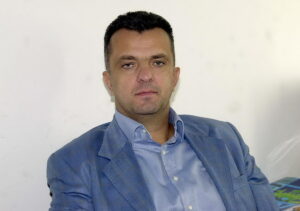
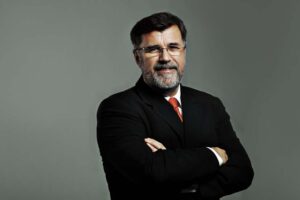
SEEMO:You live under police protection. Please explain why, how that came about and how you were threatened?
Veran Matić:
I have been under 24/7 police protection for five years now, after the security services in Serbia determined that my safety and life were endangered in my capacity of B92 news editor-in-chief. A year prior to this, my colleague Brankica Stankovic, a writer and editor of Insider, a show that deals with investigative journalism, was placed under police protection. I am responsible for Insider as well as it falls under my jurisdiction. The decision to place both of us under police protection was linked with the program because it explored a large number of taboo issues like uncovering corruption affairs, members of organized crime, hooligan’s gangs, and the plunder of state property. Threats were delivered in various ways, mostly via internet, but the assessment of security was much more related to the information collected by security agencies by using diverse methods. I believe that the greatest danger came from our refusal to withdraw after the first drastic sign of colleague Stankovic’s endangerment.
SEEMO:Can a person work normally under police protection? Does it influence the work of a journalist?
Veran Matić:
This is just the logical consequence of the situation I have described. When we understood that Brankica Stanković’s life was in jeopardy, we had to evaluate what the best response would be. We certainly wondered whether it would be possible to work under police protection, and we found the solution to this problem by deciding that a ‘protected person’ would continue to perform only her editorial tasks, while Insider’s crew would become larger, in order to strengthen the engagement that got us in this position in the first place. The resistance that we showed by making new sequels and series of Insider, the professionalism we demonstrated under very tough conditions, certainly led to me being placed under police protection. The B92 building had been under police protection for a longer period of time because there was an attempt to set it on fire, and it was threatened in other ways.
We have been working in irregular conditions for years. During the war in the nineties, Slobodan Milosevic’s dictatorship, we were banned four times, and all these years, our lives were threatened. We have always designed a strategy of reacting to threats and repression, and the most efficient one was strengthening the scope of our activities by creating a stronger impact, a bigger auditorium. This means that an efficient response can always be found, but it is important to create strong determination within the media, to offer great support to the threatened journalists and the efficient reaction of journalistic and international associations.

SEEMO:You are the chairman of the Commission for investigating killings of journalists in Serbia. How did the idea of creating this body come about? What is its purpose and what are the results so far?
Veran Matić:
It is very important to react to threats in a way that you become stronger and more efficient. It is also very significant to investigate threats thoroughly, and to try to discover the perpetrators and those who ordered the killings of our colleagues. I was aware of this need to solve killings of journalists in Serbia, and since nothing had been done about it for years, I proposed to the Prime Minister to establish a Commission around two years ago. It would gather all documents connected to the investigations conducted so far, and be composed of representatives of the journalistic profession and security agencies. New investigation teams are being formed made up of police and security information agency members, and new investigations have been conducted, led by the relevant prosecution offices.
This contributed to resolving the most famous killing of our colleague Slavko Ćuruvija in 1999. Now this case is nearing court epilogue. A lot of new data has been collected in the murder case of our colleague Milan Pantić, and I expect that the investigation will continue more intensely after a lawyer strike that lasted for several months is over. The strike slowed down a range of activities that required the presence of lawyers. In the case of Radoslavka Dada Vujasinović, a lot expertise has been contributed by the National Forensic Institute from the Hague, as the previous analyses of the Serbian experts proved to be contradictory. I believe that this is the most concrete form of fighting impunity. It can become the model as to how such situations can be resolved. A similar commission was established in Montenegro, using the Serbian commission as a role model.

SEEMO:What is your advice to colleagues who experience threats? What should they do about it, in your opinion?
Veran Matić:
I think that not a single threat should be underestimated, and that prosecutor‘s offices and the police, journalistic associations and lawyers should be informed about it in a regular way. It is absolutely necessary to report threats to both the local and foreign public and to ask for support in these matters. It is necessary that the media management and owners should strongly support their threatened journalists and editors, and demonstrate that support openly and constantly. It is also necessary to check the current status of investigations and court proceedings with the investigating authorities regularly. These measures should never be neglected with the excuse that they waste time, or something similar. Only by paying attention to and resolving even the smallest threats, will it be possible to raise the standards of the attitude of the relevant institutions towards security of journalists’ work. This will make it possible to successfully prevent future threats. Only fully resolved cases and the cases with the epilogue on the court can send a message that impunity is not an option, and that perpetrators will face justice for what they have done.

SEEMO:What is your advice to colleagues who experience threats? What should they do about it, in your opinion?
Veran Matić:
Surely, everyone should do their work and that is the obligation of the competent institutions. But if 15 or 20 years go by since the killing took place, and it is still unsolved, this means that the case is considered closed. That is why I decided to engage myself personally, in order to draw the line, to resolve unsolved cases. I wanted to introduce a clearer criteria in determining these crimes and thier prevention and and to solve those cases more quickly. Unsolved cases are a burden to all of us, because they increase distrust between the journalists and the institutions responsible for solving murders.
That is why it is important that we as journalists show how much we care. We can show it not just by making declarations to mark the anniversary of someone’s death, or by giving a couple of convenient or harsh statements, but by making it obvious that we are eager to reach court proceedings in all of the murder cases, and that we are ready to jeopardize even our own safety to accomplish this goal.
In the case of Slavko Ćuruvija’s killing, the Chief of Slobodan Milošević’s Secret Service and two high officials of this service are being indicted, as well as another fugitive suspect for whom Interpol has issued a warrant. Those facts, along with the ongoing investigations of other cases, certainly endanger all of us that are involved and this by insist that the case is resolved. However, that is the price we have to pay, and everyone should be willing to pay it in order to raise the level of safety when it comes to the work of journalists and the media.

SEEMO: In cases of attacks on journalists or threats, how significant is the support of international organizations, such as SEEMO?
Veran Matić:
Support in itself cannot mean a lot. If you have united news desks, if local associations and non-governmental organizations are joined in a network and are thus efficient when it comes to violations of human rights and freedom of speech, then international organizations can be of significant assistance. They can inform the international public and advocate for more efficient pressures to prevent threats and make journalists and the media safe. Of course, international organizations can join efforts with others in more direct intervention in order to decrease current danger through safe houses for journalists, and also by supporting solidarity through a stronger professional network.
It is especially important in situations where state institutions do not want to offer security support that international organizations fill the gap through solidarity, by financially helping journalists or media staff who are in jeopardy. I think that it is very important to create models that journalists can rely on in urgent situations. I am sure that this would help them do their job more professionally, along with protecting their safety and save their lives as a result. It is of crucial importance not to relinquish things to the extremists by being inactive, but through such actions, we should show that it will not be easy to endanger journalists without facing resistance, and that violations of journalist safety will not pass without adequate punishment.
SEEMO INTERVIEW WITH STEFAN MAKO

June 12, 2020 disabled comments

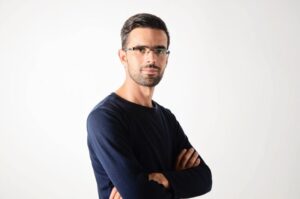
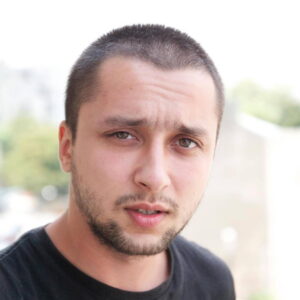
On the evening of 10 November 2014, reporter Stefan Mako was beaten by policemen in the Old City Center of Bucharest because he had filmed them while beating another man. They asked for his ID, confiscated his mobile phone, threw him in the police station, hit him, verbally abused him, spat on him and threatened him, then politely released him. For several months the journalist documented the trial of a policeman accused of having beaten a beggar to death, admist of a large number of complaints and investigations regarding abuses by Old City Center and Police Section 10 in Bucharest.


SEEMO: You were attacked by policemen last November. What happened?
Stefan Mako:
I was riding my bike around the Historic Center. I saw two policemen talking to a man next to a kebab shop. They asked for his ID and made him empty his pockets. The guy did as he was told. One of the policemen got angry, maybe because the guy was too slow: ‘What are you doing? Move! When I tell you to do something, make sure you do it’! The guy panicked; ‘Hey, what are you doing? Why are you touching me?’ and jumped the policemen. The officers restrained him right away, laid him on the pavement, punched him and kicked him, then handcuffed him.

I took out the mobile phone from my pocket and started filming. ‘This is what they teach you in military school? Aren’t you ashamed?’ an old man behind me asked them. An older policeman, wearing civilian clothing, approached me

‘Get away from here!’ he said.

I told him, ‘Leave me alone, I am a journalist. This is public space.’

‘So what if you’re a journalist! Get the fuck out, buddy, I’m being nice to you, okay?’ he said. Then he slapped my hand that was holding the phone and went to pick up the officers’ radios, which had fallen to the ground. Meanwhile, the two policemen in uniforms took the handcuffed man to the station. I started following them, filming them from a distance.

In front of the police station, I saw the older policeman talking to two officers, who then approached me and asked for my ID. Before I could hand them my papers, the officer in civilian clothing came and grabbed my phone, while the others carried me away from my bike, slapped my head and threw me inside the station.

SEEMO: What happened in the police station?
Stefan Mako:
All of a sudden, he grabbed my jacket and slammed me against the wall, then punched me in the ribcage. The policemen yelled at me as if I had killed someone. I barely took out my press card, before the dark-haired policeman grabbed it and threw it against the wall. He said, ‘You’re a journalist? I piss on you!’

I told him the guys had just thrown it around. ‘Fine, I’m out’. A police officer started reading the info on my ID card and burst out again: ‘You’re from Covasna district, huh? You’re a country boy and you talk back? Film my dick, then, film my dick! He says, bending towards me, one hand on his slit, then he slapped my left cheek and spits in my eye.’

SEEMO: So you became the problem there.
Stefan Mako:
His choleric colleague kept taunting me, saying I caused a scandal, and I kept explaining to them that I did nothing but film, it was other people who were making fun of them. Then the taller policeman grabbed me and tried to drag me in the back, probably to the restroom. ‘I’m going to fuck you in the ass, you motherfucker! You call this journalism? I’m going to fuck your ass!’ He keeps pushing me and yelling at me, ‘Don’t you show any civic spirit? You film us instead of helping us out? When you saw that man attack us, you should’ve minded your own way, not start filming.’

SEEMO: How did thing end at the police station?
Stefan Mako:
They kept softening. ‘How are the people in Covasna?’ I told them, ‘Like all people, some good, some bad’.

‘They know their place, right? That’s what I’ve heard’. The tall policeman handed me my ID and shyly shook my hand, like we were buddies. ‘Well, Mako Istvan…’ I asked him if I can leave, and they agreed. The dark-haired man gently led me to the door, but he still added that I did not do the right thing. ‘Have a nice evening’.

I told them, ‘You too’.

SEEMO: Did you fill a complaint?
Stefan Mako:
I went to the hospital, where I waited in line for five hours, together with other people who had been beaten up, until one doctor finally noticed me. The diagnosis says ‘blunt thoracic injury’. I was at a hearing at the Bucharest Police. I filed a criminal complaint to the Prosecutor via APADOR-CH, which is representing me legally.

SEEMO: Have there been any results?
Stefan Mako:
Not yet, my complaint is ‘under investigation’.

SEEMO: How did these events affect your life?
Stefan Mako:
Concerning my personal life, I was shaken for a few days. I experienced stress, fatigue and insomnia. But it is assumed that this kind of thing can happen to anyone in the ‘industry’. It helped me to better understand what I was told by several people who have had similar experiences. I suppose I have now a complete documentation and a personal perspective. I understand better why these things happen; lack of training, the pressure in the system, mimicry, professional and personal frustrations of the people involved. It also gives me a legal perspective, and direct contact with bureaucracy and systemic flaws related to civilian control, the power of citizens to defend themselves against abuse, how the system functions. People are discouraged from seeking justice in the court system because of bureaucracy, and because of the prejudices and conflicts of interest that state employees dealing with such cases have.

SEEMO: Did your experience change your reporting?
Stefan Mako:
Bypassing personal trauma, the incident, although unpleasant, helped me. Because I personally experienced this kind of treatment, I was contacted by dozens of people who were subjected to various forms of abuse by the police, people who didn’t have the courage, the resources or the power to address it legally. In any case, it was a plus for my documentation. I’m glad I escaped with a few bruises. It seems, however, the press card did something.

SEEMO INTERVIEW WITH DAN CONSTANTIN

June 12, 2020 disabled comments

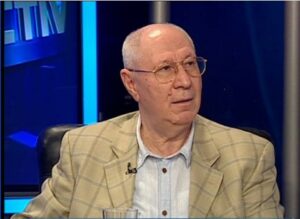
Dan Constantin is an editor-in-chief at the daily newspaper Jurnalul National in Bucharest, Romania. He was attacked in June 2014. Constantin continues to appear on television and write articles and op-eds. He is a well-known critic of Romanian President Traian Basescu, and has expressed his critical views many times in writing and on television. Constantin’s assailant said he wanted to ‘change his editorial views’, but the attack did not have the intended effect of censoring Constantin’s reporting. The case was recently closed, and the assailant went unpunished.


SEEMO:In June 2014 you were attacked in front of a supermarket in Bucharest. What happened?
Dan Constantin:
I was in the parking lot of the supermarket, loading the shopping into my car. A very aggressive young man approached me and asked, ‘What would you think if I hit you in your mouth? I know what you do, I know you from [TV news channel] Antena3 ‘. My wife was with me. I tried to settle down, but my wife got scared, called 112, said that we were being assaulted by a young man, and the police came. They took our data and also the attacker’s information.

SEEMO:Why you think you were attacked?
Dan Constantin:
What my assailant said was very similar to the propaganda coming from President Traian Basescu’s supporters. I was used to the words, but the aggressive young man was different. The physical aggression is another step. He said he wanted to call another television team to come there. I didn’t know the guy, it was the first time I saw him. I was surprised with his very virulent attitude. The young man didn’t want to hide, on the contrary. He wanted to stay, he wanted to be identified. I did not have the impression at any time that he wanted to leave. He wanted to appear as a ‘man’ to fulfil his mission. He gave all this information and acknowledged the fact that was associated with a politician, but he did not name this politician.

SEEMO:Do you have a message for people who could repeat this gesture by making threats against journalists like yourself?
Dan Constantin:
Freedom of expression is guaranteed by the Constitution, and this is what everyone has to keep in mind. Those who like this kind of attitude should recall that freedom of expression and the right to an opinion is guaranteed by the Constitution. If you do not agree with another person’s opinion, you can avoid it, but you have to let journalists to do their job. Without freedom of expression there is no rule of law! This man had this attitude not only against me, but against the many people who agree with us and support our ideas.

SEEMO:Did this attack affect your life?
Dan Constantin:
I will continue to express my views and express myself freely, in a democratic manner. My wife was scared for a longer period of time, and still fears similar situations. But this didn’t change my reporting.

SEEMO INTERVIEW WITH OLIVERA LAKIĆ (2015)

June 12, 2020 disabled comments

Olivera Lakić has been a journalist with the independent daily newspaper Vijesti since 2002. She is Montenegrin, married and the mother of two children. This interview is from 2015, three years after we published it, in May 2018, Olivera was wounded by a gunman in Podgorica after investigating corruption


SEEMO: Could you tell us about your case? When did it occur, and what happened?
Olivera Lakić:
The most dramatic events escalated in early 2011. After many threats aimed at stopping me from performing my work in a professional manner, I received the most serious and terrible threat that someone can receive. I was threatened that my daughter, who was studying in Rome at the time, would be raped. A few days prior to receiving a threat, while I was conducting my journalistic work, my security was jeopardized. A year later I was physically assaulted outside my home.

SEEMO: Have you experienced any additional threats during your career?
Olivera Lakić:
Yes. Throughout my journalistic career I have dealt with subjects concerning organized crime, corruption, unresolved unsolved murders and related issues, I was always confronted with threats. However, prior to this threat, I have rarely attached any significance to these “warnings” and threats. I think threats are, unfortunately, an integral part of the journalistic profession.

SEEMO: In your opinion, what is the reason behind the assault?
Olivera Lakić:
The reason is because I have dealt with the cases concerning organized crime, illegal production and smuggling of cigarettes involving some people from the government and security services. All the cases I have cited, as the most drastic ones, have occurred because of this research. Obviously, state institutions have failed both in protecting me and taking my side. They have taken the side of the criminals.

SEEMO: What is the epilogue of your case?
Olivera Lakić:
A worker at the tobacco production plant was sentenced to four months in prison for endangering safety there. A man who threatened that my child would be raped, a police officer and head of security of the police director at the time and a member of his family, were recently acquitted based on the decision of the first instance court. A man who turned himself in, he confessed, was acquitted of responsibility. There were three judicial processes that were initiated on this occasion. A judge sentenced a volunteer to the maximum sentence for this criminal offence. In the third trial, another elected judge has released him. A man who physically assaulted me in front of the apartment building where I live with my family, has a criminal record and was previously sentenced for drug trafficking and violent behaviour, was sentenced to nine months in prison.

SEEMO: Have you experienced fear? Are you still afraid?
Olivera Lakić:
Yes. I am afraid every day, mainly for my family. I’m particularly scared because the attitude of state institutions is worrying to say the least.

The fact that there was an attempt to obstruct the investigation into the threats against my child. The president of the Supreme Court and the head of the criminal police directly pressured the Basic State Prosecutor not to pursue the case, might make you understand. The police officer who was charged with the criminal offense is now released, and you may well understand why I’m so afraid.

No one deals with the persons who orchestrated the attack. I had to make a research on my own, to find and prosecute a man who threatened to attack my child. Although the prosecution accused the head of the criminal police for the crime of ‘illegal influence’, as he directly ‘warned’ the prosecutor that he will lose his position as a head of prosecution if he did not drop the charges and stop the investigation, the court dismissed the indictment. Moreover, the court dismissed the indictment issued last year by the prosecution against several people, including a man who attacked me physically, because I was indirectly threatened. I’m emphasizing as an important fact that at that moment I was under police protection, but it was not enough for the court.

SEEMO: How has this affected you your family and your private life?
Olivera Lakić:
I’m afraid that my family will never be the same. When I say this I mean that we have lost our sense of peace and security forever. In 2011, when the safety of my children was threatened due to my profession, they had to stop their studies for a short time They are suffering the consequences of this attack even today. For more than half a year, we had uniformed policemen in front of our apartment for 24 hours a day to ensure our safety. In addition, I had personal police security for two years and seven months. It was abolished at my request. For the entire time I was totally unable to live and work normally. I had a hard time with being escorted by the police and I was rarely leaving the apartment. My family and I have not had any joint activities outside our home, not even once. Friends of my children avoided visiting us, and even some of my friends because they were bothered by the police checks that were carried out when they visited.

I had to go to a trial almost every other week for the last four years. All my activities were subordinated to that. I often jokingly say that I visit a courtroom more often than a hairdresser.

Regardless of the difficult situations and how they were almost unbearable, I will persevere in making every detail clear, and in making sure that the persons who endanger our peace and security are brought to justice. I will not let them go unpunished.

SEEMO: Have you considered changing your profession because of your experiences?
Olivera Lakić:
Yes. Many times. Primarily because I fear for the safety of my children. After I was physically assaulted in front of my home, I quit. I thought that I had no right to endanger my family, and I was devastated by the fact that I did so. I felt guilty for years. On a daily basis, that is very intense. The director of the newspaper and editor-in-chief understood, because they themselves were victims of physical assaults and threats. They did not accept my resignation. They gave me the maximum amount of help and support, freed me from all obligations in the newsroom and told me that my job was waiting for me when I decided to come back. In addition, I was received a salary every month as if I served in full capacity. I came back to work ten months later, the same day the prosecutor’s office filed charges against the police officers who threatened to attack my child. Only with the support of my family, especially the children, could I afford to reassume the role of journalists, in addition to my role as a mother.

SEEMO: How important was the support provided by international organizations, such as SEEMO, in your case?
Olivera Lakić:
It means a lot to me and I’m grateful for it. It shows that we care for each other, and that we fight for each other … Regardless of the troubles a journalist is confronted with, if his colleagues are with him, he feels stronger. SEEMO fought for me in public on several occasions. It certainly helped to resolve some cases or caused competent authorities to pay more attention to them. So please bear in mind that I’m still in need of your help.

SEEMO: Who else provided you with support and assistance? What was the support of state authorities of Montenegro – i.e. police, prosecutors and others?
Olivera Lakić:
I have primarily received support and assistance from my editorial office and the owner of the newspapers where I work, which was sometimes touching. That showed me that my sacrifice was not in vain and that my work is valued appropriately. It is a privilege to be part of such editorial office. In addition, I was also touched by the support I received from the colleagues of other media in Montenegro, who protested for several days after I was assaulted, and who reported on the investigations and trials with special care. I was particularly touched by, and I highly appreciate, the support of my colleague Veran Matić from RTV B92 in Belgrade. I had never met him, and he called me and gave me advice about how to live with a police escort. He understood what I was going though and offered his assistance. The support of state authorities in my country began and ended with statements condemning threats and assaults. I will not forget what was, in my opinion, the ugly attitude of the regime’s newspaper Pobjeda, which made fun of my struggles in the newspapers during the days when my family and I were most vulnerable.

Although I am dissatisfied with the pace at which my cases have been resolved I must point out that the prosecution was the only authority that I could count on.

The fact that I had to turn to the Protector of Human Rights and Freedoms because the Ministry of Interior did not want to answer me about the status of my safety, or to inform me about how long I would have to be under the police protection, says enough about the attitude of the police. I have waited for the answer the Protector of Human Rights and Freedoms for several months. There are countless examples of their unprofessional behaviour and it would be a never-ending story. The fact that I had to end my police security myself after almost three years, without a reaction from them, says enough about the seriousness of police concerns and attitudes towards a journalist and citizen.

SEEMO: Finally, how do you assess the media situation in Montenegro?
Olivera Lakić:
After the last in a series of attacks on our editorial office, when a bomb was placed under the window of the editor-in-chief Mihailo Jovović, my colleague from the editorial office Balša Brković wrote: ‘A journalist servant perceives any journalist who is not a servant as an existential threat, an attack on him and his “work” as a shameful reminder of who he and what he is, a mirror that he fears to look in, because he knows what kind of ugliness he will see in it instead of his character’. I could humbly add to this that it hurts the most when someone who calls himself a journalist, who knows or should know the sacred duty of journalists and what is his role in society is, turns his head and stays silent because he is separating the journalists into ‘us’ and ‘them’. As if the truth that we jointly pursue may be segregated into ‘ours’ and ‘theirs’. As long as we are divided by such a media situation, the safety of journalists in Montenegro will be as it is now. Now a journalist in Montenegro is a clay pigeon that any scoundrel may label as he pleases, threaten, intimidate and beat. The environment in which the journalists of Vijesti are working in and survive, gives me the right to say that we are the champions.

SEEMO INTERVIEW WITH ŽELJKO IVANOVIĆ

June 12, 2020 disabled comments

Željko Ivanović is Chief Executive Officer of Daily Press, LLC and founder and publisher of daily Vijesti in Podgorica, Montenegro. In the past he has worked for the Montenegrin weekly Monitor, ALTERNATIVE INFORMATIVE NETWORK (AIM) and different media outside Montenegro.


SEEMO: You have experienced a physical assault. When and how did this happen?
Željko Ivanović:
The attack occurred on 1 September 2007. The date had certain significance too: Vijesti was celebrating ten years of publishing. After the attack, I stated that this was, symbolically, a way that the regime congratulated us. Regarding the ten-year anniversary, we took all the employees of Vijesti for a celebratory dinner to a restaurant situated in the centre of Podgorica. When I left the gathering around two in the morning, three attackers were waiting for me by my car with wooden clubs. It was a classical setup, with an organized group that followed me, preparing to intimidate and physically endanger the director of the most influential media outlet in Montenegro.

SEEMO:You were taken to the hospital. What did the doctors say?
Željko Ivanović:
I spent a few hours in the Montenegro Clinical centre, and was diagnosed with a cheekbone fracture, as well as many bruises all over my body from the wooden clubs. It was only due to my physical strength that I managed to avoid major injuries, when compared to the brutality of the attack I experienced.

SEEMO:Were there any witnesses?
Željko Ivanović:
There were two: our company driver, who heard the attackers and saw them from a distance in the park behind the restaurant (not knowing, at the time, what they were preparing for) and a tenant in the building my car was parked in front of. He heard noise and saw the attack and the attackers pretty clearly from his balcony. Later, when the regime conducted a trial for the alleged culprits (they were not actually the ones that attacked me), both witnesses claimed that the men on trial for the incident were nothing like the actual attackers by physical constitution and speech. But since the regime organized this farce, the prosecutor and the judge accepted them as the real perpetrators, in order to close the case as fast as possible. This mockery was more painful to me than the attack itself. It convinced me even further that a group of people close to the regime was behind this attack.

SEEMO:How did you deal with the attack on a personal level? Did you change anything in your life?
Željko Ivanović:
At first, I was shocked because I couldn’t have dreamt of something like this happening. Then I felt disillusioned by the realization that nothing would ever be the same after this attack. Nothing has changed in my professional engagement and my insistence of credible and professional journalism. Things have changed in my lifestyle, however. I had to employ a security service that would take care of my safety and the safety of our offices.

SEEMO:Has this attack affected your family? How?
Željko Ivanović:
Of course it has. The pressure suddenly grew on them, and I had to move them from Montenegro quickly, so they spent a year in Vienna. They care about my safety more than I do myself.

SEEMO:You are the co-owner and director of one of the leading media outlets in Montenegro. Please tell us of other attacks that Vijesti has experienced in the last several years.
Željko Ivanović:
In the last eight years, there have been around 10 attacks on our employees and property. After the attack on me, similar, but more brutal attacks were carried out on colleagues Tufik Softić, Mladen Stojović, Mihailo Jovović and Olivera Lakić. Our vehicles were torched three times and there was one attack where dynamite was placed under the main editor’s window.

SEEMO: Why are you, as a media outlet, the target of attacks?
Željko Ivanović:
It is due to our influence and credibility, as well as the inability of the regime to control us. The atmosphere of lynching that the regime has created through its leading officials and state-controlled, propagandist media outlets, has made us a target for everyone who is connected to crime and corruption, and was reported of by our paper.

SEEMO: Do you have any advice for journalists who might experience what you did, especially when it comes to physical attacks? What should they do in such a situation?
Željko Ivanović:
It’s hard to advice. The only thing you can do is pray to survive. When an organized group, either from government or crime structures is preparing attacks on you, you don’t have much space to defend yourself. It’s all in their hands, depending on the plan; if they decided to execute you or ‘just’ beat you up. If you survive, then there is no backing down, because it is better to die than be humiliated.

SEEMO: Was the reaction of SEEMO significant to you in any way?
Željko Ivanović:
The great support I received from all relevant international organizations that deal with media rights and freedom meant a lot as pressure on the regime to refrain from more radical moves, and to begin an investigation so the perpetrators could be found. Among them was the SEEMO reaction, which later regularly followed and reported on my case.

SEEMO INTERVIEW WITH ZEKIRJA SHABANI

June 12, 2020 disabled comments

Zekirja Shabani is a graduated economist with a wide range of experience in business management in developing countries. He is well-informed about Kosovo and the regional economic situation. Mr. Shabani has worked in various NGOs, as well as a journalist for TV Klan Kosova, newspaper Express, and Koha Ditore. He was the economy news sector editor-in-chief for Gazeta Tribuna, a board member of the Economic Journalists Center, and is currently the Head of the Kosovo Journalist Association.


SEEMO: You were attacked. Please explain us what happened in your case.
Zekirja Shabani : It all happened after I announced that I was suing the newspaper Tribuna for failing to pay wages to their staff on time. For two months journalists of this newspaper hadn’t been paid, and I was one of them. The Tribuna newspaper owner called me in his office and after a verbal conflict he physically attacked me. He tried to get me to sign a document terminating my contract. This was against my will and against the labour law in Kosovo.

SEEMO: Have you experienced threats and attacks before?
Zekirja Shabani : Journalism is not an easy job and I often get threats and calls from people saying that they are going to kill me. Especially now that I am the head of the Journalists Association of Kosovo. In Kosovo, where newspapers are dependent of politics, criminal groups and other interest groups threats and attacks on journalists are evident.

SEEMO: Did it influence your work as a journalist? Is it possible to work normally, without worrying that something similar might happen again?
Zekirja Shabani : Of course it influences the work of a journalist. After the attack I lost my job and now it is hard for me to find another, even though I have more than 10 years of experience both as a journalist and editor for economic topics. None of the newspapers want me to be part of their staff, because they are worried I will raise my voice, calling for better journalism conditions. And I understand this. All the newspapers in Kosovo are treating journalists as slaves and this has to be changed. Now I expect that new attacks will come from other media owners, not physically, but in other ways of discrediting my job. But I am committed to fight for journalistic rights at all costs. Because it is known that ‘what doesn’t kill you, makes you stronger’.

SEEMO: Has your attacker been tried and convicted?
Zekirja Shabani : As far as I know, he is yet to be tried or convicted. After the attack, I went to the police station and reported the case, explaining everything that happened. Also I sued the owner of the Tribuna newspaper for failing to pay me wages. Because of the judicial system in Kosovo, I don’t expect that these cases will be solved soon. Usually these take long, at least five to six years. From experience I say that this will take long, because this year we as Association of Journalist reported 24 cases of attacks and threats on journalists and none of them are solved yet.

SEEMO: What advice would you give to colleagues that find themselves in a similar situation?
Zekirja Shabani : I was attacked for raising my voice against injustice in the workplace. This is a testament to the serious situation in which journalists work, and the violations of their human rights in Kosovo. But remember, journalism is not an easy job. We all accepted it as it is, and no threats and no other form of pressure will stop us in our mission to inform. We don’t have guns and we are not violent. We have a paper and the pen, and I encourage all my colleagues to use paper and pen and raise the voice for their rights. Don’t take justice in your hands, but write to make stronger justice that will protect your human rights.

SEEMO INTERVIEW WITH ZRINKA VRABEC MOJZEŠ

June 12, 2020 disabled comments

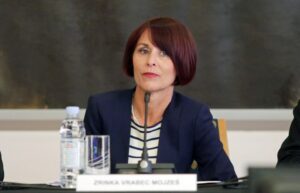
Zrinka Vrabec Mojzeš acted as Adviser to the President of the Republic of Croatia Ivo Josipović (2010-2015) for Social Affairs, Office of the President of the Republic of Croatia, Zagreb, and is a former editor at Radio 101 in Zagreb, Croatia

SEEMO: In the past, when you worked as a journalist, you experienced constant threats, intimidating phone calls and pressures. Please explain in more detail what the reason behind these attacks was. What exactly happened?
Zrinka Vrabec Mojzeš:
During the 1990s, and even after the year 2000, intimidations, threatening phone calls, and public lynch call-outs were commonplace in the state-run media. During the demonstrations in 1996 supporting Radio 101, when Tudjman’s reign was threatened for the first time, every day I received a note containing threats directed at me and my family, signed by the “Knights of Pakracka valley”. They were war criminals that killed many people during the war, and were never prosecuted. The Radio 101 attorney handed these notes to the police, and I alerted the Security agencies (headed by no less than the son of Franjo Tudjman), underlining that if anything were to happen to anyone from Radio 101, they would be held responsible.

I’m not sure whether it was the international pressure that made them protect us, but after that, this type of intimidation stopped. I remember the TV show Latinica being broadcast in 2005 with the subject of Tudjman’s heritage. For days after that episode my colleagues and I received threats by phone, mail, letters, including threats directed at my children. The secretary managed to write down the number the threats were coming from and we alerted the police, so the state attorney’s office had to react by duty. The man was found and indicted, but since the further trial process was up to me, I opted out of it. Of course, reactions from the international public and institutions, our journalistic circles and SEEMO made a great effect for the creation of enough pressure to make state officials do something about this.

SEEMO: Were your cases prosecuted by the legal system, and were they resolved? Were the perpetrators ever found and convicted?
Zrinka Vrabec Mojzeš:
As I’ve mentioned, there was no trial, but the threats kept coming. Only in a few cases in Croatia (Helena Puljiz, for example, who was pressurized by secret services) has there been a conviction, and even then, it was ten years too late. Still, those that masterminded the physical attacks on some of my colleagues were never found or prosecuted.

SEEMO: How did you take this on a personal level? Has it impacted your life?
Zrinka Vrabec Mojzeš:
It is a very inconvenient situation. I wouldn’t say I was afraid for myself, because I made the willing decision to fight against criminal privatizations, undemocratic regimes and media freedom violations. But I was afraid for my family and my children, who were exposed to many kinds of “silent” bullying in school for a long time. Of course, they are not to blame for their parents’ actions, who should have a certain sense of responsibility towards their own public acting. In some sense, you’re dragging your children into a space they do not belong in.

SEEMO: Do you have any advice for journalists who experience, threats, attacks, pressure and censorship? What should they do?
Zrinka Vrabec Mojzeš:
Journalists should absolutely go to legal institutions which, at least formally, have to react. They also must address their journalistic association, as well as all international organizations that deal with the protection of journalists and media freedom. They should speak out to the public as well. The solidarity of the public is probably the best protection, because then you cannot be suddenly “eaten by the dark”.

SEEMO: How does one protect oneself from these forms of attack?
Brankica Stanković:
The rule is that for every piece of information we publish, we have to have evidence. When you put things that way, sources are important in the sense of hearing about something, and then investigating and proving that by yourself. We always have official confirmation for our information, we don’t just rely on sources.

SEEMO: Have the reactions of SEEMO been significant to you in any way?
Zrinka Vrabec Mojzeš:
Of course, any journalist that experiences threats finds SEEMO reactions to be significant, because they force state institutions to do their job, and it engages the public about truthful information. Journalists have done a great deal of work in investigating corruption on the highest levels, which has resulted in verdicts being handed to some very prominent government officials in Croatia, among them former Prime Minister Ivo Sanader. Because of this, the role of journalists, especially investigative journalists, is still a dangerous one, even though less and less in time. It makes a huge impact on the development of democracy and its institutions, even in countries that have formally fulfilled the basic standards of rule of law and human rights.

SEEMO INTERVIEW WITH HELENA PULJIZ

June 12, 2020 disabled comments

Croatian journalist Helena Puljiz is a commentator for Tportal. She previously worked as a journalist and editor for Tportal, Jutarnji list, Glas Slavonije, Globus, Banka magazine and Varaždinske vijesti. She established journalist’s trade union at the daily Jutarnji list and co-founded the Association of Croatian Investigative Journalists. She co-edited the White Book-A Chronicle of Threats and Assaults on Journalists 1990-2011. Puljiz was awarded the Aleksandra Zec’ Charter in 2004. In 2004, she accused Croatian Counterintelligence Agency (Protuobavještajna agencija – POA) of unauthorized and illegal questioning, and initiated court proceedings against the Republic of Croatia. The court ruled in 2014 that agents had violated journalist her rights when they took her in for unauthorised questioning and threatening her in 2004.

SEEMO: You experienced serious threats as a journalist in 2004 from the Croatian Counterintelligence Agency (Protuobavještajna agencija – POA), an agency that is currently part of Security and Intelligence Agency (SOA). Can you please tell us what happened?
Helena Puljiz:
Members of the then-POA, and today’s SOA tried all the methods available to them – threats, bribery and blackmail, physical abuse – to get me, as a journalist, to spy on colleagues, politicians, heads of political parties, foreign diplomats, intellectuals in the country and abroad, and to publish dirty stories in the media for them. Even though I was worried for the safety of my own life and the lives of my family members, I reported them to the parliamentary Council for the supervision of security services, The Croatian journalistic association and the Croatian Helsinki Committee.

But instead of protection, the only thing I got from the parliamentary Board was a continuation of torture through interrogations, during which I was treated like a state enemy. Instead it was the agents that were breaking the laws and Constitution of Croatia. The only support I got was from the Council for national minorities and human rights. After they ruled that the POA agents endangered my basic human rights, then-President of Croatia Stipe Mesić decided to remove Joško Podbevšek from his position as the head of POA. But this was objected to by PM Ivo Sanader. After local and international pressure Sanader signed his annulment.

In those three months I was subjected to an attempted media lynch, political pressures, and after I reported that the agents questioned me about President Mesić to the Council, Prime Minister Sanader stated during a Parliamentary session that my case had nothing to do with media freedom and President Mesić, but rather that it was due to my connections to organized crime. This was an attempt to discredit me, and unfortunately it wasn’t the only time that happened. I was falsely connected to the case of Ante Gotovina, a war general that was on the wanted list at that time.

SEEMO: Why did POA decided to target you? You were a young journalist. Why were you so important to the POA?
Helena Puljiz:
Up to this day I have still not received any information about why I was harassed by the POA agents. In 2004, I already had 10 years of journalistic experience, and as a media worker had been following the work of the President, the government and Parliament, so I had already researched the Croatia ruling elites. As a journalist I had many international contacts, was on the payroll of different media institutions and organizations. I also founded the first journalistic organization in Europapress Holding (EPH), the trade union of journalists from the daily Jutarnji list.

SEEMO: Then what happened to you?
Helena Puljiz:
Then suddenly in 2004, I had no job, no income or possibility to publish under my own name in any media outlet in the country. The harassment I went through was by three POA agents, one of them being the head of POA for Zagreb at the time.

SEEMO: Threats by intelligence services often make people very scared. Were you afraid?
Helena Puljiz:
Of course I was scared, like anyone would be, but I still chose to live as a free human being, as much as it’s possible today. Along with the threats, bribery and blackmail attempts, the secret service agents assured me that I had no choice, that I would never find a job in Croatia because I was not covertly working for them. They even threatened the safety of my younger brother, and the endangerment of not only my reputation, but also my mother‘s. I did not succumb to pressures at any point, or have any doubts about reporting them to the authorities. For me, this was a battle for life or death.

I would have rather died than worked secretly for this service against my own profession and against the people. I was afraid they’d kill me when I reported them, and this fear only grew when the PM Ivo Sanader and his spokesperson Ratko Maček falsely accused me of being connected to organized crime.

SEEMO: Are you aware of cases where POA was actively connected to other journalists? Did you get any feedback from colleagues who experienced similar problems with intelligence services?
Helena Puljiz:
I don’t know. No one except me reported that they were approached for this reason as a journalist. But, from my own difficult experience I can say with certainty that these people have many accomplices in the media. A number of people who present themselves as journalists disseminated misinformation from the secret services about my case and tried to discredit me as a person and as a reporter.

It is common knowledge that during the 1990s in Croatia secret services abused their powers to covertly follow journalists, but unfortunately all of these cases remained unpunished.

SEEMO: Ten years after this case you got a positive ruling by the court. Are you satisfied with the decision?
Helena Puljiz:
I’m satisfied to have proven in court what I claimed from the first day; they were trying to force me to be an accomplice for the secret services, and they broke many Constitutional and legislative rules.

I’m not satisfied that the Municipal State’s Attorney offices was against me, instead of prosecuting my attackers. It’s shameful that I had to make a private lawsuit against them, instead of this state institution which should have indicted them. The Attorney offices eventually filed a complaint against my verdict, which I see only as a continuation of the abuse.

I’m sorry they endangered my health and professional reputation, that they took ten years of my life and for not being able to leave all this in the past, but I was never sorry for confronting them.

SEEMO: What would your advice be to journalists who experience a similar situation?
Helena Puljiz:
Be brave and wise.

SEEMO: Who supported you in 2004?
Helena Puljiz:
Without the support of my family and friends I would never have been able to survive that period. The support of the Croatian Journalist Association was important too, as was the support from some NGO’s, like Udruga B.a.b.e. There was also the support of parliamentary representatives of national minorities, colleagues, the general public and the international institutions that protect human and journalists ‘rights.

SEEMO: How important was the international support from different press freedom organisations, including SEEMO?
Helena Puljiz:
In 2004, the support from international human rights and press freedom organizations helped end the case with the removal of the head of POA from his position. Some of these organizations were IFJ/EFJ, CPJ, IWPR, HRW, Freedom Forum, and of course SEEMO. I must mention a special help of CPJ as well.

SEEMO: How did this case affect your life?
Helena Puljiz:
This case influenced my personal and professional life in a big way, and it still does, considering the fact that even after 10 years, I haven’t received a final judgment.

SEEMO INTERVIEW WITH DRAGO HEDL

June 12, 2020 disabled comments

Dragutin Drago Hedl has worked as a professional journalist for Croatian newspapers Glas Slavonije, Slobodna Dalmacija, Feral Tribune and Novi list. He is currently a reporter of Jutarnji list. Mr. Drago was the editor of London-based paper War Report for one year. He has been a correspondent for many renewed global media and has received several international journalistic awards. Besides journalism, he also does literary work, and is the author of several documentary films. He lives and works in Osijek and Zagreb.


SEEMO:As a journalist, you’ve experienced serious threats several times. Please tell us about your experiences.
Drago Hedl: Luckily, the threats I’ve received were more verbal. Two times I found these threats to be very serious: once during the 1990’s when Branimir Glavaš, a powerful Croatian politician at the time, said that he would turn me ‘into dust’ because of articles I published about his involvement in war crimes in Osijek.
The other serious threat came from Davor Boras in 2006, when he attacked me verbally and very vulgarly in a public place, threating to kill me ‘like a dog’. At the time, Boras was the youth president of the Croat Democratic Alliance of Slavonija and Baranja (HDSSB), a political party formed by Branimir Glavaš. Boras received a probation sentence for these threats. I also took a statement by General Mladen Kruljć seriously, when he said in an interview that General Slavko Barić tried to talk him into killing me after I wrote several articles about him. I was also threatened several times by mail. I received the latest one two days after the terrorist attack on Charlie Hebdo magazine.

SEEMO:What is it like to live with threats? Did they affect your life personally or as a journalist?
Drago Hedl: Threats are uncomfortable and always cause commotion. I find it particularly problematic that my also family had to go through hard times because of them. Especially my mother, later in her life. She died last year. I tried to keep these threats from affecting my personal life, so I never stopped appearing publically or visiting places I’d been to before I was threatened.

SEEMO:Have threats caused you to consider not writing about certain topics, or to censor yourself?
Drago Hedl: I’m sure the threats haven’t affected my journalistic work in the sense of self-censorship, or avoiding complex topics which could result in threats by the people depicted in my articles.

SEEMO:To what extent did the state protect you?
Drago Hedl: I reported all the threats I received to the police. They conducted their work professionally. On two occasions, when they assumed the threats were extremely dangerous, I was put under 24-hour police protection. When I reported the anonymous letter I received after the attack on Charlie Hebdo magazine, the police reacted promptly, sending a forensic expert to search for fingerprints on my mailbox, and they began a very intense criminal investigation.

SEEMO:How significant was SEEMO support to you?
Drago Hedl: SEEMO reactions and support were very significant to me, not only in a moral sense, but they also contributed to quicker reactions by state institutions. That type of pressure from international organizations towards Croatian authorities is very important because it shows that the case is being followed outside of Croatia. That’s why I’m always thankful to SEEMO and other organizations that protect media freedom and human rights for always reacting quickly when I was endangered for doing my job as a journalist.

SEEMO:What is your advice to younger colleagues who may experience threats? What should they do?
Drago Hedl: It is important to report every threat. Even though the aim of these threats is usually to scare the journalist and stop him from further investigation, we still can’t be sure that those who are issuing the threats aren’t serious. Besides the police, it is important to report them to organizations that deal with media freedom, such as SEEMO, because their reactions help to ensure a more efficient investigation by authorities in Croatia.

Hendrik Sittig

June 11, 2020 disabled comments

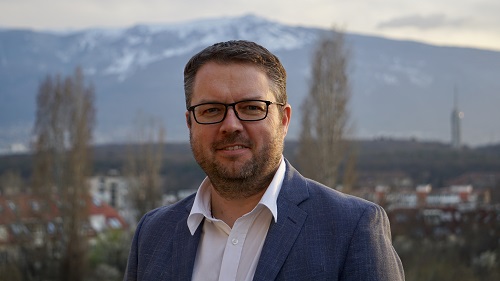
Hendrik Sittig has been director of the Media Programme for South East Europe of the Konrad-Adenauer-Stiftung, located in Sofia, since 2018. Previously, he worked for the programme directorate (TV, Radio, Online) at the public broadcaster Rundfunk Berlin-Brandenburg (rbb). Hendrik Sittig worked as a project manager for the Konrad-Adenauer-Stiftung in Moscow from 2008 to 2010. He studied Journalism and Psychology at the University of Leipzig. Other stations: two-year editorial traineeship at a regional newspaper. Editor and reporter for the ARD Aktuell TV News and the MDR television in Leipzig and Erfurt. Working scholarships in Georgia, Poland, Belarus and Ukraine as well as one-year stay at a German-language newspaper in Western Siberia.

Media Freedom in South East Europe  

Despite a certain improvement of some aspects of the media situation, declining tendencies regarding media freedom in South East Europe are still prevailing. All of the countries covered by the Media Programme South East Europe of the Konrad-Adenauer-Stiftung including Albania, Bosnia and Herzegovina, Bulgaria, Croatia, Kosovo, Montenegro, North Macedonia, the Republic of Moldova, Romania and Serbia, are placed in the mid-rank of the Index of Press Freedom. Whereat Bulgaria is still experiencing the worst results within the EU and the region. They can be attributed to an inefficient judicial system and a high corruption rate. Control of the media by oligarchs is also a major problem, as well as the monopolisation of the media market and the intertwined relations between politics, media and business. Unfortunately, Bulgaria is not an isolated case. The situation is similar in all the countries of South East Europe. For example, Serbia has deteriorated extremely compared to the previous years, mainly due to its lack of media independence and existing political influence and pressure on the editorial freedom. Nevertheless, there are also positive examples in the Press Freedom Index such as in the case of North Macedonia, which improved significantly over the last few years.
However, there are even more issues that led to the rather unsatisfactory results of the Index. There are a number of developments in the region that negatively impact the media freedom. On the one hand, the economic pressure on newspapers, radio and television is increasing due to the continuing growth of online media and social media services. On the other hand, established media are struggling with diminishing public trust. Additionally, there is the increasing political pressure to which the media are exposed. Governments use advertising budgets and subsidies to ensure positive reporting. Many print media outlets, television and radio stations are owned by oligarchs who have no interest in independent journalism but pursue their own political and economic agenda. Often the media ownership and funding is unclear, making it impossible to track the interests behind. Other issues include unattractive working conditions for journalists, legal deficits and weak self-regulation in the sector.
Thus, the media landscape in South East Europe cannot be observed separately from the society and politics. The South East European countries are all going through a long process of transformation from a communist system to a democracy. The awareness for the need of free media must be raised and this is a challenge for all societies.
Another eminent topic concerns the public service media and the fact, that they have been repeatedly criticised for being the mouthpiece of the government and for allowing political interference in reporting and structures of the media outlets. The described issue is of importance insofar as public service media need to be a source for serious, reliable and objective information. The KAS Media Programme has taken a closer look at current developments in this field with its book “A pillar of democracy on shaky ground – Public Service Media in South East Europe” published in 2019. It gives a complete overview of Public Service Media in the region and aims though giving impetus for possible reforms. Theoretically, the existing legal framework of the public service media provides a good basis for independent, democratic journalistic work in most of the countries in South East Europe. However, due to political influence for example by the composition of the supervisory boards and government-dependent funding a gap occurs between theory and practice. A recent representative opinion poll commissioned by the KAS Media Programme and conducted by the research institute Ipsos in 2019 shows very clear that more than two thirds of the respondents in South East Europe say that public service media are important for democracy. In the same time, almost 65 percent see these channels under political influence as described above.
The main aim of the Media Programme South East Europe of the Konrad-Adenauer-Stiftung (KAS) is to strengthen the role of the media in the process of democratisation and transformation. However, this goal can only be achieved when all relevant actors for the development of free and independent media are involved. This include the journalists, but also media entrepreneurs, politicians, civil society and the academic community. Above all, it is also about a common understanding of the role of the media in a democracy. Against this background, our Media Programme organises and supports educational measures and dialogue programmes together with national and regional partners to intensify cooperation and exchange between the countries. We work together with persons and institutions involved in professional media work: journalists from all media sectors, publishers, managers of media houses, professional organisations and non-governmental organisations, media lawyers and academics, communication experts and politicians. In the measures of the Media Programme, the practical work focuses on the qualification of journalists so that they can better fulfil their role as watchdogs and information providers. Closely related to this is the promotion of media freedom and pluralism of opinion by maintaining dialogue between politics, the media and civil society. Modern, professional and responsible political communication is a key component of this dialogue and therefore within the network of the European People’s Party (EPP), KAS supports the partner parties in the region in professionalising their communication.

Hendrik Sittig
Head Media Programme South East Europe, Konrad-Adenauer-Stiftung (KAS)
Sofia, 11.06.2020


All information and reference, which are contained in this webpage, were compiled after best knowledge and examined with greatest possible care. This disclaimer informs readers / users of the web and information that the views, thoughts, and opinions expressed in an interview by the interview partner or in a statement by the author belong solely to the interview partner / author and do not necessarily reflect the official policy or position of the South East Europe Media Organisation (SEEMO) Assumptions made within an interview-analysis are not reflective of the position of SEEMO. The visitors / users of the SEEMO webpage should take all steps necessary to ascertain that information you receive from SEEMO is correct. We ask every user to check references, double-check information from additional independent sources. SEEMO assumes no responsibility or liability for any errors or omissions, or for the results obtained from the use of information published on the SEEMO website / SEEMO partners website.