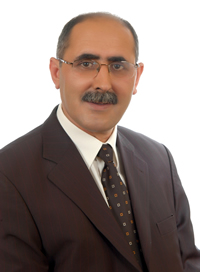
FREDY GSTEIGER (2012)

FREDY GSTEIGER (2012)

June 20, 2012 disabled comments

Fredy Gsteiger
Diplomatic Correspondent, Swiss Broadcasting Corp., Switzerland;
IPI Board Member

When Hungary joined the European Union it was an extremely welcomed entry. As Hungarian friends living in Switzerland always mentioned, there had been a little bit more openness in their native country compared to elsewhere in the then Warsaw Pact. Hungary, known for its lively discussions, colourful media scene and its cultural alertness – should it all be yesterday’s story? For all of us –for us friends in another small state – it would be extremely sad. We are worried about the recent developments against media freedom. We wonder why a government with such a strong majority in parliament needs such laws that clearly go against press freedom? Is there something this government wants to hide; is there an agenda, which should not be discussed in public? These are serious questions but no good, acceptable answers have been provided from the government in Budapest as of yet. A small country’s major asset cannot by crude power. Its best asset is a positive image. Rulers who don’t care for this image do enormous harm to their country.

Steven M. Ellis

June 20, 2012 disabled comments

Steven M. Ellis
IPI Press Freedom Adviser, Europe and the Americas

Hungary’s cosmetic amendments to its media law may have defused some criticism by the European Union, but the International Press Institute (IPI) and the South and East Europe Media Organisation (SEEMO) welcome news that other international observers remain unsatisfied.

IPI and SEEMO join the United Nations’ Human Rights Council’s special rapporteur on freedom of expression, Frank La Rue, in his recent conclusions that changes passed last month did not remove concerns that the law could be used to limit press freedom.

“The media legislation still risks generating a climate of self-censorship,” La Rue said Tuesday. “Freedom of the media is an essential foundation of democracy. Hence, every State must ensure that every medium of communication, be it television, radio, press or the Internet, can convey diverse opinions, including those that shock, offend or disturb.”

During a visit to Hungary, La Rue specifically pointed to the law’s prescription of media content based on vague concepts, and insufficient guarantees to ensure the independence and impartiality of the regulatory body empowered to apply the law. He also highlighted excessive fines and other administrative sanctions that can be imposed on media; the law’s broad scope regulating all types of media, including the press and the Internet; registration requirements for the operation of media service providers; and the lack of sufficient protection of journalistic sources.

La Rue’s concerns follow similar criticism by Organization for Security and Co-operation in Europe’s Representative on Freedom of the Media, Dunja Mijatovic, who said following the amendments last month that the law “can still be misused to curb alternative and differing voices in Hungary.”

Given Hungarian Prime Minister Viktor Orbán’s stated desire to reform his country’s Constitution, which could have strong implications on the right to freedom of opinion and expression, IPI and SEEMO are pleased that observers are continuing to pressure Hungary to conform with international human rights standards.

A flourishing, diverse, critical media is a cornerstone of any healthy democracy. The fundamental values underpinning the EU, including the right to freedom of expression, provide benchmarks for evaluating the admission of new members. Such evaluation would mean little if states can discard their commitments to those values upon joining the EU.

IPI and SEEMO therefore renew their call on Hungary to bring its media law in line with those values, and to respect the freedom of the press. Steven M. Ellis

IPI Press Freedom Adviser, Europe and the Americas

All information and reference, which are contained in this webpage, were compiled after best knowledge and examined with greatest possible care. This disclaimer informs readers / users of the web and information that the views, thoughts, and opinions expressed in an interview by the interview partner or in a statement by the author belong solely to the interview partner / author and do not necessarily reflect the official policy or position of the South East Europe Media Organisation (SEEMO) Assumptions made within an interview-analysis are not reflective of the position of SEEMO. The visitors / users of the SEEMO webpage should take all steps necessary to ascertain that information you receive from SEEMO is correct. We ask every user to check references, double-check information from additional independent sources. SEEMO assumes no responsibility or liability for any errors or omissions, or for the results obtained from the use of information published on the SEEMO website / SEEMO partners website.

Dr. Pál Eötvös

June 20, 2012 disabled comments

Dr. Pál Eötvös
President,
The Association of Hungarian Journalists (MÚOSZ)

The new Hungarian media legislation, presented in June 2010 and passed without relevant professional and social conciliation, according to the opinion of the Association of Hungarian Journalists (MÚOSZ), violates the democratic public opinion and is restrictive for freedom of expression in terms of its content and the process of its preparation too. We have expressed our counter-arguments for the legislator by a number of open letters, announcements and submissions to the constitutional court as well.

The composition of the leading authority bodies responsible for overseeing the media regulation guarantees the exclusive influence and control of the governing power over the media. Our submission to the constitutional court, among other proposals, initiates the correction of this monolithic structure. Based on a recent announcement of the constitutional court, we are hoping that we can learn about the results of the submission by the end of the year.

The features of the new media legislation, extended to the online and print private media outlets, representing a duality of strict sanctions and obscure norms (the so called ‘gum-paragraphs’), are facilitating self-censorship by establishing legal uncertainty, and they might significantly diminish freedom of Hungarian press. One of the latest modifications of the media legislation further facilitates this risk by qualifying press penalties as public dues, to be paid obligatorily even if the decision of the media council or media authority is debated on the court by the fined media outlet.

Protesting against the drastic way of the public service broadcasting company’s reorganisation in the past few weeks, in particular attracting attention to the withheld exposition of the arrangement’s professional background and the imprudent human resources strategy of the multitudinous layoffs, we released an announcement expressing our solidarity with the affected journalists, for whom the MÚOSZ, besides the moral support, offers legal representation too.

The Association of Hungarian Journalists (MÚOSZ), established in 1946, is the largest and oldest independent organization of professional journalists in Hungary. MÚOSZ enhances freedom of press and upholds the morals and traditions of ethical journalism. The Association is a full member of the International Federation of Journalists.

All information and reference, which are contained in this webpage, were compiled after best knowledge and examined with greatest possible care. This disclaimer informs readers / users of the web and information that the views, thoughts, and opinions expressed in an interview by the interview partner or in a statement by the author belong solely to the interview partner / author and do not necessarily reflect the official policy or position of the South East Europe Media Organisation (SEEMO) Assumptions made within an interview-analysis are not reflective of the position of SEEMO. The visitors / users of the SEEMO webpage should take all steps necessary to ascertain that information you receive from SEEMO is correct. We ask every user to check references, double-check information from additional independent sources. SEEMO assumes no responsibility or liability for any errors or omissions, or for the results obtained from the use of information published on the SEEMO website / SEEMO partners website.

Milena Dimitrova

June 20, 2012 disabled comments

Milena Dimitrova
Bulgarian journalist;
SEEMO Board member

It untied the hands of the government to sue and to pursue journalists without anyone having complained of slander, insult or having been affected by them. It has been a long time since our humanity has seen such a rude bridle of the press. Even more disturbing is that this attack on freedom of expression occurred in the European Union – the territory of the oldest and the most strictly observed democracy in the world. Moreover, it occurred just as Hungary took over the EU presidency.

Ostensibly, as a consequence of the economic crisis, the media situations in Italy, Slovakia and other countries are in fact as a result of ugly political pressures. Combined with the total commercialisation of television and magazines – claiming they are objective – this not only indicates that freedom of speech is in danger, but also that it has been less and less respected as the mother of all freedoms.

All information and reference, which are contained in this webpage, were compiled after best knowledge and examined with greatest possible care. This disclaimer informs readers / users of the web and information that the views, thoughts, and opinions expressed in an interview by the interview partner or in a statement by the author belong solely to the interview partner / author and do not necessarily reflect the official policy or position of the South East Europe Media Organisation (SEEMO) Assumptions made within an interview-analysis are not reflective of the position of SEEMO. The visitors / users of the SEEMO webpage should take all steps necessary to ascertain that information you receive from SEEMO is correct. We ask every user to check references, double-check information from additional independent sources. SEEMO assumes no responsibility or liability for any errors or omissions, or for the results obtained from the use of information published on the SEEMO website / SEEMO partners website.

Fredy Gsteiger

June 20, 2012 disabled comments

Fredy Gsteiger
Diplomatic Correspondent, Swiss Broadcasting Corp., Switzerland;
IPI Board Member

Modern-day Turkey is a success story. There’s no doubt about that. A country at the crossroads between Europe, the Middle East and Africa. a democratic country, a free society. A model even for – hopefully – emerging democracies in Tunisia, Egypt… But now all of a sudden, these worries caused by the Turkish government. These measures and misbehaviour in regard to the freedom of the press and the journalists: why does a strong government think it needs to do that? And why isn’t it wise enough to realise how much harm it does to the perception of Turkey, not only in Europe, but also in its eastern and southern neighbourhoods? Young democratic Egyptians, Syrians and Iranians would like to admire Turkey for its achievements. But can they any longer? A country, a government that fiddles with press freedom can never truly and convincingly be a model, cannot be a respected negotiator, cannot be a widely accepted go-between. And, of course, cannot be a member of the EU.

All information and reference, which are contained in this webpage, were compiled after best knowledge and examined with greatest possible care. This disclaimer informs readers / users of the web and information that the views, thoughts, and opinions expressed in an interview by the interview partner or in a statement by the author belong solely to the interview partner / author and do not necessarily reflect the official policy or position of the South East Europe Media Organisation (SEEMO) Assumptions made within an interview-analysis are not reflective of the position of SEEMO. The visitors / users of the SEEMO webpage should take all steps necessary to ascertain that information you receive from SEEMO is correct. We ask every user to check references, double-check information from additional independent sources. SEEMO assumes no responsibility or liability for any errors or omissions, or for the results obtained from the use of information published on the SEEMO website / SEEMO partners website.

Boris Bergant 1

June 20, 2012 disabled comments

Boris Bergant
Former Deputy Director RTV Slovenija, Ljublana;
Former EBU Deputy President;
SEEMO Board President

Press freedom is indivisible as a whole – in content and geography. Although this is a part of universally agreed upon, endorsed and legally sanctioned human rights, there exists no once and for all victory.
Nowadays, we are facing a number of new obstacles that are working against free and unbiased journalism and media. We can only fight against such obstacles with common efforts, united in solidarity and transborder in approach. Against closedness we can offer openess, transparency and enthusiasm.
So we continue to act in the case of Hungary where we are supporting the matter of media freedoms by all sorts of awareness campaigns, including a SEEMO website devoted specifically to systematically collecting all of the relevant information about the state of affairs in the media environment and offering a permanent platform for dialogue about the given arguments.
Currently, SEEMO is introducing a similar website about Turkey, a country that is a newly emerging European power with a growing population and economy. Turkey offers unlimited talents and potential yet these positive aspects are accompanied by a long history of differing experinces in terms of democracy and obstruction.
We wish to support the process of democratisation in Turkey, as well as the European perspective, by closely monitoring the area of media freedom.
It is a core activity of SEEMO, and an invitation that we extend to everyone,– to improve the current situation and secure a beter future.

All information and reference, which are contained in this webpage, were compiled after best knowledge and examined with greatest possible care. This disclaimer informs readers / users of the web and information that the views, thoughts, and opinions expressed in an interview by the interview partner or in a statement by the author belong solely to the interview partner / author and do not necessarily reflect the official policy or position of the South East Europe Media Organisation (SEEMO) Assumptions made within an interview-analysis are not reflective of the position of SEEMO. The visitors / users of the SEEMO webpage should take all steps necessary to ascertain that information you receive from SEEMO is correct. We ask every user to check references, double-check information from additional independent sources. SEEMO assumes no responsibility or liability for any errors or omissions, or for the results obtained from the use of information published on the SEEMO website / SEEMO partners website.

Agron Bajrami

June 20, 2012 disabled comments

Agron Bajrami
Editor-in-Chief,
Koha Ditore daily, Pristina

They show that being a member of EU or an aspiring country is not in itself a guarantee that media freedoms will be safeguarded and respected.

On the other hand, these trends expose the intentional ignorance among other members of EU and western world, who, with their silence, seem to be happy to sacrifice media freedoms for whatever political calculations.

Finally, these negative trends in Hungary and Turkey give a very bad example to all other EU aspiring countries of South East Europe, by providing our local authorities throughout our region justification for limiting and infringing the free speech and freedom of the media.

It is therefore instrumental to see a unified and unequivocal response against these trends, so that we prevent the further downfall of media freedoms, which is always linked with the downfall of other human right freedoms, as well.

Instead of waiting for an unlikely positive change, Europe should use its leverage on these two countries and act with determination to reverse the trends in favor of what we these days call Western and Democratic values of free speech and media

All information and reference, which are contained in this webpage, were compiled after best knowledge and examined with greatest possible care. This disclaimer informs readers / users of the web and information that the views, thoughts, and opinions expressed in an interview by the interview partner or in a statement by the author belong solely to the interview partner / author and do not necessarily reflect the official policy or position of the South East Europe Media Organisation (SEEMO) Assumptions made within an interview-analysis are not reflective of the position of SEEMO. The visitors / users of the SEEMO webpage should take all steps necessary to ascertain that information you receive from SEEMO is correct. We ask every user to check references, double-check information from additional independent sources. SEEMO assumes no responsibility or liability for any errors or omissions, or for the results obtained from the use of information published on the SEEMO website / SEEMO partners website.

Necati Abay

June 19, 2012 disabled comments

Necati Abay,
Turkey

I was working as a writer-editor in Atilim newspaper. On the 4 February 2003, I was taken into custody with other workers of Atilim newspaper and later released. While in custody, one of the police officers threatened me: “You’ll be in trouble if you publish news about bombings in Atilim newspaper again. We can have you arrested any time. It’s us who decide the time of the arrest.”
It was also a kind of censorship imposition. I replied: “We stand for freedom of the press and we will publish any news that are worthy, and we will do it like any other newspaper”.
Two months later, on the 13 April 2003, I was detained and my computer was taken away. They weren’t able to find any crime element after a house search. I was taken to the anti-terror department of Istanbul Police Headquarters in Vatan, and charged as a “coordinator of bombing acts in Istanbul”. I rejected the charge. I said that it was false and a conspiracy.
After the 4 day long detention, I was handed over to the Public Prosecutor’s Office. The Prosecutor’s Office sent me to the Court of Inquiry (a military institution). It seems that they did not take the charges against me seriously, so I was released.
However, after a few hours, I was arrested again because of a Prosecutor’s appeal that was issued. For a long time neither me nor my lawyer could see the case records.
The indictment were shown on the 27 March, 2003. What the indictment basically stated was that I was included in the outlawed organization operation.
This was an already seen scheme by the state politicians. They targeted journalists, writers and intellectuals who were then said to be included in the outlawed organization operations. Ahmet Şık and Nedim Şener were also arrested under the charges of being ‘members of Ergenekon terrorist organization’. Similarly, I was accused of being the person in charge for 3 terrorist cells that performed bombing acts.
The threat made by a policeman on the 4 February 2003 became reality: “ If you make bombing news, we will have you arrested Necati Abay”.
The person who blamed me for the conspiracy was a man I had never met nor seen before. I later found out he was taken into custody 4 nights before me, and after being tortured he was forced to sign a document, prepared and written by the police.
Later, during the trial and in a petition he wrote to the Prosecutor, this man stated that he didn’t know who Necati Abay was. He also said it was impossible to make a claim about a person he never met and that he was forced to sign the statement given to him during torture.
In his appeal sent to State Security Court on the 17 April, 2003, Ali Gul Alkaya said: “While I was in the police department, I was given some pills and then forced to sign the statement”.
In the forged document, it can be seen that the police added 4 sentences about me under the name of Ali Gul Alkaya. All of their indictments were based solely on this.
The part written about me in the 21 page long indictment:
“4-NECATI ABAY:
As can be understood from the statement given by defendant Ali Gul Alkaya on the 12 April 2004 in the police department, until the arrest of this person, there were 3 terrorist cell houses of MLKP organization in Istanbul; in the First Cell house he, Hatice Duman and Ali Riza Kaplan, in the Second Cell house Tahir Lacin, Gulizar Erman with Zeynep code name, and Sami Ozbil with Uzun code name, in the Third cell house Erkan Ozdemir and Ahmet Dogan were performing some activities. The responsible for the existence of these 3 cell houses in Istanbul is the defendant Necati Abay, who was providing communication among these 3 cell houses. Using the code name ‘Emre’ in order to keep his secrecy in the MLKP terrorist organization, the defendant Necati Abay was comitting crime by attempting to amend, change or abolish the whole, or a part of the Turkish Republic Constitution,”
The part of the indictment about me was interjected by the very same police who created that statement, and it is based on the forged document that Ali Gul Alkaya signed by force during his torture.
We cannot say that Ali Gul Alkaya revealed my secret by accusing me, because I don’t know him and he doesn’t know me. This document is proof of a police-based conspiracy, and the entire indictment against me was based on a forged document.
Six months after my arrest, on the 3 October 2003, my court hearing was held in the State Security Court. I pleaded to be released and the court released me with the condition of a pending trial. I was very happy.
In spite of the fact that I was on trial and could have been sentenced for life in solitary confinement, the judges didn’t believe the claims of ‘being the coordinator of bombing acts’. My pending trial continued for the next 8 years.
I’d like to mention that because the press unions who are against the system didn’t do anything about my situation at the time, we founded the Platform for Solidarity with Imprisoned Journalists (TGDP). Since then I have been the spokesman of TGDP.
During the 8 years of my pending trial, no evidence was found against me. I was charged with groundless claims, so it is logical that non-existing evidence cannot be found.
After 8 years, on the 4 May, 2011, in a hearing held at the 12 Criminal Court, I was sentenced to 18 years and 9 months in prison. I was surprised by the verdict, since I had been expecting an acquittal.
In the Court’s decision, this is written about me: “Even with the opinion that Necati Abay is the member of a terrorist group and commanded in the outlawed MLKP organization; it is understood that the direct relation and participation of the defendant to the crimes within the context of dossier cannot be ascertained, the defendant is within the meaning of 765 numbered, 168/1 Article of the Turkish Criminal Code…instead of life sentence, he is to be sentences to 18 years 9 months…”
As can be seen in the Court’s decision, there isn’t any evidence about me in this case, so my sentence is based on the belief.
There is no evidence, just belief. This is why I think the decision of the special authorized High Criminal Court is not judicial, but political. This is one of the typical examples of lawlessness in High Criminal Court. After the verdict of the Court, I said that this decision would be discussed a lot, and it is.
In many newspapers, journals and TV programs, this particular Court decision has been discussed. Osman Can talked about it in his column in Star newspaper, Prof. Dr Dogu Ergil in his column in Bugun newspaper, Ferai Tinc in her column in Hurriyet, and Aydin Engin in T24 web page; they all reported about it.
In Cumhuriyet newspaper, it became the second headline on the front page. I was invited to the editorial office program of Rusen Cakir in NTV, and we discussed the decision. It was also talked about in the press freedom program of Ertugrul Mavioglu in IMC TV, in which I also participated.
Because of my sentence, Human Rights Association awarded me with the Prize of Aysenur Zarakolu Freedom of Thought. On 9 June 2011, I was invited to the Swedish Parliament to give a speech about the freedom of thought and expression in Turkey. Furthermore, a petition drive has been started with the Ankara Thought Freedom Initiative, which includes 42 intellectuals.
We tried to dispute with the decision, and appealed to the supreme court. I’d like to underline that even though the court sentenced my verdict, it didn’t ask for my arrest. I hope the decision given by the 12th High Criminal Court will be annulled by the Supreme Court.
I think this decision is a sentence against the freedom of thought and expression, people’s right to receive the news, press freedom, the Atilim newspaper I was working in that time, and the Platform for Solidarity with the Imprisoned Journalists. In our country, freedom of thought and expression and freedom of press are under double pressure.
The first pressure is by the anti-terror law (TMY) which is called anti-society law by social dissidents. Until we oppose to TMY, and ask for the removal of TMY, we won’t be able to defend the freedom of expression and thought. The latter one, as seen in my situation, is the lawlessness of High Criminal Courts.
Necati Abay
——
The Platform for Solidarity with the Imprisoned Journalists

All information and reference, which are contained in this webpage, were compiled after best knowledge and examined with greatest possible care. This disclaimer informs readers / users of the web and information that the views, thoughts, and opinions expressed in an interview by the interview partner or in a statement by the author belong solely to the interview partner / author and do not necessarily reflect the official policy or position of the South East Europe Media Organisation (SEEMO) Assumptions made within an interview-analysis are not reflective of the position of SEEMO. The visitors / users of the SEEMO webpage should take all steps necessary to ascertain that information you receive from SEEMO is correct. We ask every user to check references, double-check information from additional independent sources. SEEMO assumes no responsibility or liability for any errors or omissions, or for the results obtained from the use of information published on the SEEMO website / SEEMO partners website.

20/12/2011: BOSNIA AND HERZEGOVINA – SEEMO CALLS ON PRESIDENT OF REPUBLIKA SRPSKA (BOSNIA AND HERZEGOVINA) TO RESPECT AND SUPPORT COUNTRY’S PUBLIC BROADCASTERS

December 20, 2011 disabled comments

Vienna, 20/12/2011

The Vienna-based South East Europe Media Organisation (SEEMO), an affiliate of the International Press Institute (IPI), is extremely concerned at the latest declarations by Milorad Dodik, president of the Serb-controlled entity in Bosnia and Herzegovina, Republika Srpska. On 13 December 2011, the president said that the Public Broadcasting Service of Bosnia and Herzegovina (BHRT) should be abolished. He stated that his priority was the functioning of the Banja-Luka based Radio and Television of Republika Srpska /RTRS/.

Claiming that the Sarajevo-based public broadcaster had been imposed on Republika Srpska, Dodik said it was not in the interest of the citizens to finance it and said that commercial media should be supported – rather than a “monster that lives in Sarajevo”.

SEEMO considers Dodik’s comments a direct attack on media freedom. BHRT has been critical of his policies.

Public broadcasting in Bosnia and Herzegovina has experienced serious problems for several years. In fact, there are several public broadcasters – a reflection of the country’s political division into two entities: Serb-controlled Republika Srpska and the Federation, controlled by Bosniaks and Croats. Under the laws adopted from 2005 to 2008, the Bosnia and Herzegovina public service broadcasting system consists of three broadcasters: BHRT, which is a country-wide service, and two separate-entity public broadcasters, Radio and Television of the Federation of Bosnia and Herzegovina (Radio-Televizija Federacije BiH -RTFBiH), for the Federation entity, and Radio and Television of Republika Srpska (Radio- Televizija Republike Srpske- RTRS) for Republika Srpska.

The public broadcasters, designed to promote cohesion and tolerance, tend to behave as rivals. They have been used and abused by different political parties, generally organised along ethnic lines. The country-wide public broadcaster BHRT has been especially targeted by political parties.

The case of Mehmed Agovic, former BHRT director, has been widely debated. Agovic was dismissed and reinstated three times, following court decisions. In October 2011, he was dismissed again. However, the Helsinki Committee for Human Rights in Bosnia and Herzegovina raised doubts about the full respect of Agovic’s human rights during the process.

SEEMO believes public broadcasters should be strengthened, professionalised and freed of political and other forms of pressure. Bosnia and Herzegovina needs a country-wide broadcaster, and BHRT plays that role.

“The public has a fundamental right to be informed, and politicians must understand that,” said SEEMO Secretary-General Oliver Vujovic. “I am deeply concerned about President Dodik’s comments and urge him to reconsider them and to guarantee a free working environment for all public broadcasters in Bosnia and Herzegovina. Democracy is based on informed public choices. I also call on the authorities in Sarajevo to investigate whether or not Mehmed Agovic’ s human rights were violated.”

19/12/2011: KOSOVO – SEEMO CONDEMNS PHYSICAL ATTACK ON RADIO TELEVISION KOSOVO (RTK) TV CREW

December 19, 2011 disabled comments

Vienna, 19/12/2011

The Vienna-based South East Europe Media Organisation (SEEMO), an affiliate of the International Press Institute (IPI), condemns the attack against Radio Television Kosovo (RTK) journalist Arta Avdiu and cameraman Blerim Rudari. On 13 December 2011, the Kosovo public broadcaster team was filming for a report on the use of municipal property in Lipljan/Gadime when a man started insulting and threatening them. The attacker tried to physically attack the journalist and the cameraman, as well as destroy the camera.

According to the Association of Kosovo Professional Journalists (AGPK), in 2011 there were 32 attempts to prevent journalists from doing their work.

“I call on the Pristina authorities to investigate this latest incident in Gadime,” SEEMO Secretary-General Oliver Vujovic said. “The media should be able to work freely everywhere in Kosovo.”