14/07/2011: Croatia: Joint Letter by EFJ-SEEMO-Croatian Assoc. of Journalist’s Concerning Dusan Miljus

14/07/2011: Croatia: Joint Letter by EFJ-SEEMO-Croatian Assoc. of Journalist’s Concerning Dusan Miljus

July 14, 2011 disabled comments

The European Federation of Journalists (EFJ), the Vienna-based South East Europe Media Organisation (SEEMO), an affiliate of the International Press Institute (IPI) and the Croatian Journalists’ Association (HND) express their joint concern over the fact that three years after the brutal beating of the Croatian journalist, Dusan Miljus, the police have been unable to find the perpetrators or those who ordered the attack.

In addition, the circumstances surrounding the 2008 assassination of high-profile Croatian journalist and editor of the weekly Nacional, Ivo Pukanic, have not been completely clarified. While those who planted the bomb which killed Pukanic and Niko Franjic, marketing manager of Nacional, were indicted, the masterminds behind their assassination were never found.

The letter:

Vienna, Zagreb, Brussels, 14 July 2011

We are writing regarding the unsolved cases of attacks against journalists in Croatia.

The Vienna-based South East Europe Media Organisation (SEEMO), an affiliate of the International Press Institute (IPI), the Croatian Journalists’ Association (HND; an AEJ partner), and the European Federation of Journalists (EFJ) express their joint concern over the fact that three years after the brutal beating of the Croatian journalist, Dusan Miljus, the police have been unable to find the perpetrators or those who ordered the attack.

Miljus, an investigative reporter with the Zagreb-based daily newspaper Jutarnji List, was severely beaten on 2 July 2008. Two individuals with helmets attacked him with baseball bats. Miljus suffered a brain concussion and a broken arm.

After his recovery, Miljus was assigned round-the-clock police protection. Since then, police authorities have promised a quick solution to the case. Croatia’s minister of the interior, Tomisalv Karamarko, reiterated on several occasions that the police were on the right track. In fact, in December 2010, 12 people were detained for their alleged involvement in the attack. Ten of them were released and two were kept in detention for six months. In June 2011, the Public Prosecutor withdrew all charges against the two detained individuals due to lack of evidence.

As a result, three years after the attack, the investigation is back to square one.

SEEMO, HND and EFJ maintain that attacks on journalists cannot go unpunished. The three organisations urge the Public Prosecutor and the police to step up their efforts to track down those who attacked Miljus as well as those who ordered the attack.

In addition, the circumstances surrounding the 2008 assassination of high-profile Croatian journalist and editor of the weekly Nacional, Ivo Pukanic, have not been completely clarified. While those who planted the bomb which killed Pukanic and Niko Franjic, marketing manager of Nacional, were indicted, the masterminds behind their assassination were never found.

As a future member state of the European Union, Croatia should step up efforts to demonstrate that attacks on journalists will not go unpunished.

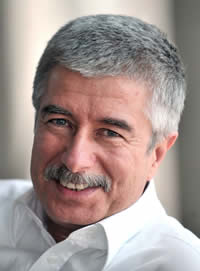
Oliver Vujovic, Secretary General, SEEMO
Zdenko Duka, President, HND
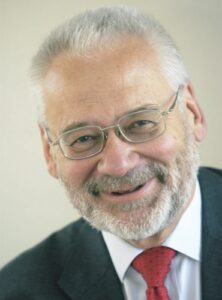
Arne König, President, EFJ

Paula Schriefer

June 20, 2011 disabled comments

Paula Schriefer
Vice President for Global Programs
Freedom Housebr

December 02, 2011 Last week I joined a delegation of leading freedom of expression organizations in Hungary to assess the impact of much criticized media legislation that went into effect in January. Discussions with dozens of journalists, media officials, regulation authorities, and government representatives validated the serious concerns expressed by international press freedom experts since the law was passed last December.

The new media legislation has many troubling features. Not only does the legislation put in place a new regulatory structure with excessively broad authority and questionable independence, it also provides limited possibilities for judicial review of the decisions made by that body, which has the ability to issue or suspend licenses, monitor media content, and issue fines and levies in cases of content violations

At the same time, it provides overly broad language on prohibited content. The law bans content that insults “human dignity” or that discriminates against “any majority” or “any church or religious group.” The legislation extends registration requirements to print and online media, a step that sharply contrasts with internationally accepted norms, and greatly expands the circumstances under which journalists can be forced to reveal their sources. Finally, the new regulatory regime has developed a model of co-regulation that amounts to outsourcing censorship to media owners in exchange for immunity from fines, which can otherwise be levied up to 2 million forints (approximately $950,000) for radio and television outlets.

As troubling as are the legislation’s implications for press freedom is the government’s arrogance in responding to widespread international criticism. Since the legislation was passed, detailed criticisms have been addressed to the Hungarian government by an impressive roster of neutral authorities: the Council of Europe, the European Parliament, the Media Representative of the OSCE, the United Nations special rapporteur on freedom of expression, and many leading press freedom and human rights organizations.

Yet rather than engaging in any sincere reflection regarding the concerns of domestic and international experts, the government’s response has been to dismiss criticism as exaggerated and politically motivated. At the same time, the government of Prime Minister Viktor Orbán has spent countless hours and reams of paper justifying every questionable aspect of the law by searching out and documenting similar examples in other European countries. The examples range from objectionable laws that should never have been passed in the first place to legitimate laws that have been taken out of context and invoked in misleading ways.

Regardless of whether the failings in other countries are valid, the Hungarian legislation represents a collection of laws that when taken as a whole represents a substantial threat to media diversity and the ability of the media to play its essential watchdog function. Journalists we spoke with, aside from those who take a pro-government line, claim that they are already engaging in self-censorship to avoid legal penalties or punitive actions by media owners who have agreed to the broad content restrictions. In an already tough economic environment, these journalists fear that few will be brave or financially secure enough to challenge the new laws. A cowed media is no asset to any democratic system, including one like Hungary, where free institutions generally prevail.

The damage to Hungarian democracy wrought by the Fidesz-led government is not limited to the new press regulation regime. Orbán’s Fidesz government also rewrote the constitution, pushed through a controversial law on religions, and passed a law limiting the authority of the Constitutional Court. Such measures, enacted with little genuine public consultation, are particularly disheartening given Hungary’s status as a model post-Communist democracy. For two decades Freedom House has been documenting the hitherto impressive progress of Hungary since its dramatic break from Communism—progress, it should be emphasized, that was unquestionably advanced by the previous Fidesz government. Since breaking free from the Communist bloc in 1989, Hungary has emerged as a consolidated democracy, rising to an impressive status of “Free” in bothFreedom in the World, our annual survey of political rights and civil liberties, and in Freedom of the Press, the companion survey of media freedom.

Unfortunately, Viktor Orbán, who once fought for democratic principles against an oppressive communist regime, seems to have succumbed to the toxic polarization of Hungarian politics by adopting a winner take all approach to governing. Having returned to power with a resounding two-thirds parliamentary majority following eight years of ineffective and corrupt Socialist rule, he had an unprecedented opportunity to reinvigorate Hungary’s sagging economy and restore public faith in the democratic process. So far, he and his party seem more focused on maintaining their stranglehold on power than on addressing the country’s numerous ills. The months ahead will show how Hungarian democracy will weather the storm.

All information and reference, which are contained in this webpage, were compiled after best knowledge and examined with greatest possible care. This disclaimer informs readers / users of the web and information that the views, thoughts, and opinions expressed in an interview by the interview partner or in a statement by the author belong solely to the interview partner / author and do not necessarily reflect the official policy or position of the South East Europe Media Organisation (SEEMO) Assumptions made within an interview-analysis are not reflective of the position of SEEMO. The visitors / users of the SEEMO webpage should take all steps necessary to ascertain that information you receive from SEEMO is correct. We ask every user to check references, double-check information from additional independent sources. SEEMO assumes no responsibility or liability for any errors or omissions, or for the results obtained from the use of information published on the SEEMO website / SEEMO partners website.

Faruk Bildirici

June 20, 2011 disabled comments

He started journalism at 1980’s, in the days of military coup. He worked at Cumhuriyet for 12 years where he worked as correspondent for education, estimation and politics and then as news manager. He has been working for Hürriyet since November 1992. He did administrative duties as well as field duties. He wrote articles for weekly Tempo magazine. He did a TV show called “Çuvaldız” for TV8. After that he made several political TV shows. He nows weekly writes “Puzzle Portraits” and he is the ombudsman of Hürriyet. He has nine books which are mostly biography.

Faruk Bildirici,
Turkey

I feel like I have a splinter in my finger. I cannot see it but my fingers start to ache each time I touch the keyboard. This is the kind of ache, which comes from deep inside, hitting my heart and extending to my brain.
I move my fingers off the keys and start thinking about them. I can touch them, I can type. However, not just one, five or ten but a total of 65 colleagues of mine cannot touch those keys. They have been in jail for years and they cannot write anymore. Remembering them is giving me a deep sorrow.
Certainly I am not the journalist in Turkey who is sharing this sorrow. Professional (occupational) organizations have gathered together and established the “Freedom for Journalists” Platform. Journalists and writers have hit the streets after a very long time in this country. Last March, several marches were organized in a number of cities; primarily in Ankara and Istanbul. The hearings of prosecuted journalists had been followed closely to support them and they had been visited in jail. Indeed an “Arrested Daily Newspaper” consisting of articles sent by those imprisoned journalists was published, which was very rich in content and could hardly be found in any other country. (*)
With all these attempts, the release of journalists under arrest and changes in the regulations hindering freedom of communication were demanded. Every protest and attempt was a reminder to the Turkish people: ” Where there is free press there is a free society”.
This reminder was not for nothing. Additionally, we are not worried because journalists are being arrested while performing their profession and kept in prison for many years. We are concerned because of the government’s (ruling party’s) approach to the media and its practices. We are aware of the fact that the structural problems of media, its ownership structure and the general perception of journalism have been laying the groundwork for the ruling party’s plans. What we have been going through today reminds me of the one party period. I do not know of any other text that explains (documents) the single party system’s perception of journalism as clearly as this. I found this text in Emine Usakligil’s book “My Republic”. In the book there was a quote from the CHP Statute. The 160th article titled “Rules that party member journalists should abide” is as follows:
“Articles in newspapers and magazines owned by party members and their publications shall be reviewed in accordance with the principles of the party. Meetings are organized with party member journalists, magazine owners and authors to reach consensus in this direction. Party members, cannot make publish publications in their newspapers, magazines and press against the party program and statute, general framework of internal and external politics and higher interests of the state. “
This was the ruling authority’s understanding of press during the period after Ataturk passed away: Newspapers and journalism that would stem from internal and external politics within the framework of the party program. This type of journalism was in effect to a very large extend. Majority of the media bosses were already supporters of CHP and they had internalized the policies of the ruling authority. Newspapers were bulletins captioning the words of the National Chief and journalists were the members of the choir praising/ flattering the rulers of the country.
In any case, those who would not disagree with this choir had no chance of survival. The iron fist of the government was ready to hit anyone who would dare to criticize. The single party government deemed all forms of pressure legitimate be it censor, jail, closing newspapers and appropriation.
We have to admit that those who ruled Turkey at that time would not talk about democracy. Nobody would claim that there existed free press and journalists free to write as they will. Everyone was aware of the fact that newspapers were guarding the system rather than reality.
Although press has become more versatile and turned into media through radios, TVs and internet sites in today’s World, it is still hard to say that it is well functioning as a guardian of reality. On top of that, if all the castles of media have been captured by AKP, it is not because the Government has made it a priority to fight against the media. When AKP was first elected as ruling party, there had already been serious structural problems in media. The establishment of Tayyip Erdogan’s political party coincided with the collapse of central parties and this helped the rise of AKP. During the same period media had serious problems.
The primary structural problem of media is the ownership structure. Starting from 1980s those newspaper owners who would only deal with publishing had to draw away from the sector one after the other. Businessmen who had investments in various sectors filled that gap. For these new owners newspapers were no different from a bank or insurance company. They would view press as profit and loss account rather than a public duty.
From a different perspective, newspapers could be considered to get stronger when they became part of larger holding companies and more capable of rising up against certain power groups within society. However, this was not the case. On the contrary, newspapers became weaker against those groups and especially the political power. Although these businessmen had good intentions they also had certain weaknesses against the political power. The newspapers were made to pay for mistakes of group companies.
This structural change of ownership in media coincided with the period of technological transformation. In a short while, the new type media owners also became owners of radios, TV channels and ultimately internet sites. Certain bosses were not satisfied with just one newspaper and TV channel which led to formation of media cartels.
While media’s new structure took its final form in 1990s, it gained new functions other than conveying the truth to the society. On one hand it started to tackle structuring of society and social engineering where on the other hand it became an arena where predominant ideologies were reproduced. While concepts like democracy, human rights, women rights were under emphasized even the bloody war in southeast that mainly military but security forces all together have pursued was not investigated. New media as a secret player of power games has also supported military’s games behind the curtain.
The economy pages started to pay more attention to businessmen rather than news that would impact larger community and issues related to trade unions and labor. They became a part of home advertising and public relations sectors. The primary concern was to stimulate consumption and praise achievements of businessmen. These new approaches brought along an elitist (selective) understanding of journalism. This understanding of journalism resembled the “site journalism” concept of the US in 1930s and it was stuck in Istanbul ; distant from the Turkish Society, could not get the pulse of the Turkish people and keep up with the changes.
Although the presence of deeper state had been questioned after a certain car accident in Susurluk , also known as the Susurluk Accident, these efforts did not last long. With the journalism structure of that period it could not continue for a long while anyway. The central media also became a part of the February 28th Period, which followed that. They were not expected to act in a different manner either. The media, which had always been a part of deeper state and spokesperson of their illegitimate activities, had no intentions to struggle against the ruling power. They could not stand up against the army’s pressure during that period as well.
Tayyip Erdogan has right at a certain point. The media had not helped him to become the prime minister. On the contrary, he got political power despite the media of that time. He has never forgotten that and never hesitated to express that openly.
” We have sufficient power to fight against the media which considers itself a part of the opposition. We have no fear of ideological attacks. We became the ruling political party while struggling with the media which considered us incapable of governing a village. We got our political from you our people but not the media. We would never be thankful to anyone or assume protection from any party or suppress the opposition using such methods.
Erdogan is a politician whose priority is to empower his political mission and position. Starting from 2002 from the first day he was first elected as the Prime Minister, he started to strive against the media. His purpose was to create his own media.
We can easily say that he has accomplished this goal over the past 9 year period. How could he do that? Through his 3 period, he has been successful in transferring capital to businessmen close to him. One role of those rising businessmen was to contribute to the transformation of media. Some of them founded newspapers, TV channels and radio channels and some acquired existing media organs through various methods.
Owners of those media organs that were not sold had been subject to pressure from the government in an open or covert manner. Tax penalties worth billions of dollars were used as a tool to serve this purpose. Prime Minister Erdogan was not satisfied with this and targeted writers and journalists directly.
Correspondents and photo correspondence who are directly covering ruling party are limited in activity. Correspondents who wrote news that Prime Minister Tayyip Erdogan is not happy with, lost their accreditations. The correspondents and columnists who are going to cover President and prime minister are chosen by themselves.
But real transformation has started in 2008 with the Ergenekon Case and following cases Ergenekon. This has initially started as cleaning up the “deep state” , “military protection” and anti “coup d’état” attempts. But it turned out to be in short time to be opposition hunting. Gang members with “dark” activities, opposition, journalists, soldiers all of them are combined together and demonstrated as a single organization.
Stoping militaries’ influence on policy making, that had deserved praise in terms of jurisdiction unfortunately became suddenly the law of illegitimacy. Neither democracy developed nor deep states dark activities are enlighten as it was claimed, and responsible of such activities couldn’t be sent to trial. In every occasion “those who try to pull leg of ruling party”..! were all the targeted by the jurisdiction and security forces. It is interestingly prosecutors and judges who are totally dependant to the government were chosen to decide who were acting democratically and who were acting illegally.
This also gave power to the police forces as they have already sided with religious groups. They became the main actor of this witch hunting by modern technological tools at phone and environment listening operations. Prior arresting people, they served the recordings of these listening to the papers which have close publication to government in order to diminish credibility of such people. These people are announced guilty with no juridical decision in front of public opinion.
During these operations, too many journalist have also been put in the jail. Although there was no evidence that they are member of terrorist organization. On one hand They are accused of being a member but all the questions at the prosecutors’ office were about the books and news that they have written. Journalistic activities were considered as crime, while “vilifying the government” was the biggest crime of all!
People put in jail did not have a chance to learn their “crime” for years. The accusations became tool to keep people in the jail for long time while they had no substantial content but full of many unrelated papers.
Hanefi Avci, who formerly was chief of police and also commonly known to have tortured leftist groups as well as has devoted his life to struggle with left organizations also has been accused of being member of the same terrorist organization. Even Avci couldn’t defend himself and he is in jail for more than one year. The government that can not tolerate any opposition made police to stop protestors like environmentalist, jobless workers, students defending rights, Kurdish protestors by using force.
In this environment, government did not only pushed back the media owners but also scared journalists. As a result, there is a division between journalists. One side praises al the activities of the government as they were their spokesperson while other side is hidden in a corner with no power at all. It has also lost its connection with people. We call it “press at the center”
How much democracy can develop here under these conditions and how much media can inform people about the realities? For the moment, I am not very optimistic about the future.
(*) Arrested Daily Newspaper
Turkish journalists syndicate published on 24 July 2011 a newspaper called “Arrested Daily Newspaper”. Arrested 39 colleagues have found chance to write at this “special” newspaper. Headlines of those articles is already very sorrowful. There is a list of writers and their articles below:
Baris Pehlivan: I interviewed my self.
Musa Kurt I have not seen the court yet
Ali Bulus: Defendin pres freedom
Ahmet Sik: This article may disturb you
Soner Yalçin: Am I witness or accused
Miktat Algül: Turkey is surrounded
Tuncay Özkan: being a journalist in opposition after AKP
Mustafa Gök: I’ma arrested in February 2004
Deniz Yildirim: Press is free for who
Nedim Sener: you call Ergenekon Ergenekon. Look you are in Silivri now.
Füsun Erdogan: why are we at jail?
Seyithan Akyüz : Accusation can not change reality?
Vedat Kursun: Being a Kurdish journalist.
Faysal Tunç: Thinker or commando?,
Sedat Senoglu: so we learnt that we were not journalist.
Rohat Emekçi: I’m kept in prison for a tragicomic reason.
Fazil Duygun: I’m in prison for more than 5 months.
Bayram Namaz: Fish on the stall,
Mehmet Yesiltepe: why we should not expect democratization from AKP,
Müyesser Yildiz: the media without syndicate is arrested
Bedri Adanir: Tell them not to shoot the kite
Hatice Duman: why we are in prison
Halit Güdenoglu: we do not know the accusation
Ozan Kilinç: Mazlum is tortured at the age of 160
Suzan Zengin: we should speak loudly about our request to abolish special courts and laws against terror.
Cihan Gün: Article from cell.
Murat Ilhan: “Negari,”
Baris Terkoglu: from which activities journalists are arrested?
O.Baha Okar: Dark side of the punishment. Accusations without evidences but with beliefs.
Sait Çakir: Turkey: open air prison
Mehmet Karabas: Freedom of thinking is changed with the law against terror
Sinan Aygül: One who is scared of you should be like you
Kadri Kaya: Media has societies’ eye and ear function.
Hamdiye Çiftçi: Freedom of press has reached its 103 years while we are kept in prison.
Ahmet Birsin: Democatic Constition will prove that he will not become dictator.
Kenan Karavil: Thoughts have soul.

All information and reference, which are contained in this webpage, were compiled after best knowledge and examined with greatest possible care. This disclaimer informs readers / users of the web and information that the views, thoughts, and opinions expressed in an interview by the interview partner or in a statement by the author belong solely to the interview partner / author and do not necessarily reflect the official policy or position of the South East Europe Media Organisation (SEEMO) Assumptions made within an interview-analysis are not reflective of the position of SEEMO. The visitors / users of the SEEMO webpage should take all steps necessary to ascertain that information you receive from SEEMO is correct. We ask every user to check references, double-check information from additional independent sources. SEEMO assumes no responsibility or liability for any errors or omissions, or for the results obtained from the use of information published on the SEEMO website / SEEMO partners website.

29/12/2010: BELARUS – IPI/SEEMO CONCERNED AT CONTINUED INVESTIGATION AND DETENTION OF BELARUS JOURNALISTS FOLLOWING MASS ARRESTS AND ASSAULT EARLIER THIS MONTH

December 29, 2010 disabled comments

Vienna, 29/12/2010

The International Press Institute (IPI), and its affiliate organisation, the South and East Europe Media Organisation (SEEMO), are alarmed that dozens of journalists arrested in a brutal police crackdown on demonstrations that followed the re-election of President Alexander Lukashenko on 19 December 2010 remain in prison, some of them reportedly in KGB investigation wards.
According to the Belarusian Association of Journalists (BAJ), 24 journalists were arrested in the crackdown, and 21 were physically assaulted.
A number of the arrested journalists have already been sentenced to up to two weeks’ detention. Others remain “under investigation” – some of them in the “KGB ward” of a Belarus prison, according to sources.
Since the crackdown, there have also been raids on critical Belarusian media outlets and equipment has been confiscated, according to the independent website charter97.org.
Among those journalists arrested were Iryna Khalip, a correspondent for the Moscow-based newspaper Novaya Gazeta and a BAJ member. Earlier this month, Khalip received the CEI SEEMO Award for Outstanding Merits in Investigative Journalism.
According to the BAJ website, Khalip was being held in the “KGB investigation ward”. On 21 December 2010, BAJ also reported that Khalip met her lawyer but her parents were not allowed to send her a parcel. The website said she was being treated as a suspect in a criminal case initiated under an article of the Criminal Code relating to “mass disturbances”.
The BAJ website also reported that Natalya Radzina, a BAJ member and editor of charter97.org, was beaten by police in Minsk’s Independence Square on the evening of 19 December 2010 and was later detained when police raided the offices of charter97.org. The website said Radzina was being held in the “investigative isolation ward of [the] KGB (State Security Committee)”, and, like Khalip, was being treated as a suspect under the Criminal Code article related to “mass disturbances.” The website reported today that Radzina is suffering from bleeding from her ears due to being beaten.

Oliver Vujovic, Secretary General of the South and East Europe Media Organisation (SEEMO), said: “We are alarmed at the arrests and jail sentences handed down to journalists. In particular, we are concerned that Natalya Radina, the editor of the website Charter 97, and Irina Khalip, correspondent for the Moscow-based newspaper Novaya Gazeta, remain in detention, at the Minsk detention facility of the Belarusian police. We would like to remind the Belarusian authorities that only a few weeks ago, on 2 December 2010, Iryna Khalip received our CEI SEEMO Investigative Journalism Award.”

Vujovic added: “We are disturbed by the fact that Khalip was forcibly taken by police while on the air with the radio station Echo Moskvy on 20 December 2010. Her husband, presidential candidate Andrei Sannikov, was also arrested. For us, it is important that in Belorussia journalists be able to work independently, professionally and freely, like in other countries.”
IPI Press Freedom Manager Anthony Mills said: “We urge the Belarusian authorities to immediately release all of the journalists and to transparently investigate assaults committed against them. Press freedom is a fundamental human right anywhere in the world, and journalists should be able to do their work without fear of arrest, assault and imprisonment.”

SEEMO Secretary General Oliver Vujovic and IPI Press Freedom Manager Anthony Mills are open to the possibility of visiting Minsk and of meeting with journalists and authorities in connection with the post-election developments.

****For further information, please contact:

Mirjana Milosevic
SEEMO Press Freedom Coordinator
South and East Europe Media Organisation (SEEMO)
E-mail: info@seemo.org
Web: www.seemo.org

Erhard Busek, President of the Institute for the Danube Region and Central Europe, Vienna (2010)

September 15, 2010 disabled comments

Southeast Europe is currently still under construction. This construction is not only dependent on the different Southeast European countries, or even better to say the people living there, but it is also a European challenge.

As made evident this year, I would say that Europe owes a lot to Southeast Europe. Not only European integration but also no visa regime must happen and. this is a responsibility for democracy and for the media.

We can congratulate both the journalists and the media owners who have developed in the right direction. But nothing and no one is perfect.

This is also true for the media in South East Europe. So far, SEEMO has expressed numerous concerns about the way in which journalists and media are treated in public, within the political arena and also concerning the security for the journalists.
Within Europe, it is a common responsibility to guarantee freedom of expression. I am very optimistic that this could happen, but a lot has to be done to create a normal situation in which you can trust that the important role of the media can be carried out in the best way possible for democracy.

My congratulations to SEEMO are connected to the request that the organisation continues on in this same way.

Erhard Busek

Jean Monnet Professor ad personam, President of the Institute for the Danube Region and Central Europe, Coordinator of SECI – Southeast European Cooperative Initiative, Former Special Coordinator of the Stability Pact for South Eastern Europe, former Minister for Science and Research in Austria and former Minister for Education in Austria and Vice-Chancellor of Austria (1991-1995)

Gerhard Pfanzelter, Secretary General, Central European Initiative- CEI (2010)

September 14, 2010 disabled comments

The Central European Initiative (CEI), whose headquarters are based in Trieste, is the oldest and largest regional organisation in Europe. Established in 1989, over the years the CEI has offered a unique framework to foster cooperation among its 18 Member States. Moreover, it has facilitated the dialogue with the European Union, in order to assist the non-EU Member States in moving towards the EU.

The CEI is a trusted and respected partner in the region, fully engaged and committed to provide significant, project-oriented contributions to strengthen the political, economic and social systems of its Member States.

Cooperation in the field of the media is a top CEI priority. Initiatives are promoted to encourage experience sharing and awareness raising with the aim to endorse media pluralism, transparency and independence. Among these activities, the CEI Journalists’ Forum stands out. The Forum offers a platform for promoting professional contacts throughout the region in order to improve the quality of the media as pillars of democratic development.

The fruitful cooperation with the South East Europe Media Organisation (SEEMO) has led to the creation of the Award for Outstanding Merits in Journalism. Recipients are journalists who excel in objective reporting despite the difficult conditions under which they often have to operate.

Because of its commitment to the freedom of the media, the CEI also supports the South East and Central Europe Media Handbook. The Handbook represents a unique instrument not only as a comprehensive database of media organisations and institutions, but also as a source of objective information about media legislation, media ownership and minority media.

We are proud to be partner of SEEMO for its remarkable commitment to protecting and enhancing press freedom.

Gerhard Pfanzelter

Secretary General
Central European Initiative (CEI)

14/12/2009: IPI / SEEMO Joint Statement: Another newspaper closed in Turkey – Court says weekly Aydınlık praised terrorism

December 14, 2009 disabled comments

An Istanbul criminal court has again ordered the temporary closure of a Turkish newspaper, after accusing it of publishing propaganda for a terrorist organisation, IPI Turkey reported. The 9 December decision to prohibit publication of the weekly Aydınlık for one month constitutes at least the third newspaper ban this year in Turkey.

In June, and again in August, Istanbul’s criminal courts suspended the operations of Günlük newspaper for a period of one month on similar charges.

The latest decision, issued by Istanbul’s 14th Criminal Court, states that several recent articles in Aydınlık – an official newspaper of Turkey’s ‘Workers’ Party’ (‘İşçi Partisi’) – “praised a terrorist organisation,” while “making state officers the target of a terrorist organisation.”

There is no indication that related charges will be brought against the newspaper or any of its employees.

Aydınlık’s management, who first heard about the court order on the day of its issue, deny praising terrorism, and were not immediately aware which articles the court order referred to.

In a press release issued shortly after they received the court decision, Aydınlık claimed authorities have targeted it following its recent publication of a series of articles detailing wiretapped conversations between Turkey’s Prime Minister, Recep Tayyip Erdogan, and Northern Cyprus’s President, Mehmet Ali Talat.

Police had even arrested Aydınlık’s editor-in-chief, Deniz Yildirim, on 19 October, seizing his computer and stating that individuals linked to the so-called “Ergenekon” plot to overthrow the government were behind the wiretaps.

Yildirim was released soon after.

In a statement issued in response to the closure of Aydınlık, IPI Turkey called for the repeal of the laws that allow prosecutors to shut newspapers in this fashion, stating that: “in a democratic country, it is not possible to apply penalties without the occurrence of a crime. This is possible only in totalitarian regimes.”

IPI Director, David Dadge said: “The shutting down of newspapers in this manner must not be allowed to continue. The Turkish government must address a legal system that permits courts to carry out such arbitrary closures, which in the case of the Aydınlık looks suspiciously like an act of reprisal for its news reporting.”

Christine von Kohl (1923-2009)

September 24, 2009 disabled comments

ELEGANZ DER ERFAHRUNG
Mit Wolfgang Libal und Christine von Kohl auf Überlandpartie
von Herbert Maurer

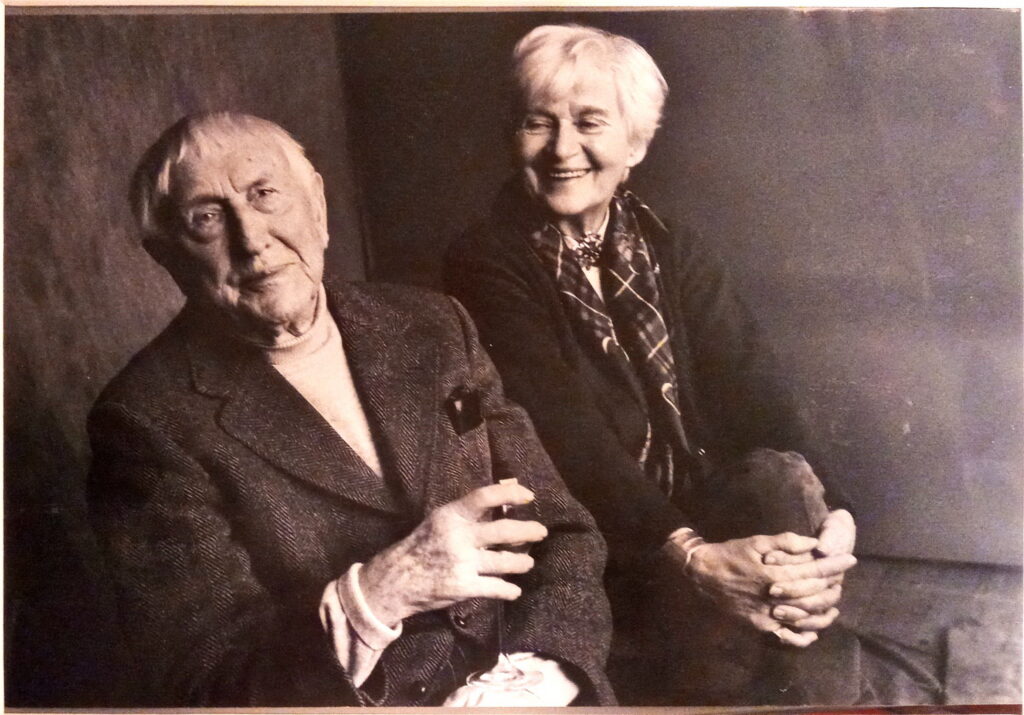
„Christl, bitte nicht schon wieder“ … „Wolfili, ich fahre nicht zu schnell … „. Ein die Existenz beschwörender oder die Existenz retten wollender dezenter Hilfeschrei, Teil eines Dialogs, der in einem viel zu kleinen Mietauto bei überhöhter Geschwindigkeit auf einer unübersichtlichen Landstraße im nord-niederösterreichischen Hügelland in Richtung Niederleis in Gegenwart des Autors dieser Zeilen (auf dem Rücksitz) so stattgefunden hat. Der Grund für den riskanten Ausflug zweier weit über 80jähriger: Einige Flaschen Rotwein, die wegen der Straßenunebenheiten im Kofferraum schepperten, sollten neu befüllt werden.
Besagter Herr, „Wolfili“, auch Herr Doktor genannt, oder „Ernst Jünger, frisch vom Pferd gestiegen“ sieht ohne Panik aber sehr bestimmt und dann doch wieder unverwandt in die Landschaft hinauf. „Du sag, wohnen da nicht die Soundsos – er deutet großzügig in die Landschaft. Auf einer Anhöhe ist eines der üblichen Schlösschen eines Landadeligen auszumachen, ob gerade verspekuliert oder verspielt oder verfallen, ist bei der Fahrtgeschwindigkeit nicht auszumachen. Aber nein, da wohnen doch die Soundsos, die auch bei Deinem Geburtstag waren. „Also die Aussicht in Prag, von der Botschaft, man erspart sich jeden Spaziergang, die Stadt ist hingebreitet, der Frühlingshügel … Christl, es waren aber doch die von damals nicht … In weiterer Ferne, auf einem Höhenrücken sind die Kuppeln der österreichischen Abhörzentrale nahe der tschechischen Grenze auszumachen, streng geheim und ziemlich systemrelevant (für welches System?), ein High-Tech Objekt aus der Zeit des Kalten Krieges, als die Grenze zu Tschechien noch eine richtige Grenze war. Die Bausubstanz der weiß-schimmernden Polyeder ist ebenso brüchig wie die Immobilie des wegen der „Kosten über Kosten“ längst selbstmordgefährdeten adeligen Soundso. Im besagter Bewaldung nahe der nachrichtendienstlich überschatteten Anlage liegt eine Wiesenhang in der Sonne, auf dem wenige Jahre später eine illustre Runde von Journalisten und lesenden Menschen lustwandelte, um die Asche des neben seiner „Christl“ in die Landschaft weisenden Herrn Doktor oder „Ernst Jünger, frisch vom Pferd gestiegen“ in den Wind zu streuen. Ein Hauch von Doktor Libal wurde wohl auch über die grüne Grenze und die Todeszone vom idyllischen Österreich ins leicht verwilderte, postkommunistische Tschechien geweht, die zweite Heimat des würdigen Weißhaarigen in dem weißen Auto von damals auf der Suche nach Wein.

Über die Grenzen hinweg

Gemietet war der Wagen von Christine von Kohl, also Wolfgangs „Christl“, einer dänischen Journalistin, Menschenrechtsaktivistin und Balkanexpertin, so wie ihr Mann. Während sie nicht nur im Weinviertel, sondern auch auf den verschlungenen Straßen der Balkanstaaten mit einer Passion für Tempo, Grenzüberschreitung und das Abweichlerische vom Mainstream unterwegs war, pflegte Dr. Libal einen bedächtigeren Umgang mit dem, was ihm und damit uns, den Lesern seiner Bücher, in den Balkanländern an Geschichte und Lokalkolorit entgegenkam. Wer sich für den Balkan im weitesten Sinn interessiert, dieses Konglomerat an möglichen und unmöglichen Staaten und Kulturen, Religionen, Atheismen und Archaismen, kleinen und großen Katastrophen, leiser und laut um Hilfe schreiender Lyrik, der kommt an der Lektüre der Bücher dieser beiden nicht vorbei. Ihre Karrieren hatten jedoch ganz anders begonnen und sie hatten erst später Kurs auf Südosteuropa genommen: Christine von Kohls Dänemark war und ist alles andere als ein Balkanstaat, wenn auch dort wie da ein Hauch von laissez faire, von historisch bedingter Lässigkeit in der Luft liegt, Wolfgang Libals Tschechien, das Geburtsland eines slawophilen Sudetendeutschen, war und ist wiederum das genaue Gegenteil eines Balkanstaates oder will es zumindest sein, immerhin liegt ja Böhmen auch nicht am Meer. Die spätere „Dänin am Balkan“ (ein sehr analytisches Erinnerungsbuch von ihr trägt diesen Titel) zuvor eine „Dänin in Berlin“, die stets gerne von der Villa ihrer Eltern in Grunewald erzählte, er – Louis von Kohl“ ein bekannter Kulturhistoriker und Sinologe, die Mutter eine Wienerin mit adeligem Background. Das elegante Berlin der 20er Jahre fand für die Verlagsmanagerin und angehende Journalistin im Frankfurt der 60er seine Fortsetzung, erst das Engagement im Helsinki-Komitee und die Übersiedlung als Korrespondentin nach Wien brachte sie – auch im geographischen Sinn, dem Balkan näher.

International statt national

Wolfgang Libal, der sein Prager Deutsch und den Klang des würdevollen Tschechisch der 20er Jahre mit Überzeugung auf den Lippen führte, war über die Jahrzehnte als Agentur-Journalist höchster Präzision verpflichtet, verbunden mit der Grandezza eines diplomatischen Geschulten – sein Sohn sollte dann später auch die diplomatische Karriere einschlagen und seine letzte Auslandmission in besagter deutscher Botschaft in Prag erfüllen. Der Unterschied zwischen dem ersten Dienstort Hamburg und viel später dann Wien konnte für einen distinguierten Stilisten und Gesellschafts-Analytiker wie Libal größer nicht sein

Als sich die beiden in den 60 in Wien, ihrem „Dienstort“ trafen, waren beide schon längst arrivierte Journalisten und Sachbuchautoren, es war mehr als „der Beginn einer wunderbaren Freundschaft“, es war eine mit großer Balance erlebte und ausgelebte Passion zu dem gemeinsamen Thema Balkan im weitesten Sinn, stets auf Reisen, bis ins höchste Alter, bei aller Liebe zur Gemütlichkeit, mit sehr prononciertem Tempo, so sehr, dass Thomas Bernhard, ein Freund der beiden, einmal fragte: Wann und wie und wo seid ihr eigentlich beisammen? Sie hatten gerade ein launisches Radiointerview zum Thema „Ehe unterwegs“ gegeben. Nach den bewegten und produktiven Jahrzehnte zwischen Belgrad, Kopenhagen, Prag und Wien waren die Aktivitäten der nunmehrigen Pensionisten nicht weniger bunt.

Unter Freunden

Wolfgang sagte etwas süffisant „Ruheständler“ zu diesem Zustand der umtriebigen Unruhe, unterbrochen nur durch den einen oder anderen gezielten und mit Freunden zelebrierten Heurigenbesuch. Chrstine von Kohl intensivierte ihre Vortragstätigkeit und gründete als Folge des Balkankrieges die bosnisch-herzegowinische, bzw. postjugoslawische Kulturplattform „Kulturni Centar“, Wolfgang war weiterhin bücherschreibend unterwegs und widmete sich zuletzt der Analyse divers post-tschechoslowakischen Phänomene. Vor alle, und das ist die Brücke zur Zukunft, die die beiden schlugen, wurden die Wohnungen in Wien, in der Benjowskigasse und in der Sieveringerstraße, aber auch die Heurigen in der Umgegend zu Treffpunkten der jungen Journalistengeneration, all jener, die nun „den Balkan neu denken wollten oder als Auslandskorrespondenten in Print, Radio oder Fernsehen jenen präzisen und eleganten Stil erlernen wollten, den die beiden, zwar aus anderen Zeit aber dann doch wieder zeitlos verkörperten. Kein Balkan-Journalist, der etwas auf sich hält, kommt an Libal/Kohl vorbei. Bis zuletzt pflegten die beiden ihren freundeskreis zwischen Politik, Diplomatie, den schönen Künsten, dem Journlismus und betrieben sehr gastfreundlich das, was man heute als „Netzwerken“ bezeichnen würde.

Charme des Erzählens

Doch zurück zum „Stil“, zu jenem eigentümlichen Cocktail aus Charme, historischem Wissen, Lebenserfahrung und professioneller Präzision, den die beiden gerne servierten: Wolfgang Libal war im Spannungsfeld zwischen Jaroslav Hasek und Ernst Jünger groß geworden, oder zwischen „seinem“ Fußballplatz in Melnik nördlich von Prag und diversen diplomatischen Vertretungen zwischen Paris und Bukarest. Die „Welt“ (er schrieb auch für die Tageszeitung desselben Namens) war nichts pathetisch Aufgeblasenes, kein Schlagzeilen-Gebrüll, sondern ein nuancenreiches, feinnerviges Gebilde, eine Zeitskulptur, streng in der Einschätzung und ästhetisch in der Schilderung zugleich. Die in dieser Welt agierenden Menschen, welche einfach nur ihr Leben retten wollten, waren keine Marionetten, keine Abziehbilder, sondern Wesen mit Sehnsucht nach einem klaren Gedanken, der mehr ist als nur eine Überschrift. Christine von Kohl ging das Thema Zivilisation etwas schwungvoller an. Ihre Gesprächspartner, und im Umgang mit Sprachen waren beide nie verlegen, waren stets „dramatis personae“, unentrinnbar mittendrin in ihrer Geschichte, wenn da nicht die Coolness der Hoffnung gewesen wäre, die die Frau Baronin vielen Verzweifelten mit Überzeugung vermittelte. Beruhigender- und irritierenderweise waren sich beide nie sicher, sie hatten kein Weltbild als Trost und Lösung anzubieten, nur, und das ist eine Kultur für sich, die Liebe zur Technik des Fragens und die Passion fürs verstehen Wollen. Die beiden haben insgesamt 148 Jahre gelebt, davon fast die Hälfte gemeinsam und wären heute 98 und 109 Jahre alt, wenn man ihre Texte liest, kommen sie einem aber vor wie „frisch vom Pferd gestiegen“.

Anekdoten:
CVK ist mit Thomas Bernhard in ihrem VW-Käfer auf dem Rückweg von einer Lesung in Eisenstadt. Finsterste Nacht, es schüttet in Strömen, die Straßen sind schlecht, der Rotwein war stark und gut eingeschenkt. In seiner Todesangst gibt der Schriftsteller die jeweiligen Abzweigungen bekannt und singt diese – rezitativ – im Mozart`schen Stil.
Noch zu Titos Zeiten wird bei einer Bärenjagd, zu der das diplomatische Cops von der jugoslawischen Regierung eingeladen war, ein Diplomat von einem anderen irrtümlich erschossen. Um zwischenstaatliche Verwicklungen zu vermeiden, musste der tote Botschafter im Auto heimlich über die Grenze geschafft werden. Die Chauffeuse bei dieser Geheimaktion: Christine von Kohl.

CVK und ihr Mann, damals weit über 80, melden sich nachmittags bestens gelaunt am frühen Nachmittag am Telefon. Was macht ihr gerade? „Wir sitzen hier gemeinsam nackt in der Badewanne und trinken Skenderbek“. „Ja, und …?“ „Weißt Du, wir wollten uns gerade umbringen, aber es hat nicht geklappt, und das muss gefeiert werden“.

Zwei kursorische biographische Skizzen:
Christine von Kohl, als Dänin 1923 in Berlin geboren, war Verlagsmitarbeiterin bei S. Fischer, Journalistin für dänische und schwedische Medien, weiters für NZZ, FAZ, Die Presse, Standard etc., Mitglied der Helsinki-Föderation, Mitarbeiterin im Simon Wiesenthal-Institutes, Gründerin und Leiterin des Kulturni Centar uvm.
Wolfgang Libal, geboren 1912 in Prag, arbeitete lange Jahre als Korrespondent für die dpa, die „Welt“ und andere vor allem deutsche Printmedien, Autor zahlreicher Fachbücher über diverse Staaten Südosteuropas
Herbert Maurer, geboren 1965 in Wien, Schriftsteller, Journalist, Übersetzer, Sprachwissenschafter, Autor von Romanen und Erzählungen, Armenienexperte
Bibliographie: Unter den vielen Artikeln für diverse Medien sowie in BALKAN und BALKAN ANDERS, sowie diversen Fachbüchern, Reiseberichten und Anthologien seien hier die letzten Bücher erwähnt:
Wolfgang Libal, Die Tschechen, Ibera-Verlag
Christine von Kohl, Eine Dänin am Balkan, Wieser-Verlag
Anthologie: Herbert Maurer (Hrsg.) Sprich günstig mit dem Balkan, Edition Atelier
Fotos: aus dem Archiv der „Presse“
bzw. (siehe Anhang) © Gabriela Brandenstein


HERBERT MAURER
geboren 1965 in Wien, studierte Sprachwissenschaften in Venedig, Köln, Bilbao, Jerusalem und Jerevan. Seine Romane, Gedichte, Theaterstücke, Essays und Übersetzungen sind in deutschen, österreichischen und armenischen Verlagen erschienen. Maurer arbeitet auch für Zeitschriften (LETTRE, Die Presse, Wiener Zeitung, Lichtungen, Literatur und Kritik, INTERNATIONAL etc.) sowie fürs Radio und als Dolmetscher, Vortragender und Moderator. Er wurde mit dem Rheingau-Literaturpreis ausgezeichnet und ist Träger der Franz-Werfel-Medaille.
Eine kurze Werkauswahl:
Gnädige Frau oder die Kunst des Tiefschlafs (Erzählungen, Wieser)
Ein Rabenflug (Roman, Wieser)
Venetia (Erzählungen, Eichborn)
Beata, Beatae … (Gedichte, Thanhäuser)
Pannonias Zunge (Roman, Berlin Verlag)
Bitte Regen (neue armenische Literatur, Wieser)
Und Gott spricht Armenisch (Essays, Klever)
Über den Tod (Essays, Ibera)
Byron schwimmt … (Roman, Klever)
Lebendig Sein (mit Martin Salzer) … (Ibera-Verlag)
Himmlisch trauern (B&B – Verlag)
Ästhetik des Abstands (Sonderzahl – demnächst)
www.herbertmaurer.at