21/11/2010: SERBIA – POLICE PROTECTION PROVIDED FOR TV B92 JOURNALIST AFTER THREATS

21/11/2010: SERBIA – POLICE PROTECTION PROVIDED FOR TV B92 JOURNALIST AFTER THREATS

September 29, 2020 disabled comments

Vienna, 21/11/2010

The South and East Europe Media Organisation (SEEMO), a network of editors, media executives and leading journalists from South East and Central Europe and an affiliate of the International Press Institute (IPI), is deeply alarmed by alleged threats received by TV B92 journalist Sonja Kamenkovic from Zajecar, Serbia.

According to information received by SEEMO, since the end of August 2010 Kamenkovic has reported on the alleged violent behaviour of a police officer who reportedly injured two young men. The currently suspended police officer allegedly threatened, on several occasions, Kamenkovic and Ivan Popovic, a journalist for Alo magazine. He reportedly said he would kill all journalists who reported on his case. The police in Zajecar subsequently provided police protection to Kamenkovic.

This is not the first time a TV B92 journalist has been provided with police protection. Brankica Stankovic remains under police protection after being threatened several times in the past few years.

SEEMO Secretary General Oliver Vujovic said: “SEEMO welcomes the police protection that has been provided to Kamenkovic and calls on the Serbian authorities to take extra measures to protect the Serbian media, in particular investigative journalists, who play a crucial role in a democratic society.”

Vujovic added: “SEEMO urges the Serbian authorities to fully investigate the latest reports of threats, and to bring to justice anyone found responsible.”
26/11/2010: NORTH MACEDONIA – PREMISES OF A1 TV HEADQUARTERS ALLEGEDLY BLOCKED BY POLICE IN SKOPJE

September 29, 2020 disabled comments

Vienna, 26/11/2010

The South and East Europe Media Organisation (SEEMO), a network of editors, media executives and leading journalists from South and East Europe and an affiliate of the International Press Institute (IPI), is concerned at the recent alleged blockade of the premises of the A1 TV headquarters in Skopje, in the Republic of Macedonia/FYROM.

According to information received by SEEMO, during the evening of 25 November 2010 the police blocked the entrance of the premises of the A1 TV station, preventing the free movement of journalists and media staff and without offering an explanation as to why it was forbidden to enter or leave the building.

After several hours, the police published a statement claiming they had not blockaded the television station but were merely dispatched to assist tax authorities in carrying out an audit of several companies registered at the same address.

SEEMO Secretary General Oliver Vujovic said: “We do not have a problem with the financial inspection of companies; however, when journalists, cameramen, and other media staff are prevented from exercising their function without any clear explanation, as in Skopje last night, an unhealthy atmosphere of governmental pressure is created. It could and should have been avoided.”

23/12/2010: KOSOVO – JOURNALIST LUMTURIE BLAKAJ PHYSICALLY ASSAULTED IN KOSOVO

September 29, 2020 disabled comments

Vienna, 23/12/2010

The South and East Europe Media Organisation (SEEMO), a network of editors, media executives and leading journalists from South, East and Central Europe and an affiliate of the International Press Institute (IPI), is deeply concerned about the physical assault on Lumturie Blakaj, journalist working for the daily newspaper Zeri, in Kosovo.

According to Blakaj, she was attacked on 20 December 2010 by an unknown perpetrator in front of the UNMIK building in Pristina. The attacker started punching Blakaj furiously in the back and proceeded by dragging her seven meters along the ground. The moment the perpetrator started punching Blakaj, three young men who witnessed the assault helped her and the perpetrator ran away.

Blakaj immediately reported the assault to the police, claiming that she did not recognize the perpetrator and has no information as to why he attacked her so viciously.

The next day, police spokesman Baki Kelani said the police have launched investigations.

“SEEMO strongly condemns all physical attacks on journalists, which have no place in a democratic society. Physical attacks such as this must be stopped from occurring in the future,” said Oliver Vujovic, SEEMO Secretary General.

“SEEMO welcomes the police investigation and calls for a full investigation into finding out not only who attacked the journalist, but also the reason behind the attack,” added Vujovic.

SEEMO also notes with unease this increasing tendency of assaults against journalists in Kosovo. It calls on the Pristina authorities to state their dedication to the protection of journalists, and press freedom in general, by taking active steps to counteract these alarming developments.

28/12/2010: CROATIA – FOUR SUSPECTS IN BRUTAL ATTACK ON JUTARNJI LIST JOURNALIST DUSAN MILJUS CAPTURED

September 29, 2020 disabled comments

Vienna, 28/12/2010

The South and East Europe Media Organisation, (SEEMO) a network of editors, media executives and leading journalists from South East and Central Europe and an affiliate of the International Press Institute (IPI), is pleased to hear that the police have detained the alleged perpetrators of the brutal attack on Jutarnji List journalist Dusan Miljus.

On 22 December 2010, in the scope of operational actions under the name of “Shock 3”, the Croatian police detained four suspects allegedly connected to the Miljus case.

Two years ago, on 2 June 2008, in front of his home in Zagreb, Croatia, Miljus was brutally attacked by unidentified men who beat him with baseball bats until he lost consciousness. When a neighbour noticed the attack and started yelling, the men fled. Since the attack, Miljus has been threatened and has remained under police protection.
Miljus’ writings span 20 years and cover crime in South East Europe, the mafia and Croatian underground circles.

SEEMO Secretary General Oliver Vujovic said: “SEEMO salutes the thorough police investigation which has proved to be serious and efficient and which has led to the detention of four alleged perpetrators. In capturing the alleged perpetrators Croatia sends a positive sign in the direction of a democratic society with press freedom.”

Vujovic continued: “However, it still needs to be determined who was the mastermind behind the brutal attack on Miljus.”

In an effort to gain further information about the media situation in Croatia, SEEMO, in cooperation with IPI, will hold a press freedom mission to the country from 25 – 28 January 2011. The mission will be led by SEEMO Secretary General Oliver Vujovic, and mission delegates will meet with Croatian President Ivo Josipovic, as well as with leading Croatian media representatives.

Interview with SEEMO member Sasho Ordanoski (September 2020)

September 27, 2020 disabled comments

Tell us a little about yourself, your family, including how you got started as a journalist?

Huhh… In our family we have five kids (the youngest is of the age of 17, the oldest 31, with various degrees of education, hobbies, and spending habits); two most adorable grandchildren; several dogs of numerous sizes, ages and (non-)pedigrees; varying number of current and rising number of ex-girlfriends and current love affairs; two son-in-laws with vibrant business ideas… My father is 91, my mom is 86 (and I am not even counting them among the kids)… Our ordinary pre-Covid19 family Sunday lunch would count more than a dozen of ear-splitting and mobile-phones-armed people around the table, with a variation of healthy and very-unhealthy food on a quite outsized table, usually starting with a number of glasses of yellow rakia, followed by bottles of good Macedonian wine and local Skopsko beer… At any day of the year we have more logistical complications than an average mid-size state institution around the world, including the budget, real-estate, transport and communal implications on a par with the International Olympic Committee.

A word of advice: DO NOT try to do this social experiment at your home!

I am 56 years old and I started journalism 38 years ago… I’ve seen “everything,” I’ve written thousands of articles (from the youth magazine “Mlad borec”, through a number of local and regional daily newspapers and magazines, to – one article! – in “New York Times”) and equally insane number of on-the-air TV appearances on domestic and foreign TVs; I’ve coordinated teams of three to seven hundred and three people in more than 15-20 organisations that I worked for – and, today, I am most of the time sick and tired of many of the things that are going on in the current media affairs in my country, in the region, and around the world… And then, every once in a while, I am impressed and overtaken with joy by the high notes that journalism can perform in the society lost in its preoccupation with money and ill-defined ways of what is a definition of a success in modern life!

A word of advice: DO NOT choose journalism as your professional occupation, it is an obsolete job that demands a lot, but brings rare satisfactions, mostly depending on factors beyond your control. However, if you are so desperate to choose journalism as your career, be prepared to fall in love with it and share the stress, uncertainty and wonderfulness of any love affair.

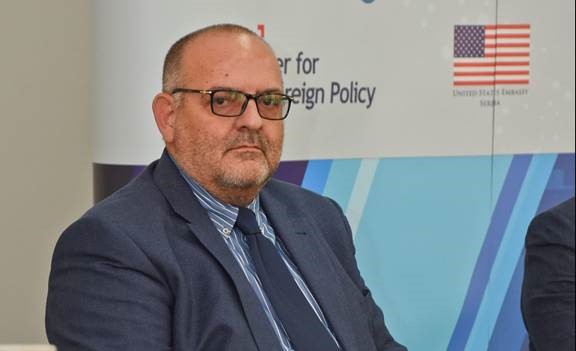
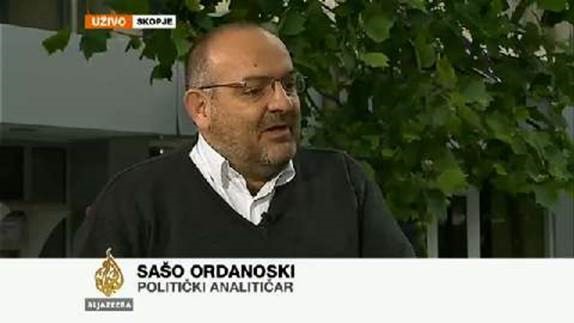
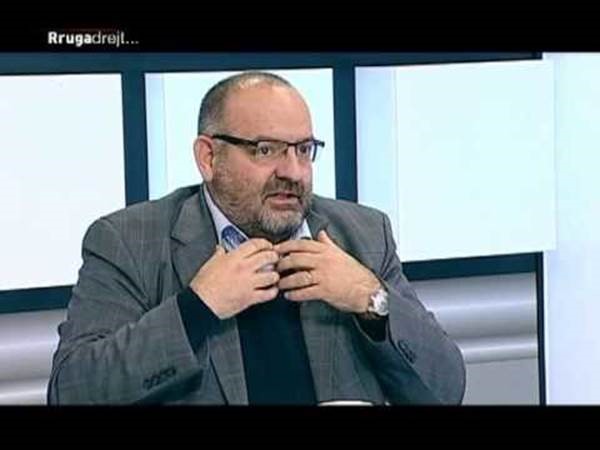
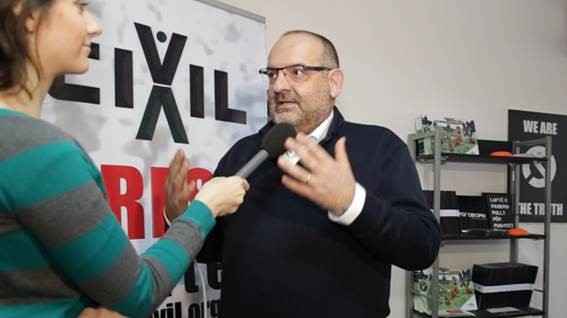
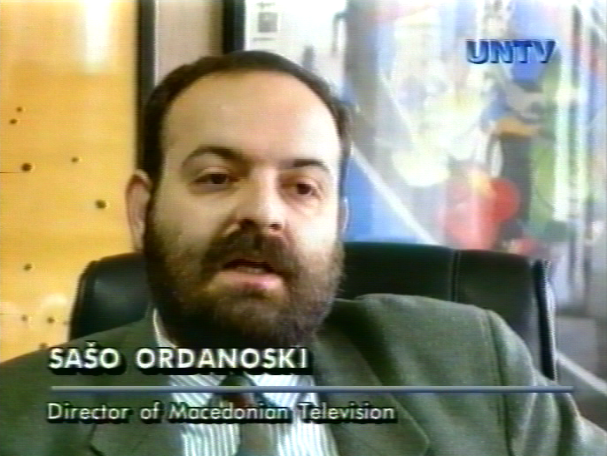
Sasho Ordanoski

What is the difference between journalism when you started and today?

In short, the BIG difference is: Internet. The job of journalists – opposite of what most of the people, and even journalists presume – is not to deliberate about “truths” in the society; but to contextualise facts in a balanced way in order that the audience(s) can decide on the plurality of “truths”, on the basis of best argumentation offered. So: facts and context!

But in today’s world of internet’s “alternative facts”, social networks’ mobs and “fake news”, with incivility and sensations as norms of communication, when the speed of the news is more important than the quality of context, it is very difficult to survive as a qualified media on the market, both professionally and financially.

Modern democratic societies need good journalism more than ever, but they demand scandals and entertainment instead. And they get it with shovels directly in their open mouths.

You worked as manager in MTV – the public broadcaster in North Macedonia and also for the private TV channel Alsat M. What was the difference to be the boss in the public and in the private TV?

It is about how you use the managerial power and about the differences in priorities. Public broadcaster is a mastodon with resources and functions that in many instances are not commercially viable, but necessary; while private TV survives on the market and needs to have commercial interests equal to professional and program demands. However, both in public and private media, regardless of the number of employees and the size of the budgets, professional and human integrity of people is probably the most important thing for success. Managing those resources – people, money, and programs – requires a lot of professional skills, human empathy, and persistent energy. Plus the good understanding of social and political agendas in the country. At least a “drop” of vision is also desirable to keep you survive endless daily challenges. Most of the days.

You founded the weekly Forum. Can you tell us a little more about this period of your life?

“Forum” magazine was a liberal orientated weekly, bi-weekly and, eventually, monthly publication that we started in 1996 and sold it in 2007. It was a high-quality magazine, both in journalistic and in production senses, with narrative journalism and long interviews in the centre of its style, with special care for high quality photography and elegant layout, in the years when printed journalism was still making market and media sense. We had our own printing press and our ambition was to publish a local “cross-breed” between the once famous “Start” magazine (published in Zagreb in the time of ex-Yugoslavia) and “The New Yorker”. For a decade of its publishing “Forum” nurtured a stable and demanding public, progressively politically oriented. We sold it in 2007 to people who wanted to keep its political and cultural influence in support to the then new Macedonian government led by Mr. Nikola Gruevski. Few years later it vanished from the market.

Sasho Ordanoski

As a journalist you received also threats. A car was set on fire in front of your house. Do you know who was responsible for this attack?

In the middle of the night on May 3-4, 2015, a car (owned by somebody else) parked in the parking lot at our family house in the village near Skopje was sat at blasé with an explosive device. Thanks to the fast reaction of the fire brigade both our and neighbour’s houses were saved from fire. That was a culmination of various forms of threats and intimidations perpetrated by the regime of Mr. Gruevski not only against me, but against a number of journalists and other critics of his government. Some people were physically attacked, others’ properties were set on fire or damaged, government’s powerful propaganda apparatus was inventing daily compromats and various forms of bullying targeting the “enemies” of Gruevski… Soon after the car-fire I was advised by some foreign friends to leave the country for some time, which I did for several months in the second half of 2015.

I never stopped writing my weekly and daily columns. They never stopped with a decade-long stream of intimidations. Gruevski was out of power in mid-2016, after an unsuccessful, violent coup d’etat attempt against the government of Zoran Zaev in Macedonian Parliament. Gruevski mysteriously left the country to Budapest in 2018 faced with a jail sentences at home.

And the investigation of the car-fire is still ongoing, without any results, as most of the other attacks against journalists in Macedonia during the Gruevski regime.

You have been also active in activities that are not connected to journalism. Can you tell us please a little more about this side of your life?

Well, my Ph.D. is in the area of sociology and communication that allows me to lecture several subjects at the two best private universities in the country for the last 15-20 years… I am also one of the founders of Transparency Macedonia back in 2001 and member of several prominent NGOs’ and think tanks’ networks in the region. Hundreds of conferences, seminars, initiatives, collaborations and platforms that tried to promote and support democracy around the Balkan. We were trying to change the world, before the era of “spread sheets” and excel tables were “invented” by the EU in the NGO sphere.

During the last three decades I’ve met wonderful people, many of them still good friends, some of them made important political and social careers in their respective countries.

Sasho Ordanoski

Many experts are saying, that till end of 80´s, journalists working in news agencies in some leading positions and in foreign desks in media, where often connected to intelligent services. This part of history would be very interesting for younger journalists. This problem is not only connected to former Yugoslavia or to the “East Europe”, as according to researches we have many examples from journalists working also in the “West” for intelligent services. How strong was the influence of intelligent services on media some 30-40 years ago? Is it true that it was important in all “Communist countries” to be a member of the party or to work for intelligent service, for having a leading position in a media? Or was it different in “East Europe” and in the former Yugoslavia?

In undemocratic societies control over processes is done through control of people. Intelligence services and secret police are/were powerful tools for controlling people for the sake of the one-party systems or “democratic” autocrats. The rest is history and it would be too long to tell here.

However, in democratic societies those services are (or, better, should be) controlled by civilian democratic institutions, so the social processes can develop in the public arena through the competition of ideas, amplified by the influence of freedom of speech and mass media.

It is all about the power and how it is obtained, kept, distributed, used – or lost.

But, forget “East”, “West”, “former” and “ex”. What do we do now? It is the same world of broken mirrors that intelligence (and not-so-intelligent) services are trying to use and misuse everywhere in order to manipulate public opinion. That’s the oldest, never ending game in town.

Did politicians try to influence your work? If yes, how you reacted? Do you have some examples?

Of course that they try, every day, influencing is the core of their job. And I am “working my sources” every day, many of them are, namely, politicians. In media theory those grades of influence are called “political parallelism”, it is part of the “hundred shades of grаy” in which journalism normally operates. But, politicians are rarely misusing their positions and power by direct threats or bribes to journalists… Usually “the dirty work” is done by other players in the political realm, often through the owners of the media.

Eventually, everything comes down to the issue of the integrity of editors/journalists and their preparedness to bend the rules and standards in the profession. It is not a simple world out there, it requires some flexibility, but rules and standards DO exist.

What was your biggest challenge in your work?

Vanity. It is necessary, but a dangerous partner in journalistic profession, where things are too often personal. With years I learned how to control it much better. I would like to think that today I am successfully adjusting that “horse” under my knees.

Corruption is very present in the SEEMO region. Are also journalists corrupted?

Seriously?! There are no developed and stable (if any!) media markets in the SEEMO region that would secure sustainable institutional and professional existence of a large majority of existing media outlets. Most of the journalists are working for indecent salaries, many are paid in cash, and their jobs are insecure and in short demand… Proliferation of “informative” portals and shady internet propagandistic operations are spreading as wild fires… And so on and so forth… Why should there be corruption among the journalists in SEEMO region?!

Sasho Ordanoski

You met also many important persons. Maybe if you can present some of them.

Look, for the profession of journalism it is not only important how good you or your media is, but also what kind of “history” is developing around you… Unfortunately, the SEE region has “produced” enough important, tragic and turbulent “history” in the last few decades, so many journalists had enough professional opportunities to cover events and people that, otherwise, in “normal” circumstances, they would have not been able to meet or report on. For instance, I got a chance to make an interview with an American president (Clinton) not because I was extraordinarily better than the competition, but because at some point the US-administration wanted to say something on Macedonia and the region – if it was not me on the journalistic side, it would have been somebody else doing the interview with the president.

So, yes, there were dozens and dozens of important people that I have met or interviewed in my 30+ years of journalistic career, but many more “ordinary” people were telling their powerful stories through my reports and articles.

However, let me tell you one story… At the end of the nineties, I was working as an unit production manager for six months for DreamWork’s production of a movie that involved the famous producer and several times Oscar winner Branko Lustig, on one side, and then the rising movie superstar George Clooney, as one of the main actors (partnered by Nicole Kidman), on the other side – and, as it usually happens in an A class Hollywood projects with high production stakes and even higher budgets, they had very turbulent mutual relations… For several weeks of shooting, many of their working “quarrels” were going “through” me: Lustig would shout to me what needed to be conveyed to Clooney, and Clooney would replay with the same sarcastic vigour what needed to be conveyed to Lusting, on few meters of distance between them, with me in the middle! Unforgettable! And very stressful… No pictures or videos on any of those “shouting matches” exist… Just sweet memories.

How hard it was to stay always professional?

Very hard. Almost impossible. But that constant strife is the beauty of this job. One piece at a time. Real journalism is a hard labour, long hours of work and personal sacrifice. It may look glamorous, but it is rarely that.

Sasho Ordanoski

Your work is connected to the South East Europe Media Organisation (SEEMO). You helped SEEMO also to organise a conference in Skopje some years ago. How important is SEEMO for you?

Networking is in the heart of our profession. We share many similar problems and challenges in the Balkan media, so exchanging experiences, ideas, and best practices with the regional colleagues is an important drill and, sometimes, therapeutic exercise. In good and, especially, in bad times.

Sasho Ordanoski

Please walk us through a typical workday. How do you manage your time today?

My working day starts ten minutes before 6 o’clock in the morning, because at 7 a.m. I am in the TV studio for the “Morning Briefing” on slobodna.tv and slobodenpecat.mk that is on air every day 7:30-10:00. It is followed by the editorial meeting of 30 minutes to set the agenda for the next day, followed by a stream of coffee talks, phone conversations, business meetings and endless stream of messages on all platforms… Lunch with friends or family is a reserved daily slot around 3 p.m. even under “distancing” corona-conditions… Afternoons are dedicated for preparations for my university activities, readings/viewings of various contents, and other journalist or foreign consultant projects I run more often than I should.

My wife and kids are fulfilling my late afternoons and social evening events. I write my daily columns (“Good Morning with Ordanoski” for civilmedia.mk) every evening around midnight (after I digest most of the evening content of the local media and during listening to “The World Tonight” on BBC Radio 4), usually ending around 1 a.m. Weekends are reserved for “detoxification” and family activities, shopping extravaganzas (we have an army to feed!), travels and longer sleep in the morning…

Hmmmm… Not a half of this would be possible without a fabulous team of people I am surrounded at work, a selection of good friends that help whenever necessary with most ordinary life hitches, and a family that emanates love to me in bigger quantities than I sometimes deserve.

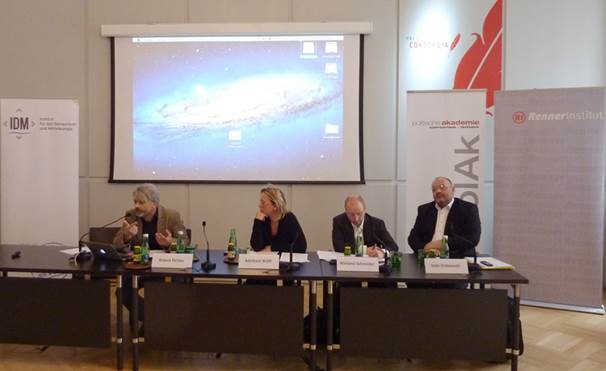
Robert Pichler, Adelheid Wölfl, Wieland Schneider, Sašo Ordanoski [© IDM]- round table by Institut für den Donauraum und Mitteleuropa – IDM In cooperation with Karl Renner Institute, Vienna and Politischen Akademie der ÖVP,Vienna

How do you see the media situation in you your country today?

In one word: good. In more details: not good. It is certainly much better than five years ago, but much бетер (i.e. worse) than where it should be.

For years the former prime minister Nikola Gruevski had a strong influence on the media situation in your country. How it happened that one person had so strong power and so strong influence?

It is called autocracy: it starts with silk gloves, with a lot of promising populism and misuse of public resources, until it is too late to stop it through normal democratic means. Gruevski knew that his propaganda machinery, together with the secret police apparatus, were of key importance for winning elections and eliminating political enemies. And he spent millions of euros on loyal media outlets and their editors and media “assassins”. It is not that complicated, really. Once one decides that staying in power is more important than democracy, the rest is technology of autocratic governing. Until the day comes when that technology cannot help you anymore.

Sasho Ordanoski

Is it possible to protect from a new “Gruevski”? The question is also connected to the fact that we have similar politicians like Gruevski today in power in some other countries in the SEEMO region.

Yes, it is possible, if an independent democratic state and public institutions do their job. If not…

You are very often in Vienna. How important is this city for you?

Vienna is the biggest and the most dynamic centre for Western European interests in the Balkans, with many experts who understand the Balkan mentality and geopolitical, often historic complexities. Not to mention its urban beautifulness, hospitality of local people and proximity to regional capitals. To have Vienna in your “neighbourhood” is a privilege that should not be missed!

Finally, as press freedom and democracy is very important in your life, can you give please some advice for younger journalists?

Freedom and democracy are never solved once and for all! Rarely they are lost in one night, but if you allow many days somebody else, and not you, to fight for freedom and democracy, the night will come when there will be no one else to fight for YOUR freedom and democratic rights. As journalist, we are at the front lines of this constant struggle, like it or not.

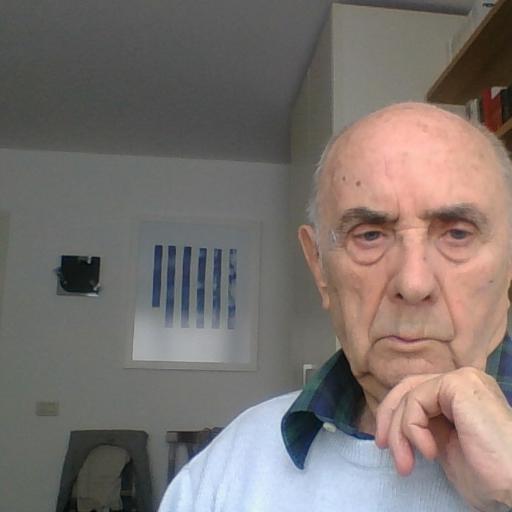
Milutin Mitrović Džive (1931-2020)

September 24, 2020 disabled comments

Milutin Mitrović Džive (1931-2020), our member from the first days of SEEMO. Milutin participated in many SEEMO conferences, supported SEEMO in the organisation of the conference “Traffic Cooperation Trieste – Vienna”, in Trieste. He started very young in the school paper Srednjoškolac, was editor in the student magazine Student, worked for Radio Beograd and was editor-in-chief of Ekonomska Politika in Belgrade. After he retired he moved to Trieste, Italy, with his wife and son. Her worked till end of his life as a journalist, reporting for Biznis i finansije, Peščanik and also monitoring press freedom violations for SEEMO. Milutin passed away in Trieste.

Interview with SEEMO member Zdenko Duka (September 2020)

September 24, 2020 disabled comments

*Tell us a little about yourself, your family, including how you got started as a journalist?

I was born in Split in 1956. My parents, both Dalmatians, already lived in Zagreb at the time, but my mother gave birth to me in Split, where there were all her relatives who could help her with a small child.

Ever since elementary school, and especially the beginning of high school, I have read a lot of literary texts but also newspapers, and political texts and cultural topics. I studied and graduated in comparative literature and philosophy at the Faculty of Philosophy in Zagreb. I published my first articles in a student newspaper in 1976, writing mostly about film. Even then, in the 80s, it was not easy to find a job. I was most attracted to books, I also enrolled in postgraduate studies in literature. However, at the end of 1980, a competition for young journalists appeared in Večernji list, I passed the competition filter and started working for Večernji list.

*Your professional work…

I fell in love with journalism. Like other beginners, I also wrote first in the city newsroom. After serving in the army, for a while I was the editor of the city column in the morning Zagreb edition, which was sold in Zagreb, just before noon and in the afternoon, in 60-70 thousand copies. These are very large numbers compared to today’s circulations in Croatia.

Later, I wrote about domestic politics, wrote topics and comments on the most important political topics. In the second half of the 1980s, writing became freer, and this was a period in which there was more journalistic freedom in the mainstream media in Croatia than in the 1990s under President Franjo Tudjman.

As a journalist, I was present at the session of the Presidency of the Croatian Communists when, in December 1989, a historic decision was made to organize the first multi-party elections in Croatia. I thought and hoped that real democracy would come to us as well. But no, the war came first.

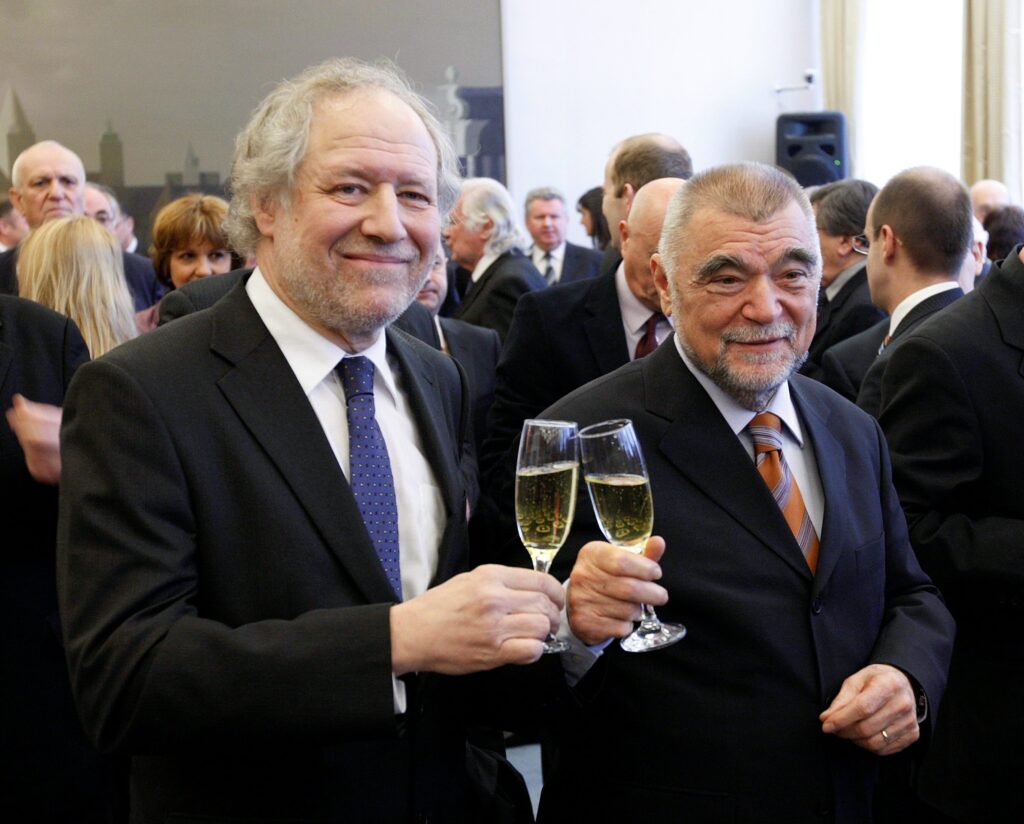
With Stipe Mesic, Croatian president (2000-2010) at the reception for journalists in a year 2010

*You started your work in Vecernji list in 1981, it was still the time of the “old Yugoslavia”. How it was to be a journalist in the former Yugoslavia? The country was a Communist, or better to say a Socialist country, that was independent from the East bloc.

Journalism was freer in the 1980s in Yugoslavia and Croatia than in some previous decades. And it was not the same in all the republics of Yugoslavia. Of course, the media was noticeably freer than in the Eastern Bloc countries. Back then, journalism was an elite business in society. There were fewer journalists than today and their work was more appreciated than today.

It is said that during the former system, writing was smarter but more boring, and today more interesting but stupider. Simplification and generalization are wittily worded, but there are some truths in that assessment.

*Was in that time important to be a member in the Communist party for a position in the media?

It was important to be a member because all the editors-in-chief of the most important media were members of the Party until the one-party system collapsed. But in the 80s, writing and reporting was freer and more critical than before. In Vecernji list, which was by far the highest-circulation daily in Croatia, the vast majority of journalists were not in the Communist Party. After Tito’s death, the Party’s influence weakened throughout society, and when regimes in Eastern Europe began to fall and the Berlin Wall was torn down, it was clear that the Yugoslav political system was counting down the last days.

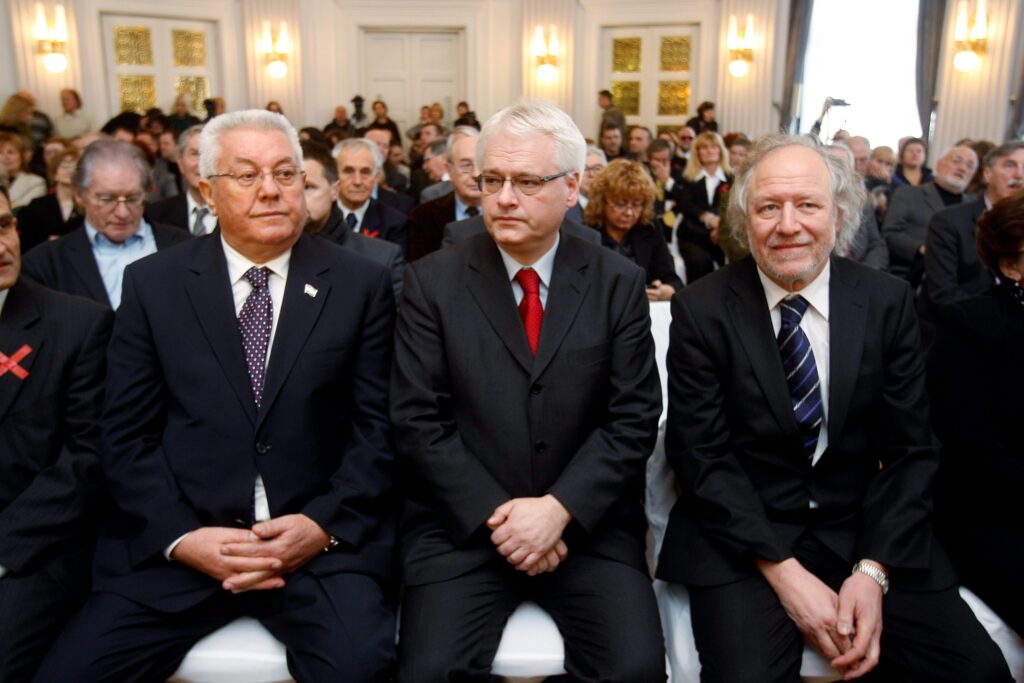
Luka Bebic, president od the Parliament, Ivo Josipovic, president od the Republic and me at 100th celibration of HND

*What was the relation with journalists from other parts of the country, with journalists outside Croatia (Croatia was till 1991 a republic in Yugoslavia)?

We were interconnected through the professional association of journalists of Yugoslavia, which was composed of national (republic) journalistic professional organizations. Numerous round tables were organized, various sports meetings of journalists, journalistic ski gatherings, etc. Journalists travelled a lot all over Yugoslavia, so we got to know each other.

*Did you feel hate between journalists from different part of Yugoslavia in 80´?

Until the second half of the 80’s, our mutual relations were good and correct. Serious tensions in society intensified with bad interethnic relations in Kosovo and the rise of Slobodan Milosevic from 1987 onwards. As is usually the case, the war of the early 1990s was prepared in the media. It started from the Serbian media controlled by Milosevic. There were a lot of inflammatory texts, the journalists who wrote them attacked not only politicians but also other journalists who had different views from theirs. This media war between journalists was not necessarily a war between journalists from different republics but a general intolerant showdown with dissidents nad „enemies“.

*It was the time with no mobile phones, no laptops, no tablets. How it was to work as a journalist?

Reporters were not sitting in the newsroom, which is the most common case today, but conducted interviews in the field. There were many more reportages than today. We received sets of 4-5 daily newspapers every day and we read, looking for incentives for texts and so on. To prepare the texts, we used to go to the journalistic documentation and photocopied everything we needed for the text. Today, these searches are performed by Google.
We dictated the reports from the outside with fixed telephone lines to typists. Yes, in that infrastructural sense, it was harder to work than it is today. But one journalist was producing less articles than today. Today, it is normal for a journalist to write and publish something every day. Then – that was not the case.

*What changed in the work in your newsroom with the independency of Croatia, but also with the war in Croatia 1991-1995?


In the early autumn of 1991, the editorial office of Večernji list was temporary transformed. I was a member of one of the two desk editor teams. Each team worked all day, meaning from 10 a.m. to midnight. But – the next day they were free. This was more rational because air raids were announced in Zagreb daily as well. Otherwise, wartime is usually not suitable for either quality or objective journalism. But many journalists respected all ethical journalistic standards and as much as they could, they wrote freely and independently.
And in the first half of the 90’s there were several completely free media – from the dailies it was a short time Slobodna Dalmacija, then Novi list, the legendary weekly Feral Tribune, anti-war Arkzin, Radio 101, Globus…

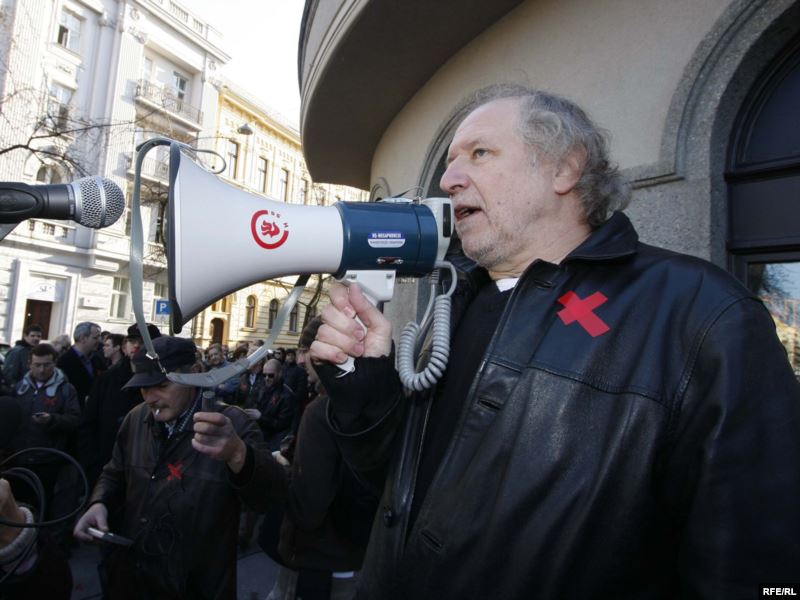
Journalists’ demonstrations in 2008

*You changed in one moment the company and the media owner. You started to work for a competition newspaper on the market, Jutarnji list. What was the difference in the work in Vecernji and Jutarnji?

I left Večernji list in January 1997 and started to work in a new weekly which called Tjednik. The founder was Slavko Goldstein and Krsto Cviić the first editor-in-chief. Večernji list was a great newspaper but in it I hadn’t enough freedom to write what I wanted to write. Tjednik was a big challenge with idea to be the first newsmagazine in Croatia. But in very short time, Tjednik changed its owner. Jutarnji list, the first new daily newspaper in Croatia in 50 years, was on the horizon. Jutarnji list was started by a young team of editors and journalists, then within Europa press holding (today Hanza media), which then had 15-20 other editions, but not daily newspapers. I come in Jutarnji list to its start. We were enthusiasts.

When we published at the end of 1998 the article that the wife of President Franjo Tudjman had deposited in a bank a very large amount of foreign currency, and Franjo Tudjman, declaring the property, claimed that she had no movables or real estate – then Jutarnji’s circulation reached 100,000 copies and was constantly growing.

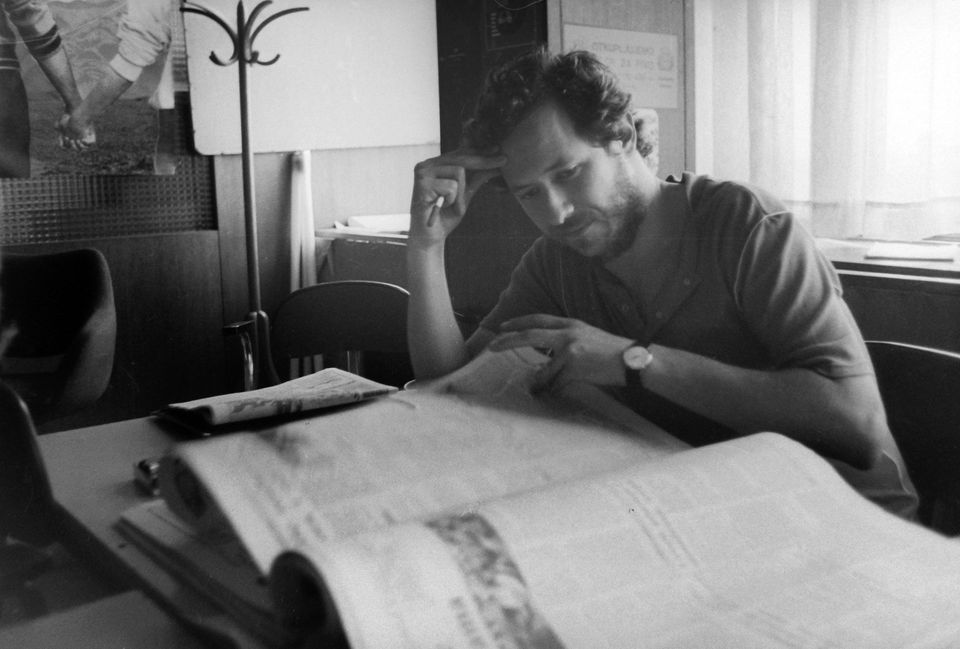
In Vecernji list newsroom in 80s

*Then you worked for Novi list, what is a local newspaper from Rijeka, but present in many parts of Croatia. How you see the role of local and regional media in Croatia?

I have been in Novi list for the last 14 years, since 2006. In that period I was the president of the Croatian Journalists’ Association for almost eight years. Novi list has been owned by a few dozen of journalists since the early 1990s and then they sold it in 2008 and it was later resold twice times. In the period from 1993 until the appearance of Jutarnji list in 1998, it was by far the freest daily newspaper in the country. Then the chance to become a national daily may have been missed. Classic local and regional media are important everywhere, but in the age of portals and social networks they play a smaller role than before.

With my grandson Val

Zdenko Duka

*For a long period you had the position of the president of the Croatian Journalists Association (HND). Was it hard to be the chief of the leading journalists association in your country?

It was an honour for me to be two times elected leader of an organization that had more than 3.000 Croatian journalists. I tried to be constantly available to everyone’ call and to follow everything that happens regarding the media so that I can promptly respond to violations of freedom of journalists and media. It was a time of economic crisis when many journalists even lost their jobs. In short, we could say that we fought for ethics and freedom of public expression, we tried to preserve the reputation of the profession, we did everything to protect journalists from physical attacks and numerous threats. And to protect journalists from the arbitrariness of publishers, also.

*What was your biggest challenge in your work?

It was a time when the political authorities no longer put so much pressure on the media, but the pressure often came from media owners who wanted the media to be tools in some of their particular interests instead of in the public interest. We managed to establish editorial councils in the newsrooms to protect journalistic independence. We managed to get the media statutes into the media law, according to which journalists had power to refuse management’s proposals when appointing the editor-in-chief or when he wants to dismiss him.

*How you see the media situation in Croatia today?

The situation is not satisfying. In general, the print media has always been the most analytical. The ones that can mostly be said to be watchdogs of democracy in one country. However, as in many other countries, the circulation of the print media has been declining almost constantly, and the influence of newspapers is weak. The television market is quite developed, portals are becoming more influential. But most journalists are in a social worse position than they were 10 or 20 years ago.
But, it cannot be said that there is a distinct political control over the media now, there were certainly worse periods.

*How hard it was to stay always professional as journalists?

Unethical behavior in journalism, as well, sometimes brings short-term benefits, better status, higher salary. But when your editors and all others know that you have firm principles and that you will not give in, then they all leave you alone and do not pressure you to do something journalistically incorrect. There is no true journalism without correctness and respect for professional rules.

*How important is the work of SEEMO as a press freedom organisation?

SEEMO is one of the most important organizations for the promotion and protection of media and journalistic freedoms in Europe, and especially important for this region of Central and Southeast Europe. Because, in addition to the protection of media freedom, it also has a function of mutual rapprochement and respect, after the bloody wars of the 1990s in the former Yugoslavia.
I think that in 20 years SEEMO really did a lot for the freedom of the media and journalists and for tolerance. Ultimately, all journalists in the region have more or less the same or similar professional problems.

*Please walk us through a typical workday. How do you manage your time today?
I read a lot. Not only newspapers and portals but also literature, philosophy and political science and I watch many news television channels. For my journalistic work the most informative in our country is the N1 channel, which is a news channel throughout the day. Of the foreign news channels, I mostly follow BBC news, France 24, CNN, Al Jazeera.

I contact many professors, fellow journalists and politicians with whom I comment on various political and other events. It helps me when writing articles.

By the way, I have been retired since June, but I still write a few commentary texts or interviews a month, mostly for the lupiga.com portal and some others.

Zdenko Duka

*Finally, as press freedom, human rights and democracy are very important in your life, can you give please some advice for younger journalists?

Journalism is a specific job and its basic meaning is information in the interest of the public. Well-informed individual can more easily make decisions about his life, both private and public, he can be a free and critical participant in social and political life. My message to young journalists is that a journalist should never allow himself to be bought in any way for anyone’s interest. He has to have a passion for truth, exposing corruption, courage and credibility to make society better.

Interview with SEEMO member Bojan Veselinovič (September 2020)

September 12, 2020 disabled comments

Tell us a little about yourself, your family, including how you got started as a journalist?

I was born in 1965 and am the father of two grown sons who are finishing their studies. The older son is doing a PhD in international political sciences in Berlin and the younger son is completing ethnology and cultural anthropology studies at the Faculty of Arts in Ljubljana. Both are excellent students, but I am nevertheless worried about them since they are members of the first generation that will not necessarily live better than their parents. I keep wondering how this has happened, to what extent this is our own fault and how broader social circumstances have contributed to that – external factors that we cannot typically influence. I guess this reflection is part of being in this profession, always trying to dig down to the essence, seeking to identify the reasons and the consequences – traits that I find sorely lacking among the younger generation of journalists. When I was deciding whether to pursue a career in journalism in the 1980s, there were too many role models in journalism to even consider remaining stuck in the average.

What is the difference between journalism when you started and today?

Pretty much everything was different back then. Externally, undoubtedly the biggest change is the miraculous development of technology, the revolutionary changes that have upended the workflow of the journalist to such an extent that I almost need not mention anything else. Unfortunately, technological change has not only been leveraged to improve the quality, speed and reach of information. It has also made journalist more perfunctory, less relevant and less respected. To a large extent the profession has itself to blame for that, but many others have eagerly taken part in the trampling and devaluation of the fourth estate – politicians, centres of economic power and many others.

Please present us your professional life.

I started dabbing in journalist in secondary school and then as a student at the Ljubljana Faculty of Social Sciences and Journalism. My first work appeared in local media, but from the mid-1980s I started a collaboration stretching over two decades with the national public radio (at the time called Radio Ljubljana). I started at the central desk, where we prepared hourly radio news, which was an excellent school of news journalism of the kind we did not get at university. Radio is “news, music and weather report,” was one of the adages of our mentor at the time, and despite the profound technological changes and other novelties, it still stands. Unfortunately, the mentorship system was eventually abandoned.
From 1988 until January 1991 I was the radio correspondent from Belgrade, which was a unique professional experience that set the stage for my entire career in journalism. This was a time when Yugoslavia was disintegrating against the backdrop of outbursts of Serbian nationalism and populism, which led to Slovenia declaring independence, triggering a ten-day war that was subsequently “upgraded” into years of armed conflict across the former Yugoslavia and thousands of victims. I followed the building of Slovenian statehood from the vantage point of doomed Yugoslav federalism and in the midst of maelstroms of war, with tanks on Slovenian roads and border crossing – which meant they were not confined to Yugoslav army barracks. In 1995 I became the editor-in-chief of the news programme at Radio Slovenija, from 2006 to 2009 I held a variety of editorial posts at Dnevnik newspaper, and for the last eleven years I’ve been the general manager of the Slovenian Press Agency.

Working as STA general manager you had to fight with many problems. Can you please present us a little your work for STA? What was STA in 2009 and what is STA in the year 2020?

During the term in office of the government led by Prime Minister Janez Janša after his first election victory in 2004, the STA was co-opted. The government administration tried to transform a national press agency that was created right after Slovenia gained independence into a government mouthpiece, even though it had a young, professional team and was well positioned as far as national press agencies are concerned to play the role of a public media outlet. That era – the term of the Janša government between 2004 and 2008 – was marred by interventions in the ownership structures of public as well as private media in general. Ownership changes, quickly followed by staffing, happened at the Delo and Večer newspapers, the Siol news portal, which is owned by the majority state-owned Telekom Slovenije, and at public broadcaster RTV Slovenija. This was a time when I left national radio: first a new law governing RTV Slovenija that presaged significant staffing changes was adopted, and the articles of association were changed quickly thereafter, cementing the status.
I arrived at the STA in 2009 as the agency’s first ever director picked in a public call for applications. Before that, directors were appointed by government decree. Two years later, in 2011, the special-purpose act on the STA was adopted, providing a legal basis for the agency for the first time in its then 20-year history. The legislation safeguards the professional independence of the STA, the supervisory board is appointed by an absolute majority by the National Assembly, and a special provision of the law governs the financing of our activities with budgetary funds in a manner that is not in violation of EU regulations. We are also allowed by law to perform commercial activities, which contribute over half of our overall revenue.
Due to the crisis at the end of the previous decade and the numerous Slovenian media that ran into trouble, the STA branched out into looking for opportunities on the non-media market, which required internal restructuring and a reform of the work processes. This was a path that led to the creation of new products designed for a broader market. We are fortunate that our in-house R&D team has a wealth of knowledge and ideas, and combining that with tender opportunities at home and abroad, we have been able to secure additional funds to finance our development projects. But all the while we have made sure that our core product – production and distribution of current, unbiased and high-quality text, audio, photo and video content to our subscribers – has not been eroded.

Before you became STA general manager you worked as editor in the daily Dnevnik. What you like more – the job as editor or as general manager?

There are certain specifics to working in each media outlet. After spending 25 years in the most fluid medium, which radio undoubtedly is, it was a shock for me how strongly working in a newspaper affects a journalist, leaving a mark that can never be brushed off or concealed. Agency work perhaps involves even more precision, speed and knowledge, and this is precisely what we have been focusing on since my arrival at the agency. The STA has an excellent editorial team and superb journalists, who are experts and specialists in their respective fields, which has made it easier to quickly steer the STA among the most important purveyors of credible news and content.

Did politicians try to influence your work? If yes, how you reacted?

Of course there have been such attempts in my reporting career. I always rejected them and successfully deflected them. I believe that this is the key task of each good editorial team. And if the team is good, the reporting staff feel that, which significantly narrows the scope of triggers that may serve as reasons for exerting pressure. Politicians always try to exert pressure, but high-quality reporting work managed by good editors serves as a deflector. This has always been a challenge for me, both as editor-in-chief at Radio Slovenija, when I was in charge of content, and now as the general manager of the national press agency.

You met also many important persons. Maybe if you can present some of them.

There have been a lot of them. The entire gamut of Slovenia’s political leadership where the greatest mark has been left by the country’s first President Milan Kučan and the late Janez Drnovšek, a prime minister who later became Kučan’s successor. Of course, there is also current Prime Minister Janez Janša, one of the key figures of Slovenia’s independence efforts. I’ve also met in person all the leaders of former Yugoslavia’s entities, including Slobodan Milošević and Ante Marković, the last prime minister of Yugoslavia as a one-party Socialist state, as well as commanders of the Yugoslav People’s Army, who “signed off” the bloody continuation of the breakup of Yugoslavia. There have been a myriad of opportunities to meet foreign leaders. There was the Bush-Putin summit hosted by Slovenia, a visit by former US President Bill Clinton, the pope came to visit twice etc.

Your work is connected to the South East Europe Media Organisation (SEEMO). How important is SEEMO for you?

SEEMO has always been an opportunity for me to maintain and strengthen ties with the media and colleagues from that part of Europe. All I can say is: priceless!

Please walk us through a typical workday. How do you manage your time today?

On the one hand, it is much easier than it used to be. On the other hand, the sheer scope of information channels created by new technologies tends to make one anxious – the fear of overlooking something that you shouldn’t. That is exactly what demands of every leader in the media world to exercise strong self-discipline, time management and, naturally, a the maximum degree of selectivity you can afford, to ensure that the big picture remains as unbiased as possible while browsing through various genuine news sources and merely ersatz news content on social media.

How you see the future of media, especially news agencies?

Despite all the technological advancements, the true role and significance of news agencies are evident on a daily basis. The more social media pave the way for the decline of their own credibility, the more the raw, correct and precise information will be crucial. News agencies take care of exactly that – they have proved to be a real antidote to disinformation, including in the corona time.

How you see the media situation in you your country today?

Unfortunately, it is not good. Change is needed, including legislative reform, but not the kind authored by the current government. Their proposed changes aim to subjugate public service media as well as make life even harder for private media, particularly newspaper companies, which are already in a bad place. I hope the legislation is either passed thoroughly changed or withdrawn altogether by the ruling four-party coalition.

Finally, as press freedom and democracy is very important in your life, can you give please some advice for younger journalists?

The best thing for a young journalist is to commit to the values which are imbued in the vision of the media company I manage. Start with creating unbiased, comprehensive and timely content, and follow the development trends to reach out to new generations. According to the latest European studies, due to numerous untrustworthy online providers and fake news, these generations place great value on verified information by professional media companies. In the more developed parts of Europe, trust in such media companies has been increasing, whereas confidence in content produced by online providers and social media has been decreasing. This means there is hope.