A global call for the UN Security Council to act against the killing of journalists in Afghanistan

A global call for the UN Security Council to act against the killing of journalists in Afghanistan

March 10, 2021 disabled comments

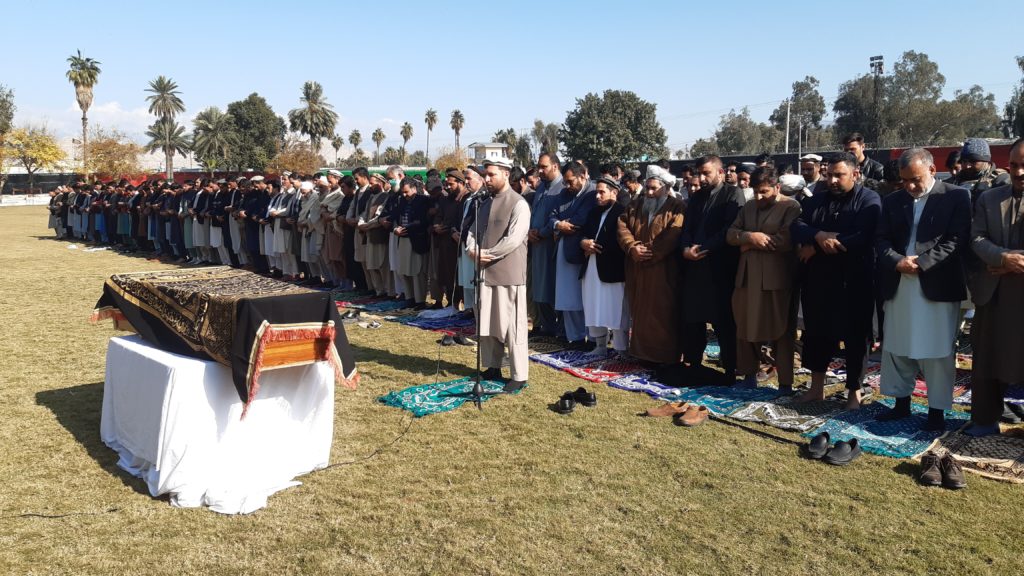
People attend the funeral ceremony of Malalai Maiwand, a journalist at Enikass Radio and TV in Nangarhar, after she was killed along with her driver in an attack on their vehicle in Jalalabad, capital of the eastern province of Nangarhar, on December 10, 2020 in Jalalabad, Afghanistan. (Photo by Wali Sabawoon/Anadolu Agency via Getty Images)

In a letter to the UNSC and UNAMA, civil society organisations from around the globe highlight the wave of journalist killings in Afghanistan and urge them to act now.

Dear permanent and elected members of the UN Security Council and Deborah Lyons, Head of the United Nations Assistance Mission in Afghanistan

Your Excellencies,

The Afghanistan Journalists Center (AFJC) and undersigned civil society organizations, dedicated to the defense and promotion of free expression and the safety of journalists, are deeply concerned by the torrent of targeted killings of journalists in Afghanistan since early 2020. These attacks have had a devastating impact on Afghanistan’s vulnerable civic space, press freedom, and related democratic rights, and we write to urge you to take immediate action.

AFJC’s press freedom tracker has documented 11 journalists and media workers who have been killed in Afghanistan since the peace deal was signed between the United States and Taliban in February 2020. Most of these journalists were deliberately targeted for their work, which underscores the lack of effective human rights protections in the country. Among the eight journalists are TV presenter Malala Maiwand, who was killed on Human Rights Day on December 10, 2020 with her driver, freelance photojournalist Rahmatullah Nikzad, who was killed in Ghazni province on December 21, 2020, and Besmillah Adel Aimaq, a radio journalist who was killed in Central Ghor province on January 1, 2021.

Media freedom and freedom of expression are human rights recognized under international legal conventions that Afghanistan is a party to, as well as domestic law. Article 19 of the International Covenant on Civil and Political Rights protects the freedom to seek, receive and impart information and ideas, while enforcement of Afghan Media Laws ensuring the security of journalists and media outlets is a fundamental responsibility of the Afghan government. Although some efforts have been made by the government to protect and uphold these rights, they have not been sufficient to prevent violations, and prosecute the perpetrators of violence against journalists. The Afghan government has made repeated pledges to ensure the security of Afghan civilians, yet there remains a culture of impunity for those responsible for carrying out targeted killings of journalists.

In response to this failure, AFJC and 200 journalists published a letter in July 2020 to Afghan President Ashraf Ghani and called on the government to end this worrying trend. Likewise, in December 2020, an EU delegation representing 8 EU member states plus Australia, Canada, the NATO Mission to Afghanistan, Norway, the United Kingdom and the U.S. Mission based in Kabul condemned the targeted and unlawful attacks on representatives of the media and called on the state to investigate and prosecute those who target these individuals with violence and immediately end impunity for killings.

We believe that strong and concerted political action from the United Nations Security Council and increased support from the UN Assistance Mission in Afghanistan are now essential, given their interest in a peaceful transition and the role that a free press plays in this endeavour. Targeting journalists creates a societal ripple effect of fear and censorship and deprives the public of crucial information about the peace process. Therefore, we request that the UN Security Council stand against the ongoing impunity for attacks against journalists in Afghanistan.

We, the undersigned organizations, call on the United Nations Security Council and UNAMA to support the media community by calling on all parties to stop violence against journalists in accordance with United Nations Security Council Resolution 2222 (2015) and other established UN standards for the protection of journalists in conflicts and warzones. Among these are the 2012 UN Plan of Action on the Safety of Journalists and the Issue of Impunity, which also calls for the need to “strengthen provisions for the safety of journalists in conflict zones” (paragraph 5.24).

With these calls to action in mind, and in light of the distinctive threats faced by journalists outlined above, the Council should:

• Use every diplomatic power at their disposal to ensure the protection of press freedom and the safety of journalists and media workers as a group of civilians under the imminent threat of physical violence in Afghanistan today and in the event that the peace deal results in a new political settlement;

• Intensify efforts to protect journalists in Afghanistan, in particular working together with the government to take serious actions to end impunity and pressure the perpetrators to cease targeting journalists;

• Scrutinize and reconsider international financial support to the Afghan government, to ensure meaningful commitments to protect media freedom and the rule of law.

• Encourage the international community to offer and strengthen practical and accessible support to threatened journalists and media workers, such as safe passage, refuge and medical assistance where necessary

Signed,

Media Freedom in Poland, Hungary and Slovenia

March 9, 2021 disabled comments

Statement to Members of the European Parliament ahead of the March 10 debate: ‘Government’s attempt to silence free media in Poland and in Hungary’

Dear Members of the European Parliament,
Article 11 of the European Union’s Charter on Fundamental Rights is under threat as media freedom and media pluralism deteriorates alarmingly in Hungary and Poland.
Over the past decade, Fidesz has perfected the process of state capture of media. Through the misuse of legislative, regulatory and administrative tools it has muzzled critical media while building a vast array of government cheerleaders that dominate the national media landscape.
The failure of the EU to act has emboldened the Hungarian government and now Poland’s Law and Justice (PiS) government is cherry-picking elements of the Hungarian model to fit the Polish system.
The model of media capture is a subtle, complex and direct threat to the public’s right to know. It is carried out through indirect means or formally independent bodies, providing governments with plausible deniability when accused of dismantling of media freedom.
Yet the effects are clear. Independent journalism is under unprecedented threat as the two governments distort and reshape the media market to their advantage, with damaging implications for both media freedom and democracy in Europe.
Similar developments are also apparent in Slovenia where the SDS government is attacking public service media and stoking hostility towards critical journalists whilst backed up by a media operation with significant investments from Fidesz linked companies.
The EU has sat on the sidelines for too long. Repeated inaction to stop the undermining of media freedom and pluralism first in Hungary, and then in Poland, has allowed this model of media capture to grow and spread to other Member States. The cost of further inaction is simply too high. It is time for the European Commission to act.

In particular we call upon the commission to
– Open investigations into the two complaints brought against the Hungarian government by Mertek Media Monitor, former MEP Benedek Javor and Klubradió for breach of EU state aid rules.

1. Complaint No. 53108 from 2019 on the abuse and discriminatory application of state advertising to starve independent outlets and reward pro-government outlets in breach of EU Article 107 TFEU
2. Complaint 45463 from 2016 on the anti-competitive mode of funding the public broadcaster which acts as a state broadcaster.

– Investigate the measures taken against Budapest’s Klubrádió, and to examine if the ruling not to renew the broadcast licence broke EU law on non-discrimination and proportionality.

– Investigate the use of Poland’s state-controlled oil company, PKN Orlen, to purchase private media and to monitor its impact on media pluralism and editorial independence

– Strengthen powers of the European Commission to protect media pluralism and independence, whether through strengthening the Rule of Law mechanism or the European Democracy Action Plan

– Support the development of an anti-SLAPP directive to protect media against abusive lawsuits such as those used in Poland against Gazeta Wyborcza and other independent media outlets.

– Ensure that EU recovery funds are not abused by governments to further their capture of media by unduly rewarding their supporters at the expense of independent media

Signatures
Association of European Journalists (AEJ-Belgium)

ARTICLE 19

Committee to Protect Journalists

European Centre for Press and Media Freedom

European Federation of Journalists

Free Press Unlimited

Helsinki Foundation for Human Rights

Index on Censorship

International Media Support

International Press Institute

Mertek Media Monitor

OBC Transeuropa

PEN International

Reporters Without Borders

Slovene Association of Journalists

Society of Journalists (Warsaw)

South East Europe Media Organisation (SEEMO)

ANNEX
Summary of Recent Developments in Poland and Hungary damaging media pluralism
In Poland
– Independent media organised a news blackout in protest against a new tax on advertising revenue that would strike independent media harshest.

– In December, the state-controlled oil company PKN Orlen took over German-owned Polska Press, giving it indirect control over 20 regional dailies, 120 weekly magazines and 500 online portals across the country and access to an estimated 7.4 million readers in the run up to 2023 local elections

– In November, PKN Orlen purchased the newspaper distribution company Ruch, a network of 1,300 newspaper kiosks

– Government allies have launched a stream of vexatious lawsuits against independent and investigative media, including over 50 against liberal daily Gazeta Wyborcza

– State advertising funds have been withdrawn from independent media, further draining revenue, and redirected to finance a bubble of pro-government media.

– In 2020 Gazeta Wyborcza was the only newspaper to be entirely excluded from the government’s Covid-19 public health campaign, denying the newspaper revenue and its hundreds of thousands of readers access to important health information

– Meanwhile plans for the ‘repolonisation’ and ‘deconcentration’ of media in the name of creating grater pluralism are, in reality, covers for the dismantling of independent media companies which can then bought by pro-government business allies or state enterprises.

– Without assertive action, we are likely to see the wholesale withdrawal of independent investors (including foreign investors) in Polish media, as has taken place in Hungary, as a direct result of discriminatory government practice

In Hungary

– Last month the government-controlled Media Council blocked the broadcast license renewal of the country’s last independent radio station in Budapest, Klubrádió, following a ten-year campaign to silence it. The media regulator responsible for the decision is populated solely by Fidesz party appointees and has a track record of decisions that discriminate against independent media

– In August, there were mass resignations from the largest independent online news portal, Index.hu, following the firing of the editor-in-chief, who had raised the alarm its independence was under threat from external pressure and Fidesz-linked investors

– In April, Hungary introduced a law criminalizing disinformation enabling the jailing of journalists for up to five years. Given that all critical media are regularly labelled sources of ‘disinformation’ by the government, the chilling effect on journalism was immediate

– Over the past decade, through its abuse of state advertising and media regulatory decisions to create a level of media pluralism in which 80% of the market for political and public affairs news is ‘financed by sources decided by the ruling party’

In Slovenia

– Since returning to power, the country’s Prime Minister has used Twitter to launch a litany of attacks on multiple journalists and media outlets, discrediting, demeaning and denigrating critical reporters and dismissing challenging reporting as “fake news”. The PM has also launched multiple attacks on the country’s public broadcaster Radiotelevizija Slovenija, even accusing it of trying to “overthrow” his government, enabling a worrying rise in online harassment of media

-In November 2020, the Slovenian Government Communication Office (UKOM) announced it had suspended the financing of the Slovenian Press Agency (STA) over a contract dispute. Press freedom groups criticised the suspension as politically motivated and part of a wider effort to undermine and stigmatise the country’s public service media

– In late February 2021, UKOM announced that it had suspended STA’s financing for the second time in three months, a move the Slovenian Journalists’ Association described as yet another attempt by UKOM and its director Uroš Urbanija to destabilize the agency through financial pressure

– In July 2020, the Ministry of Culture proposed draft amendments that would significantly alter three media laws, initially giving only five days for a public consultation. If passed, the amendments would financially weaken the public broadcaster and allow far greater government control over the management of the STA, sparking concerns the changes would pave the way for increased political interference

– In October 2020, the third largest media company in Slovenia, Planet TV, was sold to Hungarian pro-government media company TV2 Media, in a deal that intensified concern over its future independence as well as the increasing influence of the Fidesz party in the Slovenian media market

19/06/2015: More media freedom and labour rights for journalists in South Eastern Europe

February 27, 2021 disabled comments

Though the number of seminars about media freedom in the Balkans has steadily increased in recent years, the awareness in the concerned countries about the absolute lack of respect for journalists in the region has not. Why is that? Is the political will missing to improve the situation? Or is it the lack of solidarity among journalists, editors and media owners to isolate those in business and politics who are guilty of undue influence?
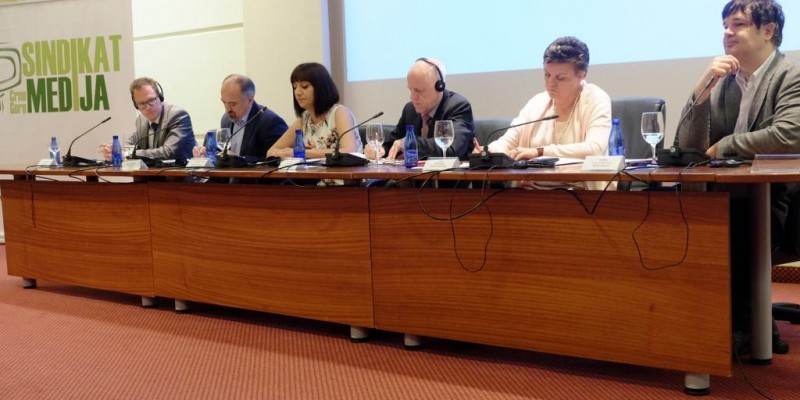
Recently, a roundtable discussion held during the Annual Meeting of the European Federation of Journalists in Budva (Montenegro) with representatives from the OSCE, SEEMO, the Konrad-Adenauer-Stiftung (KAS), and EFJ affiliates from the region reflected the dramatic situation journalism finds itself in and journalists are confronted with in the Balkans.
EFJ affiliates have called for more solidarity and a joint fight for rights and for safety, for a strengthening of professional and ethical standards, for improving the social and economic status of journalists and the fight against impunity (see EFJ Resolution on media freedom and labour rights in the Balkans).
Oliver Vujovic, the Secretary General of the Vienna based Southeast Europe Media Organization, (SEEMO), said he felt pessimistic about media freedom and the working rights of journalists in the region, including Montenegro. “Many journalists are working on the black market and some of them live of only 200 to 300 euro a month,” he noted.
Marijana Camović, the President of the Trade Union Media of Montenegro (TUMM) said in her opening speech that the level of media freedom in the country is such that anyone who could find another job immediately quits journalism.
Many journalists in Montenegro work around 12 to 15 hours a day, as shown in a recent survey of the OSCE. Failures over the years have been so drastic that those who still have jobs are often forced to cover several job positions at once and for lower wages, said Camović.
Journalists are exposed to pressures from both politics and employers and are starting the day with the fear of losing jobs. For example, in the last few months, more than 30 journalists, employees and (false) freelances working for media outlets owned by Ringier Axel Springer Serbia were dismissed without any notice, reasons or any objective criteria for layoffs. The EFJ affiliates in Serbia immediately reacted to the massive dismissals. The EFJ introduced a formal complaint about this case at the Council of Europe’s platform for protection and safety of journalists. The EFJ affiliates in Switzerland and Germany have published press releases in solidarity with their Serbian colleagues.
In general, foreign media owners in the region have not fulfilled the expectations of journalists in terms of working conditions and press freedom issues. This has been considered as a use of double standards. Instead of improvement of the media situation as well as labour and professional protection of journalists, foreign and domestic media investors are profit-oriented. With unofficial banning of unions in media companies by western corporations, journalists and media workers are usually left without legal advice and social protection. This is the sad profile of a majority of journalists in Serbia, Montenegro and Macedonia.

Another of the many challenges in the Balkans are how to bring more light into media ownership structures and separate between economic and political interest? In most countries in South-Eastern Europe there is a complete lack of transparency over who owns media in the country.

Some other negative trends observed by EFJ affiliates in the region, include:
Self-censorship: journalists are afraid of writing the facts or sharing their opinions because of possible retaliations. This is becoming increasingly a serious problem amongst journalists, while examples of drastic censorship on the internet, taking off news websites critical of the current government and arrests of citizens posting on social networks take place.
Tabloidisation: Journalism style is rapidly changing away from politics and foreign affairs towards entertainment and celebrities. This is a specific and very noticeable problem of Serbian but also Balkan media scene. This trend negatively affects the public rights to have access to verified information on topics of public interests, polarize the society and boost political influence on journalists and media professionals. Journalists are increasingly asked to make propaganda instead of reporting the facts.
Impunity: The deaths and attacks against journalists are still unsolved, crime and attacks against journalists are not properly investigated. Impunity is high on the agenda!
In this context, what can the international media and organisations do to support free journalism in the Balkans? A points action plan could be the following :

1. Helping national journalists’ unions and associations in South-Eastern Europe to be strong, independent and efficient in order to help journalists’ social and professional rights;
2. Supporting social dialogue in the media sector and help to uphold International Labour Organisation and European standards in all media (national and foreign owned);
3. Initiating and continuing at European and national level debates with politicians and interested media owners about quality and journalism as a public good;
4. Forming alliances among different media organisations, human rights and media watchdog groups, unions and universities on quality, training, media literacy and ethics;
5. Supporting training for journalists but also government officials and politicians about what independent media means and what conditions are required for journalists to do their job.

Author: Renate Schroeder (Director @EFJEurope)

11 February 2021 : Open letter to Members of the European Parliament

February 12, 2021 disabled comments

Open letter to Members of the European Parliament
11 February 2021

ARTICLE 19 and a coalition of digital rights defenders sent the following open letter to Members of the European Parliament, including Chairs and vice chairs of IMCO and ECON, and Rapporteurs and (so far known) Shadow Rapporteurs for Digital Markets Act (DMA) and Digital Services Acts (DSA).

Dear Members of the European Parliament,

We, a collective of civil society organisations and digital rights defenders in the EU, welcome the European Commission’s focus on improving the way digital markets work. We also share its concerns about gatekeeper platforms’ behaviour in many of these markets that undermines competition and market contestability. We equally share the Commission’s assessment that this leads to ‘inefficient market outcomes in terms of higher prices, lower quality, as well as less choice and innovation to the detriment of European consumers.’ (Commission Staff Working Document, SWD(2020) 364 Final, p.1)
However, we believe that the proposal for a Digital Markets Act (DMA), presented by the European Commission on 15 December 2020, fails to respond adequately to the challenges at stake and leaves some important gaps that need to be filled.
Too little focus on end users Various practices by gatekeepers exploit end users excessively. These practices not only harm end users’ economic interests as consumers and customers, they also have a negative impact on users’ civic rights. In particular, individual gatekeepers can dictate a quality standard in the market that affects, among other things, the protection of users’ data, their freedom of expression and their right
not to be discriminated against.
However, the European Commission’s proposal totally fails to consider this perspective. Indeed, there is little mention of end users’ perspective in the proposed Regulation, and the same is true for the accompanying package (impact assessment and explanatory memorandum). On the contrary, the main focus is on the relationships between core platforms and their business users.
This approach is all the more difficult to justify if one considers that the protection of end users from various kinds of exploitative conduct by companies in strong market positions is traditionally one of the main goals of competition and pro-competitive measures. Unfortunately, the Commission has long since concentrated excessively on the economic aspects of relationships between competitors. This is a failure that urgently needs a fix. EU regulators should be challenged for wanting to protect business users more than end users in the Digital Single Market. We believe this to be a substantial gap, and we call on the European Parliament and on the EU’s Council of Ministers to fill it.
DMA would leave power concentrated in the hands of a few gatekeepers According to the executive summary of the Impact Assessment Report, the DMA proposal should ‘foster the emergence of alternative platforms, which could deliver quality innovative products and services at affordable prices.’ (p. 2). However, the proposal itself falls short on this promise. On the contrary, it seems to focus on creating conditions for more competition at the business users’ level, rather than on creating conditions for more platforms to enter these markets or giving end users more choice between platforms.
In other words, the proposal aims to protect business users from, for example, self-preferencing behaviour by vertically integrated platforms, the imposition of clauses to ensure uniform prices and the mandatory use of certain platforms’ services in their relationships with end-users. But this would do little to create the conditions to restore effective competition at the platforms’ level. An extreme example of this approach is Article 6(1)(f), which would require gatekeepers to provide access and interoperability only with regard to business users or ancillary services. Rather than fostering the emergence of new platforms, this provision has the potential to increase the systemic dependence of business users and ancillary services’ providers on the core platform, whose position remains uncontested and secured in the its primary market(s).
By narrowing the focus on contestability and entry for business users, the DMA proposal seems to accept the status quo for core gatekeeper platforms. But why does it do so? Why does the Commission leave basically untouched such a strongly centralised environment, which, as the same Commission has repeatedly said in the past, raises structural competition problems? Moreover, as we highlight, leaving this strongly centralised environment untouched is surely not the best solution for individuals because it provides a few platforms with too much power over users’ rights and over
the flow of information in society. We strongly disagree with the Commission’s approach, and we therefore challenge the Commission to at least explain why they have adopted it. We also call on the European Parliament and on the Council to change this approach, and to work on more ambitious solutions to stimulate the emergence of alternative platforms.
Discussion of the DSA and DMA cannot be kept separate The Digital Services Act (DSA) and DMA have been conceived and presented as two complementary legislative proposals to together tackle the complex challenges facing the EU’s Digital Single Market. These challenges are economic, social, and political in nature and adequately solving them is key to guaranteeing the future of EU democracies and respect for the EU’s fundamental values. To tackle all the main challenges we face today we must look at digital services, and the markets where they are provided, together. The goal of a fair, open and free digital environment can only be achieved if service providers respect certain quality and human rights standards, and if markets are no longer controlled by a handful of gatekeepers. The EU needs a holistic approach, strong coordination and complementarity between the rules for services and those for markets.
Therefore, we call on the European Parliament and on the Council to adopt this holistic approach to the DSA and DMA proposals with a view to enhancing synergies, avoiding conflicts and filling gaps. We also call on civil society and on other relevant stakeholders to engage as much as they can in the debate about both proposals. In fact, the future we desire for the EU digital sphere depends in equal measure on the way we will regulate digital services and on the way we will regulate digital markets.

Your sincerely,
Access Now
Amnesty International
ARTICLE 19
Association of European Journalists
Association of European Journalists Belgium
Bits of Freedom
Civil Liberties Union for Europe
Cultural Broadcasting Archive
Digitalcourage
Electronic Frontier Foundation
epicenter.works
European Digital Rights
FITUG e.V.
Free Knowledge Advocacy Group EU
Free Press Unlimited
Global Forum for Media Development
Homo Digitalis
IT-Pol Denmark
Lie Detectors
Media Diversity Institute
Open Society European Policy Institute
Ossigeno per l’informazione
Panoptykon Foundation
Privacy International
RNW Media
South East Europe Media Organisation (SEEMO)
Tutanota
Vrijschrift
Xnet
Zavod Državljan D

3 November 2009. IFJ/EFJ, SEEMO and WAZ Demand Justice after Attack on Albanian Journalist

January 5, 2021 disabled comments

The International Federation of Journalists (IFJ) and its European group the European Federation of Journalists (EFJ), the South East Europe Media Organisation (SEEMO) and WAZ Media Group today jointly condemned the attack on Albanian journalist Mero Baze yesterday evening in Tirana.

“This is a brutal and vicious attack on a professional journalist that demands a thorough and independent investigation to punish the perpetrators”, declared IFJ President Jim Boumelha. “The evidence strongly suggests he has been assaulted for his work. Those who committed and ordered this crime need to be brought to justice. Failure would sustain the culture of impunity that forces journalists to live and work in fear and destroys democratic fabric of the country”.

According to our information, Mero Baze was attacked by the bodyguards of businessman Bezart Taci as he was leaving a pub in downtown Tirana yesterday evening. The bodyguards beat up Baze for several minutes before leaving. Baze had to be helped to be transferred to the hospital. The police arrested two men after the attack and are still looking for Mr Taci. Today the Albanian authorities also condemned the attacks.

Baze is the editor of the daily Tema and currently contributes to the Factor Plus programme broadcast by Vizion Plus TV channel of which the WAZ Media Group owns a share. It is not the first time that Baze has been targeted.

His paper Tema was expelled from its office last January and he has been
threatened several times in the past.

This attack comes on the eve of the third South East Europe Media Forum (SEEMF) to take place in Tirana from the 4 – 6 of November 2009, where high-ranking media representatives from the South East European region
will debate the challenges facing the media industry and present for the first “WAZ-IFJ Prize for Courage in Journalism”.

Oliver Vujovic, SEEMO Secretary General, condemned also these attacks “Physical attacks on journalists are both unacceptable and alarming, and indeed we welcome the condemnation of this act by Albanian autorities.
Journalists must be able to report without fear of harassment and intimidation. This case is very worrying because this is not the first time that a journalist in Albania was physically attacked, and also not the first time, that this was done by bodyguards. This act of violence is obviously aimed at intimidating the work of journalists and investigative reporters in Albania”.

The WAZ Media Group stands in full solidarity with the condemnations of the two professional groups and calls on the media for comprehensive reporting on this case.

17 November 2011 SEEMO, IPI and Partners Mission to Hungary

January 5, 2021 disabled comments

Thursday, 17 November 2011, 12:28 pm

Press Release: SEEMO – International Partnership to Highlight New Media Laws

Vienna-16 November 2011 – The International Press Institute (IPI) and its affiliate, the South and East Europe Media Organisation (SEEMO), in conjunction with a number of international media freedom groups, today began a joint International Partnership Mission to Hungary to highlight the country’s regressive new media laws.

IPI Press Freedom Adviser for Europe and North America Steven M. Ellis and SEEMO Secretary General Oliver Vujovic joined delegates from Article 19, the European Federation of Journalists, Freedom House, the Independent Journalism Center/Moldova, Index on Censorship, the International Freedom of Expression Exchange, International Media Support, the Media Diversity Institute, the Network for Reporting on Eastern Europe, the Open Society Media Program and the South East European Network for Professionalization of Media.

Other delegates scheduled to join the mission to Budapest, which was set to take place from today until Wednesday, included a representative of the World Association of Newspapers. Mission participants were also joined by representatives from local partners such as the Center for Independent Journalism, Budapest, the Hungarian Civil Liberties Union, the Károly Eötvös Institute and Mediajogfigyelo.hu.

Participants on the mission were scheduled to meet with journalists, members of civil society and representatives of government during the mission.

Hungary’s media laws, portions of which entered into effect in January as the country took over the European Union’s six-month rotating presidency, have been heavily criticized by top EU politicians, the Organization for Security and Co-operation in Europe (OSCE), journalists and a host of media freedom and freedom of expression groups.

IPI Press Freedom & Communications Manager Anthony Mills said:
“We hope that this mission will send the message that the spotlight remains firmly on Hungary. Despite some amendments to the legislation, it remains highly troubling. The broad participation in this mission serves to underscore the depth of concern that exists among a wide array of stakeholders about the potentially chilling effect of the laws. This is especially poignant because Hungary is a member of the European Union which is supposed to stand for inalienable democratic values including that of press freedom.”

Vujovic added:

“This is an opportunity for us to continue to monitor developments after the changes in the laws. We are still worried about the media situation in the country and we are using this visit to speak with media representatives to see if there have been cases of misuse of new regulations and to determine how they see the law nearly one year after it first became effective.”

The current mission marks the third joint visit by IPI and SEEMO to Hungary in relation to the new media laws.

18 November 2011 SEEMO, IPI and Partners Mission to Macedonia (FYROM / ROM)

January 5, 2021 disabled comments

The International Press Institute (IPI) and its affiliate, the South and East Europe Media Organisation (SEEMO), today began a two-day press freedom mission to the Republic of Macedonia / Former Yugoslav Republic of Macedonia, in concert with a joint delegation of freedom of expression and media development groups.

IPI Press Freedom Adviser for Europe and North America Steven M. Ellis and SEEMO Secretary General Oliver Vujovic joined delegates from the Open Society Media Program, the Global Forum for Media Development, Freedom House, Index on Censorship, Article 19, the Media Diversity Institute and others in the mission.

Participants on the mission met with journalists, members of civil society and representatives of government, and are scheduled to meet with Prime Minister Nikola Gruevski.

The mission comes at a worrying time for media freedom in the country. SEEMO conducted a press freedom mission to Macedonia last month and in a report released yesterday raised concerns about: selective implementation of laws and regulations relating to media; a lack of transparency in government-funded advertising campaigns and a lack of independence of regulatory bodies and the public broadcaster; the continued criminalisation of defamation; and failures by journalists to live up to professional standards.

IPI Press Freedom & Communications Manager Anthony Mills said: “The press freedom environment in the country appears to be deteriorating. We are seeking, through this mission, to shine a spotlight on the worrying media developments.”

Vujovic added: “The fact that this is SEEMO’s second visit to Macedonia in such a short period demonstrates how deeply concerned we are regarding the media situation in the country. We plan to observe upcoming developments carefully.

28 April 2017: Joint Reaction Macedonia

January 5, 2021 disabled comments

Following ECPMF-EFJ-SEEMO-OBCT fact-finding mission to Macedonia, on 25th-28th April 2017, the four organisations issued this statement today, regarding rising violence against journalists in Macedonia:

We hereby express our deep concerns about the yesterday‘s violent attacks against journalists in the parliament of the Republic of Macedonia.
From the beginning of 2016 until yesterday at least 21 attacks against journalists in Macedonia have been registered by the Association of Journalists of Macedonia (ZNM), out of a total of several dozens within the last years. All this clearly demonstrates a rising trend in violence against journalists.

The state of media freedom in the country is very worrying. Attacks on journalists are a direct threat to democracy.

On invitation of ZNM and the Western Balkan´s Regional Platform for Advocating Media Freedom and Journalists Safety the European Centre for Press and Media Freedom (ECPMF) conducted a fact-finding mission to Skopje from 25 to 28 April 2017. The delegation, including the European Federation of Journalists (EFJ), South East Europe Media Organisation (SEEMO) and Osservatorio Balcani e Caucaso Transeuropa (OBCT) examined the increased violence against journalists in Macedonia and listened to their experiences.

During the mission the international delegation so far conducted a total of 13 interviews with 15 representatives of several media outlets, NGO´s, the Agency for Audio and Audiovisual Media Services and the Media Ethics Council. Additionally the delegation met the Minister of the Interior, Mr Agim Nuhiu.

According to our findings among the main reasons for the increased violence are the following:

 – The political climate, anti-media rhetoric and polarization lead to a highly unsafe environment for journalists.

 – There is no political will to ensure conditions for free and independent journalism. State institutions and political stakeholders undertake no responsibility for the protection of journalists.

 – The criminal and civil justice systems do not deal effectively with threats and violence against journalists. No implementation of media protection laws and no prosecution of the perpetrators make journalists an easy target.

The signees of this statement condemn any aggression on journalists in Macedonia.

We want to strongly urge the political parties and all related bodies and authorities to prevent further attacks and ensure a safe environment for journalism and freedom of expression. We call on the judiciary and all responsible authorities to stop the ongoing impunity.

 – Macedonian authorities must conduct swift and efficient investigations on any single case of attack on physical safety and integrity of journalists. Politicians should refrain from spreading hateful rhetoric that serves violence.

 – International conventions protecting human rights and freedom of expression shall be respected.

 – The coming ruling coalition and the opposition must comply with Macedonia’s commitment to protect journalism and to guarantee internet freedom. Macedonian authorities must implement without any delay the recommendations of the Committee of Ministers of the Council of Europe on safety of journalists (Recommendation 2016-4) and on Internet freedom (Recommendation 2016-5), adopted on 13 April 2016. Following these standards, any kind of additional state regulation on media content is unacceptable.

 – Macedonian authorities must consult for any coming reform in the media sector the legitimate national organisations promoting media freedom and independent journalism: the Council of Media Ethics of Macedonia (SEMM), the Association of Journalists (ZNM), the Trade Union of Journalists (SSNM).

We also call on all journalists to take their role as watchdogs seriously. We encourage them to report and file complains if they are attacked, intimidated or harassed. They should stand in solidarity with their colleagues, cooperate and support each other.

We, as European media freedom and journalists organisations within the freedom of expression community, stand with our colleagues in Macedonia. We will further observe their situation and raise our voices to support them. There will be a full report on the fact-finding mission in May.

Skopje, 28 April 2017

Signing organisations:
 – European Centre for Press and Media Freedom (ECPMF)
 – European Federation of Journalists (EFJ)
 – Osservatorio Balcani e Caucaso Transeuropa (OBCT)
 – South East Europe Media Organisation (SEEMO)
 – Association of Journalists of Macedonia (ZNM)
 – Western Balkan´s Regional Platform for Advocating Media Freedom and Journalists Safety
This statement is endorsed by the following organisations:
 – Ethical Journalism Network
 – Index on Censorship
 – Journalismfund.eu
 – Reporters Sans Frontières / Reporters Without Borders
 – SCOOP Macedonia