Sonja Zhecheva – Mutafova / Соня Жечева-Мутафова (-2022)

22 December 2021: Letter to the President of the Republic of Poland

December 24, 2021 disabled comments

English Version

Dear Andrzej Duda, President of the Republic of Poland,

The undersigned international media freedom and journalists groups are writing to urge you to apply a presidential veto to the so-called “Lex-TVN” amendment passed by the Sejm on December 17, which we believe poses a fundamental threat to media freedom and pluralism in Poland. This bill represents a direct attack on the independence of the country’s biggest private broadcaster, U.S-owned TVN, and its news channel TVN24.

Rather than a sincere effort to protect Poland against hostile foreign media takeovers, our organisations are convinced that this media ownership law has always been about one goal: slicing through TVN’s ownership structure and forcing Discovery to sell a controlling 51% stake, opening the door for government-allied entities to potentially acquire stakes and ultimately engineer a shift in editorial position to one more favourable to the ruling party. Far from a secret, the Law and Justice (PiS) MP responsible for drafting the amendment, Marek Suski, has publicly stated the true intention of the law: obtaining greater influence over TVN’s programming.

Such a clear effort to enact media legislation that pushes out foreign owners is reminiscent of well-documented tactics used by governments in Hungary and Russia to bring independent channels under control via government-friendly entities. While laws restricting foreign media ownership do exist in EU member states, this bill is not a principled and proportionate effort to protect the Polish information landscape. Rather, it is clearly aimed at undermining one particular outlet and is part of a wider effort to “repolonise” the media. As you have previously outlined, any changes to media ownership must be conducted under market principles rather than via heavy-handed government intervention. Lex-TVN represents a clear and politically-motivated effort to strong-arm such changes through legislation and must therefore be opposed.

In addition to undermining fundamental democratic values, the proposed amendment to article 35 of the Broadcasting Act also raises legitimate doubts about its compliance with EU law and will almost certainly lead to a legal challenge from the European Commission. As the Senate has already identified, it is also inconsistent with the Polish Constitution. It also breaches the U.S-Poland Bilateral Investment Treaty, simultaneously undermining Poland’s reputation as a welcome climate for foreign investment and uprooting relations between Poland and its closest ally. That the bill was unexpectedly approved by the Sejm just before the parliamentary break, without prior announcement, and in violation of rules on adequate debate, is also deeply problematic.

The stakes of this decision for media freedom, democracy and the rule of law in Poland are high. Ultimately, your decision about this bill should not be about whether one agrees or disagrees with TVN’s coverage. It should be about the principle of media pluralism and the ability of citizens to access information from a variety of news sources. It should also be about the fundamental right of the media to fulfil its watchdog role and scrutinise those in power. And it should be about ensuring fair market conditions in a media sector free from government interference.

After the Sejm passed the initial bill in August 2021, you outlined your concerns over the law’s detrimental effect on freedom of speech and diplomatic relations. Despite being firmly rejected by the Senate, the bill awaiting your decision remains unchanged in both its form and its ultimate purpose. We therefore urge you to remain true to your word and use your veto power to outright reject this law and safeguard the freedom of the press in Poland.

Signed:

Archiwum Osiatyńskiego / The Wiktor Osiatyński Archive
ARTICLE 19
Association of European Journalists (AEJ)
Coalition for Women in Journalism (CFWIJ)
Committee to Protect Journalists (CPJ)
European Centre for Press and Media Freedom (ECPMF)
European Federation of Journalists (EFJ)
Helsinki Foundation for Human Rights (Warsaw, Poland)
IFEX
International Press Institute (IPI)
Free Press Unlimited (FPU)
OBC Transeuropa (OBCT)
Reporters Without Borders (RSF)
Public Media Alliance (PMA)
Society of Journalists, Warsaw
South East Europe Media Organisation (SEEMO)
The Daphne Caruana Galizia Foundation

• Letter sent electronically to the office of the President on Wednesday 22 December 2021

Polish version – Polska wersja

Szanowny Panie Prezydencie Andrzeju Dudo,

My, niżej podpisane międzynarodowe organizacje działające na rzecz wolności mediów i dziennikarzy piszą, zwracamy się do Pana Prezydenta z apelem o zastosowanie prezydenckiego weta wobec nowelizacji ustawy medialnej znanej powszechnie jako „lex TVN”, przyjętej przez Sejm 17 grudnia 2021. Naszym zdaniem tworzy ona fundamentalne zagrożenie dla wolności i pluralizmu mediów w Polsce. Ustawa w obecnym kształcie stanowi bezpośredni atak na niezależność TVN największego, należącego do USA prywatnego nadawcy w kraju, i jego kanału informacyjnego TVN24.

Nasze organizacje są przekonane, że zmianie ustawy medialnej przyświeca cel zgoła inny niż szczera ochrona polskiego rynku przed wrogimi przejęciami mediów zagranicznych. Mianowicie chodzi o wpłynięcie na strukturę własnościową TVN i wymuszenie na Discovery sprzedaży kontrolnego pakietu 51% udziałów. To stworzyłoby warunki do potencjalnego przejęcia udziałów przez podmioty sprzymierzone z rządem, co w efekcie mogłoby wpłynąć na linię redakcyjną, tak aby była bardziej przychylna władzy. Sam Marek Suski, poseł PiS odpowiedzialny za przygotowanie nowelizacji, w publicznych wypowiedziach nie ukrywał prawdziwej intencji stojącej za zmianą ustawy jaką jest właśnie uzyskanie większego wpływu na przekaz programowy TVN.

Strategia wprowadzania w życie przepisów medialnych, które wypychają z rynku zagranicznych właścicieli, przypomina dobrze znaną taktykę stosowaną przez władze na Węgrzech i w Rosji. Chodzi o kontrolę niezależnych kanałów za pośrednictwem podmiotów przyjaznych rządowi. Chociaż w państwach członkowskich UE istnieją przepisy ograniczające własność mediów zagranicznych, proponowana przez PiS nowelizacja ustawy medialnej nie spełnia warunków do traktowania jej w kategorii proporcjonalnego środka służącego ochronie krajobrazu medialnego w Polsce. Wręcz przeciwnie – ma wyraźnie na celu osłabienie jednego konkretnego podmiotu i wpisuje się w szerszy plan dążenia do tzw. „repolonizacji” mediów w kraju. Wszelkie zmiany dotyczące własności mediów muszą być przeprowadzane na zasadach rynkowych, a nie poprzez arbitralną interwencję rządu. Lex-TVN jest wyraźnym i umotywowanym politycznie działaniem na rzecz usankcjonowania takich zmian w ustawodawstwie czemu należy się przeciwstawić.

Proponowana zmiana art. 35 ustawy o radiofonii i telewizji oprócz podważenia podstawowych wartości demokratycznych budzi również uzasadnione wątpliwości co do jej zgodności z prawem UE i istnieje wysokie prawdopodobieństwo, że zostanie zaskarżona przez Komisję Europejską. Jak już wskazał Senat, jest ona również niezgodna z Konstytucją RP. Ponadto narusza również polsko-amerykański dwustronny traktat inwestycyjny, jednocześnie podważając reputację Polski jako przyjaznego klimatu dla inwestycji zagranicznych i zrywając stosunki między Polską a jej najbliższym sojusznikiem. Głęboko problematyczne jest również to, że ustawa została niespodziewanie uchwalona przez Sejm tuż przed przerwą parlamentarną, bez uprzedniej zapowiedzi i z naruszeniem zasad jakimi powinna cechować się debata sejmowa.

Pańska decyzja dotycząca nowelizacji ustawy medialnej ma ogromne znaczenie zarówno dla wolności mediów, jak i demokracji i rządów prawa w Polsce. Dlatego też niezwykle istotnym jest, aby nie była ona podyktowana osobistym stosunkiem do przekazu jaki reprezentuje TVN i tym, czy zgadza się Pan z treściami tam przedstawionymi. Decyzja powinna być podjęta w duchu zasady pluralizmu mediów i możliwości dostępu obywateli do informacji z różnych źródeł wiadomości. W podjęciu tak ważnej decyzji priorytetem powinno być zabezpieczenie fundamentalnego prawa mediów do pełnienia swojej roli strażnika i kontrolowania rządzących. I wreszcie – decyzja musi być w zgodzie z zasadą zapewnieniem uczciwych warunków rynkowych w sektorze medialnym, wolnym od ingerencji rządu.

Już po uchwaleniu przez Sejm wstępnej ustawy w sierpniu 2021 roku wyraził Pan Panie Prezydencie swoje obawy dotyczące szkodliwego wpływu ustawy na wolność słowa i stosunki dyplomatyczne. Pomimo zdecydowanego odrzucenia projektu przez Senat, projekt, który obecnie oczekuje na Pańską decyzję pozostaje niezmieniony zarówno w swojej formie, jak i jeżeli chodzi o cel, któremu przyświeca. Biorąc pod uwagę wszystkie omówione przez nas zagrożenia i obawy, zwracamy się do Pana Panie prezydencie z apelem, by dotrzymał Pan słowa, wykorzystał swoje prawo weta by odrzucić proponowane zmiany i tym samym jasno opowiedział się po stronie wolności mediów w Polsce.

Archiwum Osiatyńskiego / The Wiktor Osiatyński Archive
ARTICLE 19
Association of European Journalists (AEJ)
Coalition for Women in Journalism (CFWIJ)
Committee to Protect Journalists (CPJ)
European Centre for Press and Media Freedom (ECPMF)
European Federation of Journalists (EFJ)
Helsinki Foundation for Human Rights (Warsaw, Poland)
IFEX
International Press Institute (IPI)
Free Press Unlimited (FPU)
OBC Transeuropa (OBCT)
Reporters Without Borders (RSF)
Public Media Alliance (PMA)
Society of Journalists, Warsaw
South East Europe Media Organisation (SEEMO)
The Daphne Caruana Galizia Foundation

Interview with SEEMO Member Boris Bergant (December 2021)

December 9, 2021 disabled comments

Boris Bergant
born 19.4. 1948, Maribor, Slovenia

Media Adviser

Experience in broadcasting: Editor of foreign affairs, Editor in chief news and current affairs, Deputy Director at TV Slovenia, radio programming, Deputy Director General RTV SLO 1989-2006

1990-1992 President of Circom Regional, European Association of Regional Television

1990-1992, and from 1996-2006 member of the Administrative Council of European Broadcasting Union (EBU)

1993-1998 Vice Chairman of the TV Committee of the EBU, on its behalf also member of the EBU Radio Committee

1995-2001 Secretary- General, Circom Regional

1998-2008 Vice President of the European Broadcasting Union (EBU/UER)

2009- Senior Consultant, EBU
working as consultant for broadcasting management, content, organisation
( developed Strategies of Public Service Media in Slovenia, Moldova, Georgia,
Serbia, Croatia, Montenegro, Ukraine ),
consulting media in Serbia, Slovakia, FYR Macedonia, Armenia, Kyrgistan, Bosnia
and Hercegovina, Kosovo, Lithuania, Cyprus, Portugal, Austria, Italy

2010 President, Board of SEEMO ( South and East Europe Media Organisation),Vienna

Representative of the Republic of Slovenia in different media committees of the Council of Europe ( 2004-2008 Chairman of the Standing Committee on Transfrontier Television).

Member of the International Academy of Television Arts & Sciences in New York.
Member of the World Committee ISAS for standardisation of broadcasting, Internet and press.

Experience in journalism: journalist by profession, President of the Slovenian Journalist Association (1987-1991).

Awarded with high recognitions for journalistic work:
Tomšičeva nagrada for the best journalistic achievement in Slovenia, rewards at the TV festivals Monte Carlo, New York, Leipzig
Busek Award for outstanding achievements

Publishing in the field of foreign politics and broadcasting

Foreign languages: English, German, Italian, Serbian/Croat

Address: BorBER,media activities, Ltd. Abramova ulica 8, 1000 Ljubljana, Slovenia , tel. +38641 641877, +3861 2561558, fax + 3861 2561559
E mail: boris.bergant@borber.si, bergantb@siol.net

Can you tell us a little more about your childhood and student period.

I was born in Maribor, a town with significant importance for the history of Slovenian statehood. I enjoyed elementary and middle school level education there, and then moved to Ljubljana to study. In Maribor I was already starting my journalism. It was a pleasant and very optimistic, but also active youth.

As a young student you spent a period in USA. It was the year 1968, and you lived in the socialist Yugoslavia. Was it easy for you to travel from Yugoslavia, as in many countries in East block it was very hard to leave the country.

Since the break with Stalin in 1948 Yugoslavia went its own geopolitical way, based on multiethnic and multi-religious, federal state composition. Based on bloody experiences from the past, Yugoslavs decided not to belong to any political/military alliance. Tito was also co-founder of the political movement of non-aligned, bloc-free countries – , playing a relatively significant role during the east-west confrontation, trying to ease the cold war paradigm and assist a historic process of de-colonisation. This became later a part of my journalistic activity.
We always regarded Yugoslavia as an international factor, much observed as an example of a country developing democratic ( and not bolshevik) socialism, as a unique federation of formally sovereign nations and nationalities as a country in the middle certainly not inside the “iron curtain”. We knew and we know that this was not an easy way, nor without problems. Contrary – a paradigm with errors and many fatal mistakes. But as we have been in this special international situation and by definition of our regime – every Yugoslav citizen did have right to his passport and could freely travel around the world. There has been ( until later changes of their position ) only three countries where we could not go/enter – South Africa ( because of apartheid), South Korea ( as a follow up of the war) and Taiwan ( following the one-China approach ). But this changed too.

Indeed my studying stayobert in the “revolutionary “ year 1968 in the USA has in many aspects influenced my scope, orientation and approach. It was the year of the assassination of Martin Luther King Jr., and Robert Kennedy, the anti Vietnam and ethnic uprising, burning Washington DC etc. I stayed in Kenyon College, Ohio (respected political sciences college, where Olof Palme and Paul Newman studied earlier ) . They are members of the Great Lakes College Association with whom the University of Ljubljana had and I believe still has a program of student’s exchanges. It is significantly to mention that very many our ( at least Slovenian ) scholars in the field of sociology have been studied or advanced studied in the USA. It shows our social context.

Can you tell us a little more about your family. Your son is a long year diplomat, you have several journalists in your family.

Well, we are a predominantly artistic- journalistic- juristic family. My grandmother settled in Maribor ( from Ljubljana ) after World War 1 to found the Slovenian national theatre in a mostly German-speaking elite town. My father was an active sportist and sports correspondent, my already passed elder brother was all his life journalist and editor, as also his son- my nephew. My son is a diplomat (currently Slovenian ambassador in Serbia) , the families women are medical doctor (mine) and in high juridical functions ( son’s and nephew’s). My both already adult grandchildren are students in the fields of law and arts.

Boris Bergant and spouse Verena

Boris Bergant with son Damjan’s family

How and when did you start your journalistic career?

I was always interested only in journalism, But my interest fields were foreign politics and international relations.

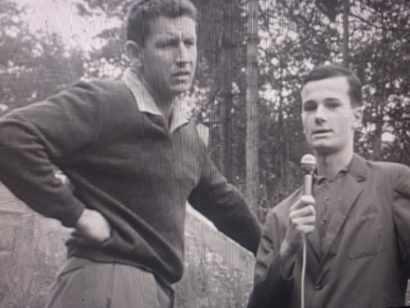
My father suddenly died in my age of 14.He had a regular sports program in the regional Radio Maribor ( a branch of our public service broadcasting house ).The editor at this station offered me to continue this program regardless of my age, appreciate and sponsor my talent. So I can say I have been journalistic and non-stop active in journalism since that age. While studying in Ljubljana, I was continuously working in Radio as a sports reporter and later in TV sports. I belong to the first news and Info generation of TV in Slovenian language, since forming the regular news program in 1968.

Boris Bergant as sports reporter 1967

Can you present us a little more your work in RTV Slovenia, where you worked from 1969 till 2009.

I experienced a usual professional career from a journalist and reporter in the daily TV news to an editor of the foreign policy department, chief editor of news, and later as deputy TV director . Later – for 17 “transitional years “ I was deputy Director General of RTV SLO. Those were times of many political changes on the top and either the incoming DG or the staff wanted guarantee for some sort of professionalism. It was an exciting and demanding part of my professional life – but also the most effective indeed.

In the years before the managerial duties, I was also active in the Slovenian Association of Journalists, in the period until 1991 it’s President ( for four years, amid transition into pluralistic democracy ). In that period, we finally managed to enter into the International Federation of Journalists – which was due to the foreign policy of the former Yugoslav Federation not being possible. Our association played together with IFJ a vital role to assist the journalists in former Yugoslavia being in war. This was also the time of establishing fruitful relations with IPI and the later activities within SEEMO.

You were involved in the start of the Alpe – Adria TV project. Can you present us this project.

Yugoslavia before 1990 has been per definition, very active in international relations. In this framework also Slovenia was attentive to maintaining and developing international links. During the time Slovenia became, due to economic achievements and development, even more attentive for extending ties with Western Europe and particularly within the co-called mid-European cultural area, using the earlier historical ties as a window for new definitions and common fields.

The idea of forming a radio and TV project Alps – Adria ( later Alps-Danube-Adria) was a common project olf ORF and RTV Ljubljana ( now RTV Slovenia). It started in 1981, to reaffirm our common values, elaborate history, achievements and promote talents and knowledge of each other. Since we had open borders, it should also foster travel and exchange. But we also wanted to include countries in the eastern vicinity.

By much persuasion, we managed finally to include Hungary.
This project is Europe’s oldest transborder regular exchange of program (a truly co-production ) still in existence. Editors have changed, but the project, now only in TV and online, remained. Partners are regional and national PSM from Slovenia, Croatia, Hungary, Italy, Bavaria and Austria. There have been ups and downs, with temporary absence, but the idea is still pursued, regularly, fortnightly .A brilliant example of professionalism and devotion.. My great honour and satisfaction.

We initiated much such cooperation of transborder nature in order to open the minds and borders. One of my favourite is the coproduction of 18 TV stations in the 80-ties “Minorities – the wealth of Europe” including Slovenia, Croatia, Vojvodina, Hungary, Sweden, Switzerland, Finland, East Germany (GDR) Austria, Denmark, Wales, Catalonia. This was one of the first documentary-art presentations of the problem of minorities in Europe. To signal that they must and should not be an obstacle, instead rather a bridge among nations and within the states.

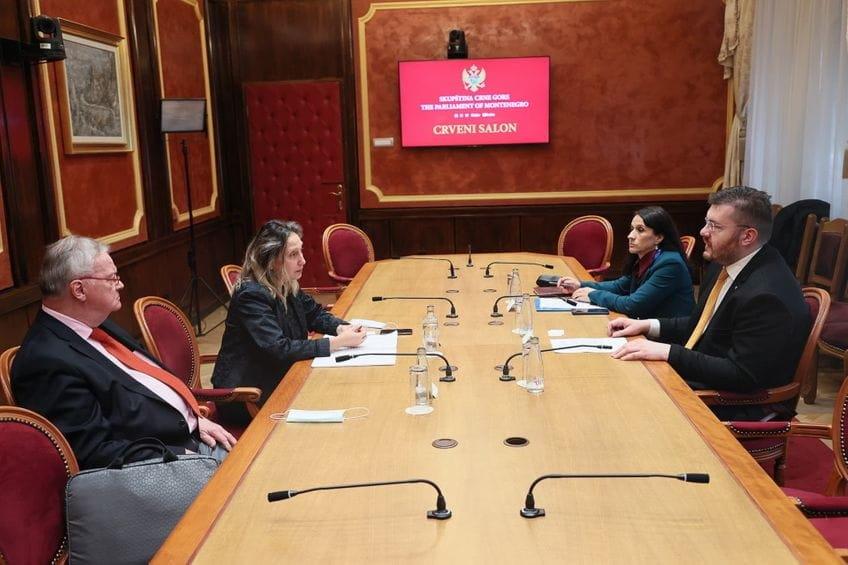
Boris Bergant with Radka Betcheva ( EBU ) in Parliament of Montenegro,
November 2021

How you started the cooperation with EBU?

In Yugoslavia, each of six republics had established a PSM in its own language ( additionally later also Kosovo and Vojvodina). All these stations have been linked in a common organ for international activities and exchange of programs and cooperations. It was similar to the German association of ARD or Swiss SSR- SRG.

The only political exception of Yugoslav neutrality was the founding member of EBU ( contrary to the Eastern OIRT ). We have been the only “ socialist “ member of the EBU since begin. As such, we have been actively participating in the organs of EBU. Some of these stations have been more active, some less – depending on experts and available people. But each of them could participate. either in the function of JRT representative ( elections, in turn, ) or directly, as experts.
It was a distinguishe and welcome opportunity for all of us to follow and actively participate in the fast-changing world of electronic media. In my career, I did experience all the significant phases of innovation – from black/white into colour TV, from analogue to digital and IT – all including total change of professional and organisational paradigm.
I started as JRT delegate in the News Group ( taking care of exchange of news, the policy of exchanges and priorities, co-productions of important events etc.). My first EBU meeting was in Corfu 1974, and I am still involved.

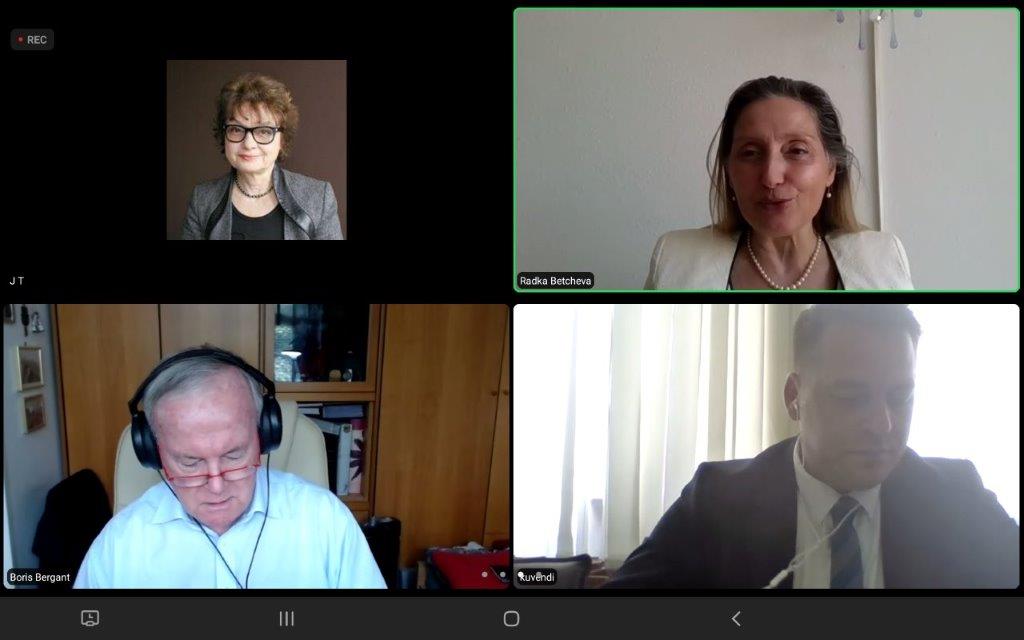
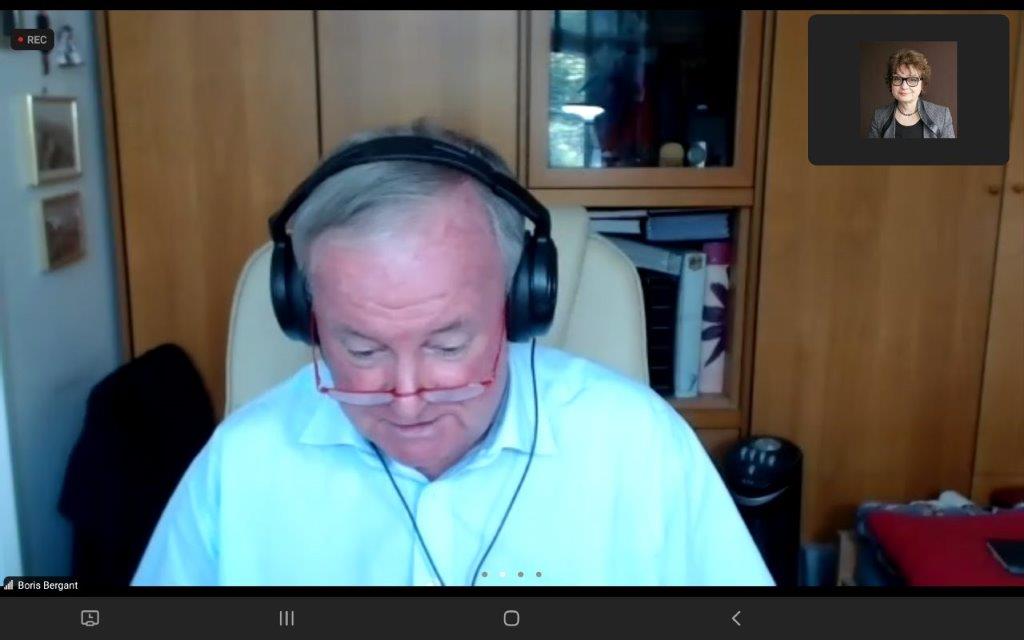
Video conferencing during Covid 19 pandemics

Your EBU – time. Please tell us a little more about this period of your working career.

The best would be the Latin tempora mutantur and nos mutamur in iis.
The media, and in particular public media, is a case of permanent changes, improvements, controversies and struggles. After participating in different organs and committees, I was at the end of 80-ties for four years serving as Vice President of the TV committee and then for ten years as the Vice President of the Union – the most extended VP term so far. It was the delicate period of unification of the PSM community in one organisation ( OIRT members joined ), accompanied by many problems and complications. It was the start of the transition from the state into public services in many of those countries ( unfortunately not yet finished ). It was a period to face the new challenges of the dual system ( public, non-commercial vs commercial ), the period of globalisation and the establishment of dangerous monopolies, not to mention the ex-YU wars ( including the bombardment of broadcasters ). EBU is still a symbol of the professionalism and solidarity of members. Still, we should more and more orient ourselves into the field of ethics and values with a critical orientation toward those who are offending and violating them and for a battle against fake news and hate speech.

Boris Bergant

What are the main problems of public broadcaster in the year 2021?

While commercial providers depend on the will and interest of their owners, PSM are increasingly under the cross fire of interests of political parties and competitors, including their economic interest. The transition into public services is far from concluded. Next to political and economic dependence, the PSM’s faces unsustainable funding. The state budget financing has shown too much vulnerability. Therefore we have to find and develop better forms of funding. We can see it only within an open dialogue with our consumers – the public and together fight for independence. But the prerequisite for existence and future remains quality, reliability and relevance of our outputs.

Finally how you see the media situation in your country and in the SEEMO region.

Frankly, I am pretty embarrassed and anxious about current developments, mostly caused by politics and the lack of creative dialogue. I only hope that it is a temporary phenomenon, partly influenced by the various dilemmas around the Covid pandemics. But in any way, it is a retrograde development – a lack of trust in everything. It is a suboptimal state of affairs. Quarrel can be a motivating element of democracy, but it has to lead to a positive, better solution. I do not see much positive in these confrontations for the time being. When subjects in public discourse regard the opponents as enemies, there always exists a potential for delicate crises. I hope we shall overcome.

Boris Bergant with Dr. Erhard Busek and Agron Bajrami, distinguished
Kosovo journalist and new (2021) Kosovo ambassador

Interview with SEEMO member Skender Krasniqi (December 2021)

December 9, 2021 disabled comments

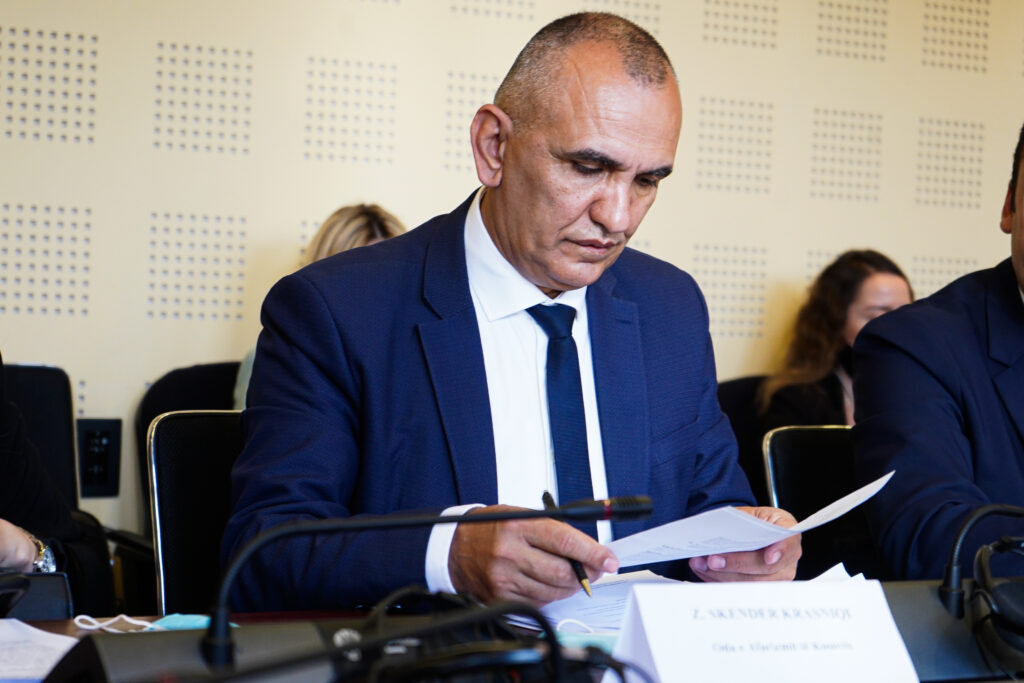
Skender Krasniqi

Skender Krasniqi has started working in KosovaPress since its establishment on January 4, 1999, exercising various duties such as: responsible for Kosovo, Editor-in-Chief, Marketing Director, General Director, and since 2016 has been the President of the KosovaPress News Agency.
He is one of the founders of the Independent Private News Agencies network based in Skopje within SEEMO. From September 2021 he is the President of the News Agencies of the Balkans and Southeast Europe, ABNA-SEE.

How do you see the media situation in Kosovo today?

The media situation in Kosovo and the Balkans in general is not at a satisfactory and desirable level. This is due to the political pressure to influence as much as possible the editorial policies but also by investing politicians in the creation of their media.

In Kosovo, in general, the media are faced with a difficult situation due to the poor economic situation that has pushed most of the media to staff reduction and making it impossible to have more experts in the necessary fields, replacing them even with beginners due to the inability to pay their level of salaries.

The prohibition of governmental advertising  in the daily newspapers has led to a reduction in the number of printed newspapers in Kosovo, and even their closure.

You are a media-owner and founder of the leading news agency in Kosovo. What are the main problems in your daily work as manager / owner?

KosovaPress is a news agency and its biggest revenues are from the sale of news, and any problem or difficulty in the media that are also clients of KosovaPress, indirectly affects us. Difficulties also come from the unsatisfactory reaction of the institutions in relation to the daily requests of journalists and this also makes it hard for the journalists to inform the public as quickly as possible.

How does your news agency survive?

KosovaPress as a News Agency has invested a lot during all these years (in January we celebrate 23 years of establishment), we bring to our customers many media products (we produce, news as text, photos, audio, video, and live video). In the field of marketing, we offer spaces for advertising, shows, sponsored articles… etc., there is a wide range of products and revenues.
We have also invested in the production of news in English and Serbo-Croatian, entering the Balkan and European market, taking into account that we are part of the News Agencies of the Balkans and Southeast Europe (ABNA-SEE) and the world congress of agencies news.

What is the quality of media in Kosovo? How professional are the media?

The media in Kosovo are trying to do their best, to be as professional as possible in terms of news independence and professionalism, but as I mentioned earlier, financial difficulties are having a negative impact. Together with other media, we have been asking for several years for the media to be included in the law on sponsorship in Kosovo, but so far, this hasn’t been taken into account by the institutions.

How strong is the pressure from politics and business on journalists in Kosovo?

Politics and business in general are constantly trying to exert their influence both in Kosovo and around the world, but in general, most of the media in Kosovo are managing to maintain their independence with great difficulty. We hope that this will last, and politics and business will understand that with the independence of the media, the political parties and institutions of the country will also be more democratic.

Do you receive sometimes calls from politicians asking that you publish or not publish a news?

In the first years after the liberation of Kosovo from Serbia, the pressure on the media in general was greater than now. This depended and still depends on how determined the media are. KosovaPress has continuously maintained its independence and quality of news as a basic need to keep its clientele. Even though the pressure in the last 10 years is much less than before, the habit of politicians and politics in general have not been completely forgotten.

Has your job influenced your private life?

Of course, when you’re the head of a medium, your private life is not like everyone else’s, but over the years it has become a normal, trying to keep work and private life at the best possible level.

Inteview with SEEMO Member Ljiljana Zurovac, Journalist and Expert for the media self-regulation (December 2021)

December 2, 2021 disabled comments

Ms Ljiljana Zurovac

zurovaclj@gmail.com

Ms Zurovac is an Independent Media Expert, with expertise in the fields of Media Ethics and Media Self-regulation, Hate Speech vs. Freedom of Speech, and Conflict Resolution.
She is currently providing her services as an Expert Consultant with an extensive field knowledge of the subject.
Apart from her career as an active Radio-TV journalist, she worked for six years as the Headmaster at the Regional High College of Journalism (1999-2005), and for 15 years (2005-2020) she was the Executive director of the Press Council in B&H.
She worked on many projects and missions of promoting and establishing of media self-regulatory bodies in the countries of the new democracy, in Europe, Asia, and MENA countries, providing her services as an Expert Consultant with an extensive field knowledge of the subject, and she regularly participates in the local and international conferences as a panelist, talking about media freedoms and media self-regulation.
Ms Zurovac holds a bachelor degree (four years study) in Dramaturgy, and a degree in Comparative literature.

She is a Member of the Fetisov Journalism Awards International Expert Council Jury, and a former Member of UNESCO Guillermo Cano Jury 2013-2016, World Press Freedom Prize where she served as the President of the Jury for 2016.

You are internationally well known. You worked for many years as a director of the Press Council in Bosnia and Herzegovina. Can you tell us a little bit more about this period of your life.

These were 15 very intensive years of my professional life, filled with a lot of struggles and fights, new ideas, creativity, development of new skills and quests for new possibilities, meetings with dear colleagues from all around the world and many international travels, exchanges of ideas and experiences, building of new friendships, but also, making some of enemies. It was a very intensive professional life which completely consumed my private life. But it was well worth of it.

I lived to build something completely new in the media field of the Balkan region, something we did not have before and which gave us the opportunity to make things good from the start. Something that could open a road for free and responsible journalism as a crucial base for development of democracy in the Balkans’ society –and that something is the media self-regulation.

It was a bumpy road, a rollercoaster that makes you excited and scared at the same time, but knowing that the final result will be great.

Bosnia and Herzegovina is a post-conflict country, and most of the media and institutions are divided according to their affiliation with the entities, cantons or regions – each of which is inhabited by different nationalities. The first thing I had to do was to unite ten of the largest media owners from all sides of such divided country, most of who had no contact among themselves at the time. It took me a year and half to do so, but we successfully finished the job and established a singular self-regulatory body for the whole country, which is one of the rare institutions that covers entire Bosnia and Herzegovina. This was a big success and a very good base for fruitful start of development of the media self-regulation as well as development of professional connections between the media and journalists from all parts of the country.

The next step was to reach as many people as possible by encouraging them to send complaints on inaccurate media reporting. We travelled all around the country, from big cities to small villages, talking to people, explaining them about their human right on accurate and timely information, and how to complain on unprofessional reporting in the media. Journalists from local media have been of a great support in these endeavours.

Later, we’ve spread our wings and started an intensive work with people from judiciary, including judges, prosecutors, and attorneys, providing them with practical knowledge about the application of the Article 10 of the ECHR, application of the media freedoms, freedom of speech and freedom of reporting, and how they can apply this knowledge in practical use of the newly adopted Law for protection against Defamation. After months of negotiations and building of confidence from both sides, we developed an excellent cooperation with representatives of judiciary from both entities and the Brcko District, together with whom we realized almost a hundred of conferences and workshops over the years.

But, the dearest work for me personally was a work with students of journalism from Universities in B&H. I started to manage the Press Council after six years of being the Headmaster of the High College of Journalism, at the Media Plan Institute. This College was a partner school of the famous French École Supérieure de Journalisme de Lille, a practical one-year school for graduate young journalists from Balkan’s region.

This wonderful School gathered young people from all Balkans’ countries to learn, work and build friendships and professional connections that will be precious in their future media works. But, above all, this was a place for reconciliation after the bloody war in the Balkans’ region in 1990-1995.

Having the experience of great results achieved at this School, I established a School for Media Ethics, under the umbrella of the Press Council. In the ten years of the school’s existence, more than 500 students participated in our programs, learning about the media self-regulation and media ethics and how to apply the media ethics in their future work.

Even more, their professors at the Faculties embraced the program of our School, and so, the media ethics, the Press Code and the media self-regulation subjects became a regular subject at the faculties’ curriculum.

With ten of my students I produced a radio show “Your voice in media – ZOOM”, what was broadcast twice a week at a PBS and at many of the local radio stations in B&H, promoting media ethics, media self-regulation and peoples’ right to accurate and ethically published information.

During these 15 years I was able to build something unusual, strong and very good, in a difficult and unstable political and financial environment. It was a small but prolific institution which became a template for other press councils in the Western Balkan region, but also a guiding method for other countries of young democracy in transition, such as Myanmar, Mongolia and Tajikistan, where I had the joy and the honour to be given an opportunity to provide my expertise and insights.

This is not a simply a job, it is a mission, that one can only endure and thrive if one has certain amount of democratic zealotry. It is certainly not for those who simply want to comply.

But, unfortunately, as many great businesses and companies, organisations and ideas, this is also a type of institution and work that rests upon enthusiasm and the back of one person who leads a well-organized team. When such person leaves, the pressures of corrupted media and political games bring these institutions to a stagnation or a decline.

Before you started in the Press Council you had a long year experience as radio and TV journalist. Can you present us a little more what you did and tell us a little more about the start of your career.

I can say that working as a radio-TV journalist, especially in the first decade of my career, was the dearest professional time in my life. That was a free and creative time, time of good rock and roll music, books, fun and excitements, always in a good company. Work was a fun and love. The radio studio was our second home. Work in the field always brought new excitement and adventure. This is a time to which I return in days when I feel desperate and without hope. The time what will never come back again. But I feel so happy to have lived in that time fully, now nurturing these memories as something precious.

As a dramatist, I accepted working at the Radio TV immediately after graduation, because this media gave me a lot of opportunities to apply my knowledge as a dramatist and playwriter in their drama programs.

Back in time, the Yugoslavian public services’ drama programs had a special place and a lot of dramas were produced at both the radio and TV. It was easy for me to participate in creation of these programs, beside my regular journalist’s work. Also, my dramatist’s skills have been very helpful in producing reportages.

Put simply, It was a right place and a right time to be prolific in fantastic creative environment, where a lot of good ideas were born for writing of theatre plays for example, and I remember that period of my life as a joyful beautiful time of a good creative work, entertainments, festivals and awards.

How you spent the war years in Bosnia and Herzegovina?

In darkness.

You are for sure one of the best experts for media ethics and self-regulation in Europe. How you see the situation in South, East and Central Europe in 2021. Do media and journalists respect media ethics?

Not at all, unfortunately. Or, better said, a very small number of the media or journalists respect media ethics. The situation is deteriorating year by year.

There are many reasons for that, such as the greed of the media owners, financial and political pressures on journalists, then there are also people who work as journalists but have no education for this job and do it with complete absence of responsibility, etc.

However, whatever the reason, there is no justification for not respecting professional ethics. A journalist must be a responsible person, first of all towards its highly important profession and then towards the people who consume the information provided by a journalist.

If I am allowed to be perfectly honest, I will answer this trough analogy – if you are an expert ecologist and someone who deeply understands biosphere, then you understand that the swamp is a swamp, no matter how much you try to clean it up or hard you work to structure it into a posh British garden.

This means that this particular eco system has rules of its own and cannot be easily compared with other environments. It also means, that improvements which do happen usually happen deep under a thick layer of scum that forever floats on surface.

The media landscape in the region is a swamp. Even more so with the introduction of new life forms which develop in the microcosmos of social media. But it is an eco-system of its own. To turn in into a lush garden where everyone can enjoy and relax, implies a complete destruction of the swamp.

In the same way, to compare the standards of old democracy countries with the primordial democracy soup of the Balkan’s media environment, is the same as comparing a neatly sorted out pharmacy with the chemical waste disposal disaster.

With the democracy we got freedom. Aside the fact that there are pressures from many sources, mainly political ones, the freedoms of speech and of the media do exist. However, misuse of these freedoms in the Balkan countries is enormous and on expense of the professional and responsible media reporting.

Journalism is not a freedom of speech; journalism is constrained by the ethical rules which must be respected at any time and in any circumstance. Without this, the real journalism will die. And thus, the freedom of society will be jeopardized in the most difficult and dangerous ways. None of us may allow that. We must fight against such outcome. As I said before, this is not a job for those who are simply willing to comply with the status quo or social decline.

Does self-regulation work in the practice. You have your experience from Bosnia and Herzegovina. What is the situation with media who are not recognising the work of a self-regulation body. Has self-regulation also influence on journalists working in this media?

The self-regulation works in practice only there when it is fully accepted.

However, the application of the media self-regulation in Balkans’ region is currently still a great responsibility of the self-regulatory bodies. The media self-regulatory bodies must be alert and oversee the application of the media self-regulation in the practice.

It does not mean that they have to play role of “media police”, but they do need to work with colleagues in the media on regular basis, reminding them why the media ethics is important for them as businesses and individuals as well as for the consumers of their information. And also, to provide them with help if help is needed when their work is under pressure. The self-regulatory body needs to spread information about complaints procedure among people, and to provide mass education for different target groups.

In the well-developed democratic countries, such as most of the EU, things are completely different. The media people, not only the journalists but also the media owners and all other media staff, have a high level of professional respect of the media ethics and their responsibility towards the who consume their information, in addition to respecting the decisions of the self-regulatory bodies.

It is however important to understand the fact that in the most of these countries the media self-regulation exists over thirty, fifty, or even more than a hundred years. We, in the Balkans, are still at the beginning, trying to make proper steps forward. Not only in the filed of the media, but generally in development of a democratic society.

The sad side of Balkans’ story is that many media owners are closely connected to the current political establishment or are even directly and actively involved in the politics themselves. Similar case is with their involvement with corporations, often using their own media outlets and employees as a tool for promotion of their political options or corporate interests. The media ethics does not exist for such media institutions, and they ignore media self-regulatory bodies. More disturbingly, there is no external consequence for such foul media as the acceptance of the media self-regulation is on a voluntary base.

Is there a way to stop the still very strong hate speech in the SEEMO region?

The real question is – is there a way to stop hate speech in any region? The problem of hate speech is a problem of its semantic implications and its colloquial usage. Very often we see that hate speech is nothing more but a way in which people express themselves due to lack of empathy and understanding of the consequences such speech may create.

It is not always about hate as such, but about frustration and violence which became the norm of communication. When Twitter limits your expression to 240 characters, the inevitable result is a decline in ability to explain complex ideas, thus creating a toxic conversation based on misunderstanding.

Similar thing happens when people lose their basic ability for decent conversation, when they don’t nurture a culture of dialog and respectful expression. All their communications eventually end in a quarrel of some kind, mostly based on misunderstanding of what the other person is saying, in the lack of empathy to comprehend where the other side is coming from and in persons own inability to express their own thoughts and views in a coherent manner.

And when you add to this a bloody and horrid past that the Balkans have, then it is easy for these verbal “duelists” to lean on the most deprived and painful aspects of history in order to make their point.

But this is not really any different than in other countries with similar background.

Censorship works, of course, but it is only a suppression and not a solution. The only true way to lower the hate speech in the Balkans or anywhere else for that matter, is to teach people – first how to think, then how to express those thoughts in a civilized manner and in a way that the other side can understand, and then also to teach them to process the information they receive with less emotion and more understanding of why and where such information is coming from.

Put simply – the solution is in empathy, literacy and ability to think and use critical faculties – something that is becoming a bit of a luxury these days.

Over the years I worked with an excellent team of experts on reducing the terrible hate speech in comments of online media. These campaigns were named “STOP! Hate speech”. The priority of these campaigns was not to simply erase hate speech in the comments but to educate and sensitize the public. The cooperation with editors and owners of the chosen online media was excellent. And the results were fantastic.

We learnt that many people are absolutely are not aware that their words are hatred or that such words can hurt someone. Often, we’d receive apologies from the “commentators”, who said that they meant nothing bad and will pay attention in the future.

Of course, there were also plenty of nasty comments toward our campaigns, but not as many as we originally expected. The final result of each campaign was that the hate speech was reduced immensely. And that this reduction was maintained for several months after the active campaign finished, but then, due to a lack of moderation it would burst again. This showed that people need to have someone to guide them constantly, or in other words, that the time of personal responsibility is still far away from our region.

You lived for many years in Sarajevo, Bosnia and Herzegovina. Now you live in a small town in Serbia. What you are doing today and why you decided to move from a city like Sarajevo to a small town?

I am taking a nice rest / break in a stress-free zone. I eat amazing Thai soups my son prepares. I watch favorite movies and TV series on Netflix, and play video games. I also grow vegetables on my terrace, enjoying beautiful view to the park what surrounds my house, and occasionally complain about the trucks which pass through our street which happens to be a yellow brick road. I read books. And have started writing a new drama.

Also, I continue to work on the promotion and development of the self-regulatory bodies in the development countries. Thanks to my dear colleague and friend with whom I worked a lot in B&H and in Myanmar, Ms. Isabella Kurkowski, I started to share my knowledge with media people in MENA countries. This is a great experience for me, and I am looking forward to every new opportunity to glorify something which is the only solution for free and responsible journalists’ work and the freedom of the media – and that it is a media self-regulation.

Why did I decide to move to a small town? Hm.. I needed peace and silence.

I completed my mission in BIH, and now I am a free-lancer, free to go and work wherever I want. I choose my hometown as a starting point. It was time to go back home, as James W. Riley said in his poem “We Must Get Home”:

“We must get home, for we have been away so long,
It seems forever and a day! And O so very homesick we have grown,
The laughter of the world is like a moan in our tired hearing,
And its song as vain, We must get home — we must get home again!
We must get home: All is so quite there:
The touch of loving hands on brow and hair,
Dim rooms, wherein the sunshine is made mild,
The lost love of the mother and the child
Restored in restful lullabies of rain
We must get home – we must get home again!

We must get home; and unremembering there
All gain of all ambition otherwhere,
Rest from the feverish victory, and the crown
Of conquest whose waste glory weighs us down.
Fame’s fairest gifts we toss back with disdain
We must get home – we must get home again!”

Can you please present your other side – your work for theatre and scenarios you wrote….

Well, I would rather say, my first side instead of the “other side”. Dramaturgy and playwriting are my chosen profession, I graduated as Dramatist and Playwright and that was my first professional engagement, what I continue doing consecutively with my journalistic engagement at the radio television.

This work allowed me to express myself fully as an artist and a spiritual human being. It always gives me a balance to my daily journalist’s work. There are a lot of dramas and scenarios I wrote, but, one of my favorites is the special theater program I produced for children, together with the most popular rock stars back in time. Over several years we have had a tour all over ex-Yugoslavia, bringing joy and festivity atmosphere to the children at the end of each of years. Another one is a TV series, a horror story, what was awarded with the third prize at the International TV festival in Baghdad, Iraq. The BiH public service rerun it even in these days regularly and many nowadays adults who were children at the time of the prime broadcasting, told me that they very much like to watch it again and again.

I am happy that now I have enough time to develop new creative ideas to write something new.

 

22 November 2021: Kyrgyz government urged to withdraw draft Broadcasting Bill

November 24, 2021 disabled comments

The undersigned members of IFEX, the global network of over 100 organisations promoting and defending freedom of expression and information worldwide, call on the government of Kyrgyzstan to withdraw its draft legislation threatening to further undermine the independence of the Kyrgyz Broadcasting Corporation (OTRK), and to instead ensure the public broadcaster is governed by standards which ensure editorial independence, transparency, and accountability to the Kyrgyz people.

In its current form, the legislation would convert OTRK – the country’s largest and most watched television network – into a state-owned body, while eliminating a range of democratic principles designed to ensure the independence of the broadcaster. Under the legislation, a General Director appointed by the President would lead the broadcaster, risking corruption and political interference to the detriment of the public interest. Such actions would eliminate the Supervisory Board, selected in part by civil society organisation representatives, whose main function is to oversee the broadcaster’s operations and ensure the accountability and transparency of activities while also incorporating public opinions.

As highlighted in a joint statement by local Kyrgyzstan IFEX member organisation, Media Policy Institute, the pluralism and independence of public service broadcasting is a key marker of a healthy democracy. This principle is reflected by UNESCO’s Sofia Declaration which stated that “State-owned broadcasting organizations should be reformed as a matter of priority and given the status of open public institutions enjoying journalistic and publishing independence”.

The Kyrgyz government’s draft legislation is therefore incompatible with democratic principles and with the government’s own public commitments made to improve democracy, and to ensure the rule of law and the full observance of human rights and fundamental freedoms in accordance with Council of Europe standards, including on the independence of public service broadcasters and on media pluralism and transparency of ownership. Further, it would contradict recommendations supported by Kyrgyzstan during its 3rd cycle Universal Periodic Review aimed at strengthening democratic institutions by protecting freedom of expression and media freedom. If left unchanged, the legislation will significantly undermine independent journalism, and freedom of expression more broadly, in Kyrgyzstan.

Accordingly, we call on the Kyrgyz government to withdraw the legislation in its current form, and instead amend it extensively to ensure that all Kyrgyz citizens can access a diversity of voices, opinions, and information from an independent, transparent, and accountable public broadcaster.

Signed

  • Afghanistan Journalists Center (AFJC)
  • ARTICLE 19
  • Association of Caribbean Media Workers
  • Bytes for All (B4A)
  • Center for Media Freedom and Responsibility (CMFR)
  • Freedom of Expression Institute (FXI)
  • Free Media Movement
  • Globe International Center
  • Initiative for Freedom of Expression – Turkey
  • International Federation of Journalists (IFJ)
  • Mediacentar Sarajevo
  • Media Foundation for West Africa (MFWA)
  • Media Institute of Southern Africa (MISA)
  • Media Policy Institute
  • Media Watch
  • Pacific Islands News Association (PINA)
  • Pakistan Press Foundation
  • Palestinian Center for Development and Media Freedoms (MADA)
  • South East Europe Media Organisation (SEEMO)
  • Vigilance for Democracy and the Civic State

Turkey: Global appeal marks 2000 days in prison for Nedim Türfent

November 7, 2021 disabled comments

EMBARGOED UNTIL 00.01 GMT ON 3 NOVEMBER 2021

‘There are so many injustices in our country that I hesitate to make statements on such specific days. On the other hand, it is easier to shine a light on injustices, unlawfulness and unfairness through known examples. This is why I see the 2000 days imprisonment as a symbol of the greater injustice in the country. It is imperative that there should be some sensitivity, not only for my own situation, but also for all prisoners who have been deprived of their freedom because of their opinions and their right to engage in politics. On the occasion of this day, I call upon all national and international rights organizations to show solidarity with all those imprisoned because of their thoughts, words and identities.’
Nedim Türfent, 22 October 2021

3 November 2021– 54 organisations urge once again the Turkish authorities to immediately and unconditionally release news editor, reporter and poet Nedim Türfent, and to overturn his conviction. Today marks 2000 days since he was arrested and subsequently sentenced to eight years and nine months in prison on trumped-up terrorism charges following an unfair trial, during which scores of witnesses said they had been tortured into testifying against him.

A news editor and reporter at the now-closed pro-Kurdish Dicle News Agency (DİHA), Nedim Türfent was detained on 12 May 2016 shortly after reporting on Turkish special police forces’ ill-treatment of Kurdish workers. Soon after his video footage was released, Türfent began receiving death threats from the police and was the target of an online harassment campaign. He was formally charged with ‘membership of a terrorist organisation’ one day after his arrest; the indictment was first produced 10 months later. He spent almost two years in solitary confinement in harrowing detention conditions.

‘Today marks another painful milestone in Nedim Türfent’s gross miscarriage of justice. That he has now spent 2000 days behind bars simply for doing his job beggars belief. As a first step towards rectifying this injustice, the Turkish authorities must release him immediately and unconditionally and urgently quash his conviction. Türfent’s application before the European Court of Human Rights is still pending, three years after being lodged, and we trust that the Court can prioritize the case. The PEN Community stands once again by Türfent and all the writers and journalists wrongfully imprisoned in Turkey and will keep advocating for their freedom until every single one of them is released’, said Ma Thida, Chair of PEN International’s Writers in Prison Committee.

Among the reasons listed in the indictment were Türfent’s social media posts, his news reporting and 20 concealed witness testimonies. His first hearing was held in Hakkari on 14 June 2017, some 200 km away from Van where he was being detained. He was denied the right to appear physically in court seven times, and instead testified via the judicial conferencing system SEGBİS, experiencing severe connection and interpretation issues. Out of the 20 witnesses called, 19 retracted their statements, saying they had been extracted under torture.

‘Today, we pass another milestone of injustice without end for Nedim, punished for his courage as a reporter. Nedim has spent 2000 days behind bars waiting for freedom. 2000 days he should never have lost and can never regain. Hundreds more journalists have been similarly targeted by a judiciary weaponised to silence dissent. We have twice asked the Constitutional Court to prioritize Nedim’s appeal to bring a swift end to this gross violation of rights. We trust that this time they will act,’ said Renan Akyavaş, IPI Turkey Programme Coordinator.

Despite such clear evidence of flagrant fair trial violations, Türfent was sentenced to eight years and nine months in prison for ‘membership of a terrorist organisation’ and ‘spreading terrorist propaganda’ on 15 December 2017. The sentence was approved by the Court of Cassation on 9 May 2020. His application before the Constitutional Court is still pending, more than three years after being lodged.His lawyers appealed to the European Court of Human Rights on 5 February 2019.

‘Nedim has been punished for his journalism which should have been awarded. The injustices that Nedim faces are injustices the majority of Kurdish journalists face in Turkey. That is why we call on every person and institution that sincerely stands for freedom of expression to stand with Nedim,’ said Murat Kök, Media and Law Studies Association (MLSA) Project and Communications Coordinator.

Ülkemizde o kadar çok adaletsizlik var ki insan bu tür spesifik günlerde bir açıklama yapmaya çekiniyor. Ama şöyle de bir gerçek var bazen bilinir örnekler üzerinden adaletsizliğe, hukuksuzluğa, haksızlığa kaynak tutmak daha kolay oluyor. Bu yüzden, bu 2000 günlük mahpusluğu ülkedeki adaletsizlik fotoğrafının büyük bir sembolü olarak ele alıyorum.Sadece kendi durumum değil, düşünceleri ve siyaset yapma hakları yüzünden özgürlüklerinden alıkonulan bütün mahpuslar için bir duyarlılık oluşması elzemdir. Bugün vesilesi ile gerek ulusal gerekse de uluslararası hak ve özgürlük kuruluşlarını düşünceleri, sözleri ve kimliklerinden dolayı tutsak edilen insanlarla dayanışmaya çağırıyorum.
Nedim Türfent’in 22.10.2021 Mesajı

3 Kasım 2021 –54uluslararası ve yerel basın ve ifade özgürlüğü kuruluşu, Türkiyeli yetkilileri bir kez daha gazeteci ve şair Nedim Türfent’i derhal ve koşulsuz bir şekilde tahliye etmeye ve hakkındaki mahkumiyet kararını bozmaya çağırıyor. Bugün, Nedim’in düzmece terör suçlamalarıyla tutuklanıp, dinlenen tanıkların büyük bölümünün ifadelerini işkence altında verdiklerini beyan ettikleri adil olmayan bir yargılama sonucunda sekiz yıl dokuz ay hapse mahkum edilmesinin 2000. günü.

Kanun Hükmünde Kararname ile kapatılan Dicle Haber Ajansı (DİHA) haber editörü ve muhabiri Nedim Türfent, özel harekat polislerinin Kürt işçilere kötü muamelesini haberleştirdikten kısa bir süre sonra, 12 Mayıs 2016 tarihinde gözaltına alındı. Nedim, haberi yayınlandıktan kısa bir süre sonra emniyet mensuplarından ölüm tehditleri almaya başladı ve çevrimiçi bir taciz operasyonunun hedefi haline geldi. Tutuklandıktan bir gün sonra “terör örgütü üyeliği” ile suçlandı; hakkındaki iddianame ise 10 ay sonra hazırlandı. İki yıl boyunca korkunç şartlar altında tecrit edildi.

‘Bugün, Nedim Türfent’in maruz kaldığı büyük adaletsizliğin bir diğer önemli ve acı verici kilometre taşı. Sadece mesleğini yaptığı için parmaklıklar arkasında 2000 gün geçirmiş olması inanılır gibi değil. Bu adaletsizliği düzeltmek için Türkiyeli yetkililer Nedim’i derhal ve koşulsuz olarak tahliye etmeli ve hakkında verilen mahkumiyet kararını bozmalıdır. PEN Topluluğu, Türkiye’de haksız bir şekilde hapsedilmiş tüm yazar ve gazetecilerin ve Nedim’in yanındadır ve her biri serbest bırakılana kadar onların özgürlüğü için mücadele etmeye devam edecektir.’ Ma Thida, Pen International Mahpus Yazarlar Komitesi Başkanı

Nedim hakkında hazırlanan iddianamede, sosyal medya paylaşımları, yazdığı haberler ve 20 gizli tanığın ifadeleri suçlamalara delil gösteriliyor. Yargılandığı davanın ilk duruşması 14 Haziran 2017’de, tutuklu bulunduğu Van’dan 200 km uzaklıkta Hakkari’de görüldü. Nedim’in duruşmada fiziksel olarak hazır bulunma talebi yedi kez reddedildi ve ifadesini SEGBİS ile vermek zorunda kaldı. 20 tanıktan 19’u ifadelerini işkence altında verdiklerini söyledi ve ifadelerini geri çekti.

‘Bugün, Nedim’in bir gazeteci olarak cesareti için cezalandırıldığı sonu olmayan adaletsizliğin önemli bir dönüm noktasını daha arkamızda bırakıyoruz. Nedim, özgürlüğü bekleyerek 2000 günü parmaklıklar arkasında geçirdi. Asla kaybetmemesi gereken ve asla geri alamayacağı 2000 gün. Eleştirel sesleri susturmak için bir silah haline getirilmiş yargı tarafından yüzlerce gazeteci aynı şekilde hedef alındı. Anayasa Mahkemesine bu büyük adaletsizliği sonlandırmak için Nedim’in başvurusuna öncelik vermesi gerektiğini iki kez ilettik. Bu sefer harekete geçeceklerine inanıyoruz. ‘- Renan Akyavaş, Uluslararası Basın Enstitüsü (IPI) Türkiye Program Koordinatörü

Bu kadar bariz adil yargılanma hakkı ihlallerine rağmen, Nedim 15 Aralık 2017 tarihinde ‘terör örgütü üyeliği’ ve ‘terör örgütü propagandası yapmak’ suçlarından sekiz yıl dokuz ay hapis cezasına çarptırıldı. Yargıtay ise 9 Mayıs 2020 tarihinde Nedim’in cezasını onadı. Üç yıl geçmesine rağmen Nedim’in Anayasa Mahkemesine yaptığı başvuru hala mahkeme önünde bekliyor.

‘Nedim, ödüllendirilmesi gereken gazeteciliği için cezalandırıldı. Nedim’in maruz kaldığı adaletsizlikler aslında Türkiye’de Kürt gazetecilerin büyük çoğunluğunun maruz kaldığı adaletsizliklerdir. Bu yüzden samimi olarak ifade özgürlüğünü savunan tüm kişi ve kurumları Nedim ile dayanışmaya davet ediyoruz.’Murat Kök, Medya ve Hukuk Çalışmaları Derneği (MLSA) Proje ve İletişim Koordinatörü

For further details contact / Daha fazla bilgi almak için iletişim adresleri:

Renan Akyavaş, Uluslararası Basın Enstitüsü (IPI): rakyavas@ipi.media
Mümtaz Murat Kök Medya ve Hukuk Çalışmaları Derneği (MLSA): murat@medyavehukuk.org
Aurélia Dondo, PEN International: Aurelia.dondo@pen-international.org

SIGNATURES / İMZACILAR

International Press Institute / Uluslararası Basın Enstitüsü (IPI)
Media and Law Studies Association / Medya ve Hukuk Çalışmaları Derneği (MLSA)
PEN International
Albanian PEN
ARTICLE 19
Articolo 21
Association of European Journalists (AEJ)
Cartoonists Rights Network International (CRNI)
Committee to Protect Journalists (CPJ)
Croatian PEN
Danish PEN
English PEN
European Centre for Press and Media Freedom (ECPMF)
European Federation of Journalists (EFJ)
French PEN
German PEN
Human Rights Association (HRA)/ İnsan Hakları Derneği (IHD)
IFEX
Index on Censorship
Initiative for Freedom of Expression/ Düşünçe Suçu?!na Karşı Girişim
Irish PEN/PEN na hÉireann
Kurdish PEN
Montenegrin PEN Center
OBC Transeuropa (OBCT)
PEN America
PEN Bangladesh
PEN Belgium (French-speaking)
PEN Centre of Bosnia & Herzegovina
PEN Esperanto
PEN Estonia
PEN Georgia
PEN Iraq
PEN Latvia
PEN Malta
PEN Melbourne
PEN Moscow
PEN Netherlands
PEN Norway
PEN Portugal
PEN Québec
PEN Romania
PEN Suisse Romand
PEN Trieste
PEN Turkey
Perth PEN Centre
Russian PEN
San Miguel de Allende PEN
Slovene PEN
South East Europe Media Organisation (SEEMO)
St Petersburg PEN
Swedish PEN
Turkey Human Rights Litigation Support Project/Türkiye İnsan Hakları Davalarına DestekProjesi
Vietnamese Abroad PEN centre
Wales PEN Cymru

Interview with SEEMO Member Alfred Lela (October 2021)

October 23, 2021 disabled comments

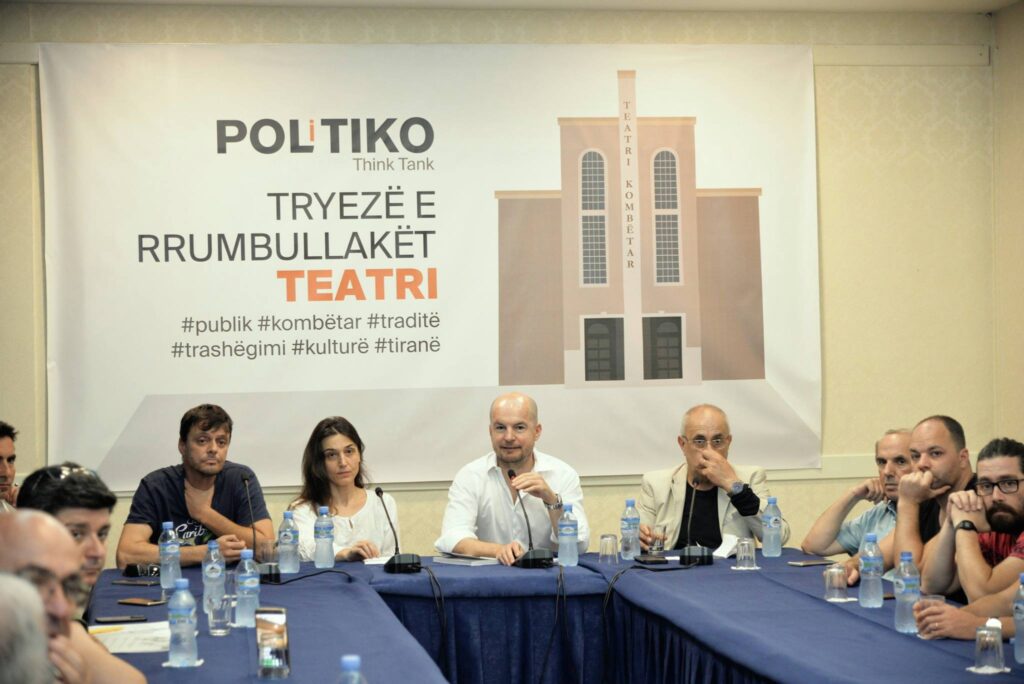
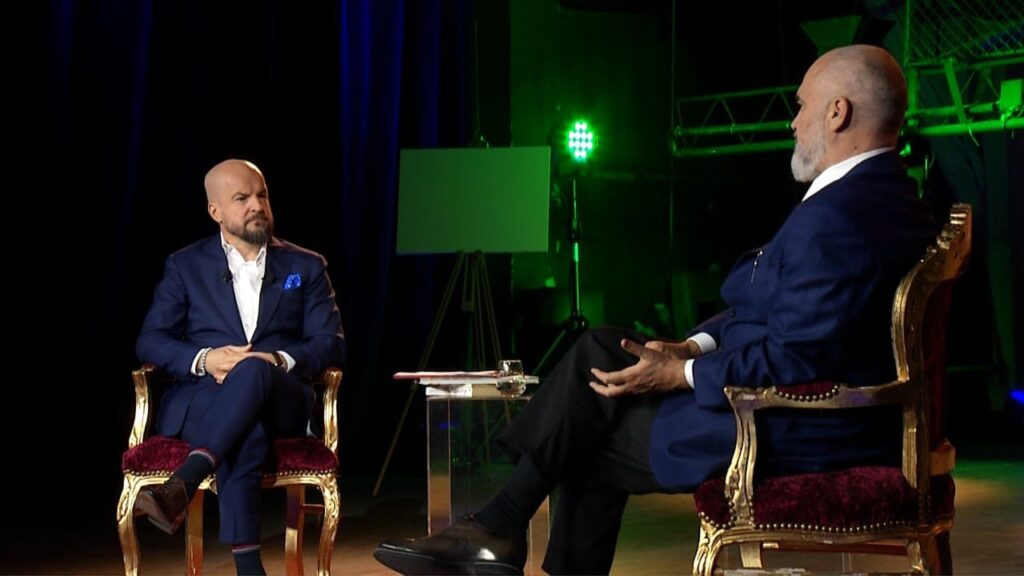
Alfred Lela is the author and anchor of Politiko, a political talk show on Top NEWS. He is the founder of Politiko. al. From 2010-2017 he worked for Media MAPO, as Deputy Editor-in-Chief for the daily MAPO, Editor-in-Chief for MAPO magazine, and Executive Director of Media Mapo. In 2012, he won the Teodor Keko Award and in 2013 the At Zef Pllumi Award. He is the author of two books: ‘Secilit Shqipërinë e Tij’ (2013), and ‘Fjalori Politik i Berishës’ (2018). He holds a Ph.D. in Communication from the European University of Tirana and a BA in Journalism from the University of Tirana. In recent years he has lectured in Journalism and Political Communication at both Universities he graduated from.

Your first job as a journalist?
A local project when I was still in high school. It was a monthly magazine of Kruja district, near the capital.

You worked as Deputy Editor-in-Chief for the daily MAPO, Editor-in-Chief for MAPO magazine, and Executive Director of MM. Please present us a little more this period in your professional work.
For seven years I did basically everything in the editorial ladder: covering the profiles page, the news from the districts, Op-Ed pages. Later on, I was editor-in-chief of the monthly Mapo magazine which I remember fondly since a reporter gets the chance to do something into the depths of reporting not just the hour-after-hour covering of the news.
To summarize I can say that today’s journalism requires more than one particular skill set. We are experiencing the universal journalist and this is tied to, of course, financial and hence the human resources. The newsrooms have fewer bodies to send out to cover the news and more genres to represent the news in. So, the math is there and when you do it you have to understand that one kind of expertise doesn’t cut it.

You are founder of Politiko.al. What is Politiko.al ?
It is an online gazette, so to speak. A news website or portal. It was founded back in March 2017 after an editorial line switch by my then publisher (Mapo). It was a hard transition but the right one at the same time. We cover mostly politics, as the name suggests, and we do some explaining of political events and of course Op-Ed pieces.

You received also two awards….
Yes, one for my reporting and one for a book of essays, basically profiles I had written on news-breaking individuals here in Albania.

What are you doing today?
I have my own TV political show named Politiko on Top News. And I keep my eyes and hands-on Politiko.al, of course.
I have a book coming out soon too.

What is the situation with media outside Tirana, in the province?
There are voices to be sure, allowed by the online boom but not strong enough to make a difference. There are projects also, mainly supports of EU institutions, US Embassy, different European foundations like Konrad Adenauer, etc, but not yet sustainability. So, yes, we have a landscape but not yet voices of authority.

Where do you see Albania in 10 years?
Demographically weak, politically still experimenting, socially diverse but chaotic. As far as the media goes, I think that freedom of speech will be there but the burden of it too. I mean too much info, but not enough news, a lot of ‘news’ but most of it propaganda. And what I dread the most, the political elite doing everything to corrupt the media and then saying that ‘yes, politics is corrupt but who isn’t’.

Finally, did journalism had an influence on your private life?
Of course, I think more than any other – journalism being a public endeavour affects you and your surroundings. But I can’t complain. You do get to affect people with your job and in return, you should expect your job to affect you also.