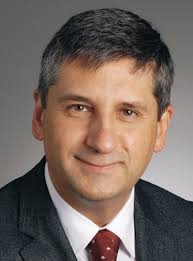
Janne Virkkunen

Janne Virkkunen

June 20, 2012 disabled comments

Janne Virkkunen (2012)
Editor-in-Chief, Helsingin Sanomat, Finland;
IPI Board Member

Turkey is continuing its EU accession negotiations, yet at the same time the Turkish government continues to seriously violate press freedom in Turkey. The EU cannot accept this behaviour from Turkey. Imprisoned journalists have to be released or tried before court. Imprisoned journalists have a right to a fair trial. If Turkey wants to become a member of the European Union, the Turkish government has to respect press freedom and the EU has to be firm in regard to this issue.

The Hungarian government has only softened the new media legislation a bit. In the European Union, we cannot accept that a member country tries to prevent the media from doing its job. In its new form, the Hungarian media law still threatens press freedom, which means that we have to continue to press Hungarians to improve the situation in the country. For us it is impossible to compromise on this kind of issue.

All information and reference, which are contained in this webpage, were compiled after best knowledge and examined with greatest possible care. This disclaimer informs readers / users of the web and information that the views, thoughts, and opinions expressed in an interview by the interview partner or in a statement by the author belong solely to the interview partner / author and do not necessarily reflect the official policy or position of the South East Europe Media Organisation (SEEMO) Assumptions made within an interview-analysis are not reflective of the position of SEEMO. The visitors / users of the SEEMO webpage should take all steps necessary to ascertain that information you receive from SEEMO is correct. We ask every user to check references, double-check information from additional independent sources. SEEMO assumes no responsibility or liability for any errors or omissions, or for the results obtained from the use of information published on the SEEMO website / SEEMO partners website.

Agnes Urban

June 20, 2012 disabled comments

Agnes Urban Assistant Professor
(Corvinus University of Budapest)
Expert at atlatszo.hu

Atlatszo.hu is the first Hungarian investigative journalism portal, launched in July 2011. Besides the production of investigative reports, it also accepts information from whistleblowers, publishes leaked documents (MagyarLeaks), files requests of data on the basis on freedom of information laws, and starts freedom of information lawsuits in case of refusal.

Idea of this project was evidently not independent from the media environment in Hungary. Rumors are about pressure of political and business interest groups; they have a direct impact even on editorial content. Additionally the legal environment does not support investigative journalism: Section 6 of Act 104 of 2010 (so-called Media Constitution) says in exceptionally justified cases, courts or authorities may – in the interest of protecting national security and public order or uncovering or preventing criminal acts – require the media content provider to reveal the identity of the informant. Anyway, these categories are far from being well-defined, so protection of sources cannot be guaranteed at all and self-censorship is an evident consequence of this regulation.

Launch of a new portal is challenging in these circumstances. The worries were not unfounded: just a few days after the start of atlatszo.hu Organized Crime Department of Budapest Police seized a hard disk of editor in chief, just because he did not reveal his source in the case of a hacker attack of a financial company.

In the last four months atlatszo.hu became a significant player in the Hungarian media scene, some of it stories found a way into mainstream media. The real question is how an investigative journalism portal can be financed in long run. Revenues are coming from donations of private persons and foundations, but the viability of this business model has not been proved in Hungary.

There are some examples for non-profit investigative journalism portals (e.g. ProPublica in US), but the size of Hungary cannot compared to US, moreover the economic decline has a negative impact on civil donations. It is the question of future, if it will be just the hobby of some enthusiastic people in long run or atlatszo.hu becomes a significant player on the Hungarian media market as an independent investigative journalism portal.

All information and reference, which are contained in this webpage, were compiled after best knowledge and examined with greatest possible care. This disclaimer informs readers / users of the web and information that the views, thoughts, and opinions expressed in an interview by the interview partner or in a statement by the author belong solely to the interview partner / author and do not necessarily reflect the official policy or position of the South East Europe Media Organisation (SEEMO) Assumptions made within an interview-analysis are not reflective of the position of SEEMO. The visitors / users of the SEEMO webpage should take all steps necessary to ascertain that information you receive from SEEMO is correct. We ask every user to check references, double-check information from additional independent sources. SEEMO assumes no responsibility or liability for any errors or omissions, or for the results obtained from the use of information published on the SEEMO website / SEEMO partners website.

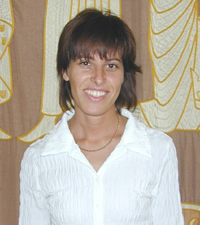
Yaroslava Sennikova

June 20, 2012 disabled comments

CIME consultant Yaroslava is Editor of the TV Channel ‘100 TV’. As an independent company 100 TV is able to cover a wide range of news stories using commentary from a broad range of sources. At the time of the 2006 Fellowship Programme Yaroslava was News Editor of 100 TV, having since been promoted to the position of Editor. Being an Editor, Yaroslava does her best to cover news and events from different angles, using the commentary of experts and other sources. In her everyday work she tries to keep the balance among news that concerns politics, economics, and the social and cultural life of the city. Yaroslava is also a Board Member of the Association of Young Journalists of North West Russia, the “Neva Press Club”.

Yaroslava Sennikova,
CIME consultant

The situation with media freedom in Belorussia currently and like already during the years hardly depends on political regime and its rules.

Local journalists say that with time passing by many of Belorussian audience may start to think that situation can’t be different and nothing is too wrong with it. Though those that are able to travel abroad and get a fresh sight to things realize how much ridiculous many things, including the media freedom, are.

The print media are divided into official and independent, that are just few, like “BelGazeta” (http://www.belgazeta.by/www.belgazeta.by), “KP-Belorussia”, “Nasha Niva” (www.nn.by). They provide the more or less balanced information with diverse points of view, keep it with no propaganda or contr-propaganda. Though they survive hard, especially economically, as, for example, in the country there is only one paper factory where all newspapers have to buy paper – during last year the price raised up 3 times higher – independent media had to buy the paper on stock-exchange, while pro-governmental press had fixed in year-long agreements price. Plus to this in 2011 pro-governmental press was supported with 54 million euro from the budget.

Among regional newspapers “Vechernij Brest” (www.vb.by) is maybe not perfect, but one of the most brave and balanced, they dare to criticize not only “main figure”, which is President, but also couple of local authorities in power.

When it comes to television it is totally official, there are no not-pro-governmental tv-channels. The same is about radio: on-air there are only FM-stations that provide music and entertainment.

When it comes to internet media, civil journalism there are several most respected and popular active bloggers as well as resources – www.naviny.by and charter97.org, bloggers Malishevskij, Lipkovich, Feduta and some others. In 2011 many of active civil journalists were undertaken for criminal cases, their sites were closed as extremists’ ones. Some of them had to leave Belorussia. There is a list on certain media web-sites that is filtered and forbidden to open in governmental organizations, educational and cultural ones. During 2011 the list grown up to 60 forbidden web-sites.

Last year there were 150 cases of journalists’ arrests, 7 from them were attacked physically. While demonstrations and civil actions journalists were arrested cruelly, professional equipment were broken, 22 journalists came through courts, 13 got administrative prosecution, others were assigned to pay fines.

Another noticeable growing trend is building “unofficial” black lists of musicians, writers, actors, artists – local and international – that are forbidden for entering the country as they demonstrated support to belorussian political prisoners. In the list such people as Russian band DDT (leaded with proactive singer), Pet Shop Boys, writer Edward Uspenskij, Andrej Bitov, dramatist Tom Stoppard, actor Jude Law, Kevin Spacey and others. Their names are also forbidden to be mentioned on TV and FM radios. The reason of being included in the list is not even participation in protest action, but only expressing the opinion on Belorussian
So at the moment the media filed is under big pressure that includes not only censorship, but also tough methods as criminal prosecution, economical pressure, violence during covering civil protest action, administrative arrests, stopping of press units activity, attempts to restrict word freedom in internet.

Piotr Stasinski

June 20, 2012 disabled comments

Piotr Stasinski (2012)
Deputy Editor-in-Chief,
Gazeta Wyborcza,
Warsaw, Poland;
IPI Board Member

From the onset of its EU presidency, which Hungary has just completed, the government in Budapest was widely criticised for enforcing the controversial media law, which was accepted by the Hungarian parliament a few days before the commencement of the EU presidency.

The bill established a new media council, a regulatory body, which may impose severe fines on media that do not, allegedly, report politics in a ‘balanced’ way. It is at the discretion of the council to judge what is considered to be ‘balanced’.

All current council members are also members of the ruling Fidesz party of Mr. Victor Orban. Fidesz has more than two-thirds majority in the parliament.

Council president, Annamária Szalai, is a close aide to prime minister Orban.

Mr. Orban’s critics accuse him of infringing upon press freedom, and of limiting, through parliamentary laws, the powers of the Hungarian constitutional tribunal.

Later, the media law, after critical review by the European Commission, was slightly softened. Originally, the powerful media council dealt only with broadcasting media; e.g. fining TV stations for ‘indecent’ content. However, begining on 1 July 2011, the council gained powers to censor printed press (daily and weekly newspapers) and websites.

There is a threat that, through the aforementioned ‘balance’ provision, the Orban government may try to silence the media, particularly left-leaning media. Leftist commentators, and other observers, are certain that, to that aim, the government would use its influence on the media council.

This threat is even greater since, after the end of the EU presidency, the coverage of Hungary by foreign media has substantially decreased. So, the Orban government may now take off its ‘white gloves’, and may, for example, take revenge on the left-leaning media, which criticised him heavily before his two lost elections, in 2002 and in 2006 (the latter case was Orban’s defeat by his socialist rival Ferenc Gyurcsany).

The very power of the media council to impose financial punishments on the press and broadcasters may be sufficient enough to make them subdue to self-censorship.

Hopefully, the Orban government would be aware that its potential actions against the media will be closely watched by Brussels, and other European capitals, and press freedom organisations, like the South and East Europe Media Organisation (SEEMO) and the International Press Institute (IPI).

Press freedom is a part of European ‘DNA’ and a pillar of democracy. And even a strong democratic mandate, which the Orban government undoubtedly holds, does not give him the right to restrict free speech.

All information and reference, which are contained in this webpage, were compiled after best knowledge and examined with greatest possible care. This disclaimer informs readers / users of the web and information that the views, thoughts, and opinions expressed in an interview by the interview partner or in a statement by the author belong solely to the interview partner / author and do not necessarily reflect the official policy or position of the South East Europe Media Organisation (SEEMO) Assumptions made within an interview-analysis are not reflective of the position of SEEMO. The visitors / users of the SEEMO webpage should take all steps necessary to ascertain that information you receive from SEEMO is correct. We ask every user to check references, double-check information from additional independent sources. SEEMO assumes no responsibility or liability for any errors or omissions, or for the results obtained from the use of information published on the SEEMO website / SEEMO partners website.

Sándor Orbán

June 20, 2012 disabled comments

Sándor Orbán
Program Director
South East European Network for Professionalization of Media

“Democracy requires the pluralism of opinions, not centrally controlled news services,” proclaimed university student András Szeles before tens of thousands of demonstrators in the very heart of Budapest on 15 March 2011. Szeles, born in the year of the fall of communism, added that he and all those who were still getting information from independent sources could not understand why Hungary was now going against Europe and the European standards of democracy. The protest rally has been the largest one initiated by civil groups since 1989. The organisers chose the date consciously, as March 15 is a public holiday and marks the anniversary of the 1848 revolution when the number one demand of revolutionaries was the abolition of censorship and the call for press freedom.

The demonstration was held eight days after the Hungarian government bowed to the pressure from the European Commission and the parliament modified the controversial media law, having provoked strong criticisms both internationally and domestically. The amendments have decreased the harmful effects of the regulation by tackling some of the worst aspects of the legislation, such as the obligation of balanced coverage for all media, the prohibition of openly or covertly defaming any community, the possibility of fining service providers even settled abroad, and the obligation of registration for all media outlets, including print and online.

Though the changes are not negligible, the core of the problems remains. The package of media legislation adopted late last year by the parliament, where the ruling conservative party FIDESZ has two thirds of the seats, goes against international free speech standards even after having been amended. That is why Dunja Mijatovic, the OSCE Representative on Freedom of the Media stated, “Hungary missed the opportunity provided by the modifications.” She recommended further changes in the laws, suggesting that the legal requirement on balanced coverage should be deleted; editorial independence must be safeguarded; print, broadcast and online media require different rules; the vague notions in the legislation must be clarified; excessive registration requirements should be deleted; and the regulatory body should be politically independent and competent. Mijatovic also emphasised the importance of media self-regulation instead of over-regulation.Very similar opinions were articulated in the European Parliament where, on 10 March 2011, MEPs voted 316 to 264, with 33 abstentions, in favour of a resolution calling on Hungary “to repeal the provisions of the laws which are not compatible with the letter or the spirit of EU laws and other European conventions.” Even further, the members of the European Parliament asked the Commission to propose a directive on media freedom and pluralism. This would be a significant step forward as the European Union lacks competence in human rights and media law in general. That is why the Hungarian media package could only have been examined by the Commission on the basis of the Audiovisual Media Services Directive and provisions on freedom of movement and freedom to provide services.

Even if there is no EU directive on media for the time being, Hungary – as a signatory of the European Convention of Human Rights – must respect the Council of Europe’s standards on freedom of expression and media pluralism. This was reflected in a recent statement of CoE Commissioner for Human Rights, Thomas Hammarberg. He concluded that “the wide range of problematic provisions in Hungary’s media legislation coupled with their mutually reinforcing nature result in an unfortunate narrowing of the space in which media can operate freely in Hungary.” According to Hammarberg, all of this suffices to warrant a wholesale review of the media law, a view which certainly resonates with the demands of those tens of thousands who went to the streets of Budapest on 15 March 2011 to demonstrate for press freedom.

All information and reference, which are contained in this webpage, were compiled after best knowledge and examined with greatest possible care. This disclaimer informs readers / users of the web and information that the views, thoughts, and opinions expressed in an interview by the interview partner or in a statement by the author belong solely to the interview partner / author and do not necessarily reflect the official policy or position of the South East Europe Media Organisation (SEEMO) Assumptions made within an interview-analysis are not reflective of the position of SEEMO. The visitors / users of the SEEMO webpage should take all steps necessary to ascertain that information you receive from SEEMO is correct. We ask every user to check references, double-check information from additional independent sources. SEEMO assumes no responsibility or liability for any errors or omissions, or for the results obtained from the use of information published on the SEEMO website / SEEMO partners website.

Dr. Márton Nehéz-Posony

June 20, 2012 disabled comments

Dr. Márton Nehéz-Posony
Attorney-at-Law
Legal Representative of the Hungarian Association of Journalists;
Expert in media- and press law

After sparking heated debates and strong criticism throughout the European Union with its Orwellian media legislature, the Hungarian Government seemingly gave in to EU demands and did propose some amendments in April, which the ruling party eventually voted for, following not too much deliberation. Still, the Hungarian Media Law raises grave concerns in believers in freedom of speech, some of which have not received the public attention they deserve.

For the sake of clarity, let us distinguish between the two pieces of legislation in question. The so-called Media Act (Act CIV of 2010, often but baselessly referred to as the “Media Constitution”) outlines the basic and substantial rules of media content. The other act (Act CLXXXV of 2010) focuses on the institutional and procedural matters of mass media, including its supervision. This act will hereinafter be referred to as the Media Supervision Act. Both acts were revised in April 2011, following widespread criticism from EU capitals and civil rights groups.

One of the most controversial provisions in the Media Act was the one providing for balanced information, since, in the original version, it would have applied not only to linear but also to on-demand content providers. The amendment has excluded on-demand services from this obligation, they, therefore, are not required to provide balanced information any longer. However, the legislation in question, Article 13 of the Media Act, still contains a provision that should sound alarms in protectors of press freedom, yet it remained in effect virtually unnoticed. The article requires that information not only be balanced, but also “comprehensive”: content providers involved in informing the public are required to provide up-to-date information on events and matters in dispute relevant to the citizens of Hungary and to ethnic Hungarians. The practical question is: who will decide what is relevant? Is it going to be an editor or the media authority? Even under the modified regulation, this requirement will apply not only to TVs and radios operating on frequencies, but also to those providing live services over the internet.

The second issue raised by critics was the broadness of the requirement of content providers to register in advance with the media authority, outlined in Articles 41-44 and 185-189 of the Media Supervision Act. EU Commission Vice President Neelie Kroes specifically questioned whether such a requirement is justifiable in the case of internet sites and the printed press. The Hungarian Government’s proposal tried to address this issue as well. Under the amendment, registration of on-demand content providers and the printed press is no longer compulsory in advance, but they have 60 days upon commencing their services to register while this certainly is some progress, there are still several other provisions of the law, which remain untouched, that raise the same question of justifiable limitations. First of all, a failure to register will result in a fine up to approximately 4,000 EUR. This threat by the law may be viewed as an administrative obstacle to the provision of services and makes the registration a de facto permission process. The purpose of this regulation could be achieved by a requirement to constantly inform the public about the content provider’s basic data (its principal address, the editor-in-chief, etc.). The other problem the legislation raises, which also has not received much public attention, is the scope of data to be provided during the registration. Linear content providers, even those not airing on frequencies, are required to provide data on the planned number of subscribers, the planned structure of their programming, the planned amount of time to broadcast news, public service programmes and programmes to serve ethnic minorities. This information seems to be unnecessary to be submitted to the authority, especially if they do not have any legal relevance. Similar to the problem of registration is the problem of a fee to be paid by linear service providers. Under the current regulation, this applies not only to TVs and radios in the air, but also to linear services over the internet, although they do not use resources owned by the state (the frequencies). If you receive nothing in return for your payment, that looks awfully like a tax. Still, the amount of the fee is not stated in the law, but it will be determined by the media authority, which in the case of internet-based content providers, makes the fee incalculable, thereby infringing upon the rule of law.

Most of the controversy lay in the powers of the media authority, the president and board members, of which are solely appointed by the ruling party. The media authority is responsible to oversee compliance with the provisions of media-related legislation. Since Articles 14, 16 and 18 of the Media Act provide for the protection of individual rights such as human dignity (which in the interpretation of the Hungarian Constitutional Court is the mother of all individual rights like the protection of reputation) or privacy, and since Article 167 of the Media Supervision Act makes it the obligation of the media authority to enforce provisions of both acts, it is very easy to come to the conclusion that this legislation creates an administrative procedure to protect individual rights, whereas they should exclusively be ruled upon by courts.

Moreover, under Articles 155 and 156 of the Media Supervision Act, in enforcing these rights and supervising content providers, the authority is entitled to examine all kinds of documents and devices carrying data related to the content providers’ activities, including confidential information and business data. The obligation to provide the authority with information is imposed on a wide array of subjects, who also face fines up to approximately 100,000 EUR if they fail to comply. In the scope of the matters to be investigated by the media authority, however, these powers are disproportionately broad.

Article 187 of the Media Supervision Act outlines the system of sanctions the authority may impose on content providers. One of them is the erasure of the provider, which results in the obligation of stopping their transmission by technical providers. Another sanction is an obligation to publish a communiqué set out in the authority’s ruling. If the content provider fails to comply, technical providers are also required to suspend their transmission. There seems to be no need to comment on these ones, lest someone finds it harmful and submits a complaint to the media authority.

All information and reference, which are contained in this webpage, were compiled after best knowledge and examined with greatest possible care. This disclaimer informs readers / users of the web and information that the views, thoughts, and opinions expressed in an interview by the interview partner or in a statement by the author belong solely to the interview partner / author and do not necessarily reflect the official policy or position of the South East Europe Media Organisation (SEEMO) Assumptions made within an interview-analysis are not reflective of the position of SEEMO. The visitors / users of the SEEMO webpage should take all steps necessary to ascertain that information you receive from SEEMO is correct. We ask every user to check references, double-check information from additional independent sources. SEEMO assumes no responsibility or liability for any errors or omissions, or for the results obtained from the use of information published on the SEEMO website / SEEMO partners website.

Jan Mainka

June 20, 2012 disabled comments

Jan Mainka Publisher,
Budapester Zeitung and
The Budapest Times

I am not a lawyer nor am I an expert in media law. I am a publisher of the only two foreign language weeklies in Hungary. It is only from this point of view that I can judge the new Hungarian media law and the situation of the freedom of press in my country. I can say that for my team, nothing has changed when compared to the previous situation. There is not even the slightest sign of the Hungarian government trying to put pressure on us. We are absolutely free to write about what we want to, and this of course means taking the minority viewpoints and the personal rights of individuals into account – just as before. It is a paradox, but the only real political pressure that I occasionally feel – in the form of insulting aggressive remarks about me or my newspapers in articles, on webpages like Wikipedia or in the forum section of our web pages – come exactly from those who allegedly burn for the freedom of press in my country and whose tolerance ends when they get confronted with articles that treat our prime minister, Mr. Orbán, any differently than a “Dr. Evil” from the East. As a result of this latent pressure and because of my unwillingness to assist in undifferentiated Orbán bashing, I stopped writing editorials a few months ago. In this sense, I have to correct my above statement regarding not feeling political pressure about what we can and cannot publish… but I hope this will pass soon.

All information and reference, which are contained in this webpage, were compiled after best knowledge and examined with greatest possible care. This disclaimer informs readers / users of the web and information that the views, thoughts, and opinions expressed in an interview by the interview partner or in a statement by the author belong solely to the interview partner / author and do not necessarily reflect the official policy or position of the South East Europe Media Organisation (SEEMO) Assumptions made within an interview-analysis are not reflective of the position of SEEMO. The visitors / users of the SEEMO webpage should take all steps necessary to ascertain that information you receive from SEEMO is correct. We ask every user to check references, double-check information from additional independent sources. SEEMO assumes no responsibility or liability for any errors or omissions, or for the results obtained from the use of information published on the SEEMO website / SEEMO partners website.

Veran Matic

June 20, 2012 disabled comments

Veran Matic (2012)
President of the Board of Directors RTV B92,
Belgrade, Serbia

I had been following years-long trial of Orhan Pamuk charged with „insulting Turkishness“. I sighed with relief when the criminal charges were dropped, but this was a bitter-sweet victory after the demonization of the Nobel laureate.
It was clear, however, if many things were not changed in the Criminal Code, criminal prosecution of journalists and free-thinking people would persist. Indeed, anyone could be charged and punished under such loose legal provisions in Turkey.
Ultimately, personal damages claims were brought by „injured“ families against Mr. Pamuk for the same ’offence’ – for his remarks about Armenian and Kurdish deaths for which he had been previously accused under the Criminal Code. The Nobel laureate was fined in late March this year and ordered to pay about $4,000.
And yet, parallel to this, a series of frightening prison sentences were handed down to journalists from all sorts of media outlets – mainstream and independent, small and big ones, tabloids…
Anti-terror laws in the country have led to a situation where Turkey ranks first in terms of the number of journalists languishing in prisons. Turkey is also ‘a world champion’ when it comes to the number of trials of journalists as well as hefty fines imposed on them.
This appears to be a part of an overall trend to stifle independent voices when we take into account constraints imposed on online and e-mail communication, and filtering of web sites. Apparently, fighting against terrorism serves as an alibi for increasing repression.
B92, the media outlet which I run, was banned four times during the Milosevic’s reign. The old authoritarian regime would always cite some legal provision as an excuse for banning the station, which, as a rule, did not have anything to do with the Public Information Act. Once they even claimed that they had not actually banned B92 but that ‘rain water penetrated transmitter’s coaxial cables’.
Autocratic regimes typically endeavour to lay down very loose rules of the game which could be easily bend to their interpretations so that they could exert control the media scene in many different ways.
It is incomprehensible to me that there are over 60 journalists languishing in prison today in Europe, including a World Press Freedom Hero. It is baffling that many exceptional journalists and editors have been murdered, that they are being attacked, that the very existence of many media outlets is threatened.
Our colleagues in Turkey are waging a very important battle for freedom of expression in this country which aspires to join the family of European democracies in the European Union. Response and a show of solidarity of colleagues worldwide have not been satisfactory so far.
Individual reactions on the part of various associations and institutions would not suffice. International organisations have not as yet shown determination to oppose this wave of violence which is undermining one of the fundamental pillars of every democracy – freedom of speech. They have failed so far to protect the journalists and the media from outrageous accusations, non-transparent judicial proceedings and violations of the right to defend oneself.
It is necessary that all the media organisations rally round to help our colleagues and their media by way of setting up a committee of reputable journalists and editors with a clear objective to pursue every possible legal avenue to amend the laws and practice in Turkey, and thus set free innocent journalists, make their persecution cease and enable normal online communication in this country.

All information and reference, which are contained in this webpage, were compiled after best knowledge and examined with greatest possible care. This disclaimer informs readers / users of the web and information that the views, thoughts, and opinions expressed in an interview by the interview partner or in a statement by the author belong solely to the interview partner / author and do not necessarily reflect the official policy or position of the South East Europe Media Organisation (SEEMO) Assumptions made within an interview-analysis are not reflective of the position of SEEMO. The visitors / users of the SEEMO webpage should take all steps necessary to ascertain that information you receive from SEEMO is correct. We ask every user to check references, double-check information from additional independent sources. SEEMO assumes no responsibility or liability for any errors or omissions, or for the results obtained from the use of information published on the SEEMO website / SEEMO partners website.

Radomir Licina

June 20, 2012 disabled comments

Radomir Licina, Senior Editor,
Danas daily, Belgrade; SEEMO Board Member

Being a journalist is a rather insecure and challenging job in many parts of the world today, but Turkey undoubtedly leads the way in Europe in this respect, together with Russia and Belarus.
Depressing figures prove that Turkey is one of the most unfriendly and most difficult environments for the work of local journalists. As of June 2011, almost 60 Turkish journalists were in jail or arrested on dubious or legally ambiguous grounds! Especially alarming is the fact that among those arrested is Nedim Sener, IPI World Press Freedom Hero! Journalists and editors associated with SEEMO and IPI must, therefore, visibly display their solidarity with arrested and jailed colleagues in Turkey.
However discouraging it may appear, this grim reality has another, much brighter side. Regardless of these dispiriting conditions, the journalists in Turkey are doing their daily jobs in a very professional way, bravely and resolutely, withstanding various threats and pressures, openly or covertly.
So, if we are obliged to show solidarity and support to those not permitted to do their job, we also have to express our admiration and esteem to the multitude of unknown, courageous colleagues who fight that never-ending daily struggle.

All information and reference, which are contained in this webpage, were compiled after best knowledge and examined with greatest possible care. This disclaimer informs readers / users of the web and information that the views, thoughts, and opinions expressed in an interview by the interview partner or in a statement by the author belong solely to the interview partner / author and do not necessarily reflect the official policy or position of the South East Europe Media Organisation (SEEMO) Assumptions made within an interview-analysis are not reflective of the position of SEEMO. The visitors / users of the SEEMO webpage should take all steps necessary to ascertain that information you receive from SEEMO is correct. We ask every user to check references, double-check information from additional independent sources. SEEMO assumes no responsibility or liability for any errors or omissions, or for the results obtained from the use of information published on the SEEMO website / SEEMO partners website.

Emre Kizilkaya

June 20, 2012 disabled comments

Chief Editor of the Foreign News Service at Hürriyet, Turkey’s largest newspaper. He is the Vice President of the board of the International Press Institute’s National Committee in Turkey. More information: about.me/emrekizilkaya

Emre Kizilkaya,
Turkey

Turkey’s Prime Minister Tayyip Erdogan claimed that they, the ruling AKP, were the ones who “unleashed” Turkish journalists. Are they really? Let’s do a fact-checking to find out: When I visited Turkey’s Minister of Justice Sadullah Ergin on May 2012 as a member of the delegation from the National Committee of the International Press Institute (IPI), I was told that the new constitution, as well as a couple of legal “packages”, will solve the most obvious and urgent problem in Turkey: the freedom of the press.
The minister’s optimism, whether it was an honest hope for a more democratic Turkey or a sinister tactic of foot dragging to put free speech advocates off, didn’t change the facts on the ground yet:
According to the Freedom for Journalists Platform (GOP), an umbrella organization that represents 94 national and local journalist associations in Turkey, more than 100 journalists are still in prison today.
This toll is confirmed by several professional associations around the world, including the European Federation of Journalists (EFJ). The most widely-accepted, updated number for the jailed journalists is 102 now.
As” world’s foremost jailer of journalists” in the words of the Overseas Press Club of America (OPC), Turkey fell back ten places to number 148 in the 2011-2012 World Press Freedom Index of the Reporters Without Borders (RSF).
The bodies of the European Union (EU), including the Council of the EU, the European Parliament and the European Commission, voiced their growing concern over the free speech record of Turkey, which they have been conducting formal accession negotiations since 2005.
Although the government alleges that several journalists are in jail, whether as a convict or a defendant, “because they are bank robbers and rapists”, the identities of such criminals are not revealed, even at the requests referring Turkey’s Freedom of Information Act.
The rest of the people, which seems like the whole lot of journalists behind the bars, are doubtlessly jailed because of their journalistic work, as the evidence is clear:
Their homes and offices are being searched, their public writings are being seized as “criminal documents”, their unpublished books are being banned by prosecutors, they are being questioned about why they published a certain news story and the indictments against them list their news items or published commentary as the only “smoking gun.”
The pro-government media in Turkey, on the other hand, amplifies the human rights violations of the political authorities, worsening the personal tragedies of objective journalists or their dissident counterparts.
Character assassination becomes the norm. For instance, wiretapped conversations, which have generally nothing to do with the legal case, are being published or broadcasted in violation of the privacy of the defendant.
Cold facts and flat statistics cannot properly describe the tragedy of the Turkish journalist as a human being, though:
Take IPI World Press Freedom Hero Nedim Sener, who was kept in jail for over a year in spite of the huge international outcry over his arrest, as well as his colleague Ahmet Sik, an equally respected investigative journalist.

Biscuits and Strip Search for Children

When we visited Sener in Silivri Prison on November 2011 with another delegation of IPI’s National Committee, he had told us how his 8-year-old daughter offered to be jailed with him. “If they have biscuits, it would be enough for me”, she had explained to him.
Later, when he was released on March 2012, the same Sener would be crying on live TV when revealing how her daughter was strip searched at the entrance of the prison, because three metal buttons of her skirt had alerted the detectors.
Sener and Sik are prominent journalists, so everybody listened to their personal tragedy in the pursuit of truth.
But what about scores of their colleagues who are still behind the bars, pending trials?
Fusun Erdogan, a director of Ozgur Radio, is one of the forgotten names. Erdogan, who described herself as “a dissident journalist”, was arrested on September 8th, 2006 and charged of being a member of a Marxist-Leninist terrorist organization. Her lawyers, as well as main opposition MPs, insist that there is no sound evidence against her.
In the last hearing on May 30, 2012, the court refused to release Erdogan once again and postponed the case to September 6th, which meant that she would remain in prison without conviction for over six years alongside ten other defendants, including two more dissident journalists.
It is clear that the need to democratize the the Constitution, the Turkish Penal Law (TCK) and the Anti-Terror Law (TMK) is urgent. But don’t get it wrong: It is more about legal practice than the legislation; as with the same laws, Turkey’s free speech record was relatively better in the past, although not ideal at all. Such legal cases aside, at least the Prime Minister was not rebuking pundits by personally targeting one of them by yelling that “this is an individual whose pen always drips with filth”.
This picture reinforces the perception that the government, which is preparing some –seemingly- cosmetic improvements to the defuse the situation nowadays, could be attempting to quell dissent and keep its hegemonic control over the public opinion.
What may be even worse is the perception that many journalists feel an urge to censor themselves in order to stay away from the wrath of the government and the judiciary.
But what can they do after seeing their independent colleagues either crying on TV or silenced in prisons?
And what can they do after reading from their colleagues, maybe not leashed but unfairly favored by the government, that Turkey is being presented by the West as a role-model for the “Arab Spring” countries?
What, except censoring themselves or, in other words, changing the color of their collars and leashes?

All information and reference, which are contained in this webpage, were compiled after best knowledge and examined with greatest possible care. This disclaimer informs readers / users of the web and information that the views, thoughts, and opinions expressed in an interview by the interview partner or in a statement by the author belong solely to the interview partner / author and do not necessarily reflect the official policy or position of the South East Europe Media Organisation (SEEMO) Assumptions made within an interview-analysis are not reflective of the position of SEEMO. The visitors / users of the SEEMO webpage should take all steps necessary to ascertain that information you receive from SEEMO is correct. We ask every user to check references, double-check information from additional independent sources. SEEMO assumes no responsibility or liability for any errors or omissions, or for the results obtained from the use of information published on the SEEMO website / SEEMO partners website.