28 June 2023: Media freedom and journalists groups call on the EU to prioritise media freedom reforms in relations with Turkey

28 June 2023: Media freedom and journalists groups call on the EU to prioritise media freedom reforms in relations with Turkey

July 5, 2023 disabled comments

28 June 2023
Media freedom and journalists groups call on the EU to prioritise media freedom reforms and human rights in relations with Turkey following the May elections

The undersigned organisations call on the incoming Spanish Presidency of the Council of the European Union to place media freedom and human rights front and centre of relations with the newly re-elected Government of Turkey.

The May elections, which saw a parliamentary majority for the AKP and its allies and the re-election of Recep Tayyip Erdoğan as President, took place against a backdrop of a media landscape dominated by pro-government outlets, the smothering of independent voices and the repression of critical journalism.

Over the past two decades, Turkey’s government has captured over 90% of the media landscape, including direct control over the country’s public media and indirect control over much of the mainstream media through party-aligned oligarchs. It has abused the power of state advertising to create compliant journalism and weaponized the broadcast regulator, RTÜK, to routinely target broadcasters with financial penalties for critical news reporting.

The capture of mainstream media has been backed by a mass crackdown on independent media, including the arrests and prosecutions of thousands of journalists in the years since the failed coup of 2016. As the country went to the polls on May 14, at least 47 journalists were imprisoned in Turkey, including 31 Kurdish journalists arrested since June 2022 alone.

Journalists face physical assaults, troll attacks by politicians and their supporters, and smear campaigns from government-aligned media. The police routinely arrest journalists at demonstrations and prevent them from reporting. According to the Mapping Media Freedom database, which documents media freedom violations across EU member states and candidate countries, since July 2022, 173 alerts, almost one in five of the total, have been located in Turkey.

More recently, the government has stepped up efforts to block and censor online content through the 2022 amendments to the disinformation law. The law, among other things, provides for up to three years imprisonment for ‘disinformation or fake news’ that threatens national security, public order and public morals. It also requires social media platforms to comply with content blocking requests or face the throttling of their bandwidth by up to 90% and six-month advertising bans.
Moreover, the vague definition of ‘disinformation’ empowers an already notoriously compromised judiciary to misuse the law to punish political opponents.

Meanwhile, studies have shown that algorithmic bias, already in place, channels over 80% of news searchers on Google to pro-government media forcing independent media to exist in a restricted news bubble.
Combined, these tactics create a hostile economic and judicial environment designed to silence independent journalism, denying the public access to a diverse range of news and information and seriously damaging Turkey’s democracy. As a consequence, Turkey’s recent elections were assessed as free, but not fair by the OSCE.

Since the elections, numerous journalists have been assaulted and independent broadcasters were issued fines by RTÜK. The broadcaster HaberTürk has stopped publishing political columns on its website, and parted ways with one of the most well-known TV journalists who had been critically covering the current news. And on June 27, Merdan Yanardağ, Editor in Chief of TELE 1 broadcaster was arrested. The election results do not bode well for media freedom and fundamental rights more broadly in Turkey.

As the European Union assesses the results of the elections, we urge European governments and policy makers to ensure that the improvement of media freedoms and fundamental rights are placed at the heart of future relations with Turkey. Failure to do so would be a betrayal both of the Turkish public and of the European Union’s values.

Signed
International Press Institute (IPI)
Articolo 21
Association of Journalists in Ankara (GC)
Coalition For Women In Journalism (CFWIJ)
Committee to Protect Journalists (CPJ)
Danish PEN
European Centre for Press and Media Freedom (ECPMF)
European Federation of Journalists (EFJ)
Freedom House
International Federation of Journalists (IFJ)
Media and Law Studies Association (MLSA)
OBC Transeuropa (OBCT)
PEN International
PEN America
PEN Canada
PEN Norway
Platform for Independent Journalism (P24)
Reporters Without Borders (RSF)
South East Europe Media Organisation (SEEMO)
Turkey Human Rights Litigation Support Project (TLSP)


20 June 2023: Turkey- International groups condemn attack against journalist Sinan Aygül

July 5, 2023 disabled comments

20 June 2023
Turkey: International groups condemn attack against journalist Sinan Aygül

Authorities must take all measures to ensure safety of journalists and hold all responsible to account

The undersigned media freedom, freedom of expression and human rights organizations strongly condemn the appalling attack on journalist Sinan Aygül that took place in Tatvan, a city in eastern Turkey, on June 17. Two people were arrested the following day charged with ‘intentional injury with a weapon’.

While we welcome the swift arrests, we call upon the authorities to thoroughly investigate this crime and ensure that all those responsible, including others who may have been behind the attack, are held fully accountable.

On June 17, Aygül, who is also the chairperson of the Bitlis Association of Journalists, wrote on Twitter that security guards employed by the mayor of Tatvan, Mehmet Emin Geylani, physically attacked him in the middle of the street. He said the security personnel arrived in a municipality-owned vehicle and were carrying firearms. As the assailants assaulted Aygül, they issued a death threat, warning him against reporting information about the mayor. Aygül was hospitalized as a result of his injuries.

Two days before the assault, in a Twitter post, Aygül had raised allegations of irregularities in the public tender for property sales involving the Tatvan Municipality and its mayor, and called for its cancellation.

Aygül has been targeted many times for his critical reporting, subjected to death threats and legal harassment. To date, 137 criminal investigations have been launched against him in connection with his journalism. On January 19, 2023, Aygül was detained on accusations of insulting Vahit Kiler, a member of parliament from the ruling AKP, for reporting on corruption allegations involving Kiler. Aygül was released the next day after an initial interrogation.

In February 2023, he was the first journalist to be sentenced under Turkey’s new “disinformation law” passed by the Turkish parliament last October. The court sentenced him to 10 months in prison, a verdict which Aygül is now appealing to the Supreme Court after his initial appeal was turned down by a regional Court of Appeal.

We stand in solidarity with Aygül and all other journalists who face threats and attacks for their reporting. The authorities must ensure that journalists are able to do their jobs freely and safely, and that the perpetrators, including others who may have been behind the attack, are brought to justice.

IPI submitted an alert on the Council of Europe Safety of Journalists Platform on this incident.

Signatories

Amnesty International Turkey
Ankara Journalists Society
ARTICLE 19
Articolo 21
Association of European Journalists (AEJ)
Coalition For Women In Journalism (CFWIJ)
Danish PEN
English PEN
European Centre for Press and Media Freedom (ECPMF)
European Federation of Journalists (EFJ)
IFEX
International Federation of Journalists (IFJ)
International Press Institute (IPI)
Journalists Union of Turkey (TGS)
Media and Law Studies Association (MLSA)
OBC Transeuropa (OBCT)
PEN America
PEN International
PEN Norway
Platform for Independent Journalism (P24)
Reporters Without Borders (RSF)
SafeJournalists Network
South East Europe Media Organisation (SEEMO)
Swedish PEN
Turkey Human Rights Litigation Support Project (TLSP)
Turkish Press, Broadcasting and Printer Worker’s Union (DİSK-Basın İş)

This statement was coordinated by IPI as part of its #FreeTurkeyJournalists campaign and member of the Media Freedom Rapid Response (MFRR), a Europe-wide mechanism which tracks, monitors and responds to violations of press and media freedom in EU Member States and candidate countries.

________________________________________

Türkiye: Uluslararası kuruluşlar gazeteci Sinan Aygül’ü hedef alan saldırıyı kınıyor

Yetkililer gazetecilerin güvenliğini sağlamak için tüm önlemleri almalı ve tüm sorumlulardan hesap sormalıdır.

Aşağıda imzası bulunan basın özgürlüğü, ifade hürriyeti ve insan hakları kuruluşları, 17 Haziran 2023 tarihinde Bitlis’in Tatvan ilçesinde gazeteci Sinan Aygül’ü hedef alan korkunç saldırıyı şiddetle kınamaktadır. Saldırıdan sonraki gün iki kişi ‘silahla kasten yaralama’ suçlamasıyla tutuklanmıştır.

Saldırının ardından hızla gerçekleştirilen tutuklamaları memnuniyetle karşılıyor, bununla birlikte yetkilileri kapsamlı bir soruşturma yürütmeye ve saldırının arkasında olabilecekler de dahil olmak üzere tüm sorumluların hesap vermesini sağlamaya çağırıyoruz.

Bitlis Gazeteciler Cemiyeti Başkanı olan Aygül, 17 Haziran’da Twitter’da Tatvan Belediye Başkanı Mehmet Emin Geylani’nin korumalarının sokak ortasında kendisine fiziksel saldırıda bulunduğunu duyurdu. Aygül ayrıca korumaların belediyeye ait bir araçla geldiğini ve ateşli silahlar taşıdığını paylaştı. Saldırganlar saldırı esnasında Aygül’e ölüm tehdidinde bulunarak belediye başkanı hakkında haber yapmaması konusunda uyardı. Gazeteci Aygül aldığı yaralar sonucunda hastaneye kaldırıldı.

Aygül, saldırıdan iki gün önce Twitter hesabından yaptığı paylaşımda, Tatvan Belediyesi ve belediye başkanının da dahil olduğu mülk satış ihalesinde usulsüzlük yapıldığı iddialarını gündeme getirmiş ve ihalenin iptal edilmesi çağrısında bulunmuştu.

Aygül, eleştirel haberciliği nedeniyle birçok kez hedef gösterildi, ölüm tehditlerine ve hukuk yoluyla tacize maruz bırakıldı. Bugüne kadar gazeteciliği ile bağlantılı olarak hakkında 137 ayrı ceza soruşturması başlatıldı. 19 Ocak 2023’te Aygül, AKP milletvekili Vahit Kiler’in adının karıştığı yolsuzluk iddialarını haberleştirdiği için Kiler’e hakaret suçlamasıyla gözaltına alınıp ilk sorgusunun ardından ertesi gün serbest bırakıldı.

Şubat 2023’te ise geçtiğimiz Ekim ayında TBMM tarafından kabul edilen Türkiye’nin yeni “dezenformasyon yasası” kapsamında ceza alan ilk gazeteci olmuştu. Mahkeme tarafından 10 ay hapis cezasına çarptırılan Aygül, ilk temyiz başvurusunun bölge istinaf mahkemesi tarafından reddedilmesinin ardından Yargıtay’a başvurdu.

Aygül ve gazetecilik faaliyetleri nedeniyle tehdit ve saldırılara maruz kalan diğer tüm gazetecilerle dayanışma içindeyiz. Yetkililer, gazetecilerin işlerini özgürce ve güvenli bir şekilde yapabilmelerini ve saldırının arkasında olabilecek kişiler de dahil olmak üzere tüm faillerin adalet önüne çıkarılmalarını sağlamalıdır.

IPI, Avrupa Konseyi Gazetecilerin Güvenliği Platformu’na bu olayla ilgili bir uyarı gönderdi.

İMZALAYANLAR:

Ankara Gazeteciler Cemiyeti
ARTICLE 19
Articolo 21
Avrupa Basın ve Medya Özgürlüğü Merkezi (ECPMF)
Avrupa Gazeteciler Birliği (AEJ)
Avrupa Gazeteciler Federasyonu (EFJ)
Bağımsız Gazetecilik Platformu (P24)
Danimarka PEN
DİSK-Basın İş
Gazetecilikte Kadın Koalisyonu (CFWIJ)
Güney Doğu Avrupa Medya Organizasyonu (SEEMO)
Güvenli Gazeteciler Ağı (SJN)
IFEX
İngiliz PEN
İsveç PEN
Medya ve Hukuk Çalışmaları Derneği (MLSA)
OBC Transeuropa (OBCT)
PEN Amerika
PEN Norveç
Sınır Tanımayan Gazeteciler (RSF)
Türkiye Gazeteciler Sendikası (TGS)
Türkiye İnsan Hakları Davalarına Destek Projesi (TLSP)
Uluslararası Af Örgütü Türkiye Şubesi
Uluslararası Basın Enstitüsü (IPI)
Uluslararası Gazeteciler Federasyonu (IFJ)
Uluslararası PEN

Bu açıklama Uluslararası Basın Enstitüsü (IPI) tarafından #FreeTurkeyJournalists kampanyası kapsamında hazırlanmıştır. IPI, AB Üye Devletleri ve aday ülkelerdeki basın ve medya özgürlüğü ihlallerini izleyen, takip eden ve bunlara müdahale eden Avrupa çapında bir mekanizma olan Media Freedom Rapid Response (MFRR) üyesidir.

19 June 2023: Civil society and journalists associations urge the Council to protect journalists

July 5, 2023 disabled comments

19 June 2023
Civil society and journalists associations urge the Council to protect journalists against spyware and surveillance in the European Media Freedom Act (EMFA)

To: Deputy Permanent Representatives (COREPER I)
CC: Attachés for Culture and Audiovisual

Dear Deputy Permanent Representatives,

We, the undersigned 79 journalists and press freedom, civil society, trade unions, digital rights and publishers and broadcasters organisations are writing to voice our concerns on the worrying developments related to the draft Regulation on the European Media Freedom Act (EMFA), in particular the provisions of Article 4 (“Rights of media service providers”). The latest compromise text of 24 May poses serious risks to European Union core democratic principles and fundamental rights, notably press freedoms, freedom of expression and the protection of journalists.

In particular, the latest compromise text: (a) maintains and aggravates the Commission’s proposal which carves out a “national security” exception from the general prohibition to deploy spyware against journalists; (b) increases the list of crimes that permit surveillance against journalists and journalistic sources; and (c) eliminates legal safeguards that protects journalists against the deployment of spyware by Member States.

In order to ensure that the Regulation protects journalists and their fundamental rights, the Council must instead:

(a) Eliminate the exception for “national security”

The current compromise text, instead of protecting journalists and their sources, will legalise the use of spyware against journalists. Specifically, the inclusion of a new paragraph 4. stating that “[t]his Article is without prejudice to the Member States’ responsibility for safeguarding national security”turns in effect the protections originally afforded by Article 4 into empty shells. Through this new provision, the Council is not only weakening safeguards against the deployment of spyware but also strongly incentivises their use based solely on Member States’ discretion.

Hungarian journalist Szabolcs Panyi adequately describes the real threat this provision poses to journalism: “Technical forensic analysis of my phone showed that the Pegasus spyware had been running on my device for seven months. My surveillance impeded my right to protect my sources of information. I am an investigative journalist who relies heavily on information from whistleblowers. In increasingly repressive political environments, like in Hungary, where media is under government control and pressure, whistleblowers and leaks are the only way left for investigative journalists to uncover the truth. This is exactly why, under the pretext of vague and bogus national security reasoning, surveillance is used against journalists in Hungary. It has an enormous chilling effect, and could make our work impossible. EU leadership in Brussels must
realize that any EU citizen, whether a journalist or a source of a journalist, can become subject of illegitimate surveillance if certain member states always get away with using ‘national security’ as a free pass. This makes the EMFA even more essential in protecting the rights of journalists and freedom of the press.”

Including the “national security” exception without fundamental rights safeguards neglects the important case law of the Court of Justice of the European Union (CJEU). The Court has been clear that the mere purpose of safeguarding national security cannot render EU law inapplicable and does not exempt Member States from their obligations to comply with the rule of law.1

(b) Restrict the list of crimes that allows repressive measures against journalists and journalistic sources and prohibit the deployment of spyware

The draft Council position deletes the exhaustive list of crimes set by the Commission in Article 2, paragraph 17 to replace it with the list established in the European Arrest Warrant Framework Decision conditioned by a maximum detention sentence of at least three years and with all offences punished by maximum minimum threshold of five-year imprisonment under national law. This has the effect to massively expand the list of crimes justifying the deployment of spyware against journalists and journalistic sources, including less severe offences such as “arson” or “piracy of products”. This is deeply problematic from a fundamental rights perspective.

To abide by the principle of proportionality, it is vitally important to include a proper threshold that excludes parts of national criminal codes which do not justify intrusive measures under Article 4(2) point (b). According to the CJEU case law only serious crime is capable of justifying a serious interference with the fundamental rights of the individual.2 When it comes to journalists and media workers the threshold must be higher due to the crucial role they play as public watch-dogs in our democracies.

As assessed by the European Data Protection Supervisor (EDPS) in its preliminary remarks3, the level of interference of modern spyware with the right to privacy is so severe that it “in fact deprives” the individual of this right. When the individual is a journalist or a source, it is all the more clear that even the purpose of protecting national security cannot establish a proper balance with the interference at stake. In a nutshell, the broad scope of the catalogue of crimes in point (c) of Article 4(2) opens the door to unacceptable and disproportionate surveillance against journalists and journalistic sources. If not substantially redrafted, the EMFA would legalise the silencing of critical voices, reinforcing chilling effects on civic spaces.

(c) Include strong legal safeguards to protect and respect free and independent journalistic work

The current proposal of the Council does not include any measures capable of safeguarding fundamental rights as required by the Treaty on European Union and the Charter of Fundamental Rights. The EMFA therefore should follow the fundamental standards built in the jurisprudence of the CJEU and the European Court of Human Rights (ECtHR).4 For example, it must include an effective, binding and meaningful prior authorisation by an independent judicial authority.

Furthermore, repressive measures under Article 4 (a) and (b) must be necessary, proportionate, assessed on a case-by-case basis and strictly limited to the most serious crimes.

The testimony of Catalan journalist Enric Borràs Abelló, President of the Group of Journalists Ramon Barnils and Deputy Director of ARA newspaper shows how crucial legal safeguards are in the context of state surveillance : “The list of personalities spied on with Pegasus and Candiru in the so-called Catalangate has, at the moment 65 names confirmed by NGO Citizen Lab. Three of them are journalists. The cyberespionage against the Catalan independence movement broke out more than a year ago and since then the Spanish National Intelligence Center (CNI) has only recognized the espionage of 18 people linked to the movement. None of them are journalists. The CNI had judicial authorisation to do so in the framework of the terrorism investigation of the [internet-based] organisation called Democratic Tsunami, which called for several demonstrations in Catalonia. The investigation of the other 47 cases perpetrated without judicial authorisation remains without a response from national authorities. So far, there isn’t any kind of collaboration from Spanish intelligence”.

In light of aforementioned points, the undersigned civil society and journalists’ organisations are urging the Council to reconsider its current position and to build a solid position against the surveillance of journalists. The Pegasus scandal in Hungary, the Predator case in Greece or the “Catalan Gate” simply are not tolerable in democratic societies. It is the role of the Council to make sure to include the highest legal safeguards to protect journalism. Therefore, we sincerely hope that, in your responsible capacities, you take the urgent and substantial steps to ensure that the concerns outlined in this letter are addressed appropriately.

We remain at your disposal should you want to further discuss how the Council can ensure that its general approach to the EMFA enhances fundamental rights, democracy and the rule of law – the foundations on which the European Union is based.

Sincerely,
1. Access Info Europe
2. Access Now
3. ActiveWatch, Romania
4. ApTI – Asociatia pentru Tehnologie si Internet, Romania
5. Article 19
6. Association of Commercial Television and Video on Demand Services in Europe (ACT)
7. Association of European Journalists (AEJ), Cyprus
8. Association of Professional Journalists, Albania
9. Belarusian Assotiation of Journalists (BAJ), Belarus
10. CFDT-Journalistes, France
11. Citizen D / Državljan D, Slovenia
12. Civil Liberties Union for Europe (Liberties)
13. Civil Rights Defenders, Sweden
14. Committee to Protect Journalists (CPJ)
15. Croatian Journalists Association
16. Cultural Broadcasting Archive, Austria
17. Culture and Mass-Media Federation FAIR-Media Sind and Romanian Trade Union of
Journalists, Romania
18. Danish Union of Journalists, Denmark
19. Deutscher Journalisten-Verband (DJV), Germany
20. Digitalcourage, Germany
21. Digital Citizenship (DCO)
22. Dutch Association of Journalists (NVJ), The Netherlands
23. Electronic Frontier Finland (Effi ry), Finland
24. Electronic Frontier Norway (EFN), Norway
25. Estonian Association of Journalists, Estonia
26. European Broadcasting Union (EBU)
27. Eurocadres
28. European Center for Not-for-Profit Law (ECNL)
29. European Centre for Press and Media Freedom (ECPMF)
30. European Digital Rights (EDRi)
31. European Federation of Food, Agriculture and Tourism Trade Unions (EFFAT)
32. European Federation of Journalists (EFJ)
33. European Partnership for Democracy (EPD)
34. European Publishers Council (EPC)
35. European Trade Union Committee for Education (ETUCE)
36. European Trade Union Confederation (ETUC)
37. Federazione Nazionale Stampa, Italy
38. Finnish Union of Journalists, Finland
39. Flemish Association of Journalists, Belgium
40. Free Press Unlimited, the Netherlands
41. Gazeta Wyborcza Foundation, Poland
42. Global Forum for Media Development (GFMD)
43. Gong, Croatia
44. Group of Journalists Ramon Barnils, Spain
45. Helsinki Foundation for Human Rights, Poland
46. Human Rights Monitoring Institute, Lithuania
47. Hungarian Press Union, Hungary
48. Independent Journalists’ Association of Serbia (NUNS), Serbia
49. Independent Journalists Association of Vojvodina, Serbia
50. industriAll Europe
51. International Press Institute
52. Internews Europe
53. IT-Pol, Denmark
54. Jouralismfund Europe
55. Journalists’ Association of Serbia (JAS-UNS), Serbia
56. Journalists’ Union of Turkey (TGS), Turkey
57. La Quadrature du Net, France
58. Latvian Journalist Union, Latvia
59. Ligue des droits humains (LDH), Belgium
60. Lithuanian Union of Journalists (LZS), Lithuania
61. Media Diversity Institute
62. News Media Europe
63. Osservatorio Balcani Caucaso Transeuropa (OBCT)
64. Ossigeno.info, Italy
65. Peace Institute, Slovenia
66. PEN International
67. Portuguese Union of Journalists (SINJOR), Portugal
68. Reporters without Borders (RSF)
69. Serbian Union of Journalists (SINOS), Serbia
70. Society of Journalists, Warsaw, Poland
71. South East Europe Media Organisation (SEEMO)
72. Statewatch, UK
73. Swedish Union of Journalists, Sweden
74. Syndicat national des journalistes (SNJ), France
75. Syndicat national des journalistes CGT (SNJ-CGT), France
76. Trade Union of Croatian Journalists, Croatia
77. Trade Union of Media of Montenegro (TUMM), Montenegro
78. TUC Nezavisnost, Serbia
79. Wikimedia Europe


1.  CJEU, Joined cases 511/18, C-512/18 La Quadrature du Net and others v. Premier ministre and Others (2020). Para. 99
2. Ibid. para. 140.

3. EDPS, ‘Preliminary Remarks on Modern Spyware’ (15 February 2022) https://edps.europa.eu/system/files/2022-02/22-02
15_edps_preliminary_remarks_on_modern_spyware_en_0.pdf

4. CEDH, Telegraaf Media Nederland Landelijke Media B.V. and Others v. the Netherlands. Also: Big Brother Watch and other v. The United Kingdom.


5 June 2023: Kyrgyzstan urged to stop abusing legislation to target independent media

July 5, 2023 disabled comments

5 June 2023
Kyrgyzstan urged to stop abusing legislation to target independent media

The recent ruling to close ‘Azattyk Media’, which can still be appealed in court, reflects a growing pattern in Kyrgyzstan to draft and arbitrarily implement controversial and ambiguous laws that could be misused to target people and institutions exercising their rights to free expression and information.

Dear President Sadyr Japarov,

We, the undersigned civil society organisations, who work to promote and defend freedom of expression and information as fundamental rights worldwide, are writing to express our concern with the continued deterioration of these rights in Kyrgyzstan.

On 27 April, the Lenin District Court in Bishkek ruled to close yet another independent media outlet – Azattyk Media, the Kyrgyz service of Radio Free Europe/Radio Liberty (RFE/RL, also known locally as Radio Azattyk), following a lawsuit filed on 17 January by the Ministry of Culture, Information, Sports and Youth Policy. In its lawsuit, the Ministry of Culture claims Azattyk Media violated Article 23(c) “The List of Information Not Subject to Public Dissemination” under the Law of the Kyrgyz Republic “On Mass Media”, which considers Azattyk Media to have disseminated “propaganda of war, violence and cruelty, national, religious exclusivity and intolerance towards other peoples and nations”. This follows from a government-ordered two-month blockage of Azattyk Media’s websites in October 2022 after a video was circulated covering the September 2022 border conflict between Kyrgyzstan and Tajikistan.

Under the “On Protection from Inaccurate (False) Information” law, authorities claimed the video included elements of “inciting ethnic hatred” and “war propaganda”. However, as of 27 April, the initial two-month blockage was extended to seven months. Radio Azattyk’s bank account was also frozen under Article 14 of the law “On countering the financing of terrorist activities and the legalization (laundering) of criminal proceeds,” which allows the suspension of accounts suspected of money laundering.

This recent ruling to close Azattyk Media reflects a growing pattern in Kyrgyzstan to draft and arbitrarily implement controversial and ambiguous laws that could be misused to target people and institutions exercising their rights to free expression and information. Vague and inconsistent constitutional amendments in early 2021, such as the restriction of “activities that contradict moral and ethical values and public conscience of the people of the Kyrgyz Republic” under Article 10(4), have dangerous implications for the rights to freedom of expression, assembly, and association. The “On Protection from Inaccurate (False) Information” law, approved in August 2021 despite heavy criticism, allows authorities to arbitrarily and extrajudicially remove or block information considered to be “false” or “inaccurate” from online platforms.

In November 2021, the Kyrgyz parliament pushed forward a bill to convert the OTRK – the country’s largest and most-watched television network – into a state-owned body, while eliminating a range of democratic principles designed to ensure the independence of the broadcaster. Despite civil society efforts calling for the government to withdraw the Broadcasting Bill, the bill passed into law in early 2022.

Press freedom and media pluralism are the lifeblood of a healthy civic space and a cornerstone for a thriving democracy. In April 2022, 25 IFEX member organisations supported the Media Policy Institute (MPI) and Public Association of Journalists (PAJ) in a joint statement expressing concerns about the shrinking state of civic space and media freedom in Kyrgyzstan after seeing a pattern of overreaching legislative changes, harassment of independent media outlets, and journalists being arrested and detained under trumped-up charges. As the silencing of independent media continues, this runs counter to Kyrgyzstan’s own constitutional values under Article 10(2) which prohibits censorship; Article 32 which guarantees rights to free thought and opinion, free expression, free speech, and press freedom; and Article 63(1) which prohibits laws restricting freedom of speech, press, and media. By blocking Azattyk Media, Kyrgyzstan is violating rights to freedom of opinion and expression, and access to information, which contravenes international and regional human rights obligations, and commitments applicable to Kyrgyzstan that have been highlighted in previous member statements.

Kyrgyzstan’s backslide into authoritarianism is further concerning as Kyrgyzstan now sits on the Human Rights Council (HRC) with an expectation to “uphold the highest standards in the promotion and protection of human rights”. As free expression, media freedom, and civic space steadily deteriorates in the country, it is vital that Kyrgyzstan reverses course and meets the commitments it has made as a member of the HRC by strengthening cooperation with international human rights mechanisms; bolstering civil society participation at the HRC; and raising awareness of human rights during its tenure. Kyrgyzstan should reflect an environment at home that is conducive to the rights to freedom of expression and information, and encourages an open civic space, if it is to be an effective member of the HRC.

Thus, we urge the Government of Kyrgyzstan to:

1. Protect the freedoms of independent media by requesting that the Ministry of Culture, Information, Sports and Youth Policy of the Kyrgyz Republic drop their lawsuit and that the Lenin District Court of Bishkek reverse its decision to close Azattyk Media;

2. Create an enabling environment conducive to freedom of expression, media freedom, and civic space by ensuring journalists and independent media outlets are free to carry out their work independently without fear of criminalisation, interference, censorship, or prosecution;

3. Refrain from developing and implementing ambiguous and overbroad legislation that can be misused and abused to target independent media outlets, journalists, and others exercising their rights to free expression and information; and

4. Uphold Kyrgyzstan’s responsibilities to promote and protect human rights as a member of the Human Rights Council by adhering to international human rights obligations to ensure freedom of expression and information under Article 19 of the International Covenant on Civil and Political Rights.

Signed
Afghanistan Journalists Center (AFJC)
ARTICLE 19
Association pour le Developpement Integré et la Solidarité Interactive (ADISI-Cameroun)
Canadian Journalists for Free Expression
Center for Media Freedom and Responsibility (CMFR)
Freedom of Expression Institute (FXI)
Free Media Movement
Independent Journalism Center (IJC)
International Press Centre (IPC)
International Press Institute (IPI)
Media Foundation for West Africa (MFWA)
Media Institute of Southern Africa (MISA)
Media Policy Institute
Media Rights Agenda (MRA)
Media Watch
Pakistan Press Foundation
Palestinian Center for Development and Media Freedoms (MADA)
PEN America
Public Association “Journalists”
South East Europe Media Organisation (SEEMO)
Syrian Center for Media and Freedom of Expression
Vigilance for Democracy and the Civic State

30 May 2023: Serbia – Legal harassment of investigative media outlet KRIK must stop

July 5, 2023 disabled comments

30 May 2023
Serbia: Legal harassment of investigative media outlet KRIK must stop

The legal harassment against Serbian investigative media outlet KRIK continues as the portal was convicted for reporting on a Strategic Lawsuit Against Public Participation (SLAPP) case it was facing, at the same time as a new abusive lawsuit has been filed against it. The European Federation of Journalists (EFJ) joined the undersigned organisations in standing in solidarity with KRIK’s newsroom, which is currently fighting 12 legal proceedings, and raising the alarm about the use of SLAPPs in Serbia, considered a growing threat to independent journalism.

In recent months, KRIK has been facing multiple lawsuits as a result of public interest investigations exposing crime, corruption and other abuses of power committed by powerful people in Serbia, often affiliated with the ruling party.

The latest alarming development came from the Belgrade High Court on 3 May. In a first-instance decision, the court condemned KRIK for naming in an article the individuals who sued them – police commander Goran Zivkovic and two of his colleagues from the Witness Protection Unit. In the article published in December 2021, the media outlet detailed the avalanche of lawsuits it is currently fighting: namely who brought the cases, on what grounds and their impact on the whole editorial team. As a result, KRIK must pay 374,200 dinars (almost 3,200 €) in compensation for “emotional pain” and for trial expenses. The court also ruled that part of KRIK’s web article must be deleted. KRIK has appealed.
In a reaction to the verdict, KRIK’s editor Stevan Dojčinović said SLAPPs are the outlet’s biggest challenge: “this latest ruling makes it clear that SLAPPs have become the regime’s main tool for shutting down the few remaining independent media outlets. Things have gone so far that we are no longer even allowed to complain in public about the fact that our newsroom is flooded with lawsuits – we are found guilty even for that.”

On 11 May 2023, KRIK reported that the media outlet is facing a new lawsuit in response to an article published on 11 April 2023. The lawsuit was filed by Nikola Petrović against KRIK’s editor and investigative reporters Bojana Jovanović and Dragana Pećo. He demanded the removal of the article and is seeking 200,000 dinars (1,700€) in compensation for “mental suffering”. Nikola Petrović has filed two other lawsuits against KRIK: one ended in favour of KRIK and the other is still pending.

This case is the last in a series of 12 lawsuits initiated in most cases by people from the government or businessmen close to them. The amount of damages claimed is completely disproportionate and exceeds by three times the organisation’s annual budget. While the financial burden is huge, the negative impact on the day-to-day operations is equally significant. The time spent on preparing the defence, presenting the evidence, analysing hundreds of pages of legal documents is effectively taking journalists away from their core work: investigating and informing citizens.

SLAPPs threaten the future of independent journalism – aiming to intimidate, drain resources and isolate reporters so they abandon their hard-hitting investigations. We, the undersigned organisations, renew our support to the KRIK journalists and call on the Serbian judicial authorities to finally acknowledge SLAPPs as a means to silence voices and suppress information of public interest. Serbia continues to provide one of the most fertile grounds in Europe for suing journalists in retaliation for their work. By failing to recognise the threats posed by SLAPPs, the latest court decision sends a worrying signal to all Serbian journalists who investigate sensitive political and economic issues. We hope that the appeal process will consider the serious impact of SLAPPs against journalists, and will finally uphold the public interest and international standards on freedom of expression.

Signed:
– Blueprint for Free Speech
– Civic Initiatives
– Civil Rights Defenders
– Coalition For Women In Journalism (CFWIJ)
– European Federation of Journalists (EFJ)
– Free Press Unlimited (FPU)
– Index on Censorship
– Institute for Mass Media Cyprus
– International Press Institute (IPI)
– Justice for Journalists Foundation
– OBC Transeuropa (OBCT)
– Organized Crime and Corruption Reporting Project (OCCRP)
– PEN International
– Reporters Sans Frontières / Reporters Without Borders (RSF)
– SafeJournalists Network
– South East Europe Media Organisation (SEEMO)
– Solomon

05.07.2023 – SEEMO Condemns Brutal Attack on Osman Mehanović and Urge Justice in Bosnia and Herzegovina

July 5, 2023 disabled comments

Osman Mehanović, a cameraman from UPS Media, a local media for the towns Bratunac and Srebrenica in the Birač region in Bosnia and Herzegovina, was brutally attacked on 23 June 2023 in the evening.

The 19-year-old Mehanović was attacked in Bratunac, Bosnia and Herzegovina, where three young men assaulted him, beat him, and shouted ultra-nationalist slogans. One of them told him: “Do you want us to slaughter you like we slaughtered you (your nation – explanation by SEEMO) in Srebrenica?”

After receiving medical treatment at a local hospital, Mehanović provided a statement to the Police Directorate in Zvornik, whose officers swiftly identified the attackers and handed them over to the relevant prosecutor for further investigation.

This is not the first hate-driven attack or threat on UPS Media employees; there was a previous targeted ultra-nationalist campaign against Dragan Jovanović, the director of UPS Media, which lasted several days on local portals and social media platforms.

SEEMO calls upon the police, judicial bodies, and local authorities in Srebrenica, Zvornik and Bratunac in Bosnia and Herzegovina, to protect journalists and media workers and penalize any form of violence against journalists and other media workers.

#fyp #mediafreedom #seemo #freespeech#southeasteuropemediaorganisation #ngo #journalist #journalistunderattack #bosniaandherzegovina #osmanmehanovic

04.07.2023 – The Vienna South East Europe Media Organisations (SEEMO) condemns the attack on Azerbaijani media workers of AzTV (Azərbaycan Televiziyası) in Nanterre in Paris, France

July 4, 2023 disabled comments

The Vienna South East Europe Media Organisation (SEEMO) condemns the attack on Azerbaijani media workers of AzTV (Azərbaycan Televiziyası) in Nanterre in Paris, France. AzTV is part of the Television and Radio Broadcasting CJSC

Journalist Kamil Balakishiyev and cameraman Ogtay Gasymov where attacked during reporting from the protests on 28 June 2023. The AzTV crew faced physical harm and sustained minor injuries, and their camera was damaged.

#fyp #mediafreedom #seemo #freespeech#southeasteuropemediaorganisation #ngo #journalist #journalistunderattack #azerbaijan #turkey #france #aztv #KamilBalakishiyev #OgtayGasymov #journalistattacked #journalist #SEEMO #pressfreedom#mediafreedom #freemedia

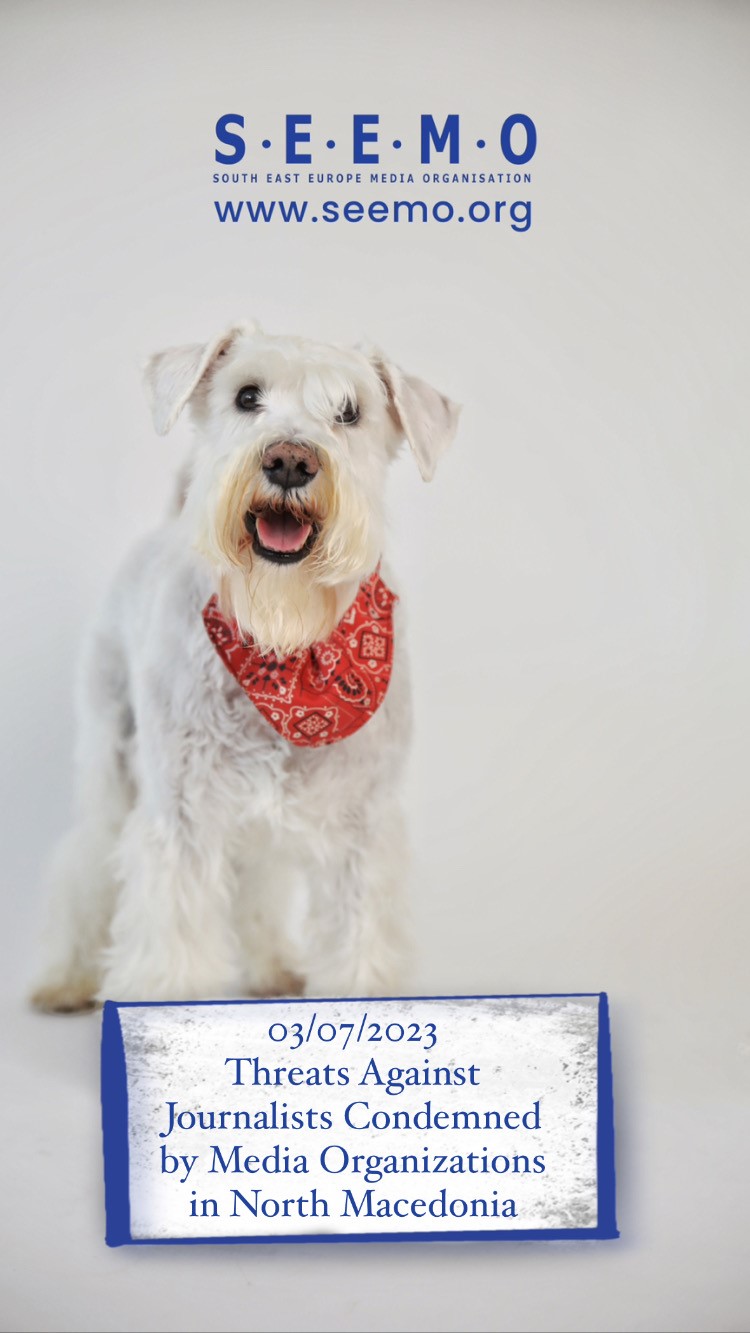
03.07.2023 – Threats Against Journalist Condemned by Media Organizations in North Macedonia

July 3, 2023 disabled comments

On 27 June 2023 Ognen Janeski (Огнен Јанески), in social media known as ognen_od_janevci, an editor from North Macedonian private television station TV 24, who is also cofounder of Fuckup Nights Skopje, was subjected to public threats during two live TV shows on TV 24.

An anonymous viewer during the show “Ochi v Ochi (Очи в очи),” verbally threatened Ognen Janeski. Additional during the show “Vo tek („Во тек“)” an anonymous viewer expressed hate speech and threats directed to all journalists in the country.

The cases have been promptly reported to the authorities in Skopje, North Macedonia and an expeditious investigation is expected to ensure swift sanctions against the perpetrator or perpetrators. The legal amendments also provide penalties for publicly expressed threats of criminal acts on the Internet, which are motivated by any kind of discrimination.

North Macedonia has since this year a better legal protection for journalist and persons working in public interest. The amendments to the Criminal Code were adopted in February 2023 by the North Macedonian Assembly. According to the amendments to the Criminal Code, for threats to the life of media workers, lawyers and health workers, the attackers will be liable with a fine or a prison sentence of up to 6 months. If the threat causes a feeling of fear or insecurity, the sentence can reach up to one year in prison. If violence is committed against these persons, then the prison sentence is from three months to three years.

South East Europe Media Organisation (SEEMO), a network with more than 3000 individual members in more than 30 states, strongly condemns such public verbal threats against media workers, emphasizing their unacceptability.

#fyp #mediafreedom #seemo #freespeech#southeasteuropemediaorganisation #ngo #journalist #journalistunderattack #northmacedonia #skopje #ognenjaneski #TV24 #journalistattacked #journalist #SEEMO #pressfreedom#mediafreedom #freemedia

30.06.2023 – Change of the Criminal Code in Italy

June 30, 2023 disabled comments

The South East Europe Media Organisation (SEEMO) is sending an appeal to the Italian Parliament to remove Articles 594 and 595 of the Italian Criminal Code. According to the articles defamation can be a civil or criminal offense and if a criminal t is punishable by imprisonment. According to article 595 criminal defamation is punished with prison sentences of up to three years.

Especially is worried the fact, that if the offense is direct to a political or administrative or judicial authority, the penalties will be increased.. According to the European Court of Human Rights (ECtHR) public persons, especially those in political roles, should expect a higher degree of criticism due to their position in society. Politicians who supported opinions that were open to criticism had to accept that they would be subject to especially hard-hitting attacks, even personal ones.

Italy needs urgently reforms that decriminalize defamation and establish reasonable limits on damages within civil law, so that press freedom can better be protected.

The trend of lawsuits against journalists in Italy is alarming, indicating a reduction space for press freedom and civic engagement. Especially is important that the work of journalist in Italy should not be blocked by Strategic lawsuits against public participation (SLAPPs).

#fyp #mediafreedom #seemo #freespeech#southeasteuropemediaorganisation #ngo #journalist #journalistunderattack #italy #robertosaviano #slapp #journalistattacked #journalist #journalistinjail #journalistarrested #jailedjournalist #SEEMO #pressfreedom#mediafreedom #freemedia

29.06.2023 – Istria Media Days 15-18 October 2023

June 29, 2023 disabled comments

Istria Media Days 15-18 October 2023, Vrsar, Istria, Croatia – for professors and students (media, communication, political science, public diplomacy, journalism.

#fyp #mediafreedom #seemo #freespeech#southeasteuropemediaorganisation #ngo #croatia #istria #SEEMO #pressfreedom #mediafreedom #freemedia