01/02/2013 – TURKEY: BOMB ATTACK

01/02/2013 – TURKEY: BOMB ATTACK

February 1, 2013 disabled comments

Vienna, 1 February 2013

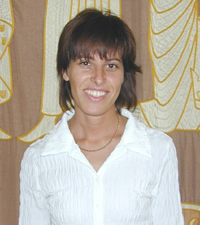
The South East Europe Media Organisation is shocked to learn that journalist Didem Tuncay was injured by today’s suicide bombing at the US embassy in Ankara, Turkey. She was waiting for a visa application for USA when she suffered a head wound. Currently Tuncay is at Ankara’s Numune Hospital . Tuncay was a former reporter for the NTV channel

23/01/2013 – SERBIA: SEEMO URGES SERBIA MAYOR TO DROP LAWSUIT AGAINST NEWSPAPER

January 23, 2013 disabled comments

Vienna, 23/01/2013

The South East Europe Media Organisation (SEEMO), a network of editors, media executives and leading journalists from South East Europe and an affiliate of the International Press Institute (IPI), appeals to Dragan Djilas, mayor of the city of Belgrade and president of the Democratic Party in Serbia, to drop his 120 billion Dinar (1,05 billion EUR) lawsuit against Serbian daily Kurir and its editor-in-chief, Sasa Milovanovic.

“I hope that Djilas started this case like a joke, and not as a serious court case,” said SEEMO Secretary General Oliver Vujovic. “I hope this especially after the statement he gave to the news agency Tanjug, as quoted by B92.” Djilas told Tanjug “the request for compensation is for the same amount that Kurir wrote was in my possession. All the lawsuits I have filed are for the amounts which Kurir had charged me. The amount is, of course, ludicrous, just like the ludicrous claims that Kurir publishes about me”.

Djilas brought the court case against Kurir and its editor-in-chief at the Higher Court in Belgrade on 26 December 2012 over alleged “mental suffering due to damage to personal honor and reputation”. At the same time Djilas is asking the court to forbid the daily from reporting negatively on him.

Vujovic said: “If Djilas thinks that the daily published wrong information, he has of course the right to protect himself. But there are other ways of doing so that do not involve a 1, 05 billion EUR lawsuit. Asking for such an amount of money has nothing to do with the protection of personal rights, honour and reputation, but is a clear step towards closing the paper and a clear attack on press freedom.” He added: “Djilas, as leader of the Democratic Party (DS), the one pro-European party in Serbia, in asking for such an amount of money for protecting his rights, gives a wrong example to other politicians in Serbia and Europe. Djilas should use other avenues of complaint and also respect international recommendations about the maximum amount of compensation to be awarded in a case.”

As Kurir informed SEEMO, the court case by Djilas is connected to an article published in Kurir’s issue of 27 November 2012 in which the paper quoted a statement made by Petar Petkovic, a member of the Serbian parliament, during a press conference of the Democratic Party of Serbia (DSS). Petkovic, in his statement, claimed that since 2004 Djilas had become one of the wealthiest Serbs thanks to his marketing business, giving some financial amounts as examples.

Djilas should know that as a public figure he must be prepared to tolerate and bear critical comments.

At the same time SEEMO is alarmed at the death threats the owner of Kurir, Aleksandar Rodic, received. According to the daily, threats arrived at Kurir’s offices stating that the owner of the newspaper would go the same way as the owner of the Nacionalweekly in Croatia, Ivo Pukanic, who was killed in 2008. The owner received the threat in a letter signed with “Atentator” (Assassin) sent from a post office in Belgrade. In addition, the newspaper received threats that the building that houses Kurir’s offices would be blown up.

“I am asking the police and the Serbian authorities to investigate these threats against the owner of Kurir and to inform the public as soon as possible about the results of the investigation”, Vujovic added.


23/01/2013: CROATIA – SEEMO CONCERNED AT ARREST OF CROATIA JOURNALIST

January 23, 2013 disabled comments

Vienna, 23/01/2013

The South East Europe Media Organisation (SEEMO), a network of editors, media executives and leading journalists from South East Europe and an affiliate of the International Press Institute (IPI), is shocked at the detention of Croatian journalist Jasna Babic, sued by a businessman for libel.

Jasna Babic has been held in Zagreb’s Remetinec prison since 22 January 2013, and could spend a maximum of 30 days there, if the court deems this necessary to ensure she appears at a trial – the date of which has yet to be set. The court defended its decision saying she had already failed to appear at 16 previous hearings and described her imprisonment as „disciplinary detention”.

“I am asking the Croatian authorities to immediately release Jasna Babic”, said Oliver Vujovic, SEEMO Secretary General. “I hope this will happen today and that Babic will again be free. To use detention as disciplinary instrument in a libel case is not acceptable. Babic, a famous investigative journalist, was arrested and treated like a criminal.”

23/01/2013 TURKEY: JOURNALISTS ARRESTED

January 23, 2013 disabled comments

VIENNA, 23 January 2013

The South East Europe Media Organisation (SEEMO) is concerned over the latest wave of arrests of journalists in Turkey.

According to information before SEEMO, 11 journalists were detained in recent police raids that took place different parts of Turkey against alleged members of the forbiden Revolutionary People’s Liberation Party-Front.

Five were freed after being ordered to pay a bail of 10,000 TRY and report to the police weekly. Six journalists are still in detention.

14/01/2013: GREECE – SMALL BOMBS TARGET JOURNALISTS´ HOMES IN ATHENS

January 14, 2013 disabled comments

Vienna, 14/01/2013

The Vienna-based South East Europe Media Organisation (SEEMO), an affiliate of the International Press Institute (IPI), is alarmed at reports of bombs being placed outside the homes of a number of journalists in Athens, Greece, on 11 January 2013.

Small homemade bombs, made with the use of gas canisters, exploded in the early morning hours on 11 January 2013 in front of the homes of five Greek journalists in the Athens districts of Lycavittos, Aghia Paraskevi, Alimos, Maroussi and Penteli. According to the Greek authorities, among the journalists targeted were Antonis Liaros, George Oikonomeas, Antonis Skyllakos, Petros Karsiotis and Chris Konstas. In each case, the explosion damaged the entrance of the building. No one was injured. In the case of Oikonomeas the attack was in front of his former residence.

The anarchist group “Lovers of Lawlessness” said the attacks were to protest coverage of the country’s financial crisis seen as sympathetic to the government,

“This is an attempt to openly terrorise the media, a vital part of our democracy,” said Simos Kedikoglou, the Greek government’s spokesman. He noted the attacks came a day after protesters barged into a radio station. Two days after this statement, on 13 January, the home of the spokesman’s brother was targeted when a group of unknown perpetrators broke a window of the residence of George Kedikoglou in Athens and threw in a molotov cocktail, starting a small fire.

“This is a new, worrying escalation of violence against media and journalists in Greece. SEEMO is alarmed at the number of violent cases and different forms of pressure directed at journalists in Greece over the past 12 months”, said SEEMO Secretary General Oliver Vujovic.

According to SEEMO there were 38 cases of press freedom violations or attacks on journalists in Greece in 2012. SEEMO calls on the authorities in Athens to urgently investigate the attacks, and to find the perpetrators and any masterminds.

14/01/2013 – AZERBAIJAN – POLICE FORCE AGAINST JOURNALSTS

January 14, 2013 disabled comments

VIENNA, 14 January 2013

The South East Europe Media Organisation (SEEMO) is concerned over the use of force against journalists by police during a demonstration in Baku on 12 January this year.

Several journalists were prevented by state officials from doing their job. Journalists were reporting about a protest connected to the deaths of young Azerbaijani army conscripts.

Michael Spindelegger , Vice-Chancellor of the Republic of Austria and Foreign Minister of the Republic of Austria (2012)

September 11, 2012 disabled comments

The main tasks of SEEMO, which was founded in 2000, have always been the fight for press freedom and anti-corruption as well as building networks of media representatives from the region with organizations at international level. SEEMO is today respected by media companies and media owners, journalists, but also all other important players in society, including leading political representatives and international organisations.

In addition to its highly successful networking SEEMO has initiated two further projects:SEEMO members, with support of the SEEMO board, founded the South East Europe PR Organisation (SECEPRO) helping journalists to better understand the world of public relations, and the International Media Centre (IMC) specialised in education of journalists and organising journalist conferences. Events like Istanbul Media Days, South East Europe Media Forum or Investigative Journalism Days, became regular meetings of journalists, editors, media owners, media experts, but also students of communication and journalism in this part of the world. Thus SEEMO strongly contributes tomutualandcross-borderunderstandingonpolitical and cultural level.

In this context, the organization has worked together with the Austrian Federal Ministry for European and International Affairs numerous times: When SEEMO organises its missions, it also includes meetings with Austrian diplomats in the region. SEEMO has therefore become an active partner for the Foreign Ministry in bringing the South East European countries closer to the European Union as it is imperative for Austria to support the positive developments especially in the media sector in the region. Press freedom and pluralism of media are core values of the European Union, wherefore they must also be at the bottom of any developments in this field of countries seeking EU membership. Diversity of media, fight against censorship and self-censorship, development of independent public services, free work of journalists, safety of journalists, free access to information, active work of investigative journalists, and transparency of media ownership are essential for democratic developments.A country that has taken these principles seriously is Croatia, which will join the European Union as its 28th member state this year.

Another area in which the Federal Ministry for European and International Affairs is benefiting greatly from the partnership with SEEMO is Austria’s membership in the UN Human Rights Council (2011-2014) which we see as an opportunity to deepen our focus on issues as press freedom and the safety of journalists.The work of SEEMO is therefore a great support for our country and her foreign policy.

I would like to conclude in expressing my appreciation for the excellent cooperation between the Austrian Federal Ministry for European and International Affairs and SEEMO.May our partnership lead to many more positive results.

Dr. Michael Spindelegger (2012)

Vice-Chancellor of the Republic of Austria
Foreign Minister of the Republic of Austria

Janne Virkkunen

June 20, 2012 disabled comments

Janne Virkkunen (2012)
Editor-in-Chief, Helsingin Sanomat, Finland;
IPI Board Member

Turkey is continuing its EU accession negotiations, yet at the same time the Turkish government continues to seriously violate press freedom in Turkey. The EU cannot accept this behaviour from Turkey. Imprisoned journalists have to be released or tried before court. Imprisoned journalists have a right to a fair trial. If Turkey wants to become a member of the European Union, the Turkish government has to respect press freedom and the EU has to be firm in regard to this issue.

The Hungarian government has only softened the new media legislation a bit. In the European Union, we cannot accept that a member country tries to prevent the media from doing its job. In its new form, the Hungarian media law still threatens press freedom, which means that we have to continue to press Hungarians to improve the situation in the country. For us it is impossible to compromise on this kind of issue.

All information and reference, which are contained in this webpage, were compiled after best knowledge and examined with greatest possible care. This disclaimer informs readers / users of the web and information that the views, thoughts, and opinions expressed in an interview by the interview partner or in a statement by the author belong solely to the interview partner / author and do not necessarily reflect the official policy or position of the South East Europe Media Organisation (SEEMO) Assumptions made within an interview-analysis are not reflective of the position of SEEMO. The visitors / users of the SEEMO webpage should take all steps necessary to ascertain that information you receive from SEEMO is correct. We ask every user to check references, double-check information from additional independent sources. SEEMO assumes no responsibility or liability for any errors or omissions, or for the results obtained from the use of information published on the SEEMO website / SEEMO partners website.

Agnes Urban

June 20, 2012 disabled comments

Agnes Urban Assistant Professor
(Corvinus University of Budapest)
Expert at atlatszo.hu

Atlatszo.hu is the first Hungarian investigative journalism portal, launched in July 2011. Besides the production of investigative reports, it also accepts information from whistleblowers, publishes leaked documents (MagyarLeaks), files requests of data on the basis on freedom of information laws, and starts freedom of information lawsuits in case of refusal.

Idea of this project was evidently not independent from the media environment in Hungary. Rumors are about pressure of political and business interest groups; they have a direct impact even on editorial content. Additionally the legal environment does not support investigative journalism: Section 6 of Act 104 of 2010 (so-called Media Constitution) says in exceptionally justified cases, courts or authorities may – in the interest of protecting national security and public order or uncovering or preventing criminal acts – require the media content provider to reveal the identity of the informant. Anyway, these categories are far from being well-defined, so protection of sources cannot be guaranteed at all and self-censorship is an evident consequence of this regulation.

Launch of a new portal is challenging in these circumstances. The worries were not unfounded: just a few days after the start of atlatszo.hu Organized Crime Department of Budapest Police seized a hard disk of editor in chief, just because he did not reveal his source in the case of a hacker attack of a financial company.

In the last four months atlatszo.hu became a significant player in the Hungarian media scene, some of it stories found a way into mainstream media. The real question is how an investigative journalism portal can be financed in long run. Revenues are coming from donations of private persons and foundations, but the viability of this business model has not been proved in Hungary.

There are some examples for non-profit investigative journalism portals (e.g. ProPublica in US), but the size of Hungary cannot compared to US, moreover the economic decline has a negative impact on civil donations. It is the question of future, if it will be just the hobby of some enthusiastic people in long run or atlatszo.hu becomes a significant player on the Hungarian media market as an independent investigative journalism portal.

All information and reference, which are contained in this webpage, were compiled after best knowledge and examined with greatest possible care. This disclaimer informs readers / users of the web and information that the views, thoughts, and opinions expressed in an interview by the interview partner or in a statement by the author belong solely to the interview partner / author and do not necessarily reflect the official policy or position of the South East Europe Media Organisation (SEEMO) Assumptions made within an interview-analysis are not reflective of the position of SEEMO. The visitors / users of the SEEMO webpage should take all steps necessary to ascertain that information you receive from SEEMO is correct. We ask every user to check references, double-check information from additional independent sources. SEEMO assumes no responsibility or liability for any errors or omissions, or for the results obtained from the use of information published on the SEEMO website / SEEMO partners website.