SEEMO INTERVIEW WITH ŠTEFICA GALIĆ

SEEMO INTERVIEW WITH ŠTEFICA GALIĆ

June 11, 2020 • • disabled comments

Štefica Galić is editor-in-chief of news portal Tacno.net. She has also been a professional photographer since 2010.


SEEMO: You were physically attacked in connection with your work. Can you please tell us about what happened?
Štefica Galić : I experienced a physical attack in Ljubuški in 2012, two days after the documentary I produced, Nedjo od Ljubuskog was aired. The movie caused a stir in Ljubuški, which led to my attack. This was an attack on my person, my freedom of speech, thought and a culmination of a campaign that lasted for days against the documentary, directed against me and my family. In the meantime, demonstrations against the film were held twice, along with constant threats, insults and pressures.

These were not random acts of hate speech by someone who was offended or insulted. They were well-organized actions of the political underground and war criminals, along with NGOs and associations from Ljubuški to Zagreb. The continuous death threats, hate speech, and media lynchings against those who dared to come to the premiere were unprecedented. One of the organizers of the demonstrations against me ran into me when I was on a walk with a friend, attacked me and hit me repeatedly, yelling at me with hatred that I had never experienced before. I went to the ambulance where I was taken care of, and then to the police where I reported what had happened. Since the woman who attacked me also worked in the police building, in the municipality part, I faced a lack of understanding by the police, to say the least. I also faced schemes, hiding of evidence and documents, and lack of tolerance, which was all in accordance with the environment I was living in.

SEEMO: Can you please tell us more about the documentary Nedjo od Ljubiškog.
Štefica Galić: It is a movie about my late husband, who received the award for Civic courage posthumously, which is the reason the film was made. The documentary tells the story of the two of us, when we publically stood against chasing Bosniaks out from Ljubuški in 1993, and tried to save them from concentration camps and terror. It deals with how Nedjo made fake guarantee letters and saved people from Ljubuški who were in the Heliodrom camp in Mostar, where members of the Croatian Defence Council (HVO) took them. The summary of the film shows how we stood against crime and the nationalistic government, who were pursuing innocent people just because they had different national and religious beliefs. We dared to think differently and showed it publically. Of course, it was all supposed to be hidden, ridiculed, insulted or removed from discussion by physical force.

SEEMO: Have the perpetrators been caught and tried?
Štefica Galić: In 2014, the Court in Široki Bijeg sentenced my attacker and the organizer of the demonstrations, Vera Dedić, to 3 months in jail and 600 KM. The lawyers from the Free Media Help Line have been great support and aid to me, and are currently in court for five cases of hate speech dissemination regarding my film. These cases are against media portals that constantly wrote false information, called for my lynching and put the lives of me and my family in danger. Oftentimes these portals didn’t actually exist, considering the fact they had no imprint or contact. Some of them changed their name or shut down as soon as we filed a lawsuit against them. The court scheduled several hearings, but many of them never showed up. It’s still in process. Recently we experienced verbal threats in Mostar. It is common that we receive threats in the comments sections on news portals. The perpetrators remain unpunished, or are fined only symbolically, so I consider those that attack and threaten us the protégées of the government.

SEEMO: As editor-in-chief of Tacno.net, do you feel safe, or do you fear other possible attacks?
Štefica Galić: I am not afraid of local thugs and chauvinists. However, some of the most recent verbal attacks show the deep involvement of the police and the system in all this, which discourages me. I believe other attacks will happen. Verbal and physical. But I also know, that as long as we talk about this, it won’t be easy to attack us. I believe we should stand together against bullying and fear created by nationalistic governments.

SEEMO: Did you receive police protection after the attack?
Štefica Galić: No, I have not received police protection nor do I want to be protected by the police. Some of them are even directly associated with the attacks, so I don’t trust them.

SEEMO: Did the attacks discourage you from covering certain topics?
Štefica Galić: No, never. We will not change our editorial policy at any cost, and nothing can change our mind. This is our moral duty. Unfortunately, our country is an undemocratic society, in which freedom of speech and opinion do not have the right interpretation, and cannot be exercised without repercussions.

SEEMO: Cases show that we often lack journalistic solidarity. Was this true in your case?
Štefica Galić: In my case, journalistic solidarity was not lacking. Many wrote about what happened to me immediately, prominent journalists from all over ex-Yugoslavia gave me their full support. However, there were those that disseminated lies and reported unprofessionally.

SEEMO: In your case, there were several campaigns of online portals and associations against you. How do you view that?
Štefica Galić: Yes, those were primarily right-wing portals and war associations that reacted because of the topics I talked about in the movie, which they wanted to hide out of fear, or as I was told by some generals and war veterans: the crime was stirred. We face attacks because of the critical stance we take on our website, which is not the desired behaviour in this part of the world. We’re recognizable for our anti-fascism, promotion of a tolerant and democratic society, and for raising our voice against everything that threatens human values.

SEEMO: What is the significance of international organizations that protect journalists, such as SEEMO? Do they provide any kind of protection in your work?
Štefica Galić: Of course. I find organizations such as SEEMO very important because they start public debate on important topics like freedom of speech, media professionalism and their importance in the society.

SEEMO Interview with Radka Betcheva

June 10, 2020 • • disabled comments

Radka Betcheva is Head of Member Relations for Central & Eastern Europe in the Directorate of Member Relations and Communications at the EBU.

She works on strategic, advisory and policy issues related to EBU members. She manages a programme for support of public service media in the EU accession countries.

From 2005 to 2012 Ms Betcheva worked as a Head of the Media Programme in the OSCE Mission to Montenegro, supporting media reforms in the host country. She worked also with the UNMIK/OSCE Mission in Kosovo in 2004-2005.

Ms Betcheva has 16 years of experience in Bulgarian public service broadcasting as a journalist, editor and executive producer and part time lecturer at the New Bulgarian University.

She speaks English, German, Russian, French, Serbo-Croatian, and Bulgarian.

She holds a masters degree in International Relations and Diplomacy from Tufts University, Boston, a masters degree in Economics from the University of National and World Economy in Sofia, and a diploma in Journalism. In 2002-2003 she was awarded the prestigious Nieman Fellowship at Harvard University.


SEEMO:The European Broadcasting Union (EBU) is well known in Europe. Not only between journalists and media, but also most “ordinary” people know EBU thanks to the Eurovision Song Contest. Can you please present what is EBU doing.

The EBU is indeed best known among the public for the Eurovision Song Contest (ESC), which is viewed by around 180 million people worldwide every year. This year, despite the live Contest being cancelled, a replacement programme Shine a Light was still watched by over 73 million people.

However, the European Broadcasting Union (EBU) is much more than the ESC. The EBU is the world’s foremost alliance of Public Service Media (PSM). We have 116 Member organisations in 56 countries in Europe and an additional 34 Associates in Asia, Africa, Australiasia and the Americas.

Our Members operate nearly 2000 TV and radio channels alongside numerous online platforms. Together, they reach audiences of more than one billion people around the world, broadcasting in more than 160 languages.

We believe strong PSM is at the heart of democratic societies and are committed to championing and upholding its unique value at both a national and international level.

We do this by:

– Helping our Members deliver the best content
– Defending PSM’s interests
– Championing the impact PSM has on society and
– Supporting our Members’ digital, organizational and cultural transformation
We provide services to Members in key areas such as content, advocacy, knowledge exchange, training, networking and facilitating alliances.

The EBU engages with national authorities such as parliaments, governments and regulatory authorities to ensure the development and adoption of appropriate legal and financial frameworks for PSM. We work closely with different partners and international organizations (like yours – SEEMO) – EU, OSCE, Council of Europe, EFJ, IFJ, and others.

Ultimately, our mission is to make PSM indispensable.

SEEMO:Why is public broadcasting important? Why we need public service media ?

Because PSM is crucial for our societies and for our democracy.

PSM provides a platform for a democratic discourse, informs citizens, provides a pluralism of opinions and points of view, engages people in the decision-making process, and aids social cohesion, tolerance and solidarity.

PSM organizations have a legally defined broad remit, which no other media have.

PSM serves everyone in the society and fosters better understanding between communities. It promotes values, national history, culture, traditions, sport, creative industries, talents. It brings the nation together around big cultural, sporting events and creates the sense of belongingness to a common history, culture, values and traditions. We need PSM to strengthen our societies, to become more understanding and tolerant.

This is a service funded by the citizens, serving all citizens and responsible only to them.

Now during the COVID-19 pandemic, PSM all over Europe have proven their indispensable role in society. EBU research shows a significant increase in audiences for PSM. People turned to their national broadcasters in record numbers to seek credible and trustworthy news and information. Many PSM in Europe have provided TV schooling and education for children. And in many countries PSM have been the only providers of culture during the crisis – offering theatre, opera, ballet, concerts etc.

PSM plays an indispensable role for democracy. In contrast to the commercial media which work for profit and often serve different and hidden agendas, PSM works for the citizens. If private media cannot publish a story which would make them lose advertising, PSM should bring the topic for discussion because it is of public interest. PSM give different voices, use different sources, and promote pluralism. This is vital for our democracies, especially in a period when we see a threatening rise of populism and authoritarianism.

It doesn’t mean that PSM always get it right but it’s a concept that we all strive to achieve.

I am very passionate about PSM. My mother worked her whole life in Bulgarian National Radio. She was an engineer who designed the studios for BNR. Her picture with the team is in the Museum of Bulgarian Radio.

When I look back at my childhood, when I was playing with the microphones in the BNR studios while my mom was working, I think that there is so much history, culture, richness, creative work and ambition for perfection in this institution. If the walls could talk – they would tell stories… Radio and Television have been the cradle of culture, music, creativity, talents… They are amazing institutions.

When Chernobyl happened – it was the Bulgarian National Television which revealed to people in Bulgaria what happened and advised them how to protect themselves after a few days of total silence. This is the real mission of PSM – to serve the people even if this might be against the will of those in power.

SEEMO. But public service media are very expensive, especially in crisis like with Covid19 many people are asking why should we pay money for TV and radio, if we can have it free of charge thanks to private / commercial channels. What is your comment?

We should not look at PSM as an expense, but as an investment in our society and in our democracy. Who will take care of the weak and the marginalized groups if not PSM? Now during the COVID-19 crisis – it was the PSM who reached out to minorities and explained to them how they should protect themselves and others in their own languages. Only PSM has the capacity to reach out to all members of society and provide them with relevant content. Diversity and pluralism are core values of PSM.

Now during the crisis PSM gained a record number of viewers and listeners. Why? Because, people were looking for credible and trusted information, not for sensationalism. People were looking for education for their children. They wanted to feel part of a wider community and not so alone. And they wanted to be entertained while in lockdown. Excellence is another core value of PSM and it would be hard to match in recent months.

SEEMO: What are the main problems of public service media in South, East and Central Europe?

The main problems of PSM in South, East and Central Europe are the real transformation from state media into a genuine PSM, the funding and the independence.

Many public broadcasters have still not accomplished their transformation from state media to PSM. They have been defined as public service media in the legal frameworks, but in reality, they are still struggling to become a genuine service to the citizens. Even the language used in day-to-day life shows that politicians and ordinary people confuse state media and PSM, still calling PSM state media.

We should make a clear distinction between state media and PSM. State media are funded by the state, work for the State and responsible to the State. Public service media are funded by citizens, work for citizens and are responsible only to the citizens. We should support this transformation, since good, professional and credible PSM helps society and supports democracy.

The second major problem is funding. PSM are often victims of inadequate funding, restrictions and unproportionate budget cuts. PSM operate in a certain economic environment and it is, of course, normal that if there are financial challenges in the country PSM will take their share of responsibility. However, PSM budget reductions should be proportionate and should not affect PSM’s ability to deliver on their mission. PSM have a broad and important remit in society and should be able to fulfil it. Reductions of budgets and legal amendments should be done in close consultation with the broadcasters and in the context of their remit.

The third big challenge to PSM is independence. PSM need to have institutional and editorial independence in order to gain and maintain the trust of the audience. Only PSM which are able to report freely, to reveal misdeeds, to scrutinize those in power and to discuss controversial issues are able to build credibility in society. For this, PSM need independent editorial policy.

People should know that PSM is at their service where they could find unbiased information, pluralism of opinions, an objective picture of what is happening in their society. Unfortunately, we often see threats on PSM’s editorial independence and it is not always easy for PSM in young democracies to defend their independence and to resist external pressure which can come in many different forms – economic, political, legal etc.

At the EBU, we support our Members in defending their institutional and editorial independence and help ensure sufficient safeguards are in the legal frameworks to protect the broadcasters. But implementation of these legal frameworks in practice is a challenge so we all have a responsibility to keep up the pressure.

SEEMO: A big problem is a strong political influence on public service media. Very often a new government means also a new general director. Or we have general directors who are good with all politicians, and are supporting whoever is in power, so public radio and TV is not representing interest of all citizens. How to change it?

There are a few ways to change this. The first one is to ensure sufficient safeguards for independence in the PSM legal frameworks. We often see grey areas in the legal frameworks, which could be abused to pave the way for undue political interference.

There are clear European standards on PSM independence. Council of Europe Recommendations on PSM independence and PSM governance provide clear guidance to national lawmakers on how to safeguard PSM institutional and editorial independence.
The EBU adopted six core values in 2012 in Strasbourg and one of which is independence. A peer to peer system has been launched in the EBU to ensure implementation of the PSM values in practice. The EBU provides legal advice and expertise.

The Council of Europe also provides legal expert opinions on draft laws and proposed amendments. However, laws are often not properly implemented and observed. We often see blunt violation of the letter of the Law, or changes of Laws overnight, or no proper public consultations, or not consulting even the PSM. This is an area where still a lot of work and perseverance are needed.

Many of PSM’s legal frameworks are introducing governing bodies who should ensure distance from politics and should serve as a buffer between politics and PSM. These governing bodies are entrusted with the election of the top management of PSM. However, the real depoliticization of these bodies is a challenge. I believe that efforts here should be focused first at improving the legal frameworks and secondly ensuring their proper implementation in practice. This is a process, but we should be insistent and perseverant.

I believe that national authorities, PSM, parliaments, governments, civil sector and the international community should support the process of proper definition and implementation of PSM legal frameworks.

Another approach to fight for PSM institutional independence is to work with the professionals within PSM and with the new generation, to make them aware and familiar with the European standards and best PSM practices. In this way we could create a critical mass of professionals which will be sensitive to human rights and freedoms and will react from within the organization when there is a challenge to independence.

The third way is to continue media literacy programmes and raise awareness within society and among politicians about what PSM is, why it is important for society, and how it contributes to society and democracy. The EBU has a special project “Contribution to Society” where a lot of data is collected on how PSM supports the creative industries and societies.

We should also engage more with the EU institutions – European Commission and the European Parliament. I believe that the EP as the highest political body in Europe could be crucial in explaining the importance and relevance of PSM for society and democracy and to defend independent and professional PSM as an important democratic institution.

SEEMO. For SEEMO is the work of investigative journalists very important. Several investigative journalists working for public broadcasters in the SEEMO region got for example the annual CEI SEEMO investigative journalism award. What is EBU doing to improve the investigative reporting in public RTV in the SEEMO region?

Investigative journalism is key part of the remit of public service media. We strongly encourage our Members to develop and practice investigative journalism. PSM are in the best position to offer such programmes to the citizens, since they do not have hidden agendas and they are not dependent on different centres of power.

We have an EBU Investigative Reporting Network, which connects investigative journalists from our Members to exchange information and learning.

We also support Members through the EBU Partnership Programme to develop skills in investigative journalism. We use EC funded projects, for example, the EC funded project for Technical Assistance to PSM in the Western Balkans. One of the key areas of the project is investigative journalism and a lot of capacity building and exchange of practices and information has been done in the framework of the project. We have strongly supported the establishment of the investigative reporting editorial office at the public broadcaster in Montenegro RTCG.

Investigative journalism is an area which deserves special attention since this is really an area where PSM could show their distinctiveness, relevance, independence and excellence.

SEEMO: The South East Europe Media Organisation has a long year and good cooperation with EBU. EBU was several times SEEMO partner, starting from our joint conference 2008 in Ljubljana. EBU has several times as partner supported the annual South East Europe Media Forum (SEEMF) like last year in Zagreb, but also EBU is supporting SEEMF 2020. How can SEEMO help EBU?

We have established excellent cooperation over the years. I think that it is very important to continue this cooperation and consolidate our efforts to strengthen PSM in South, East and Central Europe.

It is of crucial importance to be unified and speak in one voice when we see threats to journalists, or threats to independence of media and in particular public service media. We are stronger when we are together, and our message is stronger when we speak in one voice. SEEMO has supported many EBU campaigns when we are concerned about PSM funding or independence. I believe that we should continue to react on such cases and be loud in defending freedom of media and freedom of expression.

I also believe that joining forces in providing platforms for discussion of challenges to PSM, and media in general and looking for new approaches, models, solutions could only support the development of media. We should be innovative and explore all possible ways and tools to push for more professional, more independent and more adequately funded PSM and media in general.


All information and reference, which are contained in this webpage, were compiled after best knowledge and examined with greatest possible care. This disclaimer informs readers / users of the web and information that the views, thoughts, and opinions expressed in an interview by the interview partner or in a statement by the author belong solely to the interview partner / author and do not necessarily reflect the official policy or position of the South East Europe Media Organisation (SEEMO) Assumptions made within an interview-analysis are not reflective of the position of SEEMO. The visitors / users of the SEEMO webpage should take all steps necessary to ascertain that information you receive from SEEMO is correct. We ask every user to check references, double-check information from additional independent sources. SEEMO assumes no responsibility or liability for any errors or omissions, or for the results obtained from the use of information published on the SEEMO website / SEEMO partners website.

Interview for SEEMO with Pavo Marinković (2018)

June 3, 2020 • • disabled comments

First, as it would be good for our readers who do not understand Croatian and who have not seen your movie “Ministry of love”, if you can please describe as director short the movie, what is the idea when you decided to take the role of the director?

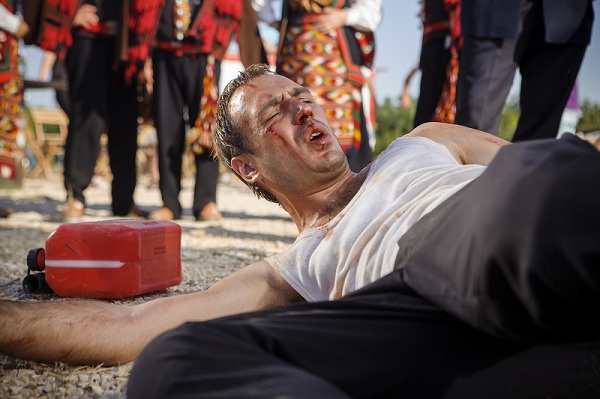
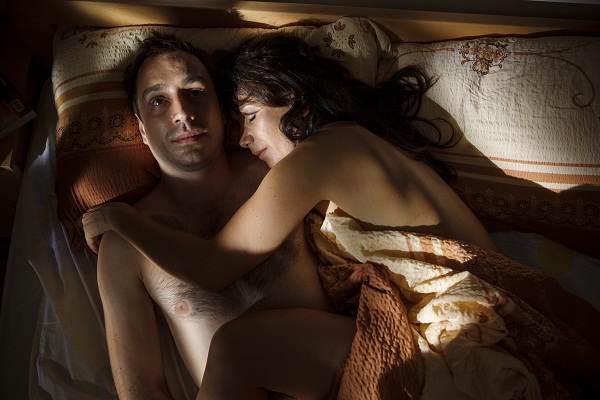
I wrote the script inspired by many absurdities of the Croatian law system, so it was pretty natural for me to direct it myself. As you probably know, Croatia is the only EU-country with significant numbers of war widows. These women receive pensions for their dead husbands. But since our new family law equalizes marriage and domestic partnership, it means that all widows who are living in domestic partnership with new partners could lose their pensions if the state can prove they now live in “sin”. So, in my film, which is completely fictional, the government establishes a group of inspectors who are supposed to investigate the widows. The protagonist of the film is one of the inspectors, who is actually a nice guy who is doing some bad things and in the end falls in love with one widow. Of course, there is a huge ethical problem. It is not a film about politics, it’s a film about people, about human urge to be loved, and not to be lonely.

In the movie-presentation on the official webpage is written: The wrong man. The wrong job. The wrong time. Was this a wrong time for the movie?

I do not think so. According to reactions, it was the exactly right time for the film. The film did not want to provoke, we wanted to make a smart comedy drama, not an activist movie, but it seems that it contains just the right dose of subversion to provoke people who feel that they have been attacked or mocked.

One of the actors is a veteran and participated in the war in the 90´. What was his view about the movie?

More actors from the film are war veterans. All of them liked the script and accepted their roles. One of the war veteran actors comes from the district where the film was mostly shot and he connected us with local people. We employed lots of local people, and some of them were participants of the war. During the filming, there were no complaints. Our collaboration was excellent.

Did you spoke with some veterans about the movie?

Well, apart from some actors, some of my friends were participants of the war. They embraced the film. We also had some festival screenings before our film distribution started. During Zadar Film Festival, we had one dislocated screening in a small town near Zadar. The screening was organized by a group of veterans, who also embraced the film. I was very much relieved after these screenings because I did not want to hurt anyone’s feelings. The characters of the widows are presented as human and likeable, and the real bad guys are from the state bureaucracy.

Can you please tell us, what happened with your movie?

The world premiere of the film was in July 2016 at the Pula Film Festival. On this screening in Arena most of the audience (5.000 viewers) were overjoyed, we had 4,55 audience rating, the highest of all Croatian films in the Competition. But after that screening there was an open complaint from the Society of War Widows on the content of the film, although it was obvious that the people who wrote the letter did not see the film. This open letter was published on some obscure web portals, that usually represent nationalistic ideas. No one cared about this, I did not even know about it, till one journalist asked me in October 2016, just before our wide cinema release. Actually, no one cared much about it, we thought it was pretty marginal. In 2016 and 2017 we had a pretty good run on festivals, got some good reviews, sold the film to 3 territories, had cinema distribution in some foreign countries. It is also important to say that the film is a Croatian Czech coproduction, made also with European money from Eurimages. The TV broadcast was set for beginning of January in 2018 and HRT started to broadcast the film trailer, and after this the problems started.

Why it was not broadcasted as announced in Croatian public RTV HRT and the “story behind”.

On the morning of the day when the screening was announced, at the gate of HRT, the delegation of War Widows appeared, asking the Board of HRT to cancel the screening, scheduled for 21:00. And never again to screen the film which HRT itself co-produced. The executives decided to cancel the screening. One important Croatian film maker died at that time and they immediately changed the program, with the good “In Memoriam” excuse. I got the phone call from HRT and they told me, the actual reason for cancelling the film was the morning visit of the delegation of war widows. At the same time, the journalists started to call.
The next day, several news reports appeared, and War Veterans Societies did not try to hide the fact that they successfully interfered in HRT program, and that HRT executives obeyed. They were sort of proud. HRT gave a panicked statement which said that they had to check if the film has some content which is against the “broadcasting law”. They could not find anything wrong and, with some critical journalists reporting about the censorship, they decided to give the film a new shot, to postpone the screening for one week, and announced: next week, same time, 21:00…

Who attacked you directly in Croatia connected to this movie? Have you been attacked by some today or former politicians / ministers in the government?

During the week, in between those announced broadcasts, some right wing portals started a serious campaign against the film and myself, one TV show on a local station, moderated by a well known right extremist had a distasteful attack on the film, accusing me of Anti Croatian Propaganda, for being a ball-less war deserter, employing actors of Serbian origin. Well, I’ve got nothing against employing excellent Croatian actors of Serbian origin, I think doing the opposite would be an attack on human rights. Honestly, I think it is unbelievable that this can happen, in a EU country, right now.
During the whole campaign, I have been protected only by journalists and film making colleagues. Not a single word of any politicians. On the evening of the screening, some 100 protesters appeared, in front of the HTV building, war invalids, widows, trying to ban the film, insulting me, the Croatian Film Centre and HRT, because they opted to screen the film. In their threatening speeches, they announced that their Minister (the Minister for War Veterans) had promised them, that the film will never be screened on HRT. HRT decided to postpone the screening again, putting the film in the “adult slot”, at, 23:20.

Have you been informed about the changes or you learned about the changes like the rest of viewers of Croatian public RTV HRT? Who, according to your knowledge, decided about the changes in broadcasting?

The HRT executive board with the help of politicians. Several days after the scandal, media published the letter of the Minister for Veterans addressed to HRT executives, in which he was demanding to ban the film. The whole situation was absurd, because the program commissioners approved the film script and praised the film. They were the co-producers.

Do you think this was a political decision?

Of course it was a political decision. Our Minister of Culture is a lady not very popular in the circles of right extremists. But the protesters are represented in the government with the Minister for War Veterans, who has no knowledge about arts but has lots of experience in organizing war veterans’ protests against our previous government. I assume, it was a dispute between 2 political options, one centre right, pro European, and the other which is very nationalist, populist and aggressive, furiously fighting for their own privileges. But, of course, the public opinion is that these Veteran societies represent the minority of people who fought in the war.

Did someone contact you from HRT after all happened? Did someone in HRT supported you?

Some decent people did, but they do not have any power. I got information that the ratings were excellent, and later, we broke the record with “on demand” ratings. Thanks to the scandal – everybody saw the film. 2 weeks after, they called me from Drama Department and apologized for all the suffering. They reported that one of the Program Directors is sorry for what had been written and reported about the film. But a week later, another program director in the report he gave to the Program council gave the statement that the film should have never been screened because of its quality. I was shocked again, I thought after the reviews, ratings, awards and festivals you should not give such statements – above all, it was impolite. And makes my further professional life with the public broadcaster very difficult. But, the people in high positions should not mix with the “enemies of the state” like me, and this was the obvious path to save his job.

How was the reaction from your colleagues and media in Croatia?

Excellent, the Film Directors Society publicly supported me and the film and lots of colleagues supported me in separate interviews. And also intellectuals and columnists from different political positions, from centre right to the left protected the film and my dignity.

But again about the extremist in Croatia – they attacked your movie, and according to some of them, very clear independent from the fact, that they never have seen your movie. Is it not ridiculous?

It is ridiculous, but it is typical for a politically very much divided country with lots of uneducated people with many prejudices. It is also a game. This is a way to control art and culture, like in the old communist times. But this time from nationalistic positions. And in the country where most people do not have an opportunity to go to theatre or cinema – the TV screening presents danger. They thought if someone makes the story based on war privileges, even in fictional and comedic manner, it could be dangerous, too subversive. So, this kind of speech should be banned. Real disaster is that these have obvious support even in the government. Although, I have to say, the Minister of Culture, in her recent interview, was very much determined in defending my film and the freedom of speech in art. Without her determination, I do not think they would broadcast it.

What I am pretty certain, that “Ministry of Love” is abusive to no one. We were moving artistically on pretty slippery territory, but lots of screenings really gave me the right to be sure – we did not hurt anyone’s feelings. To make it more absurd – now we were screened on “Common Good Film Festival” in USA. This is completely opposite of what I have been accused of.

In Croatia some people coming from the conservative-right groups see the movie as “anti-Croatian propaganda”. Some of the extremist attacked you as “pro-Yugoslav”, a description that is for us outside former Yugoslavia not understandable, but that is used in Croatia by the right-extremist if someone should be a really enemy of the country. What would be your answer?

Well, it is the same accusation as before. In communist times, everyone who was anti-communist was the enemy of the state, and this is typical state of mind for a country with immature democratic values. Now, if they feel you mock any “sacred cows” of national revolution or pride – you will immediately be pronounced as “pro-Yugoslav”, as the prime “enemy of the state”. This is someone who has nostalgic thoughts about the dead country. For sure, I do not have any, with several victims of terror in my family. But this is the old Stalinist method, functioning very well in new democracies.
But what these proud nationalists do not understand is that this type of behaviour actually harms your own country.

But why this “pro-Yugoslav” description, when we all know that the former Yugoslavia, with the borders including all 6 republics, is not more existing since 1991. Why Yugoslavia plays still an important role for the right extremist in Croatia?

It is very simple. Someone who is not patriotic enough is usually accused as being pro-Yugoslav. Of course, this is crazy, but efficient in accusing the people who think opposite of proscribed ideology.

You movies were presented on international festivals in many countries. What is the situation with festivals in Croatia? As we know, one other your movie was co-produced by Croatian public RTV HRT, but broadcasted by TV in Czech Republic, never on Croatia public RTV HRT? Why?

5 years ago, I made a documentary about our famous film director Lordan Zafranović, who was very successful in the 70s and the 80s. But because of his political views, which were communistic and he was opposed to the idea of independent state, he never got the chance to work in Croatia again and started to be “persona non grata”. My personal motif was not rehabilitation of a failed soul, but the belief that real democracy should be inclusive, and no one should be banned from work because his political beliefs started to be “out of mainstream”. The 2 of us are very different, I come from liberal intellectual background, he comes from communist working class background, and this encounter was interesting. The film was screened on Karlovy Vary FF, was also in Sarajevo but although Czech TV screened it several times, HRT, who was the co-producer never broadcast it. They did not give me an explanation. Now, the whole situation is so poisoned and politically divided, that the film would be misinterpreted.

How you see the media situation in Croatia today?

Public broadcaster HRT is on a huge downfall. There is lots of negative selection there, lots of quality people have left. And if you are not confident and competent, you are afraid that someone else will come and take your job. So, there is no vision and courage there. People are afraid. There is more freedom in the other media, but also lots of bad taste, and lots of hate speech. But I was impressed with our newspaper journalists and columnists – without them, the “Ministry of Love” would perhaps be the first forbidden Croatian film.

How you see the role of civil society in Croatia?

The situation has changed a lot. Independent conservative initiatives are getting much more subsidiaries than before and are much more present in media. There has always been too much clientelism, and now, as a consequence, the cultural politics and civil society has to survive the difficult blows from extreme conservatives. Some books have been burned publicly, recently.

Some people have the feeling that we have again after years, a stronger right-extremism in Croatia today. How you see it?

Yes, but not only in Croatia. In our country, it only looks wilder and more dangerous because of the recent war experience. People are more passionate about it. But this should not be a comfort for anyone. The extreme conservative initiatives, mixed with right extremism, were started as a political protest weapon against social democratic government. And now, it is everywhere. Politicians need votes. And of course, there is the bad economic situation, people are frustrated, and this frustration, and also disappointment, is being channeled through extreme right-wing ideas.


Link to the movie: 
https://www.youtube.com/watch?v=T9oLTq5YhL0

All information and reference, which are contained in this webpage, were compiled after best knowledge and examined with greatest possible care. This disclaimer informs readers / users of the web and information that the views, thoughts, and opinions expressed in an interview by the interview partner or in a statement by the author belong solely to the interview partner / author and do not necessarily reflect the official policy or position of the South East Europe Media Organisation (SEEMO) Assumptions made within an interview-analysis are not reflective of the position of SEEMO. The visitors / users of the SEEMO webpage should take all steps necessary to ascertain that information you receive from SEEMO is correct. We ask every user to check references, double-check information from additional independent sources. SEEMO assumes no responsibility or liability for any errors or omissions, or for the results obtained from the use of information published on the SEEMO website / SEEMO partners website.

Vladimir Radomirović, Belgrade, Serbia (May 2020)

May 30, 2020 • • disabled comments

SEEMO Interview with Vladimir Radomirović, Belgrade, Serbia in May 2020

Vladimir Radomirović, is the co-founder and editor-in-chief of the website Pištaljka (‘The Whistle’) and President of the Journalists’ Association of Serbia. In the past he worked for Politika daily, B92 TV, and Reporter weekly. Pištaljka has become synonymous with whistleblower protection in Serbia. He received the Civic Courage Award (2011), the Verica Barać Anti-Corruption Award (2012) and Nieman Fellowship at Harvard University

We asked Mr. Radomirović to present his case:

All information and reference, which are contained in this webpage, were compiled after best knowledge and examined with greatest possible care. This disclaimer informs readers / users of the web and information that the views, thoughts, and opinions expressed in an interview by the interview partner or in a statement by the author belong solely to the interview partner / author and do not necessarily reflect the official policy or position of the South East Europe Media Organisation (SEEMO) Assumptions made within an interview-analysis are not reflective of the position of SEEMO. The visitors / users of the SEEMO webpage should take all steps necessary to ascertain that information you receive from SEEMO is correct. We ask every user to check references, double-check information from additional independent sources. SEEMO assumes no responsibility or liability for any errors or omissions, or for the results obtained from the use of information published on the SEEMO website / SEEMO partners website.

Slavoljub Šćekić, Podgorica, Montenegro (May 2020)

May 5, 2020 • • disabled comments

SEEMO Interview with Slavoljub Šćekić, Podgorica, Montenegro in May 2020

Slavoljub Šćekić is currently Editor-in-Chief of the Center for Investigative Journalism of Montenegro since 2018 and Columnist – NIN magazine from Belgrade, Serbia. Šćekić was one of the founders and Director of the TV national broadcaster Televizija Vijesti from 2008 to 2014, as also one of the founders of the daily newspaper Vijesti, covering the following positions at the newspaper: Editor-in-Chief from 2002 to 2007, CEO from 2000 to 2002, Deputy Editor-in-Chief from 1997 to 2000. He was editor and correspondent of the newspaper Pobjeda from Belgrade from 1988 to 1997. He worked as journalist at the newspaper Pobjeda, Podgorica from 1985 to 1988 and as journalist at the youth student print media Omladinski pokret i Univerzitetska riječ from 1979 to 1985.

Q: What is the role of whistleblowers in Montenegro?
A: Despite the proclaimed and legal protection, the role of whistleblowers in Montenegro is insignificant, and few of them who pointed out irregularities have mostly experienced inconveniences, from harassment to job loss. This is evidenced not only by the investigations done by CIN-CG, but also by the public perception in NGO’s surveys. According to a survey conducted by the Center for Development of Non-Governmental Organizations (CRNVO) last year, 88 percent of citizens think that corruption in Montenegro is mostly, or very widespread, but there are few who would report it. Most of respondents don’t know who the whistleblowers are. Two-thirds of citizens do not know who to turn to for protection from retaliation. The Agency for Prevention of Corruption is generally not recognized as the right address.
According to CRNVO research, awareness of the importance of whistleblowers is even declining. A quarter of the citizens, five percent more than in 2017, think that the Montenegrin society does not need whistleblowers, and only 11 percent of those who noticed irregularities reported that. The most common reason for silence is the fear that they will be punished by losing their jobs, or endangering their safety.
Q: Do you keep a record on reported cases in Montenegro in the past?
A: The Law on Prevention of Corruption has been in force since January 1st 2016. According to CIN-CG data, by November last year, about 330 whistleblowers had addressed the Agency, 13 seeking protection. Only in four cases the Agency determined that it was founded. Protection was given to two Railway workers, a former head of parking service in Budva and a professor of history and geography who wanted to remain anonymous. One of the Railway workers testified for CIN-CG that it did not help him much and that his persecution continued. In one case, reported by CIN-CG, the Customs Administration acknowledged the status of a whistleblower to a customs officer who claimed that gas tariff fraud was causing hundreds of thousands of euros in damage to the state budget. He has previously internally warned of bad practices that have enabled the smuggling of cigarettes, oil and copper. The customs officer claimed that because of that he was moved from the capital to another city and that he was denied promotion in the service. Although it formally conducted the complete procedure in accordance with the law, the management of the Customs Administration have constantly rejected the claims of its responsibility in all cases. The transfer of customs officers was justified as a temporary and part of regular practice. In a statement to CIN-CG, they claimed that the customs officer would not suffer the consequences of the report. For now, as of February, there is no information that he had any additional problems.
Q: How is it legally regulated and to what extent are whistleblowers protected by law in Montenegro?
A: The Law on Prevention of Corruption stipulates that a whistleblower can be any natural or legal person who submits a report on endangering the public interest that indicates the existence of corruption. The whistleblower has the right to protection if s/he has been harmed, i.e. there is a possibility of damage due to the submitting a report, as well as of a reward if s/he has contributed to the prevention of endangering the public interest which indicates the existence of corruption. It come out right in theory but it does not work in practice.
Q: How do the state authorities react in practice if it is necessary to protect the whistleblower, but also to investigate a certain case? Who protects them in Montenegro in state and public structures?
There is no excessive concern in state and public structures for the protection of whistleblowers in public. In some cases, even the highest officials grind them down. NGOs also testified that investigative bodies spent more time investigating where information had leaked from than checking data provided by whistleblowers.
Q: Which organizations protect and help whistleblowers in Montenegro?
The Agency for Prevention of Corruption is supposed to protect and help the whistleblowers. However, in practice, whistleblowers can only get some kind of protection by alerting the public, through the media that deal with their findings and the non-government sector.
Q: How dangerous it is to be a whistleblower in Montenegro? How much does a life of a person who becomes a whistleblower change?
For now, there is no example of someone losing their life because they have become whistleblowers. But there are those who have witnessed a job loss, difficulty of finding it afterwards and the harassment in the workplace. Their lives have turned into nightmares.
Q: Can you state some cases that have been relevant in the past period / in the past few years?
The most famous whistleblower in Montenegro is Patricia Pobrić, a former manager of the Ramada Hotel in Podgorica. In 2016, she provided an MP Mladen Bojanić proves that the Directorate for railway traffic paid for two party rallies of the Social Democrats, the coalition partner of the ruling DPS party, in this hotel with money from the state budget. The Agency for Prevention of Corruption refused to protect Patricia Pobrić when she was fired, explaining that she was not a whistleblower but an assistant, justifying it as a loophole. The then Prime Minister, and the current President of Montenegro, Milo Đukanović, joined the persecution of Pobrić, stating that no one wanted such a worker.
The High Court in Podgorica sentenced the director of the Railway Directorate, Nebojsa Obradović, to three months in prison, and the Court of Appeal changed it to a suspended sentence. Obradović resigned after the verdict, but soon got a job within the same Ministry of Transport.
Pobrić remained unemployed.
Q: Can whistleblowers in Montenegro deal with the problems that arise after they go public with some information, or do they need some international help and if so, in what form?
A: Whistleblowers usually have only the public, independent media and certain non-government organizations by their side. This is insufficient and often ineffective. Monitoring of these cases and pressure from the international community, through demands to step up efforts for the rule of law, would certainly be more effective.

All information and reference, which are contained in this webpage, were compiled after best knowledge and examined with greatest possible care. This disclaimer informs readers / users of the web and information that the views, thoughts, and opinions expressed in an interview by the interview partner or in a statement by the author belong solely to the interview partner / author and do not necessarily reflect the official policy or position of the South East Europe Media Organisation (SEEMO) Assumptions made within an interview-analysis are not reflective of the position of SEEMO. The visitors / users of the SEEMO webpage should take all steps necessary to ascertain that information you receive from SEEMO is correct. We ask every user to check references, double-check information from additional independent sources. SEEMO assumes no responsibility or liability for any errors or omissions, or for the results obtained from the use of information published on the SEEMO website / SEEMO partners website.