
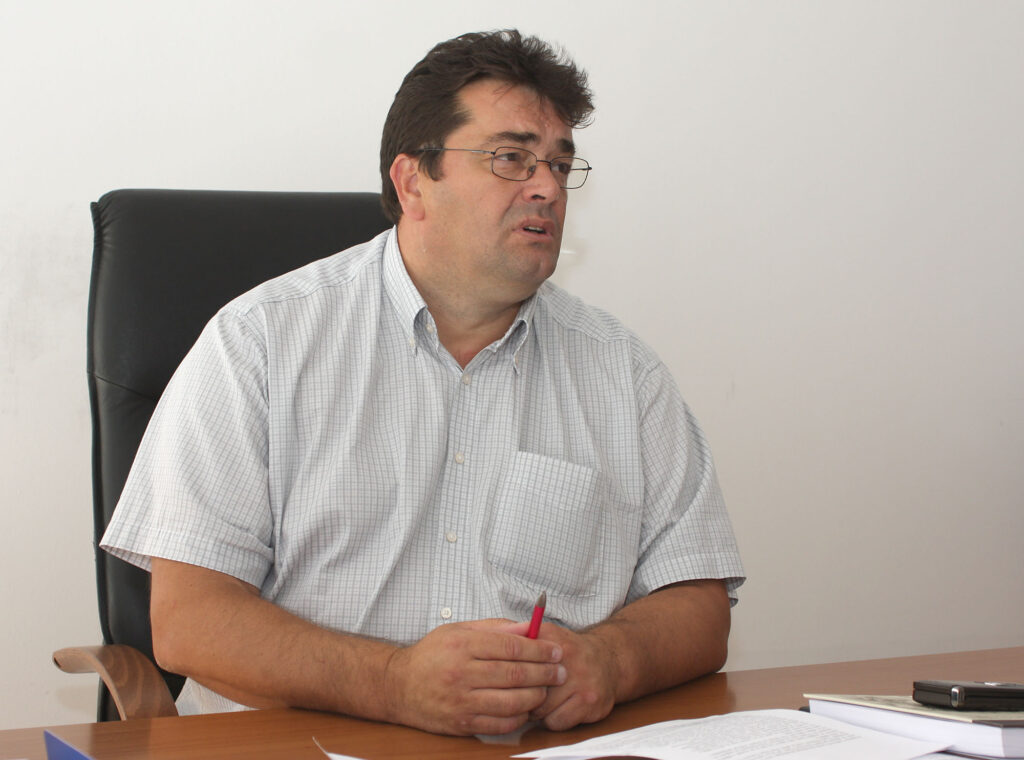
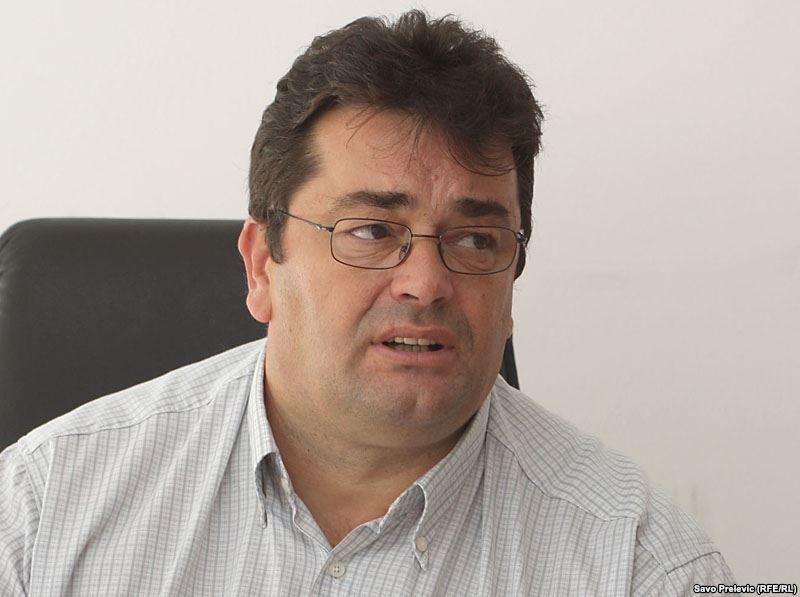
SEEMO Interview with Slavoljub Šćekić, Podgorica, Montenegro in May 2020
Slavoljub Šćekić is currently Editor-in-Chief of the Center for Investigative Journalism of Montenegro since 2018 and Columnist – NIN magazine from Belgrade, Serbia. Šćekić was one of the founders and Director of the TV national broadcaster Televizija Vijesti from 2008 to 2014, as also one of the founders of the daily newspaper Vijesti, covering the following positions at the newspaper: Editor-in-Chief from 2002 to 2007, CEO from 2000 to 2002, Deputy Editor-in-Chief from 1997 to 2000. He was editor and correspondent of the newspaper Pobjeda from Belgrade from 1988 to 1997. He worked as journalist at the newspaper Pobjeda, Podgorica from 1985 to 1988 and as journalist at the youth student print media Omladinski pokret i Univerzitetska riječ from 1979 to 1985.
Q: What is the role of whistleblowers in Montenegro?
A: Despite the proclaimed and legal protection, the role of whistleblowers in Montenegro is insignificant, and few of them who pointed out irregularities have mostly experienced inconveniences, from harassment to job loss. This is evidenced not only by the investigations done by CIN-CG, but also by the public perception in NGO’s surveys. According to a survey conducted by the Center for Development of Non-Governmental Organizations (CRNVO) last year, 88 percent of citizens think that corruption in Montenegro is mostly, or very widespread, but there are few who would report it. Most of respondents don’t know who the whistleblowers are. Two-thirds of citizens do not know who to turn to for protection from retaliation. The Agency for Prevention of Corruption is generally not recognized as the right address.
According to CRNVO research, awareness of the importance of whistleblowers is even declining. A quarter of the citizens, five percent more than in 2017, think that the Montenegrin society does not need whistleblowers, and only 11 percent of those who noticed irregularities reported that. The most common reason for silence is the fear that they will be punished by losing their jobs, or endangering their safety.
Q: Do you keep a record on reported cases in Montenegro in the past?
A: The Law on Prevention of Corruption has been in force since January 1st 2016. According to CIN-CG data, by November last year, about 330 whistleblowers had addressed the Agency, 13 seeking protection. Only in four cases the Agency determined that it was founded. Protection was given to two Railway workers, a former head of parking service in Budva and a professor of history and geography who wanted to remain anonymous. One of the Railway workers testified for CIN-CG that it did not help him much and that his persecution continued. In one case, reported by CIN-CG, the Customs Administration acknowledged the status of a whistleblower to a customs officer who claimed that gas tariff fraud was causing hundreds of thousands of euros in damage to the state budget. He has previously internally warned of bad practices that have enabled the smuggling of cigarettes, oil and copper. The customs officer claimed that because of that he was moved from the capital to another city and that he was denied promotion in the service. Although it formally conducted the complete procedure in accordance with the law, the management of the Customs Administration have constantly rejected the claims of its responsibility in all cases. The transfer of customs officers was justified as a temporary and part of regular practice. In a statement to CIN-CG, they claimed that the customs officer would not suffer the consequences of the report. For now, as of February, there is no information that he had any additional problems.
Q: How is it legally regulated and to what extent are whistleblowers protected by law in Montenegro?
A: The Law on Prevention of Corruption stipulates that a whistleblower can be any natural or legal person who submits a report on endangering the public interest that indicates the existence of corruption. The whistleblower has the right to protection if s/he has been harmed, i.e. there is a possibility of damage due to the submitting a report, as well as of a reward if s/he has contributed to the prevention of endangering the public interest which indicates the existence of corruption. It come out right in theory but it does not work in practice.
Q: How do the state authorities react in practice if it is necessary to protect the whistleblower, but also to investigate a certain case? Who protects them in Montenegro in state and public structures?
There is no excessive concern in state and public structures for the protection of whistleblowers in public. In some cases, even the highest officials grind them down. NGOs also testified that investigative bodies spent more time investigating where information had leaked from than checking data provided by whistleblowers.
Q: Which organizations protect and help whistleblowers in Montenegro?
The Agency for Prevention of Corruption is supposed to protect and help the whistleblowers. However, in practice, whistleblowers can only get some kind of protection by alerting the public, through the media that deal with their findings and the non-government sector.
Q: How dangerous it is to be a whistleblower in Montenegro? How much does a life of a person who becomes a whistleblower change?
For now, there is no example of someone losing their life because they have become whistleblowers. But there are those who have witnessed a job loss, difficulty of finding it afterwards and the harassment in the workplace. Their lives have turned into nightmares.
Q: Can you state some cases that have been relevant in the past period / in the past few years?
The most famous whistleblower in Montenegro is Patricia Pobrić, a former manager of the Ramada Hotel in Podgorica. In 2016, she provided an MP Mladen Bojanić proves that the Directorate for railway traffic paid for two party rallies of the Social Democrats, the coalition partner of the ruling DPS party, in this hotel with money from the state budget. The Agency for Prevention of Corruption refused to protect Patricia Pobrić when she was fired, explaining that she was not a whistleblower but an assistant, justifying it as a loophole. The then Prime Minister, and the current President of Montenegro, Milo Đukanović, joined the persecution of Pobrić, stating that no one wanted such a worker.
The High Court in Podgorica sentenced the director of the Railway Directorate, Nebojsa Obradović, to three months in prison, and the Court of Appeal changed it to a suspended sentence. Obradović resigned after the verdict, but soon got a job within the same Ministry of Transport.
Pobrić remained unemployed.
Q: Can whistleblowers in Montenegro deal with the problems that arise after they go public with some information, or do they need some international help and if so, in what form?
A: Whistleblowers usually have only the public, independent media and certain non-government organizations by their side. This is insufficient and often ineffective. Monitoring of these cases and pressure from the international community, through demands to step up efforts for the rule of law, would certainly be more effective.
All information and reference, which are contained in this webpage, were compiled after best knowledge and examined with greatest possible care. This disclaimer informs readers / users of the web and information that the views, thoughts, and opinions expressed in an interview by the interview partner or in a statement by the author belong solely to the interview partner / author and do not necessarily reflect the official policy or position of the South East Europe Media Organisation (SEEMO) Assumptions made within an interview-analysis are not reflective of the position of SEEMO. The visitors / users of the SEEMO webpage should take all steps necessary to ascertain that information you receive from SEEMO is correct. We ask every user to check references, double-check information from additional independent sources. SEEMO assumes no responsibility or liability for any errors or omissions, or for the results obtained from the use of information published on the SEEMO website / SEEMO partners website.