Interview with SEEMO member Orhan Galjus (September 2020)

Interview with SEEMO member Orhan Galjus (September 2020)

September 30, 2020 disabled comments

Tell us a little about yourself, your family, including how you got started as a journalist?

I’m a “language man”, I’m multinational man. I’m multigenerational, I’m G, and those with unmatured brain call me Gypsi, but originally my interpretation of that “G” – means Galjus, it is my proud family name which is very rare among the Rromani communities.

Because of the fascist, who knew that Rroma have often such family name my grandfather, who was attacked by Italian fascist, gendarme in our Rromani street, he decides to change the family name from Kalo to Galjus.
“Kalo” (in Rromani and in Indian languages “kala” means “black”. “Kalo” families the most widespread families, (somewhere is written like Callo, Kahlo).

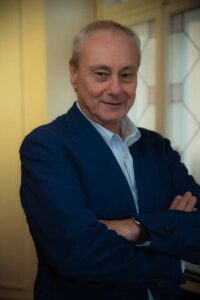
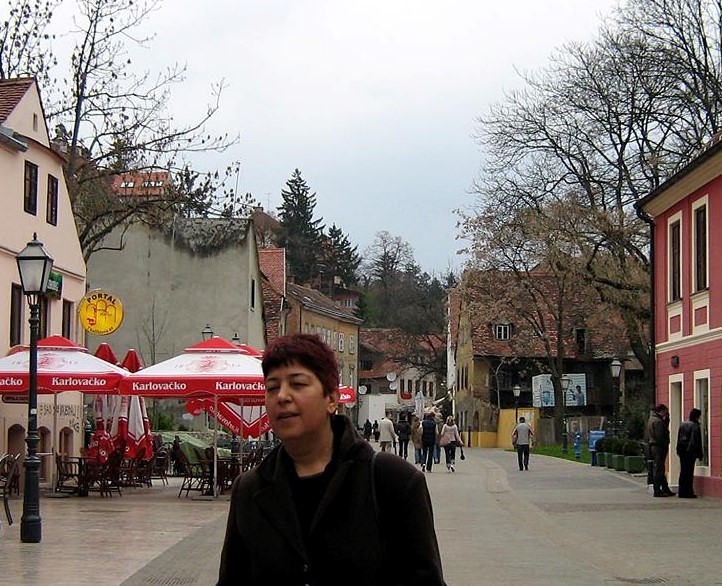
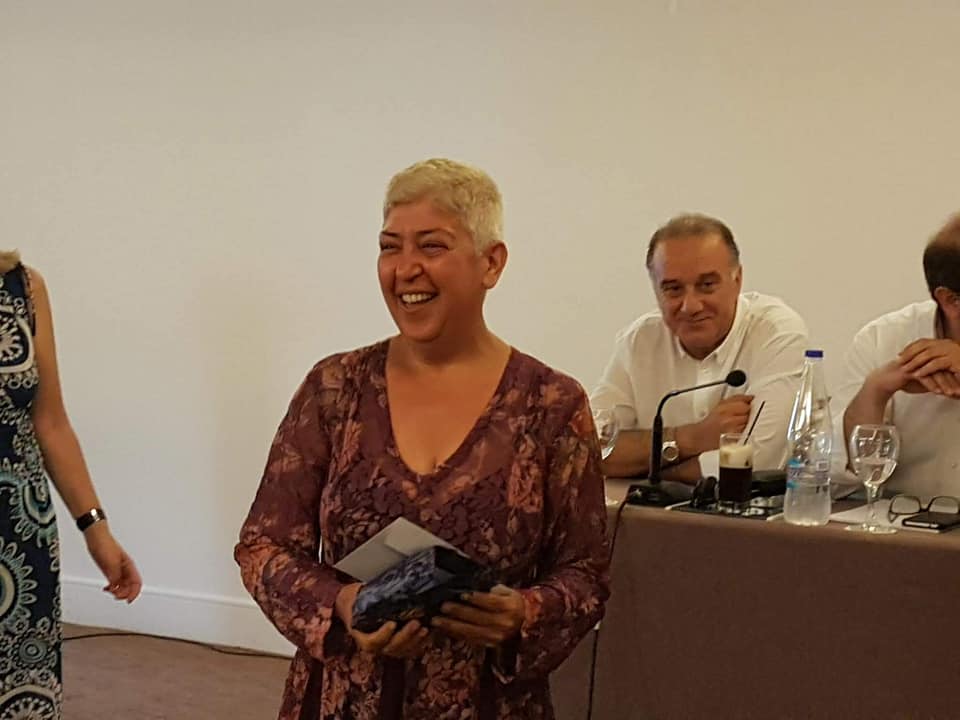
Orhan Galjus

What is the difference between journalism when you started and today?

It is big difference. The global development of the World, the notion of democracy and the change which occurred in 1970s, 1980s (in this period I started to be journalist) then1990s, 2010s the new media technologies, political economy of the Europe and the World, the internet, new age social media all that contributed to metamorphoses in and within journalism.

Today much busier and much faster! But, in 1980s, I had enough TIME to drink coffee with Belgrade opinion maker on 23rd floor of Beogradjanke, famous, late, Dusan Radovic. As well as it was a pleasure to discuss with my colleagues about the TRUTH and BEATY in journalism while being in Prishtine or Novi Sad.

The journalism has changed; the “mind set” of the media is influenced by cameleonistic feature by the ownership issues where the journalism has nor “j” from… or the unfair games of the rich “donors”.

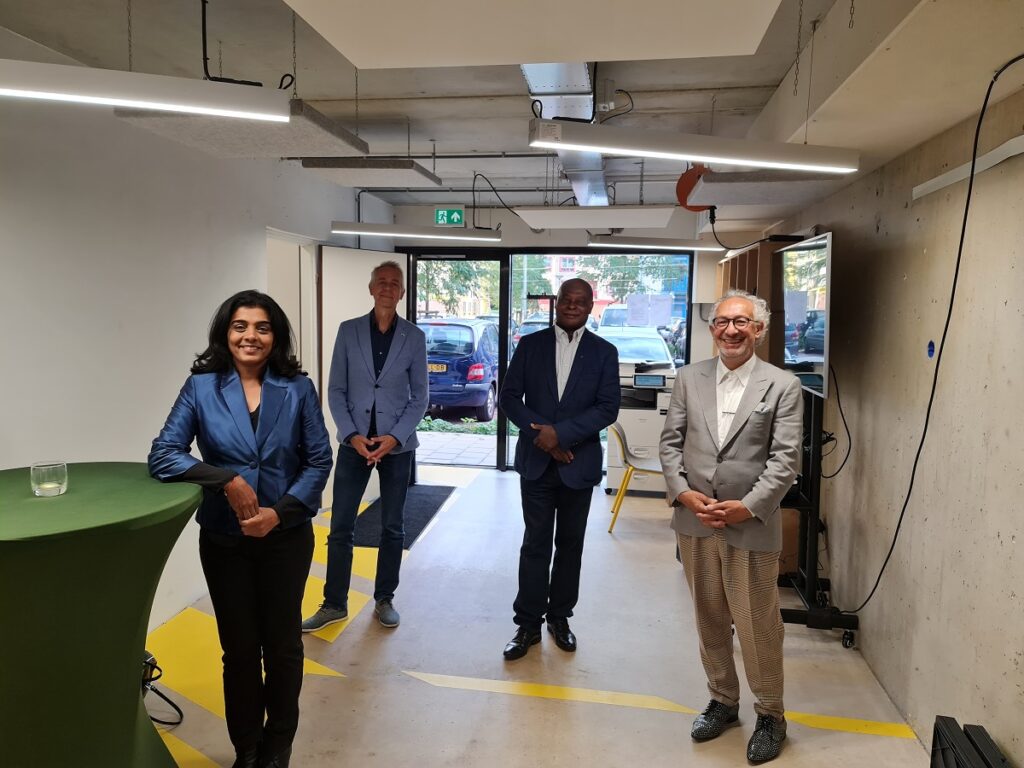
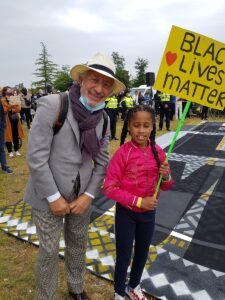
Orhan Galjus with Chair of Amsterdam South East District

You lived in many countries. What is your homeland?

Right, my professional life made such nice, beautiful line, life is as the art itself. My homeland is where is my life. But, answering sincerely I have now two homelands, my native town Prizren in Kosovo, and the Amsterdam, city of my life, The Netherlands is as my homeland too. Half of my life I spent as Dutch national.

Also, I have, I’m emotionally and genetically related to my country (homeland) of my origin, to India. I have been few times in India and there I breath as at home.

Many experts are saying that you are the leading journalist and expert between Roma journalists not only in the SEEMO region, but in Europe. What means this for you?

It is first of all responsibility, I really find that that we journalist we are skilled to speak out to talk and to bring THE TRUTH. Any other deviation is not acceptable for me. Some time when I’m demanding to get what is the reality, people think I’m radical rude. No place for the lies. Me and my fellows Rromani people we are tight with my skill in journalism. No doubts the way I can present the biggest European minority would not bring any other profit then being militant for the equality and truth. To hear that that being leading journalist and knowledgeable (NOT EXPERT!) serves me to be unstoppable for the rights of the and not only Rromani people.

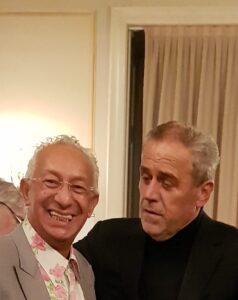
Orhan Galjus with the Mayor of Zagreb

Probably it was not always easy for you to work. Did you receive threats?

Yes … that made me to do more!

You have been also active in activities that are not connected to journalism, but more in fight for human rights of the Roma population in Europe. Can you tell us please a little more about this side of your life?

I have been surprised in my life to see something so important that I didn’t see it in my childhood:

I was refused to be registered as Rome in gymnasium, then I tried as “Serbian”, “Turkish” (my name is pure Turkish) and in the end I declare that I’m Albanian! So, I succeed! Finally I have been registered in my dream school!

From 1990 I have been participating as a member of important associations, NGOs, international organisations. Being in some leading positions, I realized why we Rroma still suffer after Second WW. It was important to talk to various people, to my neighbours, to politicians to build a diplomacy without being diplomat. I do remember my talks to Simon Wiesenthal, to Otto van Habsburg, to USA Ambassadors of Visegrad, to Jacque Delor, to Council of Europe leaders, being on same table with Condy- Condoleezza Rice, then with Sushmaji Swaraj, Hannes Swoboda, long talks with Juan de Dios Ramirez Heredia, Behgjet Pacolli, etc. And this has strengthened my exclusively actions to bring the Rromani “agenda” in the front of the Europeans. Was unbelievable to feel on “my skin”, discrimination, racism, anti-Rromani sentiments so there was no time to think twice. Still Im not satisfied: I must talk back to Commissionaires, Vjera Jurova, Frans Timmermans, we have unfinished talks. And might happen soon.

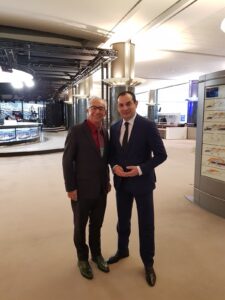
Orhan Galjus with MEP Peter Polak at the European Parliament in Brussels

You worked also for the Open Society office in Budapest. How important was this work for you?

Very important part in my life to learn the mechanism of a donor(s), of philanthropist. Also, to one who is part of such NGO the doors are open.

What was your biggest challenge in your work?

Ethics in journalism, independent financial sources to continue on with development of media.

How you see the situation with Roma media today in Europe?

The situation of the Rromani media is not good! I feel defeated, we didn’t succeed to organize a syndicate. You know what I mean, Roma media are bad organized media organization, and they less media, but more programs at a radio or TV. Having such situation, one would understand why the truth of Rroma doesn’t come to light.

Can EU do more for Roma media?

There has been kind of discussion but never so specifically happened to discus why the media in Rromani languages doesn’t develop, doesn’t succeed in the European media market. Roma media are “forgotten child” of the EU (EC).

Orhan Galjus

And governments in South East and Central Europe?

Actually, there are successful stories in South East and Central Europe related to governments and I could say still there must happened to bring together those and adapt with development in EU countries.

The job is not simple, unfortunately EU and Central South East Europe should make better bridge. To build such good bridge must happen that the Rroma should have some top leading position to help all those governments who want to facilitate on helping the Rromani people as well as Europe in this field.

How is the situation with Roma media today in the SEEMO region, South East and Central Europe?

Much better that in Western Europe! But we can’t be satisfied with this simplicity. There is need for better organization of the Rromani media in national plan in SEEMO region. Somehow SEEMO has kind of break it s need and role of SEEMO to work on this very important part in the SEEMO region. SEEMO was the first optimistic attempt on shaping the Rromani media, and I ensure you there is real need to work on Rromani media.

Orhan Galjus

How hard it was to stay always professional as journalists?

We Rroma (journalist) we are not in control of our image. Mainstream media doesn’t quote the Rromani media. They do not believe we Rroma we could be professionals, that is a vicious circle that s why there no cooperation among Rromani media, there no established exchange of the production so many so much of small pro’s and contras. It’s serious issue.
Me personally, I have an “engine” in my head: I don’t like someone to be better, I want and I do to be real and pure, original and those my features in me are as a catalysator to stay professional as journalist. It’s not easy.

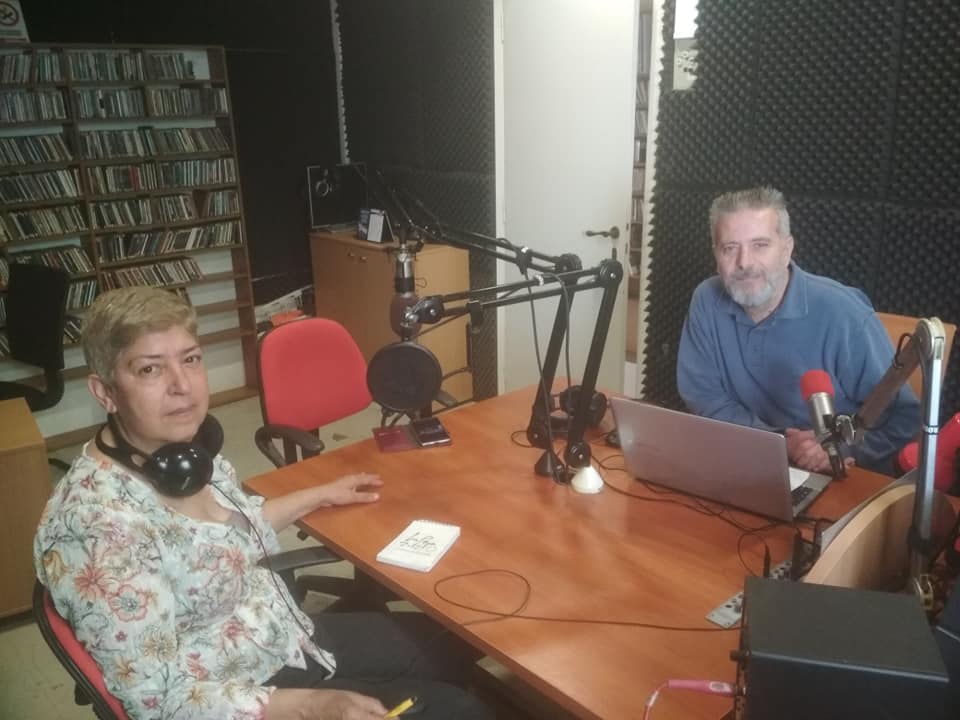
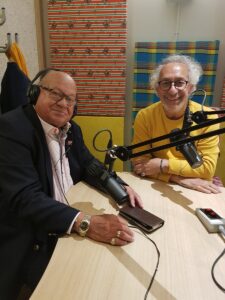
Orhan Galjus in his radio studio (August 2020)

Your work is connected to the South East Europe Media Organisation (SEEMO). You co-organised two SEEMO conferences about Roma media and journalism in South East and Central Europe. How important was this work of SEEMO for you?

It was so important very important! It was historical event in life of the Rroma media. I was so happy and proud to see so many activist who are doing pioneering journalism for community, I was so happy to see so many my colleagues and friends we had important work done from pioneering to serious issues addressing the development situation, struggles, challenges, I would recall to continue cooperation through very good plans made for that the Rromani media can reach their dreams.

Please walk us through a typical workday. How do you manage your time today?

Unavoidable drinking morning coffee with my mother (88) who check the “barometer” of social media, she says: “Dikh so si ani amari mahala” (look what happened in our mahala-street) in same time it is my opportunity to see “reports” from social media.

About noon I’m already consulting or talking, corresponding for the next Radio Patrin broadcasting. To many talks …

Attending only “must meetings”, about 19h at home, and again commentary from my mother: “why you are so late”? In this pandemic period, my mother so happy to see that Im working from home, Im NOT traveling as before …

Finally, as press freedom, human rights and democracy are very important in your life, can you give please some advice for younger journalists?

If you are not curious WHY, your journalistic engine is to slow!

19/11/2010: ALBANIA – ASSAULT ON JOURNALIST IN ALBANIA

September 29, 2020 disabled comments

Vienna, 19/11/2010

The South and East Europe Media Organisation (SEEMO), a network of editors, media executives and leading journalists from South and East Europe and an affiliate of the International Press Institute (IPI), denounces the recent assault on journalist Piro Nase, in the town of Gjirokastra, in Albania.

According to information received by SEEMO, Piro Nase, the journalist who heads the regional branch of the Albanian Union of Journalists in Gjirokastra, was physically and verbally assaulted by two alleged perpetrators on the evening of 14 November 2010.

Nase, who works for the newspaper Panorama and for TV Planet, was assaulted right after parking his car near his place of residence. It is alleged that two unknown persons suddenly appeared and started hitting him, punching him in the head. His face and jaw were showing signs of bruising the next morning.

SEEMO is alarmed by the fact that threatening statements such as “Let’s see if you will be more careful with what you write in that newspaper after tonight” allegedly accompanied the beating.

Commenting on the incident, SEEMO Secretary General Oliver Vujovic said: “SEEMO strongly condemns the physical assault on Nase and regards the attack as a blatant breach of press freedom. This was a criminal act which also constitutes an intolerable act of aggression against the fabric of society.”

“The press freedom situation in Albania remains distressing; the repeated occurrences of vicious physical attacks on journalists, such as this one, are particularly troubling. It is of paramount importance that the competent authorities investigate this assault and find the alleged perpetrators.”

21/11/2010: SERBIA – POLICE PROTECTION PROVIDED FOR TV B92 JOURNALIST AFTER THREATS

September 29, 2020 disabled comments

Vienna, 21/11/2010

The South and East Europe Media Organisation (SEEMO), a network of editors, media executives and leading journalists from South East and Central Europe and an affiliate of the International Press Institute (IPI), is deeply alarmed by alleged threats received by TV B92 journalist Sonja Kamenkovic from Zajecar, Serbia.

According to information received by SEEMO, since the end of August 2010 Kamenkovic has reported on the alleged violent behaviour of a police officer who reportedly injured two young men. The currently suspended police officer allegedly threatened, on several occasions, Kamenkovic and Ivan Popovic, a journalist for Alo magazine. He reportedly said he would kill all journalists who reported on his case. The police in Zajecar subsequently provided police protection to Kamenkovic.

This is not the first time a TV B92 journalist has been provided with police protection. Brankica Stankovic remains under police protection after being threatened several times in the past few years.

SEEMO Secretary General Oliver Vujovic said: “SEEMO welcomes the police protection that has been provided to Kamenkovic and calls on the Serbian authorities to take extra measures to protect the Serbian media, in particular investigative journalists, who play a crucial role in a democratic society.”

Vujovic added: “SEEMO urges the Serbian authorities to fully investigate the latest reports of threats, and to bring to justice anyone found responsible.”

26/11/2010: NORTH MACEDONIA – PREMISES OF A1 TV HEADQUARTERS ALLEGEDLY BLOCKED BY POLICE IN SKOPJE

September 29, 2020 disabled comments

Vienna, 26/11/2010

The South and East Europe Media Organisation (SEEMO), a network of editors, media executives and leading journalists from South and East Europe and an affiliate of the International Press Institute (IPI), is concerned at the recent alleged blockade of the premises of the A1 TV headquarters in Skopje, in the Republic of Macedonia/FYROM.

According to information received by SEEMO, during the evening of 25 November 2010 the police blocked the entrance of the premises of the A1 TV station, preventing the free movement of journalists and media staff and without offering an explanation as to why it was forbidden to enter or leave the building.

After several hours, the police published a statement claiming they had not blockaded the television station but were merely dispatched to assist tax authorities in carrying out an audit of several companies registered at the same address.

SEEMO Secretary General Oliver Vujovic said: “We do not have a problem with the financial inspection of companies; however, when journalists, cameramen, and other media staff are prevented from exercising their function without any clear explanation, as in Skopje last night, an unhealthy atmosphere of governmental pressure is created. It could and should have been avoided.”

23/12/2010: KOSOVO – JOURNALIST LUMTURIE BLAKAJ PHYSICALLY ASSAULTED IN KOSOVO

September 29, 2020 disabled comments

Vienna, 23/12/2010

The South and East Europe Media Organisation (SEEMO), a network of editors, media executives and leading journalists from South, East and Central Europe and an affiliate of the International Press Institute (IPI), is deeply concerned about the physical assault on Lumturie Blakaj, journalist working for the daily newspaper Zeri, in Kosovo.

According to Blakaj, she was attacked on 20 December 2010 by an unknown perpetrator in front of the UNMIK building in Pristina. The attacker started punching Blakaj furiously in the back and proceeded by dragging her seven meters along the ground. The moment the perpetrator started punching Blakaj, three young men who witnessed the assault helped her and the perpetrator ran away.

Blakaj immediately reported the assault to the police, claiming that she did not recognize the perpetrator and has no information as to why he attacked her so viciously.

The next day, police spokesman Baki Kelani said the police have launched investigations.

“SEEMO strongly condemns all physical attacks on journalists, which have no place in a democratic society. Physical attacks such as this must be stopped from occurring in the future,” said Oliver Vujovic, SEEMO Secretary General.

“SEEMO welcomes the police investigation and calls for a full investigation into finding out not only who attacked the journalist, but also the reason behind the attack,” added Vujovic.

SEEMO also notes with unease this increasing tendency of assaults against journalists in Kosovo. It calls on the Pristina authorities to state their dedication to the protection of journalists, and press freedom in general, by taking active steps to counteract these alarming developments.

28/12/2010: CROATIA – FOUR SUSPECTS IN BRUTAL ATTACK ON JUTARNJI LIST JOURNALIST DUSAN MILJUS CAPTURED

September 29, 2020 disabled comments

Vienna, 28/12/2010

The South and East Europe Media Organisation, (SEEMO) a network of editors, media executives and leading journalists from South East and Central Europe and an affiliate of the International Press Institute (IPI), is pleased to hear that the police have detained the alleged perpetrators of the brutal attack on Jutarnji List journalist Dusan Miljus.

On 22 December 2010, in the scope of operational actions under the name of “Shock 3”, the Croatian police detained four suspects allegedly connected to the Miljus case.

Two years ago, on 2 June 2008, in front of his home in Zagreb, Croatia, Miljus was brutally attacked by unidentified men who beat him with baseball bats until he lost consciousness. When a neighbour noticed the attack and started yelling, the men fled. Since the attack, Miljus has been threatened and has remained under police protection.
Miljus’ writings span 20 years and cover crime in South East Europe, the mafia and Croatian underground circles.

SEEMO Secretary General Oliver Vujovic said: “SEEMO salutes the thorough police investigation which has proved to be serious and efficient and which has led to the detention of four alleged perpetrators. In capturing the alleged perpetrators Croatia sends a positive sign in the direction of a democratic society with press freedom.”

Vujovic continued: “However, it still needs to be determined who was the mastermind behind the brutal attack on Miljus.”

In an effort to gain further information about the media situation in Croatia, SEEMO, in cooperation with IPI, will hold a press freedom mission to the country from 25 – 28 January 2011. The mission will be led by SEEMO Secretary General Oliver Vujovic, and mission delegates will meet with Croatian President Ivo Josipovic, as well as with leading Croatian media representatives.

Interview with SEEMO member Sasho Ordanoski (September 2020)

September 27, 2020 disabled comments

Tell us a little about yourself, your family, including how you got started as a journalist?

Huhh… In our family we have five kids (the youngest is of the age of 17, the oldest 31, with various degrees of education, hobbies, and spending habits); two most adorable grandchildren; several dogs of numerous sizes, ages and (non-)pedigrees; varying number of current and rising number of ex-girlfriends and current love affairs; two son-in-laws with vibrant business ideas… My father is 91, my mom is 86 (and I am not even counting them among the kids)… Our ordinary pre-Covid19 family Sunday lunch would count more than a dozen of ear-splitting and mobile-phones-armed people around the table, with a variation of healthy and very-unhealthy food on a quite outsized table, usually starting with a number of glasses of yellow rakia, followed by bottles of good Macedonian wine and local Skopsko beer… At any day of the year we have more logistical complications than an average mid-size state institution around the world, including the budget, real-estate, transport and communal implications on a par with the International Olympic Committee.

A word of advice: DO NOT try to do this social experiment at your home!

I am 56 years old and I started journalism 38 years ago… I’ve seen “everything,” I’ve written thousands of articles (from the youth magazine “Mlad borec”, through a number of local and regional daily newspapers and magazines, to – one article! – in “New York Times”) and equally insane number of on-the-air TV appearances on domestic and foreign TVs; I’ve coordinated teams of three to seven hundred and three people in more than 15-20 organisations that I worked for – and, today, I am most of the time sick and tired of many of the things that are going on in the current media affairs in my country, in the region, and around the world… And then, every once in a while, I am impressed and overtaken with joy by the high notes that journalism can perform in the society lost in its preoccupation with money and ill-defined ways of what is a definition of a success in modern life!

A word of advice: DO NOT choose journalism as your professional occupation, it is an obsolete job that demands a lot, but brings rare satisfactions, mostly depending on factors beyond your control. However, if you are so desperate to choose journalism as your career, be prepared to fall in love with it and share the stress, uncertainty and wonderfulness of any love affair.

Sasho Ordanoski

What is the difference between journalism when you started and today?

In short, the BIG difference is: Internet. The job of journalists – opposite of what most of the people, and even journalists presume – is not to deliberate about “truths” in the society; but to contextualise facts in a balanced way in order that the audience(s) can decide on the plurality of “truths”, on the basis of best argumentation offered. So: facts and context!

But in today’s world of internet’s “alternative facts”, social networks’ mobs and “fake news”, with incivility and sensations as norms of communication, when the speed of the news is more important than the quality of context, it is very difficult to survive as a qualified media on the market, both professionally and financially.

Modern democratic societies need good journalism more than ever, but they demand scandals and entertainment instead. And they get it with shovels directly in their open mouths.

You worked as manager in MTV – the public broadcaster in North Macedonia and also for the private TV channel Alsat M. What was the difference to be the boss in the public and in the private TV?

It is about how you use the managerial power and about the differences in priorities. Public broadcaster is a mastodon with resources and functions that in many instances are not commercially viable, but necessary; while private TV survives on the market and needs to have commercial interests equal to professional and program demands. However, both in public and private media, regardless of the number of employees and the size of the budgets, professional and human integrity of people is probably the most important thing for success. Managing those resources – people, money, and programs – requires a lot of professional skills, human empathy, and persistent energy. Plus the good understanding of social and political agendas in the country. At least a “drop” of vision is also desirable to keep you survive endless daily challenges. Most of the days.

You founded the weekly Forum. Can you tell us a little more about this period of your life?

“Forum” magazine was a liberal orientated weekly, bi-weekly and, eventually, monthly publication that we started in 1996 and sold it in 2007. It was a high-quality magazine, both in journalistic and in production senses, with narrative journalism and long interviews in the centre of its style, with special care for high quality photography and elegant layout, in the years when printed journalism was still making market and media sense. We had our own printing press and our ambition was to publish a local “cross-breed” between the once famous “Start” magazine (published in Zagreb in the time of ex-Yugoslavia) and “The New Yorker”. For a decade of its publishing “Forum” nurtured a stable and demanding public, progressively politically oriented. We sold it in 2007 to people who wanted to keep its political and cultural influence in support to the then new Macedonian government led by Mr. Nikola Gruevski. Few years later it vanished from the market.

Sasho Ordanoski

As a journalist you received also threats. A car was set on fire in front of your house. Do you know who was responsible for this attack?

In the middle of the night on May 3-4, 2015, a car (owned by somebody else) parked in the parking lot at our family house in the village near Skopje was sat at blasé with an explosive device. Thanks to the fast reaction of the fire brigade both our and neighbour’s houses were saved from fire. That was a culmination of various forms of threats and intimidations perpetrated by the regime of Mr. Gruevski not only against me, but against a number of journalists and other critics of his government. Some people were physically attacked, others’ properties were set on fire or damaged, government’s powerful propaganda apparatus was inventing daily compromats and various forms of bullying targeting the “enemies” of Gruevski… Soon after the car-fire I was advised by some foreign friends to leave the country for some time, which I did for several months in the second half of 2015.

I never stopped writing my weekly and daily columns. They never stopped with a decade-long stream of intimidations. Gruevski was out of power in mid-2016, after an unsuccessful, violent coup d’etat attempt against the government of Zoran Zaev in Macedonian Parliament. Gruevski mysteriously left the country to Budapest in 2018 faced with a jail sentences at home.

And the investigation of the car-fire is still ongoing, without any results, as most of the other attacks against journalists in Macedonia during the Gruevski regime.

You have been also active in activities that are not connected to journalism. Can you tell us please a little more about this side of your life?

Well, my Ph.D. is in the area of sociology and communication that allows me to lecture several subjects at the two best private universities in the country for the last 15-20 years… I am also one of the founders of Transparency Macedonia back in 2001 and member of several prominent NGOs’ and think tanks’ networks in the region. Hundreds of conferences, seminars, initiatives, collaborations and platforms that tried to promote and support democracy around the Balkan. We were trying to change the world, before the era of “spread sheets” and excel tables were “invented” by the EU in the NGO sphere.

During the last three decades I’ve met wonderful people, many of them still good friends, some of them made important political and social careers in their respective countries.

Sasho Ordanoski

Many experts are saying, that till end of 80´s, journalists working in news agencies in some leading positions and in foreign desks in media, where often connected to intelligent services. This part of history would be very interesting for younger journalists. This problem is not only connected to former Yugoslavia or to the “East Europe”, as according to researches we have many examples from journalists working also in the “West” for intelligent services. How strong was the influence of intelligent services on media some 30-40 years ago? Is it true that it was important in all “Communist countries” to be a member of the party or to work for intelligent service, for having a leading position in a media? Or was it different in “East Europe” and in the former Yugoslavia?

In undemocratic societies control over processes is done through control of people. Intelligence services and secret police are/were powerful tools for controlling people for the sake of the one-party systems or “democratic” autocrats. The rest is history and it would be too long to tell here.

However, in democratic societies those services are (or, better, should be) controlled by civilian democratic institutions, so the social processes can develop in the public arena through the competition of ideas, amplified by the influence of freedom of speech and mass media.

It is all about the power and how it is obtained, kept, distributed, used – or lost.

But, forget “East”, “West”, “former” and “ex”. What do we do now? It is the same world of broken mirrors that intelligence (and not-so-intelligent) services are trying to use and misuse everywhere in order to manipulate public opinion. That’s the oldest, never ending game in town.

Did politicians try to influence your work? If yes, how you reacted? Do you have some examples?

Of course that they try, every day, influencing is the core of their job. And I am “working my sources” every day, many of them are, namely, politicians. In media theory those grades of influence are called “political parallelism”, it is part of the “hundred shades of grаy” in which journalism normally operates. But, politicians are rarely misusing their positions and power by direct threats or bribes to journalists… Usually “the dirty work” is done by other players in the political realm, often through the owners of the media.

Eventually, everything comes down to the issue of the integrity of editors/journalists and their preparedness to bend the rules and standards in the profession. It is not a simple world out there, it requires some flexibility, but rules and standards DO exist.

What was your biggest challenge in your work?

Vanity. It is necessary, but a dangerous partner in journalistic profession, where things are too often personal. With years I learned how to control it much better. I would like to think that today I am successfully adjusting that “horse” under my knees.

Corruption is very present in the SEEMO region. Are also journalists corrupted?

Seriously?! There are no developed and stable (if any!) media markets in the SEEMO region that would secure sustainable institutional and professional existence of a large majority of existing media outlets. Most of the journalists are working for indecent salaries, many are paid in cash, and their jobs are insecure and in short demand… Proliferation of “informative” portals and shady internet propagandistic operations are spreading as wild fires… And so on and so forth… Why should there be corruption among the journalists in SEEMO region?!

Sasho Ordanoski

You met also many important persons. Maybe if you can present some of them.

Look, for the profession of journalism it is not only important how good you or your media is, but also what kind of “history” is developing around you… Unfortunately, the SEE region has “produced” enough important, tragic and turbulent “history” in the last few decades, so many journalists had enough professional opportunities to cover events and people that, otherwise, in “normal” circumstances, they would have not been able to meet or report on. For instance, I got a chance to make an interview with an American president (Clinton) not because I was extraordinarily better than the competition, but because at some point the US-administration wanted to say something on Macedonia and the region – if it was not me on the journalistic side, it would have been somebody else doing the interview with the president.

So, yes, there were dozens and dozens of important people that I have met or interviewed in my 30+ years of journalistic career, but many more “ordinary” people were telling their powerful stories through my reports and articles.

However, let me tell you one story… At the end of the nineties, I was working as an unit production manager for six months for DreamWork’s production of a movie that involved the famous producer and several times Oscar winner Branko Lustig, on one side, and then the rising movie superstar George Clooney, as one of the main actors (partnered by Nicole Kidman), on the other side – and, as it usually happens in an A class Hollywood projects with high production stakes and even higher budgets, they had very turbulent mutual relations… For several weeks of shooting, many of their working “quarrels” were going “through” me: Lustig would shout to me what needed to be conveyed to Clooney, and Clooney would replay with the same sarcastic vigour what needed to be conveyed to Lusting, on few meters of distance between them, with me in the middle! Unforgettable! And very stressful… No pictures or videos on any of those “shouting matches” exist… Just sweet memories.

How hard it was to stay always professional?

Very hard. Almost impossible. But that constant strife is the beauty of this job. One piece at a time. Real journalism is a hard labour, long hours of work and personal sacrifice. It may look glamorous, but it is rarely that.

Sasho Ordanoski

Your work is connected to the South East Europe Media Organisation (SEEMO). You helped SEEMO also to organise a conference in Skopje some years ago. How important is SEEMO for you?

Networking is in the heart of our profession. We share many similar problems and challenges in the Balkan media, so exchanging experiences, ideas, and best practices with the regional colleagues is an important drill and, sometimes, therapeutic exercise. In good and, especially, in bad times.

Sasho Ordanoski

Please walk us through a typical workday. How do you manage your time today?

My working day starts ten minutes before 6 o’clock in the morning, because at 7 a.m. I am in the TV studio for the “Morning Briefing” on slobodna.tv and slobodenpecat.mk that is on air every day 7:30-10:00. It is followed by the editorial meeting of 30 minutes to set the agenda for the next day, followed by a stream of coffee talks, phone conversations, business meetings and endless stream of messages on all platforms… Lunch with friends or family is a reserved daily slot around 3 p.m. even under “distancing” corona-conditions… Afternoons are dedicated for preparations for my university activities, readings/viewings of various contents, and other journalist or foreign consultant projects I run more often than I should.

My wife and kids are fulfilling my late afternoons and social evening events. I write my daily columns (“Good Morning with Ordanoski” for civilmedia.mk) every evening around midnight (after I digest most of the evening content of the local media and during listening to “The World Tonight” on BBC Radio 4), usually ending around 1 a.m. Weekends are reserved for “detoxification” and family activities, shopping extravaganzas (we have an army to feed!), travels and longer sleep in the morning…

Hmmmm… Not a half of this would be possible without a fabulous team of people I am surrounded at work, a selection of good friends that help whenever necessary with most ordinary life hitches, and a family that emanates love to me in bigger quantities than I sometimes deserve.

Robert Pichler, Adelheid Wölfl, Wieland Schneider, Sašo Ordanoski [© IDM]- round table by Institut für den Donauraum und Mitteleuropa – IDM In cooperation with Karl Renner Institute, Vienna and Politischen Akademie der ÖVP,Vienna

How do you see the media situation in you your country today?

In one word: good. In more details: not good. It is certainly much better than five years ago, but much бетер (i.e. worse) than where it should be.

For years the former prime minister Nikola Gruevski had a strong influence on the media situation in your country. How it happened that one person had so strong power and so strong influence?

It is called autocracy: it starts with silk gloves, with a lot of promising populism and misuse of public resources, until it is too late to stop it through normal democratic means. Gruevski knew that his propaganda machinery, together with the secret police apparatus, were of key importance for winning elections and eliminating political enemies. And he spent millions of euros on loyal media outlets and their editors and media “assassins”. It is not that complicated, really. Once one decides that staying in power is more important than democracy, the rest is technology of autocratic governing. Until the day comes when that technology cannot help you anymore.

Sasho Ordanoski

Is it possible to protect from a new “Gruevski”? The question is also connected to the fact that we have similar politicians like Gruevski today in power in some other countries in the SEEMO region.

Yes, it is possible, if an independent democratic state and public institutions do their job. If not…

You are very often in Vienna. How important is this city for you?

Vienna is the biggest and the most dynamic centre for Western European interests in the Balkans, with many experts who understand the Balkan mentality and geopolitical, often historic complexities. Not to mention its urban beautifulness, hospitality of local people and proximity to regional capitals. To have Vienna in your “neighbourhood” is a privilege that should not be missed!

Finally, as press freedom and democracy is very important in your life, can you give please some advice for younger journalists?

Freedom and democracy are never solved once and for all! Rarely they are lost in one night, but if you allow many days somebody else, and not you, to fight for freedom and democracy, the night will come when there will be no one else to fight for YOUR freedom and democratic rights. As journalist, we are at the front lines of this constant struggle, like it or not.

Milutin Mitrović Džive (1931-2020)

September 24, 2020 disabled comments

Milutin Mitrović Džive (1931-2020), our member from the first days of SEEMO. Milutin participated in many SEEMO conferences, supported SEEMO in the organisation of the conference “Traffic Cooperation Trieste – Vienna”, in Trieste. He started very young in the school paper Srednjoškolac, was editor in the student magazine Student, worked for Radio Beograd and was editor-in-chief of Ekonomska Politika in Belgrade. After he retired he moved to Trieste, Italy, with his wife and son. Her worked till end of his life as a journalist, reporting for Biznis i finansije, Peščanik and also monitoring press freedom violations for SEEMO. Milutin passed away in Trieste.