24 September 2020: 31 human rights groups call for urgent response to the Algerian government’s intensifying crackdown on civil society and journalists amidst the COVID-19 pandemic

24 September 2020: 31 human rights groups call for urgent response to the Algerian government’s intensifying crackdown on civil society and journalists amidst the COVID-19 pandemic

December 29, 2020 disabled comments

The Algerian authorities’ relentless prosecution and harassment of civil society and journalists undermines human rights as the country undertakes its democratic transition process, ahead of a constitutional referendum to be held on November 1st.

We, the undersigned regional and international non-governmental organisations, write to draw your attention to the alarming and the intensified crackdown on Algerian civil society, targeting peaceful activists and journalists, including with arbitrary detention. We urge you to address these worrying developments, and to:
• Strongly condemn the arbitrary and unlawful arrest, detention and judicial harassment of journalists, human rights defenders, civil society and other peaceful activists solely for expressing their views, for protesting peacefully and/or calling for democratic change;
• Call on the Algerian authorities to immediately and unconditionally release these individuals, arbitrarily detained;
• Call on authorities to cease all judicial harassment and intimidation against them; and
• Call on Algeria to ensure and guarantee the right to freedom of expression and peaceful assembly as included in the Algerian Constitution, in the International Covenant on Civil and Political Rights (ICCPR) ratified by Algeria.

Illustrative of this crackdown, in August, two journalists – Abdelkrim Zeghileche and Khaled Drareni – were sentenced respectively to two and three years in prison. Drareni’s appeal is set for 8 September. Human rights defender and activist Abdullah Benaoum has remained in pre-trial detention since December 2019, despite a very critical health condition. Opposition figure Amira Bouraoui was sentenced to a year in prison on 21 June and is awaiting her appeal on 24 September. On 19 June 2020, about 500 peaceful protesters were subjected to mass arbitrary detentions.

The Algerian authorities’ relentless prosecution and harassment of civil society and journalists undermines human rights as the country undertakes its democratic transition process, ahead of a constitutional referendum to be held on November 1st, and endangers the health of individuals detained given the heightened risk of contracting COVID-19 in the midst of an outbreak of the virus in Algerian prisons. This risk is illustrated by the recent death of two detainees and the infection of at least eight others.

In the 44th HRC session, civil society organisations urged the Council to increase its scrutiny of the situation in Algeria, knowing that within less than a month – between 30 March and 16 April 2020 – three communications were sent to the Algerian government by multiple special procedures in relation to arbitrary and violent arrests, unfair trials and reprisals against human rights defenders and peaceful activists. Despite these communications, and while President Tebboune announced his support for an open dialogue with the Hirak and his desire to break with previous repressive practices following controversial elections in December 2019, the reality on the ground shows that the level of repression has increased drastically.

We therefore call on you to raise these pressing and worrying developments in order to protect Algerian civil society as it strives to protect its democratic transition, and its freedom of assembly and expression.

We thank you for your consideration and look forward to your response.

Yours sincerely,

[List of signatories follows below]

Context
Since the outbreak of COVID-19, and the suspension of the peaceful protest movement called the Hirak, Algerian authorities have accelerated arbitrary prosecutions and harassment of journalists, peaceful activists, rights defenders, and citizens expressing dissenting opinions. Between March and June 2020, local rights groups estimate that at least 200 people were subjected to arbitrary arrests for expressing their opinion or for their alleged support to the Hirak, while more than 1,400 were prosecuted in relation to the protests since the start of the Hirak movement in February 2019. As of 25 August, and according to the National Committee for the Release of Detainees (CNLD), at least 44 people are behind bars after being arbitrarily detained for expressing their opinion, and a number of them are in pre-trial detention. On 19 June 2020, about 500 peaceful protesters were subjected to mass arbitrary detentions.

Among those recently sentenced or prosecuted:
• Political activist Samir Ben Larbi and national coordinator of the families of the disappeared Slimane Hamitouche (subject of a joint communication from UN Special Procedures), were sentenced on 10 August to two years in prison over online publications and their participation in peaceful protests.
• On 21 June, Amira Bouraoui, activist and opposition figure, was sentenced to a year in prison after criticizing President Tebboune online. She is awaiting her appeal, scheduled to take place on 24 September 2020.
• The pre-trial detention of Walid Kechida, creator of a satirical Facebook page, arrested in April for “contempt and offense to the President” and “attack on the divine entity”, was renewed on 27 August 2020 for another 4 months.
• Activist Abdullah Benaoum’s health is in critical condition. He has remained in pre-trial detention since his participation in a peaceful demonstration in December 2019, although he suffers from a heart condition requiring an urgent surgical intervention. His petition for a pretrial release was rejected again on 2 September.

Peaceful activists and journalists are sentenced on vague charges such as “weakening the morale of the army”, “undermining national unity” or “offending the President”, all stemming from exercising their right to free speech or peaceful assembly. The National Union of Magistrates (SNM) has recently denounced the abusive recourse to pre-trial detention.

In addition, authorities have continued to clamp down on freedom of information by blocking news websites and multiplying the prosecution of journalists. In April 2020, the Parliament hurriedly passed vaguely worded amendments to the Penal Code allowing for people exercising free speech to be charged with “spreading false news”, harming “national unity” and “public order”, punishable by one to three years in prison. At least six online news websites covering the COVID-19 pandemic and the Hirak protests were made unavailable on Algerian networks in April and May. Two of them were blocked four days after the editor-in-chief of both websites published an op-ed criticizing President Abdelmadjid Tebboune’s first 100 days in office. Minister of Communication Amar Belhimer admitted that the authorities, without prior notification, had blocked them pending “further legal proceedings” against the director for “defamation and insult” against President Tebboune.

Among the journalists targeted:
• Reporter Abdelkrim Zeghileche was sentenced to two years in prison on 24 August 2020 after he called for the creation of a new political party and criticized President Tebboune. He was accused of “endangering national unity” and “insulting the head of state”;
• Journalist Khaled Drareni, correspondent for TV5Monde and Reporters Without Borders (RSF), Director of the Casbah Tribune, was sentenced to three years in prison over his reporting on the Hirak protest movement on 10 August 2020;
• On 28 July 2020, Algerian authorities detained Moncef Aït Kaci, a former France 24 correspondent, Ramdane Rahmouni, a freelance producer and camera operator, and Mustapha Bendjama, a local journalist and advocate for the freedom of the press. They were released temporarily pending investigation, and Bendjama continues to face inappropriate criminal charges.
• After a one-day trial, in April 2020, Algerian authorities also charged three journalists with “attack on national unity” over their reporting on the coronavirus pandemic.

Furthermore, members of the judiciary who demand respect for judicial independence have been sanctioned professionally. On February 10, the Justice Ministry ordered the arbitrary transfer of prosecutor Mohamed Belhadi 600 kilometers south of Algiers, after Belhadi requested the acquittal of 16 protesters. The spokesperson for the Algerian Magistrates Association, Saad Eddine Merzouk and other judges who called for the protection of judiciary independence, were summoned in an extraordinary session before the Superior Judicial Council on 1 June 2020. Back in November 2019, police had forcefully dislodged a peaceful gathering of magistrates on strike, in a courthouse in Oran, over the reshuffling of judicial positions.

Signatories
• Adil Soz – International Foundation for Protection of Freedom of Speech
• Afghanistan Journalists Center (AFJC)
• Africa Freedom of Information Centre (AFIC)
• Americans for Democracy & Human Rights in Bahrain (ADHRB)
• ARTICLE 19
• Bytes for All (B4A)
• Cairo Institute for Human Rights Studies (CIHRS)
• Cambodian Centre for Independent Media (CCIM)
• Cartoonists Rights Network International (CRNI)
• Collaboration on International ICT Policy for East and Southern Africa (CIPESA)
• Committee to Protect Journalists (CPJ)
• Electronic Frontier Foundation (EFF)
• Globe International Center
• Initiative for Freedom of Expression – Turkey
• International Federation of Journalists (IFJ)
• International Press Centre (IPC)
• International Press Institute (IPI)
• Maharat Foundation
• Media Foundation for West Africa (MFWA)
• Media Institute of Southern Africa (MISA)
• Media, Entertainment and Arts Alliance
• Metamorphosis, Foundation for Internet and Society
• Pacific Islands News Association (PINA)
• Reporters Without Borders (RSF)
• South East Europe Media Organisation (SEEMO)
• World Association of Community Radio Broadcasters (AMARC)

• Amnesty International
• Civicus
• Committee for the Respect of Liberties and Human Rights in Tunisia
• International Federation for Human Rights (FIDH)
• International Service for Human Rights (ISHR)

https://ifex.org/31-human-rights-groups-call-for-urgent-response-to-the-algerian-governments-intensifying-crackdown-on-civil-society-and-journalists-amidst-the-covid-19-pandemic/

1 October 2020: Slovenia: News outlet ‘Necenzurirano’ hit with 39 SLAPP lawsuits

December 29, 2020 disabled comments

“SLAPP cases such as this one threaten independent journalism. It would be a sad irony if Necenzurirano, which in Slovenian means ‘Uncensored’, itself becomes the latest media outlet in Europe to fall victim to censorship by brazen abuse of the law”.

This statement was originally published on ipi.media on 1 October 2020.

IPI joined by 11 European journalist and press freedom groups in condemning brazen defamation case

We, the undersigned organisations, today express our grave concern over the barrage of vexatious defamation lawsuits targeting journalists working for the investigative news website Necenzurirano in Slovenia over the last two months.

As outlined in a media freedom alert issued by the Council of Europe, since August journalists Primož Cirman, Vesna Vukovic and Tomaž Modic have each had 13 different criminal lawsuits lodged against them by Rok Snežić, a tax expert and unofficial financial advisor to Slovenian Prime Minister Janez Janša, bringing the total so far to 39.

The lawsuits target the journalists’ joint reporting over the last three years on Snežić’s business dealings and alleged involvement in an illegal loan to Janša’s ruling SDS party. The reporting was published in siol.net and then necenzurirano.si, the portal the three journalists founded in January 2020.

In response, Snežić has alleged that untrue elements within these articles have seriously damaged his honour and reputation and filed criminal defamation complaints. Defamation is punishable with a fine or up to a year in prison under Slovenian law.

Snežić himself, who runs a tax “optimisation” company, has previously been convicted of fraud, money laundering and tax evasion and is the subject of investigations by the Office of the Republic of Slovenia for the Prevention of Money Laundering and the National Investigative Bureau (NPU) in Slovenia, plus authorities in Bosnia and Herzegovina.

We believe it is abundantly clear that the number and nature of these spurious defamation lawsuits against Necenzurirano are not aimed at achieving justice, but instead at silencing the outlet by forcing its journalists to fight time-consuming and costly legal battles, draining them financially and discouraging them from further reporting.

As such, this represents one of the most brazen uses anywhere in the European Union in recent years of Strategic Lawsuits Against Public Participation (SLAPP), a form of abusive litigation used by powerful actors to harass media outlets working in the public interest.

In the coming weeks, we hope the court in Maribor will see these cases for what they are – a clear abuse of the judicial system to pressure a newly established media outlet – and ensure these vexatious lawsuits are thrown out.

To protect journalists from the risks of similar litigation in the future, we urge the government to revive parliamentary discussions on the repeal of criminal defamation in Slovenia, as part of wider legislative reform of both the Criminal and Civil Code.

With the dangers of such litigation against outlets like Necenzurirano abundantly clear, we take this opportunity to reiterate our call to the European Commission to introduce procedural safeguards and anti-SLAPP measures as part of its upcoming European Democracy Action Plan. In addition, an anti-SLAPP directive is needed to establish a Union-wide minimum standard of protection against SLAPPs, by introducing exemplary sanctions to be applied to claimants bringing abusive lawsuits, procedural safeguards for victims, as well as other types of preventive measures.

We further note that this legal harassment comes against a backdrop of a swift decline in press and media freedom in Slovenia over the last six months, in which repercussions and retaliation against those critical of the government or investigating public figures are leading to an increasingly hostile climate for watchdog journalism.

Moreover, it is noteworthy that these lawsuits have been initiated by a self-described friend and ally of the prime minister. On 25 September, Janša himself retweeted a comment with the message “Panic!” that shared a report on the lawsuit. The outlet that published that report, along with other outlets affiliated with SDS, have over previous weeks published disparaging and baseless articles about Necenzurirano’s staff. We are concerned that these attacks appear to be a coordinated effort to smear the three journalists and discredit their reporting.

SLAPP cases such as this one threaten independent journalism. It would be a sad irony if Necenzurirano, which in Slovenian means “Uncensored”, itself becomes the latest media outlet in Europe to fall victim to censorship by brazen abuse of the law.

This statement was coordinated by IPI as part of the Media Freedom Rapid Response (MFRR), a Europe-wide mechanism which tracks, monitors and responds to violations of press and media freedom in EU Member States and Candidate Countries.

Signed
• ARTICLE 19
• European Federation of Journalists (EFJ)
• Free Press Unlimited (FPU)
• Index on Censorship
• International Press Institute (IPI)
• South East Europe Media Organisation (SEEMO)

• Reporters Without Borders (RSF)
• Civil Liberties Union for Europe
• European Centre for Press and Media Freedom (ECPMF)
• Osservatorio Balcani Caucaso Transeuropa (OBCT)
• Slovene Association of Journalists (DNS)
• The Daphne Caruana Galizia Foundation

https://ifex.org/slovenia-news-outlet-necenzurirano-hit-with-39-slapp-lawsuits/

16 December 2020: Rights organizations call on Biden administration to shift US policy toward Bahrain

December 29, 2020 disabled comments

In a joint letter to President Elect Joseph Biden, organizations raise their concerns about the deteriorating political situation in Bahrain and urge him to ensure that democracy and human rights are returned to the center of American foreign policy.

This statement was originally published on adhrb.org on 16 December 2020.

Dear President Elect Joseph Biden!

We the undersigned organizations are writing to offer our sincere congratulations for your election to the presidency of the United States. We are writing to raise our concerns about the deteriorating political situation in Bahrain and urge you to ensure that democracy and human rights are returned to the center of American foreign policy. As you are no doubt aware, Bahrain’s 2011 Arab Spring uprising, which saw thousands peacefully protest to demand democratic change, was violently and brutally suppressed by the Alkhalifa regime of Bahrain, in a barrage of human rights violations followed by the imposition of draconian measures.

Unlawful Imprisonment & Medical Negligence of Political Opposition Figures & Human Rights Defenders (HRDs)

Since 2017, Bahrain has outlawed all political opposition parties. Mr. Hasan Mushaima, the leader of the political opposition in Bahrain, is serving an unjust life imprisonment sentence because of his role in leading the pro-democracy movement and on charges related to free speech. Other opposition leaders unjustly imprisoned since the suppression of the 2011 democracy movement, include Dr Abduljalil Al Singace, Abdulwahab Husain, and Shaikh Ali Salman among others. HRDs have also been targeted by the State, including Abdulhadi Al-Khawaja, Naji Fateel and Ali AlHajee, and continue to languish behind bars serving lengthy sentences in prisons where torture and ill-treatment remain prevalent.

Conditions in Bahrain’s prisons, where thousands of political prisoners are incarcerated, are notoriously poor, with prisoners reporting poor sanitation, religious discrimination and widespread medical negligence, which continues to be a serious concern. Political prisoners and HRDs are routinely and punitively denied adequate medical care for chronic conditions, a practice condemned by four UN Special Rapporteurs in September 2019 and eight Special Rapporteurs in November 2019.

The International Committee of the Red Cross has highlighted the heightened vulnerability of prison populations amid the outbreak of the COVID-19 pandemic. Under such circumstances, systematic medical neglect is placing the lives of aging political leaders, many of whom suffer from underlying health conditions, at heightened risk. Hassan Mushaima, the 72-year old leader of the political opposition who is in remission from cancer and suffers from multiple chronic health problems including diabetes, has seen his health significantly deteriorate over the last few weeks as a result of the sustained neglect of his health. In April 2020, 21 NGOs called for Mushaima’s and others’ immediate release.

Crackdown on Civic and Press Freedoms

Bahrain has also clamped down severely on civil society and press freedom, with civil society figures facing routine judicial harassment, particularly from repressive cybercrime legislation. In 2020, several public figures have been prosecuted solely for their social media activity, including prominent defence lawyer Abdullah Al Shamlawi. According to Freedom House, in May 2019, the cybercrime directorate of the Ministry of Interior (MOI) threatened to prosecute citizens who follow social media accounts deemed “malicious” by the government – at least 21 individuals were arrested, detained, or prosecuted for online activity between June 2018 and May 2019. Concerningly, the Bahraini regime has seized the opportunity provided by the coronavirus pandemic to tighten their grip over the country. Since March, authorities have further cracked down on citizens’ online activity and introduced legislation outlawing criticism of government policy. At least 39 people have been arbitrarily detained since the start of the pandemic.

Among them are journalists formerly employed by Al-Wasat, the last independent newspaper in Bahrain that was forcibly closed in 2017, who continue to face harassment in prison. In April 2020, CPJ reported that former Al-Wasat journalist and political prisoner Mahmoud Al-Jaziri was placed in solitary confinement as a reprisal for a recording in which he critiques the Bahrain government’s insufficient measures to protect prisoners from the outbreak of the COVID-19 pandemic in Jau prison.

Unlawful Executions and Death Row Cases

Since the 2011 Arab Spring, the human rights situation in Bahrain has steadily worsened and subsequent to the abandonment of Bahrain’s moratorium on the use of the death penalty in 2017, the rate at which individuals are sentenced to death has increased tenfold. As of November 2020, there are 27 individuals on death row in Bahrain, 25 of whom are at imminent risk of execution, pending only ratification by the King. Of the 25, nearly half were convicted on the basis of confessions allegedly extracted under torture, most recently in the case of Mohammed Ramadhan and Husain Moosa. Similarly, at least five of the six executions since 2017, have been condemned as arbitrary by UN experts due to the use of evidence obtained through torture.

Policy Recommendations:
• Secure the release of all political opposition figures imprisoned solely for peacefully expressing their rights to expression, assembly and association, including Hassan Mushaima, Dr Abduljalil Al-Singace, Abdulhadi Al-Khawaja, Sheikh Ali Salman, Abdulwahab Husain, Shaikh Mohammad Habib Almiqdad, Shaikh Zohair Ashoor, Mohammad Fakhrawie, Ali Fakhrawie, and Khalil Al Halwachi among others.
• Ensure victims of government abuses receive justice and compensation and that human rights oversight bodies are genuinely independent from the government;
• Rescind the arbitrary ban on opposition parties, including Al-Wifaq, Wa’ad, Haq, and others;
• Restore Obama-era human rights conditions on any arms sales or military support to Bahrain and make continued military support for Bahrain contingent on democratization; and
• Make clear the United States’ willingness to relocate the Fifth Fleet should Bahrain continue violating the human rights of their citizens.
• Impose Magnitsky Act sanctions against Bahraini officials who committed crimes related to human rights violations.

We hope you will consider this letter when determining your foreign policy direction and wish the very best for your administration over the next four years.

Yours sincerely,

• Americans for Democracy & Human Rights in Bahrain (ADHRB)
• ActiveWatch – Media Monitoring Agency
• Adil Soz – International Foundation for Protection of Freedom of Speech
• Association pour le Developpement Integré et la Solidarité Interactive (ADISI-Cameroun)
• Bytes for All (B4A)
• Center for Media Freedom and Responsibility (CMFR)
• Center for Media Studies & Peace Building (CEMESP)
• Free Media Movement
• Freedom House
• Globe International Center
• Initiative for Freedom of Expression – Turkey
• International Press Institute (IPI)
• Media Institute of Southern Africa (MISA)
• Pakistan Press Foundation
• South East Europe Media Organisation (SEEMO)
• Bahrain Institute for Rights and Democracy (BIRD)
• European Center for Rights and Democracy (ECDHR)
• The Committee for the Respect of Liberties and Human Rights in Tunisia

https://ifex.org/human-rights-organizations-highlight-systematic-violations-call-for-change-in-us-policy-toward-bahrain-from-bidens-administration/

14 October 2020 Turkey’s press freedom crisis is worsening

December 21, 2020 disabled comments

Turkey’s press freedom crisis is worsening amid growing state capture of media, the lack of independence of regulatory institutions, and a new social media law designed to clamp down on the remaining spaces for free comment, a coalition of 11 international press freedom, journalism and human rights groups warned following a four-day mission to the country last week. They also flagged the continued jailing and prosecution of journalists as well as ongoing concerns over the safety of journalists and judicial independence.
The coalition held hybrid online/offline meetings last week in Istanbul and Ankara with journalists, civil society, members of parliament, the judiciary and other authorities to assess the newest threats to independent journalism, which this year have included detentions and criminal investigations of journalists who reported on the country’s management of the Covid-19 pandemic. Convened by the International Press Institute (IPI), the delegation also comprised representatives from ARTICLE 19, the Association of European Journalists (AEJ), the Committee to Protect Journalists (CPJ), the European Centre for Press and Media Freedom (ECPMF), the European Federation of Journalists (EFJ), Human Rights Watch (HRW), Osservatorio Balcani e Caucaso Transeuropa (OBC Transeuropa), PEN International, Reporters without Borders (RSF) and the South East Europe Media Organisation (SEEMO).
Jailing of journalists and threats to their safety
Scores of journalists remain behind bars in Turkey or face baseless prosecutions in retaliation for their work. State authorities continue to instrumentalize a justice system that does not guarantee basic due process rights in court. The lack of political will to end this pattern, largely unchanged since 2016, is hugely disturbing. This month’s court decision to declare former Cumhuriyet editor Can Dündar a fugitive and confiscate his assets symbolizes the relentless persecution of critical voices and constitutes a new form of attack on journalists through the seizure of the private property of journalists and their families as reprisal for their legitimate journalistic work.
In a meeting with the Human Rights Department of the Ministry of Justice in Ankara, mission members also called on authorities to ensure the prosecution of those responsible for physical attacks on journalists, which are on the rise, especially in local areas.
The safety of journalists remains seriously threatened by Turkey’s effective exclusion of journalists and political prisoners from an early release programme announced earlier this year to ease overcrowding in prisons in the context of the Covid-19 pandemic. Journalists who are already deprived of their liberty face a grave risk to their health.
Weakening the independence of the courts
Meanwhile Turkey’s authorities in recent months have widened their efforts to silence the press by stepping up online censorship through the new law targeting social media, mobilizing partisan regulatory bodies, and launching a new offensive against judicial independence by targeting Turkey’s Constitutional Court (TCC). On the day the mission met with the TCC and the Ministry of Justice, the Justice Minister announced his support for the ‘restructuring’ of the TCC in line with the country’s presidential system.
The proposal, initiated by the right-wing nationalist MHP party and backed by President Erdogan, would undermine any independence enjoyed by the TCC, which, despite delays in its decision making and on occasion failure of lower courts to implement its rulings, remains an essential guarantor of the fundamental rights embedded in the constitution, including press freedom.
The issue is critical given concerns that the general lack of judicial independence in Turkey has underpinned the government’s crackdown on the press.
Separately, in its meeting with the TCC, the mission urged the court to give greater priority to press freedom cases, including those related to website blockings, noting that many of these cases involve ongoing rights violations. The delegation also urged the court to select pilot cases that can set precedents for lower courts to follow and to address the problem of lower courts ignoring constitutional court rulings, which seriously threatens the rule of law. Delegates also raised the continuing problem of Turkey’s criminal defamation laws and the need for clear judgements by the TCC on defamation cases to affirm the right to freedom of expression.
Crushing critics on social media
In its meeting with the Ministry of Justice, the delegation repeated strong criticism of the social media law that came into force on October 1 and that paves the way for greater online censorship. Social media platforms as well as online news sites are among the last bastions for critical journalism in Turkey following the state-led takeover of mainstream media. While the government claims the measure is based on “similar” legislation in Western countries, Turkey’s courts and regulatory bodies lack the independence necessary to prevent abuse of the law. In practice, the law therefore could serve as a new tool to silence critics online.
The response of the social media companies remains uncertain, but mission members fear that, should the law be implemented in its current form, the companies would effectively become an extension of the government’s censorship apparatus, complying with take down requests without the possibility of recourse to any independent review.
Political manipulation of regulatory bodies
The delegation calls for an end to the misuse of state regulatory bodies, including the Radio and Television High Council (RTÜK) and the Press Advertising Authority (BİK), to punish and financially cripple independent media. RTÜK has stepped up a campaign of fines and broadcast bans on independent television broadcasters. While the office of the RTÜK chair declined the delegation’s request for a meeting, İlhan Taşçı, an opposition member of the body, received the delegation and agreed with its concerns about politically motivated targeting of critical broadcasters. Meanwhile, BİK, which press freedom groups met earlier this year, has increasingly issued spurious state advertising bans on critical newspapers. Both RTÜK and BİK are effectively controlled by the government and demonstrate a woeful lack of independence despite being nominally independent institutions.
International concern over threats to free speech and rule of law in Turkey
The mission also met with representatives of 17 diplomatic missions in Turkey – a sign of the global concern over press freedom and the rule of law in Turkey – as well as the Delegation of the European Union. Mission members welcome the recent, unvarnished findings of the EU’s progress report on Turkey, which highlights a “serious backsliding” on freedom of expression. But the international community must step up its bilateral and multilateral efforts to bring Turkey back into the club of countries that respects the rule of law. Human rights issues, including press freedom, must not be held hostage to geopolitical developments.

Mission members

1 December 2020 Protecting public watchdogs across the EU: A proposal for an EU anti-SLAPP law

December 21, 2020 disabled comments

This paper was drafted[1] at the initiative of a coalition of non-governmental organisations from across Europe that have been working together over the past years to raise awareness and urge policy makers to protect public watchdogs such as journalists, rights defenders, activists and whistleblowers from Strategic Lawsuits Against Public Participation (SLAPPs).[2]SLAPP suits are a form of legal harassment. Pursued by law firms on behalf of powerful individuals and organisations who seek to avoid public scrutiny, their aim is to drain the target’s financial and psychological resources and chill critical voices to the detriment of public participation.
Currently, no EU country has enacted targeted rules that specifically shield against SLAPP suits. EU-wide rules providing for strong and consistent protection against SLAPP suits would mark a crucial step forward towards ending this abusive practice in EU Member States and serve as a benchmark for countries in the rest of Europe and beyond. Together with other legislative and non-legislative measures, it would contribute to secure a safer environment for public watchdogs and public participation in the EU.
This is why civil society has engaged a wide range of experts including academics, lawyers, practitioners, SLAPP targets and policy and advocacy specialists, to look into the value added, the feasibility and the key components of possible EU anti-SLAPP legislation.
This paper is the result of this collaborative work: a model EU anti-SLAPP law proposing a set of rules which, if in place, would make sure that in each EU country SLAPPs are dismissed at an early stage of proceedings, SLAPP litigants pay for abusing the law and the courts, and SLAPP targets are given means and assistance to defend themselves. As democracy and the rule of law come increasingly under pressure in a number of EU countries, this paper supports the call on EU policymakers by the undersigned organisations to urgently put forward an EU anti-SLAPP Directive to protect public watchdogs that help hold the powerful to account and keep the democratic debate alive.

Read the full proposal

1* This paper was authored by an expert working group composed of dr. Linda Maria Ravo, expert consultant to the Civil Liberties Union for Europe (Lead Author and Principal Investigator), dr. Justin Borg-Barthet, Senior Lecturer, Centre for Private International Law, University of Aberdeen (Co-Investigator) and Prof. dr. Xandra Kramer, professor at Erasmus School of Law, Erasmus University Rotterdam and at the Faculty of Law, Economics and Governance of Utrecht University (Co-Investigator). The authors are thankful to specialist practitioners and scholars who acted as peer reviewers of the text. The usual disclaimer applies.

2 ** The initiative was financially supported by ARTICLE 19, the Civil Liberties Union for Europe, the Committee to Protect Journalists, the European Centre for Press and Media Freedom, the European Federation of Journalists, Free Press Unlimited, Greenpeace European Unit, the International Press Institute, NGO Shipbreaking Platform, PEN International and Reporters Without Borders.

Signatories

  • ARTICLE 19
  • Committee to Protect Journalists (CPJ)
  • European Federation of Journalists (EFJ)
  • Free Press Unlimited (FPU)
  • Hungarian Civil Liberties Union
  • Index on Censorship
  • International Press Institute (IPI)
  • PEN International
  • P24 Platform for Independent Journalism
  • Reporters Without Borders (RSF)
  • South East Europe Media Organisation
  • IFEX
  • Articolo21, liberi di…
  • Association of European Journalists (AEJ)
  • Association of European Journalists (AEJBelgium)
  • Associazione Stampa Romana
  • Bulgarian Helsinki Committee (BHC)
  • Centre for Peace Studies
  • Civil Liberties Union for Europe (Liberties)
  • Civil Rights Defenders
  • Civil Society Europe
  • Committee to Protect Journalists (CPJ)
  • The Daphne Caruana Galizia Foundation
  • i.Re Donne in rete contro la violenza, Italy (network of women’s crisis centres)
  • Earth League International (ELI)
  • EUobserver
  • European Centre for Press and Media
  • Freedom (ECPMF)
  • European Civic Forum
  • European Environmental Bureau (EEB)
  • FIDH (International Federation for Human Rights), within the framework
  • of the Observatory for the Protection of Human Rights Defenders
  • Forum Trentino per la Pace e i Diritti Umani
  • FNSI, Federazione Nazionale Stampa
  • Italiana (The Union of Italian Journalists)
  • Global Forum for Media Development (GFMD)
  • Greenpeace EU Unit
  • Government Accountability Project
  • Guardian News and Media Limited
  • Human Rights Centre “Antonio Papisca”,
  • University of Padova, Italy
  • Human Rights House Foundation (HRHF)
  • Hungarian Helsinki Committee (HHC)
  • ILGA-Europe (European region of the International Lesbian, Gay, Bisexual, Trans
  • and Intersex Association)
  • International Media Support (IMS)
  • Justice and Environment (J&E)
  • Media Defence
  • Media Diversity Institute (MDI)
  • NGO Shipbreaking Platform
  • OMCT (World Organisation Against Torture), within the framework of the
  • Observatory for the Protection of Human Rights Defenders
  • Organized Crime and Corruption Reporting Project (OCCRP)
  • Osservatorio Balcani Caucaso Transeuropa (OBCT)
  • Ossigeno per l’informazione
  • Oživení
  • Pištaljka
  • Rights International Spain (RIS)
  • Sindacato Cronisti Romani (Regional Journalists’ Union, Italy)
  • Sindacato Giornalisti del Trentino-Alto Adige/Südtirol (Regional Journalists’
  • Union, Italy)
  • SpeakOut SpeakUp Ltd (United Kingdom)
  • The Good Lobby
  • Towarzystwo Dziennikarskie, Poland (Society of Journalists)
  • Transparency International EU
  • Umweltinstitut München
  • UNESCO Chair “Human Rights, Democracy and Peace”, University of
  • Padova
  • Whistleblowing International Network

2 December 2020 Egypt: NGOs call on authorities to release leaders of the Egyptian Initiative for Personal Rights

December 21, 2020 disabled comments

The undersigned organisations strongly condemn the persecution of employees of the Egyptian Initiative for Personal Rights (EIPR)

 and Egyptian civil society by the Egyptian government. We urge the global community and their respective governments to do the same and join us in calling for the release of detained human rights defenders and a stop to the demonisation of civil society organisations and human rights defenders by government-owned or pro-government media.

Since 15 November, Egyptian authorities have escalated their crackdown on human rights defenders and civil society organisations. On 19 November, Gasser Abdel-Razek, Executive Director of the Egyptian Initiative for Personal Rights (EIPR) – one of the few remaining human rights organisations in Egypt – was arrested at his home in Cairo by security forces. One day prior, EIPR’s Criminal Justice Unit Director, Karim Ennarah, was arrested while on vacation in Dahab. The organisation’s Administrative Manager, Mohamed Basheer, was also taken in the early morning hours from his home in Cairo on 15 November.

All three appeared in front of the Supreme State Security Prosecution where they were charged with joining a terrorist group, spreading false news, and misusing social media, and were remanded into custody and given 15 days of pre-trial detention.

The interrogations of the security services and then the prosecution of the leaders of the EIPR focused on the organisation’s activities, the reports issued by it, and its efforts of advocating human rights, especially a meeting held in early November by EIPR and attended by a number of ambassadors and diplomats accredited to Egypt from some European countries, Canada, and the representative of the European Union.

The detention of EIPR staff means one thing: Egyptian authorities are continuing to commit human rights violations with full impunity. This crackdown comes amidst a number of other cases in which the prosecution and investigation judges have used pre-trial detention as a method of punishment. Egypt’s counterterrorism law was amended in 2015 under President Abdel-Fattah al-Sisi so that pre-trial detention can be extended for two years and, in terrorism cases, indefinitely. A number of other human rights defenders – including Mahienour el-MasryMohamed el-BaqerSolafa MagdyAlaa Abd El Fattah,Sanaa Seif, and Esraa Abdelfattah – are currently held in prolonged pre-trial detention. EIPR researcher Patrick George Zaki remains detained pending investigations by the Supreme State Security Prosecution (SSSP) over unfounded “terrorism”-related charges since his arrest in February 2020. Amnesty International has extensively documented how Egypt’s SSSP uses extended pre-trial detention to imprison opponents, critics, and human rights defenders over unfounded charges related to terrorism for months or even years without trial.

In addition to these violations, Gasser Abdel-Razek told his lawyer that he received inhumane and degrading treatment in his cell that puts his health and safety in danger. He further elaborated that he was never allowed out of the cell, had only a metal bed to sleep on with neither mattress nor covers, save for a light blanket, was deprived of all his possessions and money, was given only two light pieces of summer garments, and was denied the right to use his own money to purchase food and essentials from the prison’s canteen. His head was shaved completely.

The manner in which Egypt treats its members of civil society cannot continue, and we, an international coalition of human rights and civil society actors, denounce in the strongest of terms the arbitrary use of pre-trial detention as a form of punishment. The detention of EIPR staff is the latest example of how Egyptian authorities crack down on civil society with full impunity. It’s time to hold the Egyptian government accountable for its human rights abuses and crimes. Join us in calling for the immediate release of EIPR staff, and an end to the persecution of Egyptian civil society.

Signed

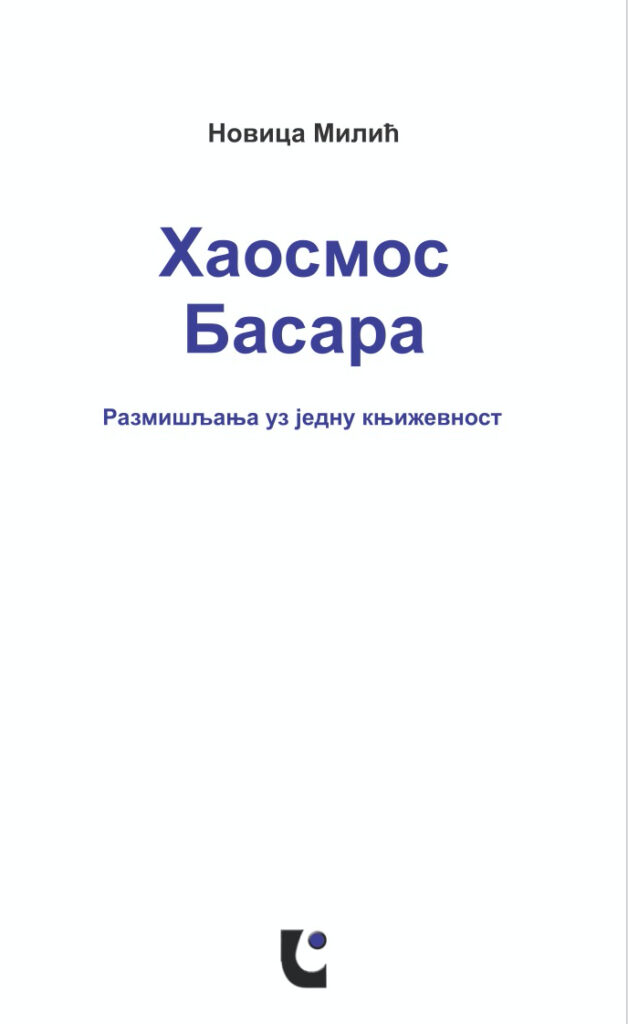
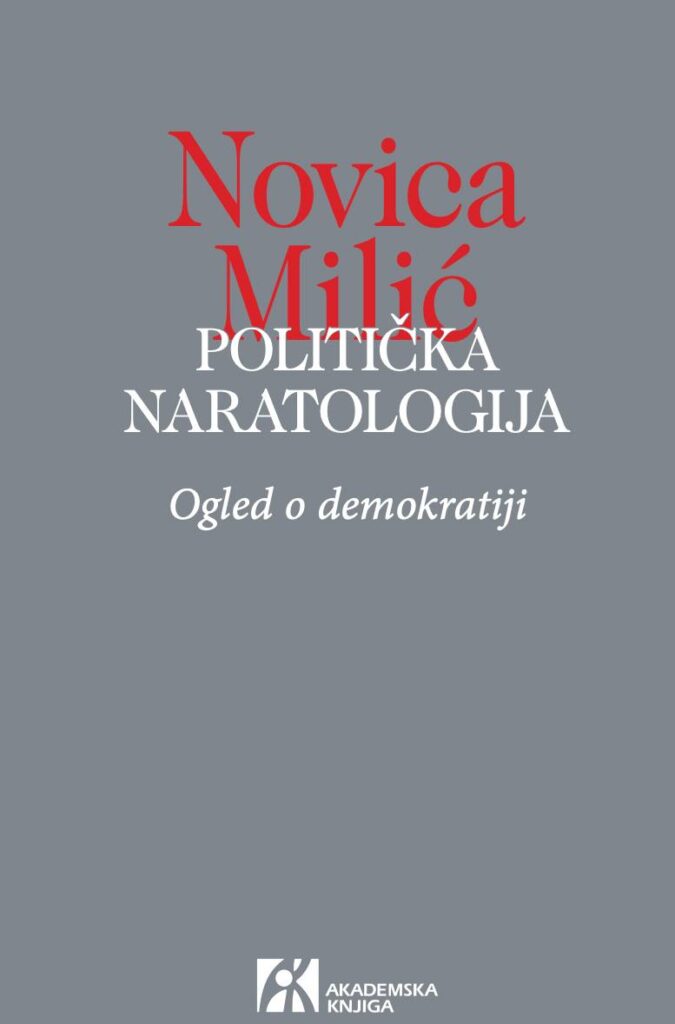
Novica Milić, December 2020: Politička naratologija, Postestetikа i Haosmos Basara (in Serbian)

December 11, 2020 disabled comments

Krajem ove godine naš suradnik Novica Milić je objavio tri različite knjige, naslovljene Politička naratologija, Postestetikа i Haosmos Basara.

Tri knjige odjednom?
Te tri knjige su nastale ranije, u raznim razdobljima. „Politička naratologija: Ogled o demokratiji“ pisana je na osnovu jednog već desetogodišnjeg kursa o istoriji ideje demokratije. Prošla je kroz 3–4 verzije koje sam pretprošlog leta pokušao da „sintetišem“, ali je svaka od tih verzija vukla na svoju stranu. Onda sam sve to napisao iznova, prošle zime, kad sam shvatio da treba da se odmaknem od političke filozofije ka istoriji, i tome je služila tzv. naratologija, razmišljanje o pričama. Uzeo sam četiri takve priče, odnosno narativa: antički, onako kako je zabeležen kod Herodota, Makijavelija kad sedi zatočen zbog navodne zavere protiv Medičija, a onda potom piše Vladaoca, rušenje Bastilje na početku Revolucije u Francuskoj 1789. godine, a onda, u naše doba, pad berlinskog Zida. Oko tih događaja i priča organizovao sam sve ostalo: antiku sa atinskom demokratijom i njenim osnovnim vrednostima, pojavu rimske republike kao forme države, srednjevekovne sukobe Pape i Cara, renesansno otkriće slobode i invencije pojedinca, moderne revolucije u Engleskoj, Americi, Francuskoj, izbijanje a onda propast boljševičkih i fašističkih revolucija, problem savremenosti i budućnosti demokratije. Ostalo mi je bilo još da se odmaknem od nemačke teorije (možda najrazvijene kad je o demokratiji reč) i anglosaksonske doktrine (takođe previše normativne za moj ukus), i da sa nizom mislilaca koji su deo naše savremenosti (poput Fukoa, Deride, Agambena itd.) vidim koja su današnja otvorena pitanja demokratije kao političkog poretka slobode, odgovornosti, javnosti, jednakosti prava, smenljivosti na izborima. Kad mi je ta potka pošla za rukom, posle je tkanje išlo relativno lako.

I koji su otvoreni problemi demokratije danas?
Moderna demokratija kao liberalna demokratija je očito u odlasku, jer je u odlasku i njena osnova iz projekta prosvetiteljstva o ljudskom napretku i emancipaciji. Države više oblikuju zajednice, nego obratno. Jačaju sile kontrole, države ih razvijaju do mere koja je ranije bila nepoznata, a i društva ih oberučke prihvataju. Smenljivost vlasti je postala manje važna od izbornosti, pa je ova druga prešla u predvidljiv ritual. Javnost je uveliko dirigovana, a političke odgovornosti je sve manje. Slobode su dopuštene tamo gde su manje važne, čak se guraju u bahatost i nasilje, a jednakost u pravima je uglavnom fraza u sve komplikovanijim normativnim mehanizmima predstavničkih tela, pa smo sve manje predstavljeni i zastupljeni, a sve više zamenjeni. Transformacija moći i vrednosti u kojima se moć kreće u novim dinamikama – promenjene forme života, nove tehnologije, informatike, drugačije subjektivnosti odnosno mentaliteti itd. – učinili su da liberalnu demokratiju lako smenjuju populizmi, autoritarne matrice, dirigovana javnost, kvazi-identiteti, čak religijske obnove. Što je demokratiju gurnulo u „rijaliti“ šou, sa veštim klovnovima koji se predstavljaju kao državnici (Tramp, Boris Džonson, Vučić). Levica još čuči u izanđalim matricama marksizma (Marks je umro pre skoro 150 godina), pa desnica uspešno manipuliše nacijom, državom, ekonomijom. Tako da je politička sredina (tzv. srednja klasa, odnosno tamo gde su ljudi individue i stoga nosioci različitosti u slobodama) uglavnom potisnuta, stisnuta, razbijena iako je tu prostor politike najširi. Zaboravilo se da je demokratija stvar zajednice, a ne države, konkretna i lokalna, previše se poverovalo u njenu globalnu prirodu, u njen automatizam. A demokratije ima u meri u kojoj zajednica drži do osnovnih vrednosti dok tzv. elita prima zadatak da stalno traga i predlaže nova rešenja za inače stare probleme slobode, jednakosti prava, odgovornosti, javnosti.

Vaša knjiga Postestetika ima podnaslov „Moć i savremena umetnost“?
I ta je knjiga rezultat jednog fakultetskog kursa, a o moći razmišlja ne samo kao o nečemu spolja, što nas ograničava i sputava (kako najčešće zamišljamo moć, jer je doživljavamo kao vlast nad nama, a moć je šira od svog oblika vlasti), nego kao o pozitivnoj, stvaralačkoj snazi. Savremena umetnost, ona koja se javlja u vidu tzv. konceptuale, postala je upitna. Ne samo da je pod pitanje stavila raniju milenijumsku tradiciju umetnosti – kao kad Dišan uzme pisoar, malo ga izokrene i od toga napravi slučaj koji se smatra, još od jedne ankete među ekspertima pre 15–ak godina, za „najuticajnije delo savremene umetnosti“ – već što u pitanje dovodi granicu između umetnosti i neumetnosti. Iako u toj knjizi nekome može izgledati da branim konceptualu, mene su zanimala pitanja više od odgovora. Radije u muzejima posmatram stare majstore platna i kičice, iako me konceptualisti katkad zabavljaju svojim dosetkama. Ali prvima dajem prednost. Radije slušam Betovena, nego Džona Kejdža (ako se tu ima šta čuti u „4’33“, tri stava tišine). Moć Dišanovog pisaoara, tj „Fontane“, u savremenoj umetnosti je teško osporiti, konceptualisti su uglavnom dišanovci, pa se treba onda upitati šta sve to znači, otkuda dolazi, kuda vodi. Tome je knjiga posvećena.

A knjiga o Basari?
To je knjiga o Basari pripovedaču, o njegovim romanima i pričama. Ona je nastala iz raznih beležaka koje sam pravio tokom decenija. Naša sredina uglavnom nije svesna njegovog vanserijskog narativnog talenta koji prevazilazi mnogo toga danas, u širim razmerama nego što je domaća literatura. Iza njegovog humora, cinizma, apsurda, kriju se stara i večna pitanja čovekovog uspenja i pada, metafizike, transcendencije, nihilizma u stvarnoj istoriji, haosa života i smrti. Ali to nije tumačenje Basare, to ostavljam drugima. Podnaslov je tu „Razmišljanja uz jednu književnost“. Šta mislimo, kako razmišljamo kad čitamo te romane, kojim kontekstima ih možemo okružiti kako bismo ih bolje osvetlili. Ispostavilo se da se ta knjiga pridružila po vremenu objavljivanja Političkoj naratologiji i Postestetici, ali to je usled okolnosti; kod nas, naročito u vreme korone, ne može se planirati vreme izdavanja, ne mogu to ni izdavači.

Šta još pišete?
Jedna knjigetina – preko 800 stranica – o istoriji antičke (starogrčke pa rimske) i onda renesansne književnosti, od početka pa negde do XVII veka, najviše o odnosu pevanja i mišljenja, literature i filozofije, čeka u Službenom glasniku skoro godinu dana. Glasnik ima svoju temporalnost spore, državne kuće, gde su knjige manje važne. A trenutno pokušavam da od grupe tekstova objavljivanih baš ovde, u Novom magazinu, sačinim jedan ogled o Srbiji, toj tužnoj temi naše svakodnevice. To bi bila publicistička, polemička, vrlo kritična knjiga, tekuće problematike, rađena kao da nas čeka sudnji dan. Hoću da isprobam neke nove stilove i ritmove u pisanju, sa što manje mojih prokletstava (a to su sklonost teoriji, i dugačke rečenice – borim se protiv toga koliko god mogu). I još jedan rukopis čeka izdavača, knjiga o književnoj psihoanalizi. Nisam objavljivao knjige desetak godina, pa sada hoću da se lišim tih opsesija. Jer kad objavite knjigu, ona je prepuštena čitaocima, i kao autor možete je zaboraviti. Nalazim da je ta vrsta zaborava osveženje, jer omogućuje da se bacim na nešto novo, da rizikujem na drugačije načine. Samo onaj ko rizikuje nešto novo ima šanse da uspe. Dojadilo mi je toliko opšte klišetiranje, mrtvilo i mišljenja i pisanja oko nas. Ako sebe ne iznenadim, sigurno neću ni druge. Heraklitovski verujem da je sunce svaki dan novo. Pa ga treba slaviti, kao izvor života.

17/01/2012: KOSOVO – SEEMO CONDEMNS POLICE BEATING OF KOSOVO PHOTOJOURNALIST

November 26, 2020 disabled comments

Vienna, 17/01/2012

The Vienna-based South East Europe Media Organisation (SEEMO), an affiliate of the International Press Institute (IPI), condemns alleged police violence against Kosovo freelance photojournalist Vedat Xhymshiti. On Saturday 14
January, the reporter was covering clashes between demonstrators and Kosovo police near the Merdare border crossing between Serbia and Kosovo, when he was struck by policemen. He lost conscioussness but was not hospitalised. The attack was filmed.

The 14 January protests were organised by the Vetevendosje Movement whose members gathered in order to impede the free flow of goods between Serbia and Kosovo at the Merdare and Dheu i Bardhe border crossings. Vetevendosje opposes contact with Serbia. The police prevented the demonstrators from reaching border crossings. There were clashes, and injuries on both sides.

Xhymshiti told SEEMO that he saw a citizen on the ground being beaten by policemen. He was about to take a photo when he was assaulted.

“I call on the police authorities to investigate and sanction those who attacked Xhymshiti”, said Oliver Vujovic, SEEMO Secretary General. “Vedat Xhymshiti was carrying filming equipment when the police attacked him. It was clear that he was a journalist. Beating a journalist is a direct attack on press freedom.”

18/01/2012: ROMANIA – SEEMO CALLS ON ROMANIAN AUTHORITIES TO IDENTIFY AND PROSECUTE AGGRESSORS OF JOURNALISTS

November 26, 2020 disabled comments

Vienna, 18/01/2012

Numerous reporters were physically assaulted by protesters and policemen while covering peaceful anti-government protests that degenerated into violence in Bucharest between 15 and 16 January 2012. It appeared that the journalists were deliberate targets. Catalin Lupasteanu, from the Mediafax news agency, said that he was beaten up by the police although he shouted:”Press! Press!”

Several employees of Bucharest-based Antena 3 TV were injured. Most of them were victims of protesters’ violence: Adrian Anghel was hit by an inflammable object; Alexandru Capraru, suffered a head injury when hit by a stone; Petre Nichita was hit by a metal bar and suffered head injuries; Dragos Stoian was hit by a metal chain; and Carmina Othman’s hair was set on fire.

The car belonging to the Romanian public broadcaster TVR was stoned by protesters.

Meanwhile, Lucian Negrea from the DC News Website was allegedly beaten by riot police. The scene was filmed. Some other reporters, including Radu Lungu, were briefly detained. Cristian Zarescu (Romania TV) reported being assaulted by the police.

The exact number of assaulted journalists, either by protesters or the police, is not known.

The Romanian Press Club called police actions excessive. Some assaulted journalists had their press cards visibly displayed. According to SEEMO sources, some journalists did not have experience or the training in conflict reporting and volatile situations.

The Vienna-based South East Europe Media Organisation (SEEMO), an affiliate of the International Press Institute, expresses profound concern at the level of violence against reporters who were covering the clashes. “Beating up journalists does not promote press freedom and it does not guarantee well-balanced information,” said Oliver Vujovic, SEEMO Secretary General.

Vujovic added: “I urge the police authorities to investigate all cases of violence against journalists during the demonstrations. Every single person who used force – whether protester or police officer – should be sanctioned. Silencing journalists is silencing freedom. Romania is an EU country and has to respect international standards. Violence is not acceptable.” Further, Vujovic stated: “Media owners should train journalists in how to act when covering conflict situations.”

19/01/2012: CROATIA – SEEMO URGES NEW CROATIA GOVERNMENT TO CREATE LEGAL AND INSTITUTIONAL ENVIRONMENT FOR CROATIAN RADIOTELEVISION (HRT) TO FUNCTION AS A PUBLIC BROADCASTER

November 26, 2020 disabled comments

Vienna, 19/01/2012

Transforming state television channels into public broadcasters has been a slow and difficult process in most post-communist countries, including those that are already in the European Union or are about to join. Croatian Radiotelevision (HRT) has been struggling and failing to fulfil this task. The December 2010 law regulating the public broadcaster did not meet expectations. The theoretically non-partisan Programme Council has not been functioning as such. Its members are perceived to represent political interests. Journalists feel ignored and sidelined. The open conflict between the Council members and journalists is aired on TV. This conflict has many causes: the persistence of direct and indirect political pressure, top-down appointments of editors without professional credibility, arbitrary suspension of programs without plausible explanations, public suspension of journalists, selective censorship and an overall absence of transparency.

As a result, journalists, their professional associations and other civil society institutions stage protests, write appeals and public letters. On 22 January, Croatia celebrates a referendum on EU membership. As other cases in the region have illustrated, joining the EU is not a synonym for problem solving.

The new government, installed in December 2011, promised to address the issue. Yet, the newly appointed minister of culture, Andrea Zlatar-Violic, admitted: “Among the 500 employees of the ministry, nobody is specialised media,” according to the press release published on the Croatian Journalists’ Association website. Andrea Zlatar spoke during the meeting dedicated to HRT problems and attended by journalists, editors, NGOs, and different professional organisations that took place in Zagreb on 16 January 2012. While criticism abounded, the meeting ended with a joint appeal calling, among other things, for the end of political meddling, censorship and nepotism, as well as for transparency, clear strategy and respect for professional standards.

The Vienna-based South East Europe Media Organisation (SEEMO), an affiliate of the International Press Institute (IPI), supports the appeal signed by the Croatian Journalists’ Association (HND) and 26 other NGOs and associations in demanding professionalization of the public broadcaster, and an end to political pressure and censorship.

“It is high time for the government and all relevant institutions to address the problems of the public broadcaster and create a proper legal and institutional environment for the Croatian public to receive information of public interest,” declared Oliver Vujovic, SEEMO Secretary General. “I remind the politicians of all political orientations that the role of media is to disseminate information in a truthful and balanced way and respect all professional standards.”