26.02.2024 – Journalist Zorica Kusmuk Faces Defamation Charges in Republic of Srpska, Bosnia and Herzegovina

26.02.2024 – Journalist Zorica Kusmuk Faces Defamation Charges in Republic of Srpska, Bosnia and Herzegovina

February 26, 2024 disabled comments

Investigative journalist Zorica Kusmuk, based in Bijeljina, Republika Srpska (one of the two entities of Bosnia and Herzegovina), has become the first officially accused of defamation in the Republic of Srpska, Bosnia and Herzegovina, a charge established as a criminal offense since last year in this entity. Defamation carries penalties of fines up to 6,000 BAM (3,068.69 EUR). Kusmuk, known for her investigations on corrupt practices and criminal activities within the police and judiciary, was recently interrogated by the Bijeljina Police Department. She faces allegations not only of defamation but also of unauthorized publication of another’s document, portrait, or recording.

At the heart of the criminal prosecution against the investigative journalist is a video she published in December 2020, allegedly showing police interrogation methods. Specifically, Kusmuk is accused of labeling on several occasions a policeman in Bijeljina, as a “torturer of suspects” on her Facebook page (https://www.facebook.com/zorica.kusmuk.info/?locale=sr_RS) and website zoricakusmuk.info(https://zoricakusmuk.info/). Additionally, in August of last year, she purportedly referred to a police inspector as a “criminal” in a Facebook comment and expressed hope for his arrest. Furthermore, on 24 October 2023, she allegedly shared a video and photo on her Facebook page and website, implicating a policeman in forcing a statement from an individual, and asserting his involvement in discrediting the late inspector.

In response to these accusations, Kusmuk stated that she initially published the video in December 2020 and subsequently required clarifications from the Bijeljina District Prosecutor’s Office regarding the legality of the police officers’ actions during interrogations. However, she claims she has not received a response from the prosecution until today.

The South East Europe Media Organisation (SEEMO) is monitoring the case and condemns the legal actions taken against journalist Zorica Kusmuk. The charges of defamation levied against her, allegedly for her investigative reporting, raise serious concerns about press freedom situation in Republika Srpska, as one of the two entities of of Bosnia and Herzegovina. SEEMO calls for an immediate cessation of legal harassment against Kusmuk and urges authorities in Banja Luka, Republika Srpska, Bosnia and Herzegovina, to uphold the fundamental principles of freedom of expression and the press, crucial for a democratic society. Such actions threaten the integrity of journalism and undermine public trust in media institutions. SEEMO stands in solidarity with Zorica Kusmuk and demands that she be allowed to carry out her work without fear of reprisal.

South East Europe Media Organisation (SEEMO) is a regional non-governmental, non profit network of editors, media executives and leading journalists in Southeast, South, East and Central Europe. SEEMO members are in Albania, Armenia, Azerbaijan, Belarus, Bosnia-Herzegovina, Bulgaria, Croatia, Cyprus, Czech Republic, Estonia, Georgia, Greece, Hungary, Kazakhstan, Kosovo, Kyrgyzstan, Latvia, Lithuania, Malta, Moldova (with the territory of Transdnestria), Montenegro, North Macedonia, Poland, Romania, Russia, Serbia, Slovakia, Slovenia, Tajikistan, Turkmenistan, Türkiye / Turkey, Ukraine and Uzbekistan. Austria, Italy, Vatican and San Marino have a special status in SEEMO. SEEMO has over 3000 individual members, and additional media as corporate members.


#fyp #mediafreedom #seemo #freespeech #southeasteuropemediaorganisation #ngo #journalist #journalistunderattack #bosniaandherzegovina #bih #republikasrpska #republicofsrpska #zoricakusmuk #zoricakusmuk.info #SEEMO #pressfreedom #mediafreedom #freemedia
24.02.2024 – Serbian Court Rules in Favor of RTS Editor in Defamation Case Against Serbian Singer

February 23, 2024 disabled comments

The recent verdict handed down by the First Basic Court in Belgrade, Serbia, on Tuesday 20 February 2024, marks a significant development in the legal battle between a Serbian singer and Oilvera Kovačević, editor at Radio Television of Serbia (RTS – https://www.rts.rs/sr/index.html).

Following a talk on a private TV channel, aired on 13 March 2022, where a singer made damaging allegations against Olivera Kovačević, the court ruled in favor of the latter, ordering the singer to pay a sum of 150,000 RSD (1,279.92 EUR) as compensation for moral damages caused by defamation.

The allegations centered on a claim made by the singer, that Olivera Kovačević had accepted a payment of 30,000 EUR to manipulate the outcome of the previous Eurovision Song Contest, what was vehemently denied by Olivera Kovačević and unsupported by any evidence.

The court also mandated that the singer covers the legal costs incurred during the trial and publish the court’s decision, without commentary or delay, in the newspaper Politika (https://www.politika.rs/).

Ivan Ninić, legal representative of Olivera Kovačević underscored the broader implications of the ruling, emphasizing that it not only defends Olivera Kovačević’s personal and professional integrity but also serves to protect the reputation and credibility of all Eurovision participants and jurors.

Furthermore, the court’s decision reflects a balancing act between the protection of individual dignity and the principles of freedom of expression, particularly in cases involving public figures like Olivera Kovačević, who occupies a prominent role as a journalist and editor at RTS. This ruling underscores the judiciary’s commitment to upholding the rule of law and preserving the integrity of public discourse in Serbia.

South East Europe Media Organisation (SEEMO) is a regional non-governmental, non profit network of editors, media executives and leading journalists in Southeast, South, East and Central Europe. SEEMO members are in Albania, Armenia, Azerbaijan, Belarus, Bosnia-Herzegovina, Bulgaria, Croatia, Cyprus, Czech Republic, Estonia, Georgia, Greece, Hungary, Kazakhstan, Kosovo, Kyrgyzstan, Latvia, Lithuania, Malta, Moldova (with the territory of Transdnestria), Montenegro, North Macedonia, Poland, Romania, Russia, Serbia, Slovakia, Slovenia, Tajikistan, Turkmenistan, Türkiye / Turkey, Ukraine and Uzbekistan. Austria, Italy, Vatican and San Marino have a special status in SEEMO. SEEMO has over 3000 individual members, and additional media as corporate members.

#fyp #mediafreedom #seemo #freespeech #southeasteuropemediaorganisation #ngo #journalist #journalistunderattack #serbia #rts #oliverakovacevic #SEEMO #pressfreedom #mediafreedom #freemedia
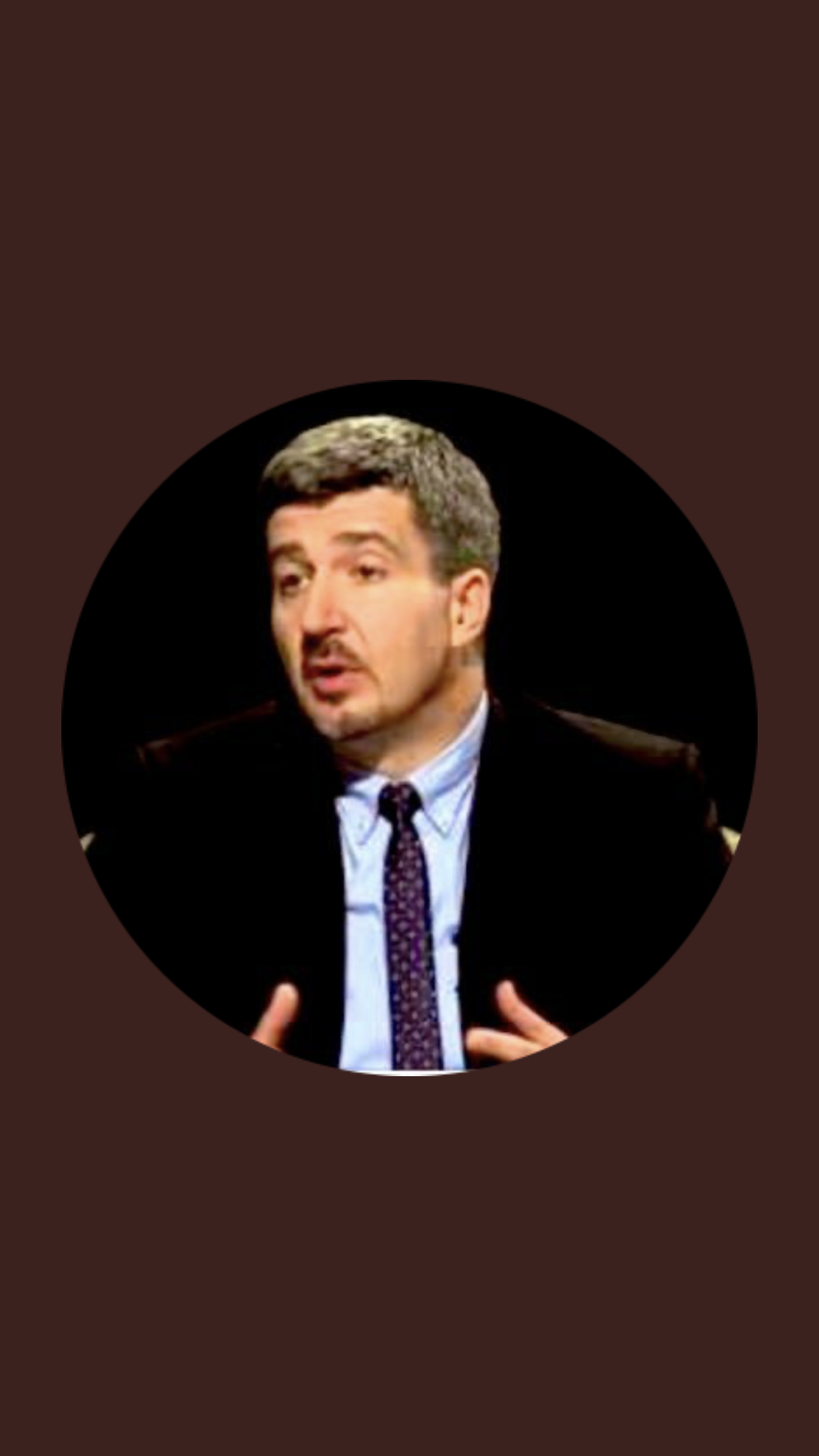
22.02.2024 – Russian Court Orders Continued Detention of US Reporter

February 22, 2024 disabled comments

On Tuesday 20 February 2024 in Moscow (Москва), Russia, a court has upheld the detention of Wall Street Journal (https://www.wsj.com/) journalist Evan Gershkovich until 30 March 2024, refusing an appeal against the extension of his pre-trial detention.

Gershkovich, whose arrest occurred during a reporting trip to Yekaterinburg (Екатеринбург), Russia on 29 March 2023, faces espionage charges that he and his employer vehemently deny. Gershkovich was detained by the Federal Security Service (Федеральная служба безопасности Российской Федерации) with allegations of possessing information on a “Russian defense enterprise.” Subsequently transferred to Moscow, he was formally arrested on 29 May 2023 and taken to Lefortovo Prison in Moscow, Russia.

Russian authorities never present any evidence to substantiate the allegations against him.

The case has garnered widespread attention, prompting international condemnation and calls for Gershkovich’s immediate release.

Gershkovich’s detention is emblematic of broader concerns regarding press freedom and the treatment of foreigners in Russia.

The recent designation of Radio Free Europe/Radio Liberty ( RFERL – https://www.rferl.org/) as an “undesirable” organization by the Russian Justice Ministry underscores the government’s crackdown on independent media.

The South East Europe Media Organisation (SEEMO) condemns the continued detention of Wall Street Journal reporter Evan Gershkovich by the Russian authorities. The lack of transparency surrounding his arrest and the absence of evidence supporting the allegations raise serious concerns about press freedom and the protection of journalists’ rights. SEEMO calls for the immediate release of Gershkovich, emphasizing the vital role journalists play in informing the public and fostering open discourse. SEEMO urges Russian authorities to uphold international standards, respect journalistic integrity, and ensure the safety of media professionals working within their jurisdiction.

South East Europe Media Organisation (SEEMO) is a regional non-governmental, non profit network of editors, media executives and leading journalists in Southeast, South, East and Central Europe. SEEMO members are in Albania, Armenia, Azerbaijan, Belarus, Bosnia-Herzegovina, Bulgaria, Croatia, Cyprus, Czech Republic, Estonia, Georgia, Greece, Hungary, Kazakhstan, Kosovo, Kyrgyzstan, Latvia, Lithuania, Malta, Moldova (with the territory of Transdnestria), Montenegro, North Macedonia, Poland, Romania, Russia, Serbia, Slovakia, Slovenia, Tajikistan, Turkmenistan, Türkiye / Turkey, Ukraine and Uzbekistan. Austria, Italy, Vatican and San Marino have a special status in SEEMO. SEEMO has over 3000 individual members, and additional media as corporate members.

#fyp #mediafreedom #seemo #freespeech #southeasteuropemediaorganisation #ngo #journalist #journalistunderattack #russia #EvanGershkovich #WallStreetJournal #journalistarrested #journalistdetained #journalistinjail #SEEMO #pressfreedom #mediafreedom #freemedia
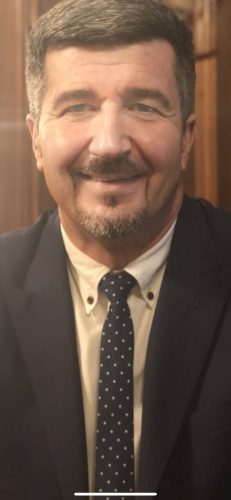
Interview with SEEMO member Belmin Karamehmedović (February 2024)

February 21, 2024 disabled comments

Belmin Karamehmedović
2015 – to present Director General Radio and Television of Bosnia and Herzegovina, www.bhrt.ba
2012 – 2015 Deputy Director General Radio and Television of Bosnia and Herzegovina, www.bhrt.ba
2010 – 2012 Television of Bosnia and Herzegovina CEO
2004 – 2010 Television of Bosnia and Herzegovina Head of the Sports Department
2003 – 2004 CEO Media Group – Pool of marketing agencies established by McCann-Erickson and BBDO Adriatic in Bosnia and Herzegovina
1995 – 2004 Field Producer in Bosnia and Herzegovina ABC NEWS

Can you please tell us how and when you started your professional work?

I started my professional work in 1987 at local radio station “Sarajevo 202”. My TV work on BHRT started in September 1992.

As you are working for BHRT since 1992 you have also experience with reporting during the war in Bosnia and Herzegovina.

That was extremely difficult period of my life, same as every other person who spent the war in besieged Sarajevo. We didn’t have even basic resources for normal living, such as food, electricity, water, gas supply, etc. People of Sarajevo got killed on daily basis and situation at that time very often looked hopeless. Despite all of these circumstances, BHRT didn’t stop the informative mission for a second, employees gave their best in order to do their very important job and we managed to survive and do what we were supposed to do at that time.

Can you present us please the main problems of public RTV in Bosnia and Herzegoviona today in February 2024?

The main problem is the fact that PBSs who are in charge of collecting and distributing the fee violate the Law because they do not apply the provisions on the distribution of licence fees, and all this only to the detriment BHRT. The other problem is the lack of sustainable financing for BHRT and the lack of political will to solve it. The problem occurs since 2017 and every government verbally supports BHRT but in the reality they do nothing to solve the problem.

How is the financial situation in BHRT ?

It is very difficult for a long time but the peak is at the moment as we do not have the collection of the license fee (RTV tax) since 1st January 2024.

Before we get into the details of the current situation, there are a few questions about how public services are financed. The so-called mixed financing model for public broadcasters includes the majority of revenue from the RTV tax and a portion of revenue from marketing. We have already discussed how the Law on the Public Broadcasting System determined the method of revenue distribution. In terms of how the RTV tax was collected, from 2005 to 2017, it was done through the telecom operators. The data revealed that, in addition to an insufficient level of collection, the number of subscribers was decreasing as people switched to other types of telecommunication services.

Following the expiration of the collection services agreement with three telecom operators in BiH, collection in Republika Srpska is now done through the Inkaso service, Pošte RS and electronically.

In the Federation, the RTV tax is paid only through Elektroprivreda BiH in the areas where it provides services, because Elektroprivreda HZ HB refused to collect the RTV tax.

The RTV tax is currently BAM 7.50 (EUR 3.6) per month and is legally adjusted to the inflation rate, but the last adjustment was in 2013.

Entity broadcasters are responsible for collecting RTV tax. Although the RTV tax is a legal requirement, it is practically voluntary in the Federation of BiH territory because citizens can only pay the electricity bill and omit the RTV tax. The current situation and financial problems of BHRT are the result of the fact that BHRT does not receive funds from the RTV tax collected across the entire territory of BiH, as provided for by the Law on the Public Broadcasting System.

Since 2017, RTRS has violated the Law by failing to transfer to BHRT the corresponding portion of 50% of funds collected in the territory of Republika Srpska, resulting in a debt of RTRS to BHRT that exceeds BAM 82 million (approx. EUR 42 million). This is why BHRT owes money to the FBiH Tax Administration for employee contributions, the Indirect Taxation Authority, and the EBU, etc. In previous years, BHRT initiated court actions for debt collection in order to collect what is legally owed to it. However, after the BiH Court declared itself incompetent and transferred the case to the District Commercial Court in Banja Luka, BHRT lost the first three cases because the Court treated the material evidence as information and ruled that RTRS has no legal obligation to transfer funds from the RTV tax to BHRT because “the Corporation of Public Broadcasting Services has not been established”. It is important to note that it was RTRS that obstructed the establishment of the Corporation, which is responsible for the collection and distribution of taxes under the law. As a result, even though the Corporation did not exist, the RTV tax was collected and distributed in accordance with the law from 2006 until 2017, when RTRS arbitrarily stopped transferring funds to BHRT.

It should be noted that the RTV of the Federation of BiH also violates the law by failing to transfer to RTRS 25% of the funds from the FBiH’s tax collection, and therefore illegally keeping BAM 20 million (approx. EUR 10.5 million) from 2017 to November 2023. From 2017 to November 2023, BHRT received BAM 105.090.176, RTV FBiH received BAM 109.451.046 and RTRS received BAM 142.680.894 of the total RTV tax collected. In percentage terms, this equates to app. BHRT 29%, RTV FBiH 31%, and RTRS 40%, as opposed to the legal distribution of BHRT 50%, RTV FBiH 25%, and RTRS 25%. At the attempt of the FBiH executive power to redirect these funds to BHRT, which would somewhat reduce RTRS’s debt to BHRT, the current management of RTV FBiH, which violates the law by keeping other people’s funds, accused BHRT, which has no direct role in the collection of funds, of the alleged violation of the Law and refused to direct said funds to BHRT in order to settle its obligations.

The situation worsened after the FBiH Tax Administration blocked BHRT accounts in December 2021 and March 2022 due to unpaid pension and disability insurance contributions (a total debt amounts to approx. BAM 28 million, or EUR 14 million). This nearly resulted in the complete collapse of BHRT. The account was unblocked after the FBiH Parliament, in both Houses, unanimously adopted a Resolution instructing the Tax Administration to allow BHRT to operate until the court proceedings against RTRS were completed.

All of the above events have significantly worsened BHRT’s financial situation and called into question the national broadcaster’s very existence, because BHRT is unable to operate in accordance with the Law and fulfil its legal obligations to the state (taxes and contributions), clients, and, of course, employees who have been in existential danger for a long time.

Due to the inability to receive the revenue required by law, BHRT owes the most to the following entities: FBiH Tax Administration – BAM 28 million, EBU – 8.5 CHF million, Indirect Taxation Authority, VAT obligations BAM 5.7 million. Due to a lack of funds, BHRT is unable to invest in the procurement of equipment or to follow market trends of technological development, so the majority of the equipment used is still in analogue format, which has not been used in Europe or the rest of the world for a long time. It is also worth noting that, with the exception of the larger areas of Sarajevo, Mostar, and Banja Luka, the rest of the country lacks a digital signal because the competent ministry in the BiH Council of Ministers has not completed the project of providing a digital signal to the entire territory of BiH. BHRT also has significant issues with the investment maintenance of the building it moved into in 1984, which causes difficulties in daily operations (part of the space is still in disrepair, the heating/cooling system is about to fail, the war-damaged facade has not been repaired, and so on).

As an example of the state of the equipment, it is sufficient to say that BHRT has two outside broadcast vans from 1984 with analogue equipment and SD equipment from 1989 (a donation from Turkish Radio and Television), so we cannot produce the signal in HD quality. Part of the building’s equipment is in HD quality, which BHRT was able to secure with its own efforts through a bank loan, but the majority of the equipment in the TV studios is still in analogue quality. The equipment of BH Radio 1 is several decades old, and there are constant problems with broadcast interruptions due to wear and tear.

What is the number of staff in your company? Did you reduce them in the past years?

Current number is 795, and it has been significantly reduced from more than 1000 employees several years ago.

What are the solutions? How to solve the complicate situation with public radio and TV?

Nothing is complicated or too complicated if you want to solve it. There are so many solutions in Europe on how to finance PSM and how to collect the fee. The only need is good will of all actors included and it could be solved very easily. We just need Bosnian to provide full and strict implementation of the law of public broadcasting system which was adopted in Parliament in 2005, but has never been fully implemented primarily due to political obstructions from Bosnian entity Republika Srpska.

Do you see with optimism or pessimism the future of the media scene in your country?

I wouldn’t be here if I was a pessimist. Of course, there is light at the end of the tunnel but it seems the tunnel is too long and a certain period of time would be needed. We need a long term and financially sustainable solution for the public broadcasting system. Otherwise, we will have the same problems again and every few years.

image1
image2

21.02.2024 – Media Outlets Denied Access to Orban’s State of the Nation Speech

February 21, 2024 disabled comments

On 15 February 2024, Telex (https://telex.hu/), a news outlet in Hungary, reported that several independent media from Hungary and several international media, including Telex itself were denied access to Prime Minister of Hungary Viktor Orbán’s annual State of the Nation speech. Link to Telex news is here: https://telex.hu/english/2024/02/15/telex-and-several-foreign-news-outlets-refused-entry-to-orbans-annual-state-of-the-nation-speech. Also Associated Press – AP (https://apnews.com/), reported about the same problem.

The event was scheduled for 17 February 2024 at Várkert Bazár in Budapest, Hungary. The Foundation for a Civic Hungary, responsible for organizing the event, cited limitations on the number of media representatives allowed to attend as the reason for the exclusion.

According to Telex “Last year, Telex’s photographer was still allowed to be present for Viktor Orbán’s annual address, but the press was completely excluded from the Prime Minister’s following speeches: first in Kiskőrös on 15 March and then in Veszprém on 23 October. In the latter case, the press was initially “welcomed” after prior registration, but in the end, at the venue itself, staff of the independent press were not allowed inside the cordoned-off area”

The South East Europe Media Organisation (SEEMO) condemns the exclusion of media outlets, both domestic and international, from attending Prime Minister Viktor Orbán’s annual State of the Nation speech in Hungary. SEEMO calls on the Hungarian authorities to ensure that journalists can perform their essential role without hindrance or intimidation.

South East Europe Media Organisation (SEEMO) is a regional non-governmental, non profit network of editors, media executives and leading journalists in Southeast, South, East and Central Europe. SEEMO members are in Albania, Armenia, Azerbaijan, Belarus, Bosnia-Herzegovina, Bulgaria, Croatia, Cyprus, Czech Republic, Estonia, Georgia, Greece, Hungary, Kazakhstan, Kosovo, Kyrgyzstan, Latvia, Lithuania, Malta, Moldova (with the territory of Transdnestria), Montenegro, North Macedonia, Poland, Romania, Russia, Serbia, Slovakia, Slovenia, Tajikistan, Turkmenistan, Türkiye / Turkey, Ukraine and Uzbekistan. Austria, Italy, Vatican and San Marino have a special status in SEEMO. SEEMO has over 3000 individual members, and additional media as corporate members.

#fyp #mediafreedom #seemo #freespeech #southeasteuropemediaorganisation #ngo #journalist #journalistunderattack #hungary #telex #ap #SEEMO #pressfreedom #mediafreedom #freemedia
20.02.2024 – Journalist Fined in Governor Insult Case in Türkiye / Turkey

February 20, 2024 disabled comments

Journalist Nagihan Yılkın (@nagihanyilkin) who is working for cumhuriyet.com.tr(https://www.cumhuriyet.com.tr/) has been fined, on 15 February 2024, with 7,080 TRY (approx. 212 EUR) following a complaint by the then Governor of Gaziantep (2018–2023), Türkiye / Turkey now since 2023 the Governor of Istanbul, Türkiye / Turkey. She was charged under Article 125 of the Turkish Penal Code for allegedly “insulting a public official.” The court acquitted Editor-in-Chief of cumhuriyet.com.trMustafa Büyüksipahi in the same case.

The fourth hearing of the case, initiated over her investigative article published on the Cumhuriyet newspaper’s website on 15 March 2022, was held at the 2nd Criminal Court of First Instance in Istanbul, Türkiye / Turkey.

The South East Europe Media Organisation (SEEMO) is monitoring the developments connected to this court case.

South East Europe Media Organisation (SEEMO) is a regional non-governmental, non profit network of editors, media executives and leading journalists in Southeast, South, East and Central Europe. SEEMO members are in Albania, Armenia, Azerbaijan, Belarus, Bosnia-Herzegovina, Bulgaria, Croatia, Cyprus, Czech Republic, Estonia, Georgia, Greece, Hungary, Kazakhstan, Kosovo, Kyrgyzstan, Latvia, Lithuania, Malta, Moldova (with the territory of Transdnestria), Montenegro, North Macedonia, Poland, Romania, Russia, Serbia, Slovakia, Slovenia, Tajikistan, Turkmenistan, Türkiye / Turkey, Ukraine and Uzbekistan. Austria, Italy, Vatican and San Marino have a special status in SEEMO. SEEMO has over 3000 individual members, and additional media as corporate members.

#fyp #mediafreedom #seemo #freespeech #southeasteuropemediaorganisation #ngo #journalist #journalistunderattack #turkey #journalistfined #NagihanYılkın #cumhuriyet.com.tr #SEEMO #pressfreedom #mediafreedom #freemedia
19.02.2024 – Siarhei Hardziyevich Released Following Arrest

February 19, 2024 disabled comments

On 8 February 2024, former journalist from Drahichyn (Драгічын), Belarus, Siarhei Hardziyevich (Сяргей Гардзіевіч), born 1971, was released from the temporary detention center after serving a 15-day administrative detention sentence for distributing extremist products.

Officers of the Drahichyn Police Department arrested Siarhei Hardziyevich on 24 January 2024. The police filed a report against him for violating Article 19.11 of the Code of Administrative Offenses, which prohibits the distribution, production, or storage of information products containing calls for extremist activity.

The reason for his arrest and subsequent sentence became apparent on 26 January 2024 in the court. Hardziyevich was responsible, according to local sources, for sharing an online publication from an internet resource recognized by authorities as ‘extremist’ in Belarus.

Hardziyevich attempted to defend himself in court, stating that he had deleted his Vkontakte (Russian online social media and social networking service based in Saint Petersburg) social media account in November 2023, aiming to prove that his actions were not an administrative offense.

Siarhei Hardziyevich’s was not arrested for the first time. When he previously worked for the Piershy Rehijon (https://1reg.org/) online publication he was arrested in December 2020. He was charged with insulting a public officer, disseminating false and humiliating information (slander) containing accusations of committing a serious crime, and publicly insulting the President of the Republic of Belarus. The charges were according to the Criminal Law of Belarus, Article 188, 368 and 369.

Before this trial, Hardziyevich was under house arrest and was sentenced to 1 year and 6 months of imprisonment on 2 August 2021. He completed this sentence on 17 October 2022. In September of the same year, he was added to the list of ‘extremists’.

In September 2023, Hardziyevich was detained at the Brest (Брэст) checkpoint while returning from Poland to Belarus. At the border, authorities decided to inspect his cell phone and subsequently charged him with storing ‘extremist’ content, resulting in another 15-day administrative detention sentence.

South East Europe Media Organisation (SEEMO) condemns the political pressure on Hardziyevich in Belarus and also condemns all cases where he was arrested.

South East Europe Media Organisation (SEEMO) is a regional non-governmental, non profit network of editors, media executives and leading journalists in Southeast, South, East and Central Europe. SEEMO members are in Albania, Armenia, Azerbaijan, Belarus, Bosnia-Herzegovina, Bulgaria, Croatia, Cyprus, Czech Republic, Estonia, Georgia, Greece, Hungary, Kazakhstan, Kosovo, Kyrgyzstan, Latvia, Lithuania, Malta, Moldova (with the territory of Transdnestria), Montenegro, North Macedonia, Poland, Romania, Russia, Serbia, Slovakia, Slovenia, Tajikistan, Turkmenistan, Türkiye / Turkey, Ukraine and Uzbekistan. Austria, Italy, Vatican and San Marino have a special status in SEEMO. SEEMO has over 3000 individual members, and additional media as corporate members.

#fyp #mediafreedom #seemo #freespeech #southeasteuropemediaorganisation #ngo #journalist #journalistunderattack #belarus #SiarheiHardziyevich #journalistinjail #jailedjournalist #journalistinprison #journalistreleased #SEEMO #pressfreedom #mediafreedom #freemedia
16.02.2024 – SEEMO Condemns Hungary’s Crackdown on Press Freedom with New Law

February 16, 2024 disabled comments

On 13 February 2024, the Human Rights Watch (HRW – https://www.hrw.org/) released a statement (https://www.hrw.org/news/2024/02/13/hungary-media-curbs-harm-rule-law) condemning the Hungarian government’s interference with media freedom and pluralism, citing it as part of a broader attack on the rule of law in Hungary. The law, approved by the Hungarian parliament, establishes a sovereignty protection office with expansive powers to investigate individuals active in public life. Critics argue that the true intention behind the legislation is to intimidate and silence dissenting voices, rather than ensuring accountability. Hungarian Prime Minister Viktor Orbán has defended the law, claiming it is necessary to combat foreign interference in the country’s affairs and protect its sovereignty. civil society groups and media organizations contend that the sovereignty protection office will operate with unchecked authority, potentially leading to harassment and intimidation of targeted individuals and organizations. The media groups assert their commitment to continuing their work despite the law’s passage, emphasizing its detrimental effects on media freedom and democratic debate in Hungary.

This legislation adds to existing worries about the erosion of democratic norms and media freedom in Hungary, prompting calls for action from both domestic and international stakeholders to safeguard fundamental rights and uphold democratic principles.

The South East Europe Media Organisation (SEEMO) continues to monitor the developments in Hungary By establishing a sovereignty protection office with sweeping powers to investigate individuals involved in public life, the government is further tightening its grip on the media landscape and stifling dissenting voices. SEEMO calls on Hungarian authorities to repeal this law.

South East Europe Media Organisation (SEEMO) is a regional non-governmental, non profit network of editors, media executives and leading journalists in Southeast, South, East and Central Europe. SEEMO members are in Albania, Armenia, Azerbaijan, Belarus, Bosnia-Herzegovina, Bulgaria, Croatia, Cyprus, Czech Republic, Estonia, Georgia, Greece, Hungary, Kazakhstan, Kosovo, Kyrgyzstan, Latvia, Lithuania, Malta, Moldova (with the territory of Transdnestria), Montenegro, North Macedonia, Poland, Romania, Russia, Serbia, Slovakia, Slovenia, Tajikistan, Turkmenistan, Türkiye / Turkey, Ukraine and Uzbekistan. Austria, Italy, Vatican and San Marino have a special status in SEEMO. SEEMO has over 3000 individual members, and additional media as corporate members.

#fyp #mediafreedom #seemo #freespeech #southeasteuropemediaorganisation #ngo #journalist #journalistunderattack #hungary #SEEMO #pressfreedom #mediafreedom #freemedia
15.02.2024 – Journalist Korab F. Rexhepi Threatened

February 15, 2024 disabled comments

On 12 February 2024, Korab F. Rexhepi (https://www.facebook.com/korab.f.rexhepi), a journalist affiliated with DTV Television (https://dtvmedia.net/), who has his show “Llaf pas Darke” (Chat after Dinner), recently found himself targeted by a series of alarming threats originating from an individual using the initials M.B.

The unsettling episode unfolded after Rexhepi ended during his TV show a direct phone call with M.B, prompted by the latter’s use of inappropriate language during live broadcast.

Subsequently, Rexhepi revealed to the Association of Journalists of Kosovo (Asociacioni i Gazetarëve të Kosovës – AGK – https://agk-ks.org/en/) the disturbing content of the threatening messages he received. The messages he received in written form over his mobile phone. One such message ominously warned of dire consequences, stating that Rexhepi and his entire family would ‘disappear.’

The South East Europe Media Organisation (SEEMO) condemns the threats made against journalist Korab Rexhepi, which represent a serious violation of press freedom and journalist safety. Threats of violence aimed at silencing journalists have no place in a democratic society and must be addressed with urgency by the relevant authorities. SEEMO calls on the authorities in Kosovo to thoroughly investigate this case and ensure that those responsible are held accountable for their actions. Journalists must be able to carry out their work without fear of intimidation or reprisal, and SEEMO stands in solidarity with Korab Rexhepi and all journalists facing similar threats or attacks.

South East Europe Media Organisation (SEEMO) is a regional non-governmental, non profit network of editors, media executives and leading journalists in Southeast, South, East and Central Europe. SEEMO members are in Albania, Armenia, Azerbaijan, Belarus, Bosnia-Herzegovina, Bulgaria, Croatia, Cyprus, Czech Republic, Estonia, Georgia, Greece, Hungary, Kazakhstan, Kosovo, Kyrgyzstan, Latvia, Lithuania, Malta, Moldova (with the territory of Transdnestria), Montenegro, North Macedonia, Poland, Romania, Russia, Serbia, Slovakia, Slovenia, Tajikistan, Turkmenistan, Türkiye / Turkey, Ukraine and Uzbekistan. Austria, Italy, Vatican and San Marino have a special status in SEEMO. SEEMO has over 3000 individual members, and additional media as corporate members.

#fyp #mediafreedom #seemo #freespeech #southeasteuropemediaorganisation #ngo #journalist #journalistunderattack #kosovo #KorabRexhepi #DTV #journalistattacked #SEEMO #pressfreedom #mediafreedom #freemedia
14.02.2024 – Journalists from Moldova Detained and Released in Transnistria

February 14, 2024 disabled comments

On 24 January 2024, journalists Viorica Tătaru and Andrei Captarenco, both affiliated with Moldova’s TV8 (https://tv8.md/), found themselves at the center of an incident while covering a local protest in Tiraspol (Тираспол), Transnistria / Transdniestria / Pridnestrovie (officially Pridnestrovian Moldavian Republic (PMR) – Приднестро́вская Молда́вская Респу́блика, ПМР – part of Moldova out of control of the government in Chisinau). Russia maintains some 1,500 soldiers in Transnistria, as also some additional 500 as “peacekeepers”.

The protest aimed to voice opposition against newly imposed customs duties on goods entering and leaving the region. However, their journalistic effort took an unexpected turn when staff from the State Security of PMR detained them. This rapid detention underscores the severe restrictions on press freedom within Transnistria, where journalists face constant surveillance and intimidation merely for attempting to fulfill their professional duties.

It was revealed that Tătaru and Captarenco were subjected to lengthy interrogations, lasting around three hours, during which they were questioned separately. The security personnel, compelled the journalists to delete all footage captured at the protest, effectively erasing any documentation of the event. Such actions not only violate the rights of journalists but also obstruct the public’s right to be informed.

Following their ordeal, the journalists were released after being transported to the Transnistrian border, presumably to ensure their exit from this part of Moldova that is not under the control of the government. This heavy-handed approach to curtailing journalistic activities represents a broader pattern of harassment and censorship targeting media professionals operating in Transnistria. The Moldovan Prosecutor’s Office for Combating Organized Crime and Special Cases has initiated an investigation into the circumstances surrounding the journalists’ detention, signaling a recognition of the seriousness of the incident.

Transnistria, also referred to as Pridnestrovie, is an entity officially designated as the Pridnestrovian Moldavian Republic (Република Молдовеняскэ Нистрянэ), yet it lacks international recognition and is considered a part of Moldova.

This incident is not an isolated one, in September 2023, authorities in Transnistria deemed Moldovan photojournalist Elena Covalenco as “undesirable,” thereby obstructing her from reporting on a soccer event coordinated by the Union of European Football Associations (UEFA). They further enforced a three-year prohibition on her access to Transnistria, citing her journalistic activities as a significant security concern. In 2022 two Romanian journalists were arrested in Transnistria and escorted to the territory controlled by the Moldovan government. In 2010 a Transnistrian court sentences Ernest Vardanean to 15 years in prison for spying for Moldova, he was realased in 2011 and moved with his family to Chisnau.

This underscores the systemic challenges faced by journalists covering Transnistria, where press freedom is consistently undermined by arbitrary restrictions and punitive measures. The lack of accountability for such violations perpetuates an environment of fear and uncertainty for journalists working in the region.

The South East Europe Media Organisation (SEEMO) strongly condemns the arrest of Tătaru and Captarenco as assault on press freedom. Additionally, we urge authorities in Transnistria to respect the rights of journalists and ensure their ability to report freely without fear of reprisal or intimidation. The fundamental principles of freedom of the press must be upheld to safeguard democracy and the public’s right to information.

South East Europe Media Organisation (SEEMO) is a regional non-governmental, non profit network of editors, media executives and leading journalists in Southeast, South, East and Central Europe. SEEMO members are in Albania, Armenia, Azerbaijan, Belarus, Bosnia-Herzegovina, Bulgaria, Croatia, Cyprus, Czech Republic, Estonia, Georgia, Greece, Hungary, Kazakhstan, Kosovo, Kyrgyzstan, Latvia, Lithuania, Malta, Moldova (with the territory of Transdnestria), Montenegro, North Macedonia, Poland, Romania, Russia, Serbia, Slovakia, Slovenia, Tajikistan, Turkmenistan, Türkiye / Turkey, Ukraine and Uzbekistan. Austria, Italy, Vatican and San Marino have a special status in SEEMO. SEEMO has over 3000 individual members, and additional media as corporate members.

#fyp #mediafreedom #seemo #freespeech #southeasteuropemediaorganisation #ngo #journalist #journalistunderattack #moldova #tv8 #VioricaTătaru #AndreiCaptarenco #SEEMO #pressfreedom #mediafreedom #freemedia