02/10/2008: MONTENEGRO – AMENDMENTS TO THE LAW ON PUBLIC SERVICE BROADCASTING OF MONTENEGRO

02/10/2008: MONTENEGRO – AMENDMENTS TO THE LAW ON PUBLIC SERVICE BROADCASTING OF MONTENEGRO

October 2, 2008 disabled comments

Vienna, 02/10/2008

The Vienna-based South East Europe Media Organisation (SEEMO), a network of editors, media executives and leading journalists from South East Europe and an affiliate of the International Press Institute (IPI), is concerned at several proposed amendments to the Public Service Broadcasting Law of Montenegro. Although the draft amendments are generally in line with international standards on public broadcasting, a number of concerns have been identified.

The Radio Televizija Crna Gora – RTCG (Radio and Television of Montenegro) should be able to decide more freely over the use of their budget, except from funds from the state budget that are earmarked for certain functions, such as minority language programming.

The procedure for appointing members of the governing RTCG Council is problematic, as it does not ensure the independence of the public service broadcaster. Candidates for the RTCG Council are nominated by various institutions, including academic bodies, NGOs, sport organisations, and unions, but Parliament has the final say in deciding the candidate for each position. Since Parliament is responsible for this important decision, which could be influenced by party affiliation, mechanisms that ensure transparency and fairness, such as open hearings and the possibility for members of the public to voice their opinion, are essential. Also the staggering of the tenures of the individual members of the RTCG Council would help to ensure continuity.

According to SEEMO Secretary General Oliver Vujovic, “It is essential that the legal framework governing public service broadcasting ensures editorial independence and institutional autonomy. Before adopting the draft law, it would be important to take into account the relevant European and international documents relating to public service broadcasting.”

24/09/2008: BULGARIA – ATTACK ON OGNYAN STEFANOV, EDITOR OF THE ON-LINE NEWS SITE – BULGARIA

September 24, 2008 disabled comments

Vienna, 24/09/2008

The Vienna-based South East Europe Media Organisation (SEEMO), a network of editors, media executives and leading journalists from South East Europe and an affiliate of the International Press Institute (IPI), condemns the recent violent attack on Ognyan Stefanov, editor-in-chief of the on-line news site, Frognews, in Sofia, Bulgaria.

According to information before SEEMO, Ognyan Stefanov was beaten unconscious by several men in masks with hammers and rods as he was on his way out of the restaurant “Kiparisite” on the evening of Monday, 22 September 2008.

Ognyan Stefanov was taken to the Military Medical Academy in Sofia with serious head injuries and broken limbs. According to information from the Bulgarian News Agency, BGNES, the director of the Military Medical Academy, Stojan Tonev, said Ognyan Stefanov underwent a crucial operation on 23 September 2008.

Commenting on the incident, SEEMO Secretary General Oliver Vujovic said that “heinous attacks on media representatives such as this one against Ognyan Stefanov must become a thing of the past in a democratic society.” Furthermore, he called on the authorities to “initiate an immediate and thorough police investigation to bring to justice those responsible for this crime.”

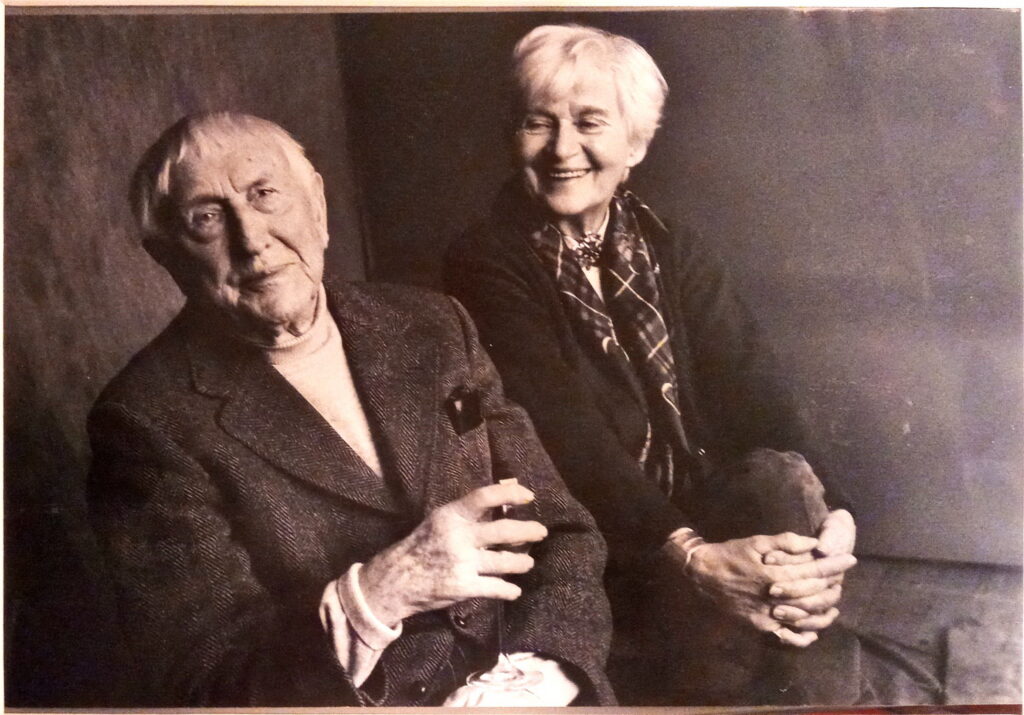
Wolfgang Libal (1912-2008)

September 24, 2008 disabled comments

ELEGANZ DER ERFAHRUNG
Mit Wolfgang Libal und Christine von Kohl auf Überlandpartie
von Herbert Maurer

„Christl, bitte nicht schon wieder“ … „Wolfili, ich fahre nicht zu schnell … „. Ein die Existenz beschwörender oder die Existenz retten wollender dezenter Hilfeschrei, Teil eines Dialogs, der in einem viel zu kleinen Mietauto bei überhöhter Geschwindigkeit auf einer unübersichtlichen Landstraße im nord-niederösterreichischen Hügelland in Richtung Niederleis in Gegenwart des Autors dieser Zeilen (auf dem Rücksitz) so stattgefunden hat. Der Grund für den riskanten Ausflug zweier weit über 80jähriger: Einige Flaschen Rotwein, die wegen der Straßenunebenheiten im Kofferraum schepperten, sollten neu befüllt werden.

Besagter Herr, „Wolfili“, auch Herr Doktor genannt, oder „Ernst Jünger, frisch vom Pferd gestiegen“ sieht ohne Panik aber sehr bestimmt und dann doch wieder unverwandt in die Landschaft hinauf. „Du sag, wohnen da nicht die Soundsos – er deutet großzügig in die Landschaft. Auf einer Anhöhe ist eines der üblichen Schlösschen eines Landadeligen auszumachen, ob gerade verspekuliert oder verspielt oder verfallen, ist bei der Fahrtgeschwindigkeit nicht auszumachen. Aber nein, da wohnen doch die Soundsos, die auch bei Deinem Geburtstag waren. „Also die Aussicht in Prag, von der Botschaft, man erspart sich jeden Spaziergang, die Stadt ist hingebreitet, der Frühlingshügel … Christl, es waren aber doch die von damals nicht … In weiterer Ferne, auf einem Höhenrücken sind die Kuppeln der österreichischen Abhörzentrale nahe der tschechischen Grenze auszumachen, streng geheim und ziemlich systemrelevant (für welches System?), ein High-Tech Objekt aus der Zeit des Kalten Krieges, als die Grenze zu Tschechien noch eine richtige Grenze war. Die Bausubstanz der weiß-schimmernden Polyeder ist ebenso brüchig wie die Immobilie des wegen der „Kosten über Kosten“ längst selbstmordgefährdeten adeligen Soundso. Im besagter Bewaldung nahe der nachrichtendienstlich überschatteten Anlage liegt eine Wiesenhang in der Sonne, auf dem wenige Jahre später eine illustre Runde von Journalisten und lesenden Menschen lustwandelte, um die Asche des neben seiner „Christl“ in die Landschaft weisenden Herrn Doktor oder „Ernst Jünger, frisch vom Pferd gestiegen“ in den Wind zu streuen. Ein Hauch von Doktor Libal wurde wohl auch über die grüne Grenze und die Todeszone vom idyllischen Österreich ins leicht verwilderte, postkommunistische Tschechien geweht, die zweite Heimat des würdigen Weißhaarigen in dem weißen Auto von damals auf der Suche nach Wein.

Über die Grenzen hinweg

Gemietet war der Wagen von Christine von Kohl, also Wolfgangs „Christl“, einer dänischen Journalistin, Menschenrechtsaktivistin und Balkanexpertin, so wie ihr Mann. Während sie nicht nur im Weinviertel, sondern auch auf den verschlungenen Straßen der Balkanstaaten mit einer Passion für Tempo, Grenzüberschreitung und das Abweichlerische vom Mainstream unterwegs war, pflegte Dr. Libal einen bedächtigeren Umgang mit dem, was ihm und damit uns, den Lesern seiner Bücher, in den Balkanländern an Geschichte und Lokalkolorit entgegenkam. Wer sich für den Balkan im weitesten Sinn interessiert, dieses Konglomerat an möglichen und unmöglichen Staaten und Kulturen, Religionen, Atheismen und Archaismen, kleinen und großen Katastrophen, leiser und laut um Hilfe schreiender Lyrik, der kommt an der Lektüre der Bücher dieser beiden nicht vorbei. Ihre Karrieren hatten jedoch ganz anders begonnen und sie hatten erst später Kurs auf Südosteuropa genommen: Christine von Kohls Dänemark war und ist alles andere als ein Balkanstaat, wenn auch dort wie da ein Hauch von laissez faire, von historisch bedingter Lässigkeit in der Luft liegt, Wolfgang Libals Tschechien, das Geburtsland eines slawophilen Sudetendeutschen, war und ist wiederum das genaue Gegenteil eines Balkanstaates oder will es zumindest sein, immerhin liegt ja Böhmen auch nicht am Meer. Die spätere „Dänin am Balkan“ (ein sehr analytisches Erinnerungsbuch von ihr trägt diesen Titel) zuvor eine „Dänin in Berlin“, die stets gerne von der Villa ihrer Eltern in Grunewald erzählte, er – Louis von Kohl“ ein bekannter Kulturhistoriker und Sinologe, die Mutter eine Wienerin mit adeligem Background. Das elegante Berlin der 20er Jahre fand für die Verlagsmanagerin und angehende Journalistin im Frankfurt der 60er seine Fortsetzung, erst das Engagement im Helsinki-Komitee und die Übersiedlung als Korrespondentin nach Wien brachte sie – auch im geographischen Sinn, dem Balkan näher.

International statt national

Wolfgang Libal, der sein Prager Deutsch und den Klang des würdevollen Tschechisch der 20er Jahre mit Überzeugung auf den Lippen führte, war über die Jahrzehnte als Agentur-Journalist höchster Präzision verpflichtet, verbunden mit der Grandezza eines diplomatischen Geschulten – sein Sohn sollte dann später auch die diplomatische Karriere einschlagen und seine letzte Auslandmission in besagter deutscher Botschaft in Prag erfüllen. Der Unterschied zwischen dem ersten Dienstort Hamburg und viel später dann Wien konnte für einen distinguierten Stilisten und Gesellschafts-Analytiker wie Libal größer nicht sein

Als sich die beiden in den 60 in Wien, ihrem „Dienstort“ trafen, waren beide schon längst arrivierte Journalisten und Sachbuchautoren, es war mehr als „der Beginn einer wunderbaren Freundschaft“, es war eine mit großer Balance erlebte und ausgelebte Passion zu dem gemeinsamen Thema Balkan im weitesten Sinn, stets auf Reisen, bis ins höchste Alter, bei aller Liebe zur Gemütlichkeit, mit sehr prononciertem Tempo, so sehr, dass Thomas Bernhard, ein Freund der beiden, einmal fragte: Wann und wie und wo seid ihr eigentlich beisammen? Sie hatten gerade ein launisches Radiointerview zum Thema „Ehe unterwegs“ gegeben. Nach den bewegten und produktiven Jahrzehnte zwischen Belgrad, Kopenhagen, Prag und Wien waren die Aktivitäten der nunmehrigen Pensionisten nicht weniger bunt.

Unter Freunden

Wolfgang sagte etwas süffisant „Ruheständler“ zu diesem Zustand der umtriebigen Unruhe, unterbrochen nur durch den einen oder anderen gezielten und mit Freunden zelebrierten Heurigenbesuch. Chrstine von Kohl intensivierte ihre Vortragstätigkeit und gründete als Folge des Balkankrieges die bosnisch-herzegowinische, bzw. postjugoslawische Kulturplattform „Kulturni Centar“, Wolfgang war weiterhin bücherschreibend unterwegs und widmete sich zuletzt der Analyse divers post-tschechoslowakischen Phänomene. Vor alle, und das ist die Brücke zur Zukunft, die die beiden schlugen, wurden die Wohnungen in Wien, in der Benjowskigasse und in der Sieveringerstraße, aber auch die Heurigen in der Umgegend zu Treffpunkten der jungen Journalistengeneration, all jener, die nun „den Balkan neu denken wollten oder als Auslandskorrespondenten in Print, Radio oder Fernsehen jenen präzisen und eleganten Stil erlernen wollten, den die beiden, zwar aus anderen Zeit aber dann doch wieder zeitlos verkörperten. Kein Balkan-Journalist, der etwas auf sich hält, kommt an Libal/Kohl vorbei. Bis zuletzt pflegten die beiden ihren freundeskreis zwischen Politik, Diplomatie, den schönen Künsten, dem Journlismus und betrieben sehr gastfreundlich das, was man heute als „Netzwerken“ bezeichnen würde.

Charme des Erzählens

Doch zurück zum „Stil“, zu jenem eigentümlichen Cocktail aus Charme, historischem Wissen, Lebenserfahrung und professioneller Präzision, den die beiden gerne servierten: Wolfgang Libal war im Spannungsfeld zwischen Jaroslav Hasek und Ernst Jünger groß geworden, oder zwischen „seinem“ Fußballplatz in Melnik nördlich von Prag und diversen diplomatischen Vertretungen zwischen Paris und Bukarest. Die „Welt“ (er schrieb auch für die Tageszeitung desselben Namens) war nichts pathetisch Aufgeblasenes, kein Schlagzeilen-Gebrüll, sondern ein nuancenreiches, feinnerviges Gebilde, eine Zeitskulptur, streng in der Einschätzung und ästhetisch in der Schilderung zugleich. Die in dieser Welt agierenden Menschen, welche einfach nur ihr Leben retten wollten, waren keine Marionetten, keine Abziehbilder, sondern Wesen mit Sehnsucht nach einem klaren Gedanken, der mehr ist als nur eine Überschrift. Christine von Kohl ging das Thema Zivilisation etwas schwungvoller an. Ihre Gesprächspartner, und im Umgang mit Sprachen waren beide nie verlegen, waren stets „dramatis personae“, unentrinnbar mittendrin in ihrer Geschichte, wenn da nicht die Coolness der Hoffnung gewesen wäre, die die Frau Baronin vielen Verzweifelten mit Überzeugung vermittelte. Beruhigender- und irritierenderweise waren sich beide nie sicher, sie hatten kein Weltbild als Trost und Lösung anzubieten, nur, und das ist eine Kultur für sich, die Liebe zur Technik des Fragens und die Passion fürs verstehen Wollen. Die beiden haben insgesamt 148 Jahre gelebt, davon fast die Hälfte gemeinsam und wären heute 98 und 109 Jahre alt, wenn man ihre Texte liest, kommen sie einem aber vor wie „frisch vom Pferd gestiegen“.

Anekdoten:

CVK ist mit Thomas Bernhard in ihrem VW-Käfer auf dem Rückweg von einer Lesung in Eisenstadt. Finsterste Nacht, es schüttet in Strömen, die Straßen sind schlecht, der Rotwein war stark und gut eingeschenkt. In seiner Todesangst gibt der Schriftsteller die jeweiligen Abzweigungen bekannt und singt diese – rezitativ – im Mozart`schen Stil.
Noch zu Titos Zeiten wird bei einer Bärenjagd, zu der das diplomatische Cops von der jugoslawischen Regierung eingeladen war, ein Diplomat von einem anderen irrtümlich erschossen. Um zwischenstaatliche Verwicklungen zu vermeiden, musste der tote Botschafter im Auto heimlich über die Grenze geschafft werden. Die Chauffeuse bei dieser Geheimaktion: Christine von Kohl.
CVK und ihr Mann, damals weit über 80, melden sich nachmittags bestens gelaunt am frühen Nachmittag am Telefon. Was macht ihr gerade? „Wir sitzen hier gemeinsam nackt in der Badewanne und trinken Skenderbek“. „Ja, und …?“ „Weißt Du, wir wollten uns gerade umbringen, aber es hat nicht geklappt, und das muss gefeiert werden“.
Zwei kursorische biographische Skizzen:
Christine von Kohl, als Dänin 1923 in Berlin geboren, war Verlagsmitarbeiterin bei S. Fischer, Journalistin für dänische und schwedische Medien, weiters für NZZ, FAZ, Die Presse, Standard etc., Mitglied der Helsinki-Föderation, Mitarbeiterin im Simon Wiesenthal-Institutes, Gründerin und Leiterin des Kulturni Centar uvm.
Wolfgang Libal, geboren 1912 in Prag, arbeitete lange Jahre als Korrespondent für die dpa, die „Welt“ und andere vor allem deutsche Printmedien, Autor zahlreicher Fachbücher über diverse Staaten Südosteuropas
Herbert Maurer, geboren 1965 in Wien, Schriftsteller, Journalist, Übersetzer, Sprachwissenschafter, Autor von Romanen und Erzählungen, Armenienexperte
Bibliographie: Unter den vielen Artikeln für diverse Medien sowie in BALKAN und BALKAN ANDERS, sowie diversen Fachbüchern, Reiseberichten und Anthologien seien hier die letzten Bücher erwähnt:
Wolfgang Libal, Die Tschechen, Ibera-Verlag
Christine von Kohl, Eine Dänin am Balkan, Wieser-Verlag
Anthologie: Herbert Maurer (Hrsg.) Sprich günstig mit dem Balkan, Edition Atelier
Fotos: aus dem Archiv der „Presse“
bzw. (siehe Anhang) © Gabriela Brandenstein

HERBERT MAURER
geboren 1965 in Wien, studierte Sprachwissenschaften in Venedig, Köln, Bilbao, Jerusalem und Jerevan. Seine Romane, Gedichte, Theaterstücke, Essays und Übersetzungen sind in deutschen, österreichischen und armenischen Verlagen erschienen. Maurer arbeitet auch für Zeitschriften (LETTRE, Die Presse, Wiener Zeitung, Lichtungen, Literatur und Kritik, INTERNATIONAL etc.) sowie fürs Radio und als Dolmetscher, Vortragender und Moderator. Er wurde mit dem Rheingau-Literaturpreis ausgezeichnet und ist Träger der Franz-Werfel-Medaille.
Eine kurze Werkauswahl:
Gnädige Frau oder die Kunst des Tiefschlafs (Erzählungen, Wieser)
Ein Rabenflug (Roman, Wieser)
Venetia (Erzählungen, Eichborn)
Beata, Beatae … (Gedichte, Thanhäuser)
Pannonias Zunge (Roman, Berlin Verlag)
Bitte Regen (neue armenische Literatur, Wieser)
Und Gott spricht Armenisch (Essays, Klever)
Über den Tod (Essays, Ibera)
Byron schwimmt … (Roman, Klever)
Lebendig Sein (mit Martin Salzer) … (Ibera-Verlag)
Himmlisch trauern (B&B – Verlag)
Ästhetik des Abstands (Sonderzahl – demnächst)
www.herbertmaurer.at

17/09/2008: MOLDOVA – LEGAL DEVELOPMENTS THAT CONTAIN THREATS TO PRESS FREEDOM – MOLDOVA

September 17, 2008 disabled comments

Vienna, 17/09/2008

The Vienna-based South East Europe Media Organisation (SEEMO), a network of editors, media executives and leading journalists from South East Europe and an affiliate of the International Press Institute (IPI), is concerned about several recent legal developments in Moldova that contain threats to press freedom, freedom of expression, and the right of access to information.

According to information before SEEMO, Moldova’s Parliament has passed an amendment to the Law on Editorial Activity that came into effect on 26 June 2008. The Law on Editorial Activity now includes a ban on printing material that challenges or defames the state and the people, incites war, aggression, national, racial or religious hatred, discrimination, territorial separatism, public violence or in any other way that threatens the constitutional regime. SEEMO supports the Publishers’ Union of Moldova in their claim that this amendment could result in self-censorship.

SEEMO is also alarmed by the recently adopted restrictive regulations concerning the assessment, selection and publication of textbooks for pre-university education, which favour the state publishing houses subordinated to the Ministry of Culture and Tourism over other publishing houses. In recent years, several Moldovan publishing houses invested money and human resources in projects concerning textbooks and created a complex editorial system. The government, however, has discounted these efforts by introducing the new regulations, which could negatively affect the education system in Moldova.

Furthermore, SEEMO would like to express its concern at a worrisome draft law, the Law on Preventing and Fighting Crimes Committed by Means of the Information System, which is soon to be passed by Parliament. According to the draft law, internet service providers will be required to store the personal data of users and provide this information to the authorities upon request.

Moreover, the draft Law on State Secrets, which is soon to be adopted by Parliament, would result in a limitation of public access to official information. The draft would provide far-reaching powers to public authorities and the Security and Information Service by enabling them to declare as classified any information they consider to be a state secret.

09/09/2008: SERBIA – NATIONALIST MOVEMENTS “OBRAZ” AND “1389”

September 9, 2008 disabled comments

Vienna, 09/09/2008

The Vienna-based South East Europe Media Organisation (SEEMO), a network of editors, media executives and leading journalists from South East Europe and an affiliate of the International Press Institute (IPI), is deeply concerned about actions directed against the media in Serbia by members of the hard-line nationalist movements “Obraz” and “1389”.

According to information provided to SEEMO, members of “Obraz” and “1389”, wielding a placard that read, “Zuta novinska agencija Beta” (“Yellow News Agency Beta”), forced their way into the offices of the Beta news agency in central Belgrade on 30 August and demanded the coverage of their ongoing protests against the arrest on 21 July of Radovan Karazdic, the Bosnian Serb wartime leader.

Commenting on the incident, SEEMO Secretary General Oliver Vujovic said, “SEEMO condemns these aggressive actions taken against the independent news agency Beta. There are other, more peaceful, ways of ensuring that one’s voice is heard by a media outlet.” He went on to urge the authorities “to take all possible measures to ensure the safety of media practitioners in Serbia.”

31/07/2008: MOLDOVA – ACCREDITATION TO A ROMANIAN CORRESPONDENT – MOLDOVA

July 31, 2008 disabled comments

Vienna, 31/07/2008

Zinaida Greceanii,

Prime Minister of the Republic of Moldova

Zinaida Greceanii
Prime Minister of the Republic of Moldova
1 Piata Marii Adunari Nationale, Government House,
MD-2033 Chisinau
Moldova (Rep.)
Fax: +373 22 242 696

Your Excellency,

The Vienna-based South East Europe Media Organisation (SEEMO), a network of editors, media executives and leading journalists from South East Europe and an affiliate of the International Press Institute (IPI), is concerned about the ongoing delay in issuing accreditation to a Romanian correspondent in Moldova.

According to information before SEEMO, on 23 July, Lina Grau, correspondent for the Romanian news agency NewsIn, was denied access to a presidential press conference in Chisinau based on her lack of accreditation. Grau, who holds both Moldovan and Romanian citizenship, applied for accreditation as a journalist on 14 April, presenting both Moldovan and Romanian identification documents when doing so. Over three months later, she has not yet received any response.

According to official documents, accreditation decisions “will be taken within 30 days from the date of presentation of papers and will be finalized by issuing an accreditation card”. Grau has been working as a journalist in Moldova for ten years, and stated that she has never experienced any problems in the past.

SEEMO urges Your Excellency to do everything in your power to ensure that this issue is quickly resolved, especially given that several other journalists have in the past been denied accreditation in Moldova without reason. SEEMO emphasizes that administrative requirements should never serve to hamper the free flow of news, and must always be dealt with in a transparent manner.

We thank you for your attention.

Yours sincerely,

Oliver Vujovic

SEEMO Secretary General

28/07/2008: SERBIA – ATTACK ON STEFAN CVETKOVIC – SERBIA

July 28, 2008 disabled comments

Vienna, 28/07/2008

To:

Ivica Dacic,
First Deputy Prime Minister and Minister of Interior

Ivica Dacic
First Deputy Prime Minister and Minister of Interior
Bulevar Mihajla Pupina 2
Belgrade
Serbia
Fax: +381 11 314 8 535

Your Excellency,

The Vienna-based South East Europe Media Organisation (SEEMO), a network of editors, media executives and leading journalists from South East Europe and an affiliate of the International Press Institute (IPI), would like to express its concern about the recent attack on Stefan Cvetkovic, and the general pattern of unresolved crimes against journalists in Serbia.

According to information before SEEMO, on 18 July, Cvetkovic, owner and editor-in-chief of RTV TNT from Bela Crkva, was physically attacked by an individual while having dinner at a restaurant. According to Cvetkovic, the attack was related to a past report aired on his TV station. As outlined in a SEEMO protest letter of 13 August 2007, Cvetkovic previously received death threats by way of telephone. In its letter, SEEMO urged Serbian officials to investigate these threats. SEEMO now urges Your Excellency to do everything in your power to protect Cvetkovic, and to ensure that this case is closed by bringing the perpetrator to justice.

This attack is just one example of a troubling trend in Serbia. SEEMO notes that its records indicate that, since the beginning of 2008, 36 threats or attacks have been made against journalists in Serbia.

Several unresolved attacks loom particularly large. Dada Vujasinovic, journalist for the magazine Duga, died under unclear circumstances on 8 April 1994. Slavko Curuvija, owner of Dnevni Telegraf, a daily, and the magazine Evropljanin, was gunned down near his home in the centre of Belgrade on 11 April 1999. Milan Pantic, a local reporter for the Belgrade-based daily Vecernje Novosti, was murdered on 11 June 2001 in Jagodina. In addition, the culprits behind the 14 April 2007 bomb explosion in front of the apartment window of Dejan Anastasijevic, an investigative reporter and editor for the Belgrade-based weekly magazine Vreme, have not been found.

SEEMO welcomes Your Excellency’s call for the protection of journalists against pressure and attacks, and urges you to ensure that it is appropriately followed-up on.

We thank you for your attention.

Yours sincerely,

Oliver Vujovic

SEEMO Secretary General

22/07/2008: GREECE – AUTHORITIES DENIED A GROUP OF JOURNALISTS ENTRY – GREECE

July 22, 2008 disabled comments

Vienna, 22/07/2008

To:

Kostas Karamanlis
Prime Minister of the Hellenic Republic

Prokopis Pavlopoulos
Minister for the Interior and Public Order

Kostas Karamanlis
Prime Minister of the Hellenic Republic
Athens
Greece

Fax: +30 210 6715340
E-mail: state@government.gr
Prokopis Pavlopoulos
Minister for the Interior and Public Order
Athens
Greece

Fax: +30 210 6929764
E-mail: info@ypes.gr

Your Excellencies,

The Vienna-based South East Europe Media Organisation (SEEMO), a network of editors, media executives and leading journalists from South East Europe and an affiliate of the International Press Institute (IPI), wishes to express its concern after the Greek authorities denied a group of journalists from the Former Yugoslav Republic of Macedonia (Republic of Macedonia) entry into the country.

According to information before SEEMO, on 19 July, journalists from TV A1, TV A2, Forum and Makedonsko sonce were on their way to report on a cultural event in northern Greece, and were bearing standard passports with regular Greek visas. However, at the border the journalists were denied entry with the explanation that they did not have the permission of the Greek government to report on the event. One journalist from Forum was denied entry although he had a journalist’s visa. An offer to enter Greece as non-journalists, without their cameras and other technical equipment, was declined by the journalists. They were also told they could enter the country as journalists after the cultural event was over.

SEEMO condemns this move by the Greek authorities. Greece is a member of the European Union, and expected to uphold the right to press freedom, one of the pillars of democracy. Decisions like this prevent the ability of journalists to work freely and hinder the free flow of information. We urge Your Excellencies to do everything in your power to ensure that cases like this do not happen in the future.

Yours Sincerely,

Oliver Vujovic

SEEMO Secretary General

16/07/2008: MOLDOVA – ATTACK AGAINST GHENADIE BREGA – MOLDOVA

July 16, 2008 disabled comments

Vienna, 16/07/2008

The Vienna-based South East Europe Media Organisation (SEEMO), a network of editors, media executives and leading journalists from South East Europe and an affiliate of the International Press Institute (IPI), expresses concern about an attack against Ghenadie Brega, acameraman for Eu TVin Chisinau, the capital of Moldova.

According to information before SEEMO, on 9 July, Ghenadie Brega accompanied to the prosecutor’s office an individual implicated in an inquiry into alleged Internet-based calls to overthrow the government. Upon his arrival at the building, Brega was verbally and physically attacked by a person in civilian clothing. The attacker told Brega to leave, and repeatedly struck at his camera, even though Brega identified himself as a journalist and explained that he had the right to film in the public building.

Oliver Vujovic, SEEMO Secretary General, condemned the incident as undue interference with the journalist’s right to access information of public interest, and called for “an immediate investigation to identify the individual responsible for the attack.”