12/09/2016: TURKEY – SEEMO CONCERNED OVER PROBLEMATIC MEDIA ATMOSPHERE IN TURKEY

12/09/2016: TURKEY – SEEMO CONCERNED OVER PROBLEMATIC MEDIA ATMOSPHERE IN TURKEY

September 12, 2016 disabled comments

Vienna, 12/09/2016

The South East Europe Media Organisation (SEEMO) expressed growing concern after the recent arrests of journalists in Turkey.

On Saturday 10 September, journalist Ahmet Altan and his brother, academic and professor Mehmet Altan were detained by members of the Istanbul anti-terror police. The arrests, allegedly coming in lieu of investigations into the failed coup, which have been conducted since 15 July. Ahmet Altan and his brother are said to have been scrutinized because of comments they made on the eve of the coup, on a talk show on the Can Erzincan TV channel.

“We call on authorities in Turkey to immediately release Ahmet and Mehmet Altan. It is despicable to detain individuals solely based on their opinions expressed publically. Freedom of speech has reached a new low in Turkey, and we must stand up against this mounting pressure and censorship journalists in the country are facing” SEEMO Secretary General Oliver Vujovic stated this morning.

SEEMO is a network of editors, media executives and leading journalists in South, East and Central Europe and its press freedom work is supported by the European Centre for Press and Media Freedom (ECPMF) project, as part of a grant by the European Commission.
11/09/2016: CROATIA – SEEMO CONDEMNS VERBAL ATTACKS AGAINST FORMER PRESIDENT OF THE CROATIAN JOURNALIST ASSOCIATION

September 11, 2016 disabled comments

Vienna, 11/09/2016

On 8 September, Zdenko Duka, former President of the Croatian Journalist Association and journalists, who was reporting for the Croatian daily Novi List from Rijeka, was verbally attacked by some participants of a pre election meeting.

The group verbally attacked him as a “spy” and “person who works against interests of Croatia”. Additional he was offended to work for SDP party. The group took photos of Zdenko Duka as they shouted his name.

The South East Europe Media Organisation (SEEMO) condemns this verbal attack on a journalist in Croatia. Organizers of a public event have to take care about order and peace and one of the basic rules is to protect journalists who are reporting from the event..

SEEMO is a network of editors, media executives and leading journalists in South, East and Central Europe and its press freedom work is supported by the European Centre for Press and Media Freedom (ECPMF) project, as part of a grant by the European Commission.

09/10/2016: HUNGARY – SEEMO CONCERNED OVER MEDIA SHUTDOWN IN HUNGARY

September 10, 2016 disabled comments

Vienna, 09/10/2016

The South East Europe Media Organisation (SEEMO) expressed concern after news that the publication of one of Hungary’s leading newspaper has been suspended indefinitely.

The owner company of Nepszabadsag (People’s Freedom) daily has announced on Saturday, 8 October that both print and online editions of the outlet will be suspended. The publisher stated the daily had been operating at a serious loss over the past 10 years due to a drop in circulation. The liberal daily was an important critical voice against the Victor Orban government. .

“We are closely monitoring these troubling developments in Hungary” SEEMO Secretary General Oliver Vujovic said today.

SEEMO is a network of editors, media executives and leading journalists in South, East and Central Europe and its press freedom work is supported by the European Centre for Press and Media Freedom (ECPMF) project, as part of a grant by the European Commission.

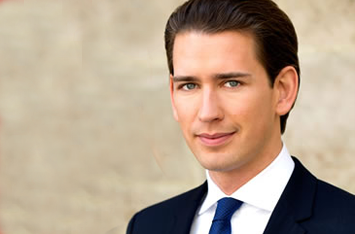
Sebastian Kurz , Minister for Foreign Affairs and Integration of Austria (2016)

September 10, 2016 disabled comments

The number of journalists who fall victim to attacks, arbitrary detentions and even murder has increased substantially around the globe.

Austria thus supports the protection and safety of journalists at international level and speaks out in international fora against increasing restrictions on freedom of the press. Only recently, Austria’s commitment to promoting the safety of journalists has met.

This resolution calls for the immediate and unconditional release of all arbitrarily detained and arrested journalists and condemns attacks on media companies in the strongest possible terms. The text particularly highlights the special risks faced by journalists in the digital age and draws attention to the special problems faced by female journalists. This resolution is by far the strongest text that the UN Human Rights Council and the UN General Assembly have ever adopted on this topic. The fact that it was co-sponsored by more than 80 states and adopted by consensus underlines its significance and adds to its importance.

After this latest success, we will remain committed to supporting the safety of journalists as well as the protection of the freedom of the media and the press, and particularly in the context of Austria’s Chairmanship of the OSCE in 2017. In the context of the related efforts, we also seek to establish a link between a long-standing geographical priority of Austrian foreign policy, the Western Balkans, and substantive issues on Austria’s thematic agenda. In 2017 and in cooperation with the OSCE Representative on Freedom of the Media Dunja Mijatović, we therefore plan to host a conference on the safety of journalists in the Western Balkan countries.

One of the most important NGOs active in promoting freedom of the press in the Western Balkans and in Central Europe is the South East European Media Organisation (SEEMO). Since its inception, this organisation has launched numerous initiatives that have succeeded in supporting journalists in the free exercise of their profession. This makes SEEMO a particularly important partner of the Federal Ministry for Europe, Integration and Foreign Affairs in the region. I am very pleased that SEEMO is continuing its valuable efforts and remains committed to promoting a free media landscape and wish the organisation every success for the future.

Sebastian Kurz , Minister for Foreign Affairs and Integration of Austria.

07/09/2016: SERBIA – SEEMO CRITICIZES RECENT MEDIA FREEDOM VIOLATIONS IN SERBIA

September 7, 2016 disabled comments

SERBIA, 07/09/2016

The South East Europe Media Organisation (SEEMO) expressed discontent after latest developments in hate speech and attacks against journalists in Serbia.

A high level official of the Democratic Party (DS) made statements on his Twitter account yesterday, 11 September, which could be interpreted as threats to journalists. While allegedly criticizing the current political situation in the country, The politician alluded that along with “bots” (supporters of the ruling party), certain journalists should also “be dragged out of their houses by their ears”.

Another incident provoked by political views occurred on Friday, 11 September, when Nedim Sejdinovic, President of the Independent Journalists’ Association of Vojvodina made comments about the political regime of the 1990’s in Serbia, at a round table in Sombor. He noted that key political players today and those from the past are similar and that the level of business, corruption and crime in political structures remained the same. After he was quoted, comment sections on several news portals filled up with defamatory statements, slurs and threats. Sejdinovic also received several threats from anonymous individuals on Facebook, telling him allegedly to “leave while he can” and threatening his life and safety.

“We call on authorities to not only protect media workers that are being threatened and attacked, but also penalize those who amongst them that, as politicians, see it fit to use hate speech and endanger the safety of journalists. Institutions in Serbia must not tolerate either of these media freedom violations” SEEMO Secretary General Oliver Vujovic said.

SEEMO is a network of editors, media executives and leading journalists in South, East and Central Europe and its press freedom work is supported by the European Centre for Press and Media Freedom (ECPMF) project, as part of a grant by the European Commission.

06/09/2016: TURKEY – SEEMO CONCERNED BY MEDIA SITUATION IN TURKEY

September 6, 2016 disabled comments

Vienna, 06/09/2016

The South East Europe Media Organisation (SEEMO) harshly condemned the behaviour of Turkish authorities, after they confiscated video footage of an interview conducted between a Turkish minister and Deutsche Welle talk show host Michel Friedman.

Friedman, who hosts the talk show Conflict Zone, conducted an interview with the minister on 5 September in Ankara as a follow-up story on the failed coup attempt in Turkey on 15 July. The host asked the minister about the aftermath of the coup, including mass arrests and layoffs, the state of women’s rights, the current media situation in the country and some other questions.

The interview was previously scheduled to air on Conflict Zone, but as soon as it was finished, the minister’s press officer forbade Deutsche Welle from broadcasting the material. When Friedman protested this decision, the footage was confiscated by ministry employees.

The Youth and Sports Ministry of Turkey denied confiscating the material. “The team …gave us the unauthorized recordings.”, was officially said, According to the Turkish officials, the interview was not authorized because of “loss of impartiality” by the German journalist.

On the same day, two journalists were detained by authorities during an unauthorized rally in Ankara. Freelancer Can Ozen and Dicle News Agency reporter Mehmet Kurnaz were arrested while present at the rally, organized by the Kurdish political party HDP. The demonstrations were held in support of Abdullah Ocalan, an imprisoned leader of the Kurdish Workers Party (PKK).

SEEMO also supports calls made by the European Federation of Journalists, asking that Evrensel daily reporters Cemil Ugur and Halil Ibrahim Polat be released immediately. The two journalists were arrested on 23 August, after reporting about the ‘freedom watch’ organized in the province of Mersin, also held for imprisoned PKK leader Ocalan. So far, no information has been provided by authorities about the condition of the journalists.

SEEMO is a network of editors, media executives and leading journalists in South, East and Central Europe and its press freedom work is supported by the European Centre for Press and Media Freedom (ECPMF) project, as part of a grant by the European Commission.


06/09/2016: BELARUS – SEEMO CONDEMNS LACK OF PROFESSIONALISM BY PUBLIC BROADCASTER IN BELARUS

September 6, 2016 disabled comments

Vienna, 06/09/2016

The South East Europe Media Organisation (SEEMO) expressed condemnation of a recent ruling by the Supreme Court in Belarus against blogger and photographer Anton Matolka.

Matolka filed a lawsuit against the Belarusian TV and Radio Company (BT) several months ago, after the station used one of his photographs without his consent. The photo of polar lights, which Matolka took in 2015, was used in breach of copyright. The blogger initially demanded a high financial moral damage, but in the course of the hearing he reduced the amount to a symbolic 0.01 kopeks’ compensation.

The court ruled against Matolka and the decision cannot be appealed. Matolka has to pay 450 BYN (205 EUR) in court fees, and an additional 89,40 BYN (41 EUR) to the court-appointed expert.

‘SEEMO urges the relevant authorities to uphold the intellectual property rights of Anatol Matolka in this case,’ said SEEMO Secretary General Oliver Vujovic. ‘As the creator of the original image in question, he is entitled to the protection of its use’.

SEEMO is a network of editors, media executives and leading journalists in South, East and Central Europe and its press freedom work is supported by the European Centre for Press and Media Freedom (ECPMF) project, as part of a grant by the European Commission.

03/09/2016: GREECE – SEEMO CONCERNED BY NEW MEDIA REGULATION IN GREECE

September 3, 2016 disabled comments

Vienna, 03/09/2016

The South East Europe Media Organisation (SEEMO) is concerned by a recent government cut backs of the number of television channels operating in the country.

On 2 September Greece offered only four broadcasting licenses to channels, claiming that this will help regulate the sector and allow it to stay viable, given that it is already in debt. The number of permits is also said to have been based on advertising industry estimates. Once all four broadcasters are chosen, each will have two weeks to pay the first portion of the required sum, based on the outlet’s profits.

However, the fact that only four licenses are being offered means that several of the eight private channels broadcasting nationwide will have to shut down. The regulation is being criticized as a gag order that will curb free speech and put thousands of people out of work. The four licences were won by three ship owners and a construction tycoon.

‘SEEMO is concerned that the recently announced cutbacks in Greece will endanger media plurality,’ said SEEMO General Secretary Oliver Vujovic. ‘Having access to a range of broadcasters is essential in any democratic society so that citizens have enough information to form independent opinions and make informed political choices. SEEMO supports a regulation of the media market in Greece, including very important system of licences for all TV channels, but the system and selection should be transparent and made in cooperation with journalist and media associations and according to international standards”.

SEEMO is a network of editors, media executives and leading journalists in South, East and Central Europe and its press freedom work is supported by the European Centre for Press and Media Freedom (ECPMF) project, as part of a grant by the European Commission.

02/09/2016: TURKEY – SEEMO CALLS FOR RELEASE OF JOURNALIST IN TURKEY

September 2, 2016 disabled comments

Vienna, 02/09/2016

The South East Europe Media Organisation (SEEMO) calls for the release of Lindsey Snell, an American journalist who was detained while travelling to Turkey from Syria.

Snell, a video journalist currently residing in Istanbul, Turkey, was detained by police on 7 August after escaping a terrorist group in Syria. Snell had gone to Syria to film, and was allegedly held hostage for two weeks. According to her spouse, Snell’s apartment in Istanbul was raided by police on 22 August, and her laptop, hard disc, video camera and other materials were confiscated. Her husband was also detained for two days, under suspicion that he had tried to destroy evidence in the journalist’s apartment, and was involved in the failed coup attempt in Turkey on 15 July.

SEEMO members call on authorities in Turkey to immediately release Lindsey Snell. Incarcerating investigative journalists in conflict zones only worsens and intensifies the atmosphere of censorship and media violations in the region. Media workers must be allowed to do their job professionally and freely, without pressure or fear of censorship.

SEEMO is a network of editors, media executives and leading journalists in South, East and Central Europe and its press freedom work is supported by the European Centre for Press and Media Freedom (ECPMF) project, as part of a grant by the European Commission.


30/08/2016: TURKEY – SEEMO APPALLED BY DETERIORATION OF RIGHTS IN TURKEY

August 30, 2016 disabled comments

Vienna, 30/08/2016

The South East Europe Media Organisation (SEEMO) was appalled by recent incidents in Turkey.

On 28 August, Turkish police forces raided the premises of Azadiya Welat, a Kurdish-language daily in the city of Diyarbakir. Following the search, over 23 staff members were arrested and detained, deprived of their phones and IDs, and were held in the Diyarbakir Police headquarters. A child that was visiting the offices was also taken into custody. Reports say the justification behind the raid were alleged ‘illegal organizational meetings held at the premises’.

It was revealed that release demands for Sahin Alpay, Lale Kemal, Ali Bulac and over 40 other journalists arrested on 31 July have been rejected. Following the aftermath of the coup attempt in Turkey on 15 July, media workers were charged for allegedly being members of a terrorist organization, and were detained. The Judiciary Court in Istanbul rejected the release pleas, claiming that no new evidence has surfaced which would justify their release.

On 30 August The Radio and Television Supreme Council (RTUK suspended Izgur Gun, a local news outlet in Turkey. Aside from having its website repeatedly blocked in the previous months, the station was fined for allegedly broadcasting terrorist propaganda on 27 August.

‘The persecution of journalists working in Turkey has reached devastating levels,’ said SEEMO Secretary General Oliver Vujovic. ‘SEEMO calls for the release of journalists who have been imprisoned simply for doing their jobs’.

SEEMO is a network of editors, media executives and leading journalists in South, East and Central Europe and its press freedom work is supported by the European Centre for Press and Media Freedom (ECPMF) project, as part of a grant by the European Commission.