12.09.2024 – Offensive Comments Towards Jugmedia Editor by a High Level Public Official in Leskovac in Serbia

12.09.2024 – Offensive Comments Towards Jugmedia Editor by a High Level Public Official in Leskovac in Serbia

September 12, 2024 disabled comments

Ivanović also recounted a recent press conference where she was prevented from asking questions. This person allegedly waved documents that supposedly detailed the funding Jugmedia had received over the past decade, further escalating the confrontation. Ivanović firmly denied these allegations, stating they were baseless and aimed at discrediting her and the portal.

This individual’s behavior is not only offensive but also contrary to the ethical standards expected of public officials. According to the Code of Conduct for Leskovac officials, they are required to act with respect and civility, treating media representatives without discrimination. The code explicitly states that an official must not behave in any manner that could degrade the reputation of the office they hold, either in public or in private life.

This incident underlines the need for public figures to respect both the press and the ethical guidelines that govern their behavior, ensuring a respectful and professional relationship with the media.

The South East Europe Media Organisation (SEEMO) condemns the derogatory remarks made by a public official in Leskovac against Milica Ivanović, editor of Jugmedia, and views these actions as a direct attack on press freedom and journalistic integrity. Such behavior from a public official is unacceptable and undermines the role of independent media. SEEMO will be closely monitoring this situation to ensure that press freedom is respected and that journalists can work without fear of personal attacks or intimidation. SEEMO supports also the Association of Journalists of Serbia (Udruženje novinara Srbije – UNS) that reported on this case.

South East Europe Media Organisation (SEEMO) is a regional non-governmental, non profit network of editors, media executives and leading journalists in Southeast, South, East and Central Europe. SEEMO members are in Albania, Armenia, Azerbaijan, Belarus, Bosnia-Herzegovina, Bulgaria, Croatia, Cyprus, Czech Republic, Estonia, Georgia, Greece, Hungary, Kazakhstan, Kosovo, Kyrgyzstan, Latvia, Lithuania, Malta, Moldova (with the territory of Transdnestria), Montenegro, North Macedonia, Poland, Romania, Russia, Serbia, Slovakia, Slovenia, Tajikistan, Turkmenistan, Türkiye / Turkey, Ukraine and Uzbekistan. Austria, Italy, Vatican and San Marino have a special status in SEEMO. SEEMO has over 3000 individual members, and additional media as corporate members.

#fyp #mediafreedom #seemo #freespeech #southeasteuropemediaorganisation #ngo #journalist #serbia #leskovac #jugmedia #milicaivanovic #journalistattacked #journalistthreat #SEEMO #pressfreedom #mediafreedom #freemedia
11.09.2024 – Croatian Journalists’ Association Urges Government to Decriminalize Defamation and Combat SLAPP Lawsuits

September 11, 2024 disabled comments

The Croatian Journalists’ Association (Hrvatsko Novinarsko Društvo – HND – https://hnd.hr/) is intensifying its demands for the government to decriminalize defamation offenses against honor and reputation.

During a recent press conference, Hrvoje Zovko, President of HND, emphasized the organization’s long-standing call for the removal of these offenses from Croatia’s Criminal Code. He argued that doing so would significantly reduce the pressure of lawsuits, particularly Strategic Lawsuits Against Public Participation (SLAPP) suits, which are frequently used to intimidate journalists and the media.

Zovko highlighted that while HND welcomes the formation of expert groups focused on addressing SLAPP lawsuits, the association’s primary demand remains unchanged, the decriminalization of defamation-related offenses. According to Zovko, little progress has been made in this area, and he called on the Ministry of Culture and Media, along with the Ministry of Justice, to prioritize the decriminalization of these offenses if they genuinely care about reducing judicial persecution of journalists. Croatia, Zovko noted, ranks among the worst in Europe when it comes to the number of lawsuits against journalists, with judges themselves frequently acting as plaintiffs.

He also pointed out that journalists in Croatia face double legal jeopardy for published work, as they are often sued in both civil and criminal courts. Despite the fact that the Media Act, which has been in force for two decades, stipulates that publishers are responsible for what is published, private plaintiffs frequently target individual journalists with lawsuits.

HND, in collaboration with the Center for Democracy and Law “MikoTripalo,” (Centar za demokraciju I pravo MikoTripalo – https://tripalo.hr/) conducted an analysis of 1,333 lawsuits filed between 2016 and 2023. The findings are concerning: over 40% of these cases exhibit at least one SLAPP indicator, demonstrating that the number of SLAPP suits is alarmingly high. This directly contradicts claims by the Ministry of Culture and Media, as well as the Ministry of Justice, that SLAPP lawsuits are infrequent in Croatia.

The South East Europe Media Organisation (SEEMO) stands in full support of the Croatian Journalists’ Association (HND) in their call for the decriminalization of defamation offenses and the fight against SLAPP lawsuits in Croatia. SEEMO believes that decriminalizing defamation is a crucial step towards safeguarding press freedom and ensuring that journalists can perform their duties without fear of judicial harassment. SLAPP lawsuits are a dangerous tool used to intimidate and financially burden journalists, threatening the very foundation of free expression. SEEMO urges the Croatian government to align with international standards, prioritize media freedom, and implement necessary reforms to protect journalists from legal abuses.

SEEMO is alarmed that defamation remains a criminal offence in Croatia. SEEMO urges urges Croatian Parliament to decriminalize insult and defamation in Article 147 and 149 of the Criminal Code (https://mpudt.gov.hr/pristup-informacijama-6341/zakoni-i-ostali-propisi/zakoni-i-propisi-6354/kazneno-pravo/kazneni-zakon/6602?impaired=1). The Criminal Code of Croatia penalises insult and defamation – .presenting or disseminating untrue facts about a person before a third party that may harm that person’s honor or reputation.

SEEMO presented the need for decriminalization in the past years in meetings to several state officials, including ministers and it was always promised by state officials that the problem will be solved, but nothing happened.

South East Europe Media Organisation (SEEMO) is a regional non-governmental, non profit network of editors, media executives and leading journalists in Southeast, South, East and Central Europe. SEEMO members are in Albania, Armenia, Azerbaijan, Belarus, Bosnia-Herzegovina, Bulgaria, Croatia, Cyprus, Czech Republic, Estonia, Georgia, Greece, Hungary, Kazakhstan, Kosovo, Kyrgyzstan, Latvia, Lithuania, Malta, Moldova (with the territory of Transdnestria), Montenegro, North Macedonia, Poland, Romania, Russia, Serbia, Slovakia, Slovenia, Tajikistan, Turkmenistan, Türkiye / Turkey, Ukraine and Uzbekistan. Austria, Italy, Vatican and San Marino have a special status in SEEMO. SEEMO has over 3000 individual members, and additional media as corporate members.

#fyp #mediafreedom #seemo #freespeech #southeasteuropemediaorganisation #ngo #journalist #croatia #hnd #slapp#SEEMO #pressfreedom #mediafreedom #freemedia
10.09.2024 – Death Threats Against Croatian Journalist Jurica Gašpar Spark Outcry and Calls for Justice

September 10, 2024 disabled comments

On 4 September 2024, Jurica Gašpar, founder and editor-in-chief of the news portal Morski.hr (https://www.morski.hr/), received multiple death threats via WhatsApp and Facebook. The Morski.hrportal is specialized in maritime reporting.

These threats were allegedly in response to his critical reporting on maritime issues. The threats ranged from derogatory comments to explicit messages of physical harm. One allegedly WhatsApp message read: “Shame on you, scumbags, especially Gašpar… you attacked us, and we are the biggest ambassadors of Croatia. I’m done with you… suckers.” According to Gašpar, the same individual, whose identity was visible in the messages, attempted to harass the newsroom with numerous phone calls, which were ignored. On Facebook, two other threatening messages implied physical violence and death.

Due to the severity of these threats, Gašpar and his team were forced to seek refuge in a safe location. The Morski.hr editorial team issued a public statement, urging authorities to ensure the safety of their journalists and bring those responsible to justice. This situation escalated after the portal reported on 1 September 2024 that an association had arranged a meeting with a public relations agency to counteract negative coverage of Morski.hr. During this meeting allegedly ship owners discussed cooperation in order to promote them in certain media and “marginalize” Morski.hr and its “negative coverage”. After the meeting threats started, with a message in a WhatsApp group, in which it was proposed to collect money for someone who will kidnap Gašpar “in the trunk”. At least ten people allegedly joined the initiative.

A leaked allegedly recording from the forwarders’ meeting revealed that a PR professional with alleged political connections had planned to use their influence to promote a favorable image of the shipping industry while undermining Morski.hr’s credibility. This revelation underscores the ongoing challenges faced by independent journalism in Croatia, where media freedom is increasingly threatened by vested interests.

The South East Europe Media Organisation (SEEMO) condemns the death threats made against Jurica Gašpar, the editor-in-chief of Morski.hr, and stands in solidarity with all journalists facing intimidation for their work in Croatia. SEEMO calls on the relevant authorities to investigate these threats with the utmost seriousness and to ensure the safety of Gašpar and his colleagues. SEEMO will be closely monitoring this situation and will continue to advocate for press freedom and the protection of journalists across the region.

South East Europe Media Organisation (SEEMO) is a regional non-governmental, non profit network of editors, media executives and leading journalists in Southeast, South, East and Central Europe. SEEMO members are in Albania, Armenia, Azerbaijan, Belarus, Bosnia-Herzegovina, Bulgaria, Croatia, Cyprus, Czech Republic, Estonia, Georgia, Greece, Hungary, Kazakhstan, Kosovo, Kyrgyzstan, Latvia, Lithuania, Malta, Moldova (with the territory of Transdnestria), Montenegro, North Macedonia, Poland, Romania, Russia, Serbia, Slovakia, Slovenia, Tajikistan, Turkmenistan, Türkiye / Turkey, Ukraine and Uzbekistan. Austria, Italy, Vatican and San Marino have a special status in SEEMO. SEEMO has over 3000 individual members, and additional media as corporate members.

#fyp #mediafreedom #seemo #freespeech #southeasteuropemediaorganisation #ngo #journalist #croatia #morski.hr #JuricaGašpar #journalistattacked #journalistthreat #SEEMO #pressfreedom #mediafreedom #freemedia
06.09.2024 – Turkish Woman Faces Trial After Arrest for Criticizing President Erdoğan in Street Interview

September 6, 2024 disabled comments

Turkish authorities arrested Dilruba Y for her comments criticizing President of Türkiye / Turkey Recep Tayyip Erdoğan during a street interview in İzmir, Türkiye / Turkey. Her interview was published on 9 August 2024, on the YouTube channel called Tüylü Mikrofon (www.youtube.com/@Tüylümikrofon).

Her remarks led to charges of “inciting hatred and enmity among the public” and “insulting the president.” On 12 August 2024 she was remanded in custody at Şakran Women’s Closed Prison in Izmir, with the indictment swiftly accepted by the court. Her trial has been scheduled for 3 September 2024.

Her criticism centered around the huge executive powers granted to Erdoğan under Türkiye / Turkey presidential system, connected to the recent ban on Instagram in Turkey / Türkiye. The state official Information and Communication Technologies Authority (BTK) imposed on 2 August 2024 a nine-day ban on Instagram following the platform’s restriction of messages from Turkish officials. Instagram is one of the most used social media platforms in Türkiye / Turkey

Opposition figures condemned her arrest as part of a broader suppression of free speech in Türkiye / Turkey. Representatives from the Good Party (İ) and the Republican People’s Party (Cumhuriyet Halk Partisi – CHP) visited Dilruba in prison, denouncing her detention as an example of the government’s political use of the judiciary.

The case against Dilruba Y. arose after Türkiye / Turkey broadcasting watchdog, the Radio and Television Supreme Council (RadyoveTelevizyonÜstKurulu – RTÜK – https://www.rtuk.gov.tr/en), condemned street interviews aired on social media as “manipulating public opinion.” Her trial will proceed on charges of inciting public hatred and insulting the president. Despite a court ruling dropping one of the charges, she remains detained and her legal battle continues.

The South East Europe Media Organisation (SEEMO) condemns the arrest and prosecution of DilrubaY. for expressing her views during a street interview in İzmir, Türkiye / Turkey. Street interviews are important for getting views of individuals and citizen opinions in every democratic country. Silencing critical voices through legal action is an unacceptable violation of freedom of speech and an alarming trend in Türkiye / Turkey ongoing suppression of critical voices. SEEMO calls for her immediate release and will closely monitor the case to ensure that justice is upheld, and press freedom is protected in Türkiye / Turkey.

South East Europe Media Organisation (SEEMO) is a regional non-governmental, non profit network of editors, media executives and leading journalists in Southeast, South, East and Central Europe. SEEMO members are in Albania, Armenia, Azerbaijan, Belarus, Bosnia-Herzegovina, Bulgaria, Croatia, Cyprus, Czech Republic, Estonia, Georgia, Greece, Hungary, Kazakhstan, Kosovo, Kyrgyzstan, Latvia, Lithuania, Malta, Moldova (with the territory of Transdnestria), Montenegro, North Macedonia, Poland, Romania, Russia, Serbia, Slovakia, Slovenia, Tajikistan, Turkmenistan, Türkiye / Turkey, Ukraine and Uzbekistan. Austria, Italy, Vatican and San Marino have a special status in SEEMO. SEEMO has over 3000 individual members, and additional media as corporate members.

#fyp #mediafreedom #seemo #freespeech #southeasteuropemediaorganisation #ngo #journalist #turkey #SEEMO #pressfreedom #mediafreedom #freemedia
04.09.2024 – Journalist Ahmed Ibrohim Arrested in Tajikistan Amid Accusations of Bribery and Alleged Set-Up

September 4, 2024 disabled comments

Ahmad / Ahmadi Ibrohim (Аҳмади Иброҳим), a 62 years old journalist and editor-in-chief of the newspaper “Payk,” (Пайк) was arrested by law enforcement in the Khatlon (Вилояти Хатлон) region of Tajikistan on 12 August 2024.Ibrohim is accused of attempting to bribe a government official, leading to a criminal case under Article 320 of the Tajik Criminal Code, which carries a potential prison sentence of up to 10 years.

Critical voices in the country suggest that the arrest allegedly may have been a setup orchestrated by a The Committee for State Security (Комитет государственно й безопасности – КГБ – KGB) officer, who allegedly had been in close contact with Ibrohim for several months, allegedly offering to resolve issues related to “Payk’s” operating license.

According to local sources, a person repeatedly promised to secure the license renewal and eventually requested 2,500 TJS (approximately 212 EUR) to facilitate the process. When Ibrohim provided the money, he was arrested.

The charges against Ibrohim were later modified, accusing him of attempted bribery under Article 32, Part 3, and Article 320, Part 2 of the Criminal Code. These charges suggest an incomplete criminal act, but they still carry severe penalties, including fines and long prison sentences.

While Tajik authorities have not officially confirmed the arrest, Ibrohim’s colleagues believe the journalist has become a victim of a deliberate scheme aimed at silencing him. They emphasize that Ibrohim has been critical of local officials in the Khatlon region and the city of Kulob, where “Payk” operates. A friend stated that Ibrohim never actively offered a bribe, but instead was misled into giving money under false pretenses.

Ibrohim’s work has previously attracted threats from extremist groups. His critical articles about extremism led to threats. Despite these threats, Ibrohim continued to write and expose issues in the region. He also published several books.

Ibrohim founded in 2012 “Payk,” which is the only independent newspaper in the Khatlon region. However, “Payk” has faced multiple obstacles over the years, including financial difficulties and temporary shutdowns by authorities. Ibrohim’s previous battles with the authorities also included a 2014 incident in which the Khatlon Prosecutor’s Office temporarily suspended the newspaper’s operations due to a licensing issue.

This arrest raises significant concerns about the state of press freedom in Tajikistan, where multiple journalists have been jailed in recent years. The reasons cited for their imprisonment range from extremism to bribery, but many local and international observers believe the real motive is to silence critical voices in the media.

The South East Europe Media Organisation (SEEMO) will closely monitor the situation surrounding Ahmad Ibrohim’s arrest and ongoing legal proceedings. SEEMO is committed to ensuring that his case, along with similar instances of repression against journalists, receives the attention it deserves andthat the fundamental rights of media professionals are upheld.

South East Europe Media Organisation (SEEMO) is a regional non-governmental, non profit network of editors, media executives and leading journalists in Southeast, South, East and Central Europe. SEEMO members are in Albania, Armenia, Azerbaijan, Belarus, Bosnia-Herzegovina, Bulgaria, Croatia, Cyprus, Czech Republic, Estonia, Georgia, Greece, Hungary, Kazakhstan, Kosovo, Kyrgyzstan, Latvia, Lithuania, Malta, Moldova (with the territory of Transdnestria), Montenegro, North Macedonia, Poland, Romania, Russia, Serbia, Slovakia, Slovenia, Tajikistan, Turkmenistan, Türkiye / Turkey, Ukraine and Uzbekistan. Austria, Italy, Vatican and San Marino have a special status in SEEMO. SEEMO has over 3000 individual members, and additional media as corporate members.

#fyp #mediafreedom #seemo #freespeech #southeasteuropemediaorganisation #ngo #journalist #tajikistan #AhmadIbrohim #Payk #journalistarrested#SEEMO #pressfreedom #mediafreedom #freemedia
02.09.2024 – Belarusian Presidental Pardon to Ksenia Lutskina, Dzmitry Luksha and Palina Palavinka

September 2, 2024 disabled comments

Ksenia Lutskina (Ксенія Луцкіна), a Belarusian journalist, was released from prison following a presidential pardon issued by Aleksandr Lukashenka (Аляксандр Лукашэнка) on 16 August 2024. Lutskina was among a group of political prisoners suffering from severe health conditions, whose release was portrayed by the regime as an act of leniency.

During her imprisonment, Lutskina’s health deteriorated significantly. Despite her freedom, the circumstances surrounding her release highlight the ongoing repression in Belarus, where journalists, activists, and opposition figures continue to face persecution.

Lutskina had been sentenced to eight years in prison for her involvement in the Coordination Council, a group formed in response to the contested 2020 presidential elections in Belarus. After working at the Belarusian State Television and Radio Company for 15 years, Lutskina joined the national strike at the broadcaster and resigned. She then collaborated with former colleagues to launch an independent YouTube channel aimed at providing alternative news coverage. Her efforts to promote free and independent journalism led to her arrest in December 2020, where she was charged with conspiracy to seize power and later with large-scale tax evasion. She was charged according to the Art. 357 of the Criminal Code of Belarus.

Lutskina’s release came after her family petitioned for a pardon due to her deteriorating health. She expressed the emotional toll of writing the pardon request, describing it as the most challenging thing she had ever written. Upon her release, she expressed her joy at finally being able to reunite with her family, particularly her son. However, her health remains a concern.

On 3 July 2024 Belarusian freelance journalist Dzmitry Luksha (Дзмітрый Міхайлавіч Лукша ), born 1989, received a presidential pardon after serving 30 months of a four-year prison sentence. Also his wife Palina Palavinka (Паліна Палавінка), born 1989, received a presidential pardon. Luksha was arrested on 11 March 2022. Palavinka was arrested on 2 June 2022. On 2 December 2022, a Court in Minsk sentenced Dzmitry Luksha to four years in prison and a fine of 16,000 Belarusian rubles (about 5 825 EUR). Also on 2 December 2022 the Court sentenced Polina to two and a half years of prison

Dzmitry Luksha, Palina Palavinka, as well as Dzianis Yarouski and Kanstantsin Nikanorau were accused of «discrediting the Republic of Belarus» and «participating in mass protests». Dzmitry Luksha was found guilty under Article 369–1 of the Criminal Code and Article 342-1 of the Criminal Code. Palina Palavinka was charged under Article 16-6 and Article 369–1 of the Criminal Code and Article 342-1 of the Criminal Code

The South East Europe Media Organisation (SEEMO) welcomes the release of journalist KseniaLutskina, who had been unjustly imprisoned in Belarus for her courageous work in defending press freedom. SEEMO also welcomes the presidential pardon of journalist Dzmitry Luksha, who had been unjustly imprisoned, and his wife Palina Palavinka, who had been unjustly imprisoned. SEEMO remains deeply concerned about the broader situation of media repression in Belarus. SEEMO calls on the Belarusian authorities to end the persecution of journalists and immediately release all remaining journalists and political prisoners. True justice will only be served when freedom of the press is fully restored.

South East Europe Media Organisation (SEEMO) is a regional non-governmental, non profit network of editors, media executives and leading journalists in Southeast, South, East and Central Europe. SEEMO members are in Albania, Armenia, Azerbaijan, Belarus, Bosnia-Herzegovina, Bulgaria, Croatia, Cyprus, Czech Republic, Estonia, Georgia, Greece, Hungary, Kazakhstan, Kosovo, Kyrgyzstan, Latvia, Lithuania, Malta, Moldova (with the territory of Transdnestria), Montenegro, North Macedonia, Poland, Romania, Russia, Serbia, Slovakia, Slovenia, Tajikistan, Turkmenistan, Türkiye / Turkey, Ukraine and Uzbekistan. Austria, Italy, Vatican and San Marino have a special status in SEEMO. SEEMO has over 3000 individual members, and additional media as corporate members.

#fyp #mediafreedom #seemo #freespeech #southeasteuropemediaorganisation #ngo #journalist #belarus #KseniaLutskina#journalistreleased#SEEMO #pressfreedom #mediafreedom #freemedia
29.08.2024 – Albanian Sports Journalist Faces Online Threats Over T-Shirt Controversy

August 29, 2024 disabled comments

On 22 August 2024, Ervin Baku, a sports journalist for Albanian Radio Television (Radio TelevizioniShqiptar– RTSH – https://rtsh.al/), became the target of online harassment after appearing in a Euronews TV (https://www.euronews.rs/) interview wearing a T-shirt with a Serbian flag. The shirt, a gift from a Serbian coach, sparked widespread criticism on social media, leading Baku to clarify on air that his gesture was not intended to be provocative. Despite his apology, the backlash intensified, and Baku received numerous threatening messages, including death threats. He reported these threats to the State Police at the Regional Directorate in Tirana, Albania.

Baku has also filed a formal complaint with the State Police, naming individuals responsible for the threats and demanding accountability. The Union of Albanian Journalists (UnioniiGazetarëveShqiptarë – UGSH – https://unionigazetareve.com/), Albania’s largest organization of journalists, reaffirmed its solidarity with Baku..

The South East Europe Media Organisation (SEEMO) condemns the online harassment and death threats directed at Albanian sports journalist Ervin Baku. Such attacks on journalists represent a grave violation of press freedom and individual rights. SEEMO calls on the authorities in Albania to take immediate and decisive action to investigate these threats, ensure the safety of the journalist, and hold the perpetrators accountable. SEEMO will be closely monitoring this case to ensure that justice is served and to support the protection of journalists across the region.

We also consider those politicians in power in Southeast Europe responsible, who constantly welcome extreme ultra-nationalist attitudes or do not react after attacks. Instead of accepting that highlighting the national symbols of a neighboring country is normal and part of normal relations between countries, i.e. wearing a t-shirt with the flag or other symbols of a neighboring country, there is a negative reaction of certain individuals in the public under the influence of politics. As a result, unpleasant situations and even physical attacks on individuals occur. Here, it is necessary to urgently establish a culture of acceptance of diversity.

South East Europe Media Organisation (SEEMO) is a regional non-governmental, non profit network of editors, media executives and leading journalists in Southeast, South, East and Central Europe. SEEMO members are in Albania, Armenia, Azerbaijan, Belarus, Bosnia-Herzegovina, Bulgaria, Croatia, Cyprus, Czech Republic, Estonia, Georgia, Greece, Hungary, Kazakhstan, Kosovo, Kyrgyzstan, Latvia, Lithuania, Malta, Moldova (with the territory of Transdnestria), Montenegro, North Macedonia, Poland, Romania, Russia, Serbia, Slovakia, Slovenia, Tajikistan, Turkmenistan, Türkiye / Turkey, Ukraine and Uzbekistan. Austria, Italy, Vatican and San Marino have a special status in SEEMO. SEEMO has over 3000 individual members, and additional media as corporate members.

#fyp #mediafreedom #seemo #freespeech #southeasteuropemediaorganisation #ngo #journalist #albania #ErvinBaku #RTSH #journalistattacked#SEEMO #pressfreedom #mediafreedom #freemedia
27 August 2024: Türkiye: Sentence for Journalist Bülent Mumay

August 27, 2024 disabled comments

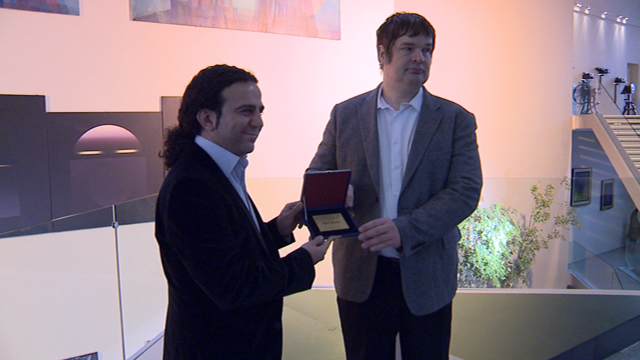
The South East Europe Media Organisation (SEEMO) has named Bülent Mumay, as the winner of the 2013 SEEMO Human Rights Award.
more: https://seemo.org/human-rights-2013/.
The award was presented to Bülent Mumay by Oliver Vujovic, SEEMO’s secretary-general, on 4 December 2013 in Istanbul.

The International Press Institute (IPI) and the undersigned freedom of the press and expression organisations denounce the decision by a Turkish appeals court to uphold the 20-month prison sentence against renowned journalist Bülent Mumay. This verdict represents a severe assault on press freedom and freedom of expression in Türkiye, further eroding the foundations of democratic discourse in the country.

We urgently call on Turkish authorities to end their harassment of critical journalists. Mumay’s case is emblematic of the systematic repression of independent journalism in Türkiye. Mumay’s only legal recourse is to file an individual application to the Constitutional Court, which should overturn this ruling.

The chronology leading to this verdict is deeply alarming:

On 6 May, 2023, Mumay was sentenced to 20 months in prison for his social media posts about a pro-government construction company’s seizure of Istanbul Municipality’s subway funds through a court during the period of time when the ruling party headed the municipality. The journalist appealed the sentence, but the appeal was rejected.
A Turkish court ordered to block access to his tweet, which alleged that the contractors were government-affiliated, following a complaint from Metin Güneş, the owner of the company.
On 20 May, 2024, further attempts to censor his reporting were made when a Turkish court ordered Twitter to remove another tweet about the same issue. On 20 August, 2024, an appeals court upheld the 20-month prison sentence. The court also ordered the Information and Communication Technologies Authority (BTK) to block access to news reports about the upheld prison sentence. At this point, Mumay’s only remaining legal recourse is to file an individual application to the Constitutional Court. The charges against Mumay, which include ‘illegally obtaining or disseminating personal data’, are a thinly-veiled attempt to silence critical journalism. The verdict, coupled with repeated censorship, demonstrates the escalating pressure on press freedom in Türkiye. It sends a chilling message to journalists seeking to report on matters of public interest, especially those involving politically connected entities.

Mumay’s case is not an isolated incident but part of a broader pattern of judicial harassment and censorship targeting Türkiye’s independent media. It highlights the urgent need for international attention to protect press freedom and the public’s right to information.

Ongoing harassment of independent journalists The persecution of Bülent Mumay exemplifies a widespread campaign of intimidation against journalists in Türkiye. The government employs a persistent approach to stifling investigative reporting, utilising legal intimidation, censorship, and financial coercion. Recent incidents emphasise the gravity of this trend:

Legal Persecution: BirGün journalists İsmail Arı and Timur Soykan face investigations for their books on organized crime and corruption, with authorities seeking fines and book seizures in what are clear attempts to curb investigative journalism.

Censorship: A Turkish court ordered the Information and Communication Technologies Authority (BTK) to block access to a news report by journalist İsmail Saymaz on the controversial appointment of Assoc. Prof. Miyase Koyuncu Kaya as Türkiye’s Education Attaché in The Hague, Netherlands, replacing her husband.

Financial Pressure: The systematic censorship of investigative journalism by the government has created an environment where even criminals feel emboldened to target journalists. A striking example is the lawsuit filed by drug lord Duax Ngakuru against Timur Soykan and Kırmızı Kedi Publishing, demanding 350,000 TL in damages and the withdrawal of the book Baron Invasion, which describes the activities of crime syndicates in Türkiye and explains why global mafias are flocking to Türkiye. This showcases the financial tools being used to intimidate journalists and publishers.

These cases illustrate the multifaceted assault on press freedom in Türkiye. Journalists covering matters of public interest face legal consequences, censorship, and financial ruin. This coordinated campaign endangers democratic principles and threatens the public’s right to be informed.

The undersigned organizations demand that instead of punishing journalists for informing the public, Türkiye’s judiciary should hold accountable those violating press freedom in the country. It is essential that journalists be allowed to perform their vital role in society without fear of retribution.

This statement was produced by IPI as part of the Media Freedom Rapid Response (MFRR), a Europe-wide mechanism which tracks, monitors and responds to violations of press and media freedom in EU Member States and candidate countries, funded by the European Commission.

Signed:

International Press Institute (IPI)
ARTICLE 19 Europe
Articolo 21
Association of Journalists, Ankara
European Centre for Press and Media Freedom (ECPMF)
Foreign Media Association Turkey (FMA)
IFEX
Media and Law Studies Association (MLSA)
Osservatorio Balcani Caucaso Transeuropa (OBCT)
PEN International
PEN America
PEN Canada
PEN Norway
Platform for Independent Journalism (P24)
Progressive Journalists Association (ÇGD)
South East Europe Media Organisation (SEEMO)
Swedish PEN
The European Federation of Journalists (EFJ)
Turkey’s Journalists’ Union (TGS)

in Turkish language:

Türkiye: Basın ve ifade özgürlüğü kuruluşları gazeteci Bülent Mumay’a verilen hapis cezasının onanmasını kınıyor Uluslararası Basın Enstitüsü (IPI), aşağıda imzası bulunan basın ve ifade özgürlüğü kuruluşlarıyla birlikte gazeteci Bülent Mumay’a verilen 20 aylık hapis cezasının onanmasını kınıyor. Bu karar, Türkiye’de gazetecilerin özgürce haber yapma hakkını tehdit ediyor. Aynı zamanda, halkın doğru bilgiye ulaşmasını zorlaştırarak demokrasinin işleyişini olumsuz etkiliyor.
Türkiye’deki yetkililere, gazetecilere yönelik tacize son vermeleri için acil çağrıda bulunuyoruz. Mumay’ın davası, Türkiye’de bağımsız gazeteciliğe yönelik sistematik baskının son örneklerinden biridir ve bu durum giderek artan bir eğilim olarak ciddi endişelere yol açmaktadır. Mumay’a verilen hapis cezasının onanmasına uzanan süreçte yaşananlar endişe vericidir:

6 Mayıs 2023’te Mumay, bir inşaat firmasının İstanbul Büyükşehir Belediyesi’nin (İBB) metro kredisine haciz koydurması ile ilgili sosyal medya paylaşımları nedeniyle 20 ay hapis cezasına çarptırıldı. Gazeteci karara itiraz etti, ancak itirazı reddedildi. Mumay’ın hükümetle bağlantılı müteahhitlerin sürece dahil olduğu iddialarını dile getiren tweet’i hızlıca engellendi.

20 Mayıs 2024’te, aynı konuyla ilgili başka bir tweet’ine erişim engeli getirilerek habercilik faaliyetlerini sansürleme girişimleri devam etti. 20 Ağustos 2024’te, istinaf mahkemesi 20 aylık hapis cezasını onadı. Onaylanan hapis cezasıyla ilgili haberlere erişim engellendi. Bu aşamada Mumay’ın tek seçeneği Anayasa Mahkemesi’ne bireysel başvuruda bulunmak. Mumay’a yöneltilen “kişisel verileri hukuka aykırı şekilde ele geçirme veya yayma” suçlamaları, araştırmacı gazeteciliği sindirme stratejisinin
bir sinyalidir. Hapis cezası kararı ve tekrarlanan sansür, Türkiye’de basın özgürlüğü üzerinde artan baskıyı gözler önüne sermekte ve siyasi bağlantılı yapılarla ilgili kamu yararına haber yapmak isteyen gazeteciler üzerinde caydırıcı bir etkiye yol açmaktadır.
Mumay’ın davası tekil bir örnekten ziyade Türkiye’de bağımsız medyaya yönelik kapsamlı bir yargı tacizi ve sansür uygulamasının parçasıdır. Bu durum, basın özgürlüğü ve halkın bilgi alma hakkının korunmasının uluslararası düzeyde daha fazla gündem teşkil etmesi gerekliliğine işaret etmektedir.

Bağımsız Gazetecilere Yönelik Süregelen Baskı Bülent Mumay’a yönelik sansür ve hapis cezası kararı, Türkiye’deki gazetecilere yönelik yaygın bir yıldırma politikasının son
örneklerindendir. Hükümet, araştırmacı gazetecileri susturmak için davalarla gözdağı, sansür ve finansal baskı gibi yöntemlerle ısrarlı bir tutum sergilemektedir. Yakın zamanda yaşanan gelişmeler bu eğilimin ciddiyetini vurgulamaktadır: Yasal Cezalandırma: BirGün gazetesi yazarları İsmail Arı ve Timur Soykan, organize suç ve yolsuzluk hakkındaki kitapları nedeniyle soruşturmalarla karşı karşıya kaldı ve kitaplarının toplatılması talep edildi. Bu, araştırmacı gazeteciliği engellemeye yönelik açık girişimlerden biri oldu.

Sansür: Gazeteci İsmail Saymaz’ın, Milli Eğitim Bakanlığı Hollanda Lahey ğitim Ataşeliği görevinden ayrılan Doç. Dr. Niyazi Kaya’nın yerine eşi Doç. Dr. Miyase Koyuncu Kaya’nın atanmasıyla ilgili haberine erişim engeli getirildi. Finansal Baskı: Hükümetin araştırmacı gazeteciliğe yönelik sistematik sansürü, suçluların bile gazetecileri hedef alma cesaretini bulduğu bir ortam yarattı. Çarpıcı bir örnek, uyuşturucu baronu Duax Ngakuru’nun Timur Soykan ve Kırmızı Kedi Yayınevi’ne karşı açtığı, 350.000 TL tazminat ve Baron İstilası kitabının toplatılmasını talep eden dava oldu. Bu dava, gazetecileri sindirmek için kullanılan finansal baskıyı gözler önüne serdi. Bu vakalar, Türkiye’de basın özgürlüğüne yönelik çok yönlü saldırıyı göstermektedir. Kamuyu ilgilendiren gerçekleri gün yüzüne çıkaran gazeteciler davalar, sansür ve mali yıkımla karşı karşıya kalmaktadır.
Bu uygulamaların tümü, demokratik ilkeleri tehlikeye atmakta ve halkın bilgi edinme hakkını tehdit etmektedir.

Aşağıda imzası bulunan kuruluşlar, Türkiye’de yargının, kamuoyunu bilgilendirdikleri için gazetecileri cezalandırmak yerine, ülkede basın özgürlüğünü ihlal edenlerden hesap sormasını talep etmektedir.
Gazetecilerin toplum için kritik olan bu mesleği misilleme korkusu olmadan yerine getirmelerine izin verilmesi esastır.

Bu açıklama, Avrupa Komisyonu tarafından finanse edilen ve AB Üye Devletleri ile aday ülkelerdeki basın ve medya özgürlüğü ihlâllerini belgeleyen Avrupa çapında bir mekanizma olan Medya Özgürlüğü Acil Müdahale (MFRR) kapsamında Uluslararası Basın Enstitüsü (IPI) tarafından hazırlanmıştır.

İmzalayanlar:

Uluslararası Basın Enstitüsü (IPI)
ARTICLE 19 Avrupa
Articolo 21
Avrupa Basın ve Medya Özgürlüğü Merkezi (ECPMF)
Avrupa Gazeteciler Federasyonu (EFJ)
Çağdaş Gazeteciler Derneği (ÇGD)
Gazeteciler Cemiyeti, Ankara
Güney Doğu Avrupa Medya Örgütü (SEEMO)
IFEX
İsveç PEN
Medya ve Hukuk Çalışmaları Derneği (MLSA)
OBC Transeuropa
PEN Amerika
PEN Kanada
PEN Norveç
Punto24 Bağımsız Gazetecilik Derneği (P24)
Türkiye Gazeteciler Sendikası (TGS)
Uluslararası PEN
Yabancı Medya Derneği (FMA)

27.08.2024 – Türkiye / Turkey Journalist Evren Demirdaş Targeted After Reporting

August 27, 2024 disabled comments

Journalist Evren Demirdaş (@evrendemirdas35 /@demirdasevren35 ), since 2019 a correspondent for Sözcü (https://www.sozcu.com.tr/) in Elazığ, Türkiye / Turkey, has come under attack on social media after reporting on a company.

After Demirdaş published his report on 17 August 2024 detailing a recent contract of a company and public tenders awarded to the company, the verbal attacks started.

Demirdaş’s report was based on official data obtained from the Electronic Public Procurement Platform (EKAP).

Demirdaş pointed out that if the person who attacked him, believed the report contained inaccuracies, he could have pursued legal recourse, such as issuing a denial or filing a lawsuit. Instead, the person chose to target the journalist personally.

In a similar incident, Halk TV (https://halktv.com.tr/) reporter Ferit Demir was also verbally attacked for his coverage of this company. The trend of targeting journalists who report on sensitive topics has been on the rise in Türkiye / Turkey, raising concerns about press freedom in the country.

The South East Europe Media Organisation (SEEMO) condemns the personal attacks directed at journalist EvrenDemirdaş. Such actions are unacceptable and represent a clear attempt to intimidate and silence journalists who report on matters of public interest. SEEMO will be closely monitoring this case to ensure that the rights of journalists are protected and that those responsible for verbal attacks are held accountable.

South East Europe Media Organisation (SEEMO) is a regional non-governmental, non profit network of editors, media executives and leading journalists in Southeast, South, East and Central Europe. SEEMO members are in Albania, Armenia, Azerbaijan, Belarus, Bosnia-Herzegovina, Bulgaria, Croatia, Cyprus, Czech Republic, Estonia, Georgia, Greece, Hungary, Kazakhstan, Kosovo, Kyrgyzstan, Latvia, Lithuania, Malta, Moldova (with the territory of Transdnestria), Montenegro, North Macedonia, Poland, Romania, Russia, Serbia, Slovakia, Slovenia, Tajikistan, Turkmenistan, Türkiye / Turkey, Ukraine and Uzbekistan. Austria, Italy, Vatican and San Marino have a special status in SEEMO. SEEMO has over 3000 individual members, and additional media as corporate members.

#fyp #mediafreedom #seemo #freespeech #southeasteuropemediaorganisation #ngo #journalist #turkey #Sözcü #EvrenDemirdaş#SEEMO #pressfreedom #mediafreedom #freemedia
23.08.2024 – Montenegro Urged to Adopt National Media Freedom Act in Line with European Standards

August 23, 2024 disabled comments

Montenegro must urgently adopt its own Media Freedom Act to align with European Union standards and emphasize the critical role of independent media services in society, according to statements from the Association for Responsible and Sustainable Development (Udruženje za odgovorni i održivi razvoj – UZOR – https://uzor.me/), founded 2019, and the Association of Professional Journalists of Montenegro (Društvo profesionalnih novinara Crne Gore – DPNCG – https://dpncg.com/). According to UZOR and DPNCG representatives, this move is essential for the country’s continued progress on the path toward European integration.

They stressed that the adoption of several laws, including media laws, has been recognized through Montenegro’s attainment of Interim Benchmark Assessment Report (IBAR), signaling substantial progress in aligning with EU standards. Obtaining the IBAR represents a significant step in the EU integration process. IBAR represents an assessment of how much a candidate country has fulfilled the interim benchmarks in Chapter 23 – Judiciary and Fundamental Rights, and Chapter 24 – Justice, Freedom, and Security.” However, further steps are necessary, especially in ensuring media freedom.

Additionally, transparent procedures for appointing and dismissing media directors and board directors would secure independence of public services. The act would also ensure better ensure the confidentiality and protection of journalistic sources and provide transparency in media ownership, making it clear to the public who controls the media and whose interests might influence reporting.

The new law would further require media outlets to disclose any funding received from state advertising, state financial support, and financial assistance from third countries, following the example of European regulations.

By adopting the Montenegrin Act on Media Freedom in accordance with the European Act on Media Freedom, Montenegro would secure respect of the editorial freedom and independence of media service providers.

The South East Europe Media Organisation (SEEMO), fully supports a Montenegrin Act on Media Freedom in accordance with the international standards. SEEMO encourages continued efforts in strengthening judicial independence, media freedom, and fundamental rights to ensure transparency and democracy.

South East Europe Media Organisation (SEEMO) is a regional non-governmental, non profit network of editors, media executives and leading journalists in Southeast, South, East and Central Europe. SEEMO members are in Albania, Armenia, Azerbaijan, Belarus, Bosnia-Herzegovina, Bulgaria, Croatia, Cyprus, Czech Republic, Estonia, Georgia, Greece, Hungary, Kazakhstan, Kosovo, Kyrgyzstan, Latvia, Lithuania, Malta, Moldova (with the territory of Transdnestria), Montenegro, North Macedonia, Poland, Romania, Russia, Serbia, Slovakia, Slovenia, Tajikistan, Turkmenistan, Türkiye / Turkey, Ukraine and Uzbekistan. Austria, Italy, Vatican and San Marino have a special status in SEEMO. SEEMO has over 3000 individual members, and additional media as corporate members.

#fyp #mediafreedom #seemo #freespeech #southeasteuropemediaorganisation #ngo #journalist #montenegro #dpncg #uzor #SEEMO #pressfreedom #mediafreedom #freemedia