08.08.2023 Turkey: International groups condemn fifth imprisonment order against journalist Barış Pehlivan – Türkiye: Uluslararası kuruluşlar gazeteci Barış Pehlivan’ın beşinci defa parmaklıklar ardına girecek olmasını kınadı

08.08.2023 Turkey: International groups condemn fifth imprisonment order against journalist Barış Pehlivan – Türkiye: Uluslararası kuruluşlar gazeteci Barış Pehlivan’ın beşinci defa parmaklıklar ardına girecek olmasını kınadı

August 10, 2023 disabled comments

Turkey: International groups condemn fifth imprisonment order against journalist Barış Pehlivan

The undersigned media freedom, freedom of expression, human rights, and journalists’ organisations strongly condemn the latest incident of judicial harassment against journalist Barış Pehlivan and reiterate calls to the Turkish authorities to respect media freedom.

On August 2, journalist Barış Pehlivan was informed via an SMS from the Ministry of Justice that he was expected to turn himself over to the Marmara Low Security Correctional Institution (formerly Silivri) between August 1-15, 2023. Pehlivan has already been incarcerated four times due to his journalism, two of those being one day behind bars in February and May 2023 for the same sentence. This order would mark his fifth time behind bars.

We are concerned by the repeated judicial harassment of Pehlivan, who is exercising his fundamental right to free speech as a journalist in Turkey.

Due to his coverage of the funeral of an MIT (Turkish National Intelligence Organization) officer in Libya, Pehlivan was arrested on March 6, 2020 and taken to court, alongside journalists Aydın Keser, Barış Terkoğlu, Eren Ekinci, Hülya Kılınç, Ferhat Çelik and Murat Ağırel, and was sentenced to 3 years and 9 months in prison on charges of exposing classified intelligence documents.

On May 12, 2020, Turkish authorities postponed the sentences of thousands of inmates due to Covid-19, but a last-minute clause excluded primarily the charges that journalists face, keeping all journalists, including Pehlivan, in prison.

After spending 6 months behind bars, journalist Barış Pehlivan was released on September 9, 2020 on parole on the condition that he not be subject to another court case. After his release, Pehlivan commented on the court’s decision by saying: “There is no crime in this case. This case aims to punish our journalism.”

On July 15 this year, the Turkish Parliament enacted a measure drafted by the governing coalition regulating parole and probation rules. According to this regulation, Pehlivan also gains the right to benefit from parole, his lawyer reports. When Pehlivan’s lawyer filed a request for information on the decision that Pehlivan submits himself to the correctional institution, the response indicated that the prison administration had disregarded the relevant clauses of the legislation from July 2023.

Shortly after he co-authored a book titled “SS” (referring to the initials of former Minister of Interior Süleyman Soylu) in April 2023, Pehlivan was targeted by then-advisor of the Minister of Interior on the grounds of having ties to organised crime, and another one of his articles became the subject of an insult case. While the trial process has not begun for the latest court case that was opened in April 2023, it has been seen as an attempt to end Pehlivan’s parole.

In mid-July, 15 journalists were released from prison, while as of August 7, 20 journalists still remain behind bars in Turkey. In the past year 232 alerts regarding Turkey were reported on the Mapping Media Freedom database, impacting 329 journalists, media workers or outlets, which shows the dire conditions independent journalism operate under in the country. All together, these alerts make up a quarter of all the reported alerts in Europe.

Acts of judicial harassment targeting journalists hinder media freedom and people’s right to access information.

We call upon the Turkish authorities to reverse the decision to reimprison Pehlivan and end the systematic judicial harassment against him and other journalists.

We reiterate our solidarity with the imprisoned journalists. Journalism is not a crime and every minute a journalist spends behind bars is a violation of freedom of expression and media freedom.


Signatories:

ARTICLE 19 Europe

Articolo 21

Association of Journalists (GC)

Coalition For Women In Journalism (CFWIJ)

Committee to Protect Journalists (CPJ)

Danish PEN

European Centre for Press and Media Freedom (ECPMF)

European Federation of Journalists (EFJ)

Freedom of Expression Association (İFÖD)

Freedom House

International Press Institute (IPI)

Media and Law Studies Association (MLSA)

Media Research Association (MEDAR)

OBC Transeuropa (OBCT)

PEN America

PEN International

Reporters Without Borders (RSF)

Roma Memory Studies Association (Romani Godi)

South East Europe Media Organisation (SEEMO)

TURKISH TRANSLATION:

Türkiye: Uluslararası kuruluşlar gazeteci Barış Pehlivan’ın beşinci defa parmaklıklar ardına girecek olmasını kınadı

Aşağıda imzası bulunan medya özgürlüğü, ifade hürriyeti, insan hakları ve gazetecilik örgütleri; gazeteci Barış Pehlivan’a yönelik son yargı tacizini şiddetle kınamakta ve Türkiye yetkililerine medya özgürlüğüne saygı gösterme yönündeki çağrılarını yinelemektedir.

Gazeteci Barış Pehlivan’a 2 Ağustos’ta Adalet Bakanlığı tarafından gönderilen SMS ile 1-15 Ağustos 2023 tarihleri arasında Marmara Açık Ceza İnfaz Kurumu’na (eski adıyla Silivri) teslim olması gerektiği bildirildi. Gazeteciliği nedeniyle ikisi 2023 yılının Şubat ve Mayıs aylarında aynı cezadan birer gün olmak üzere şimdiye kadar dört kez cezaevine giren Pehlivan, hakkındaki son kararın bozulmaması halinde beşinci kez hapse girmiş olacak.

Bir gazeteci olarak temel ifade hürriyeti hakkını kullanan Pehlivan’a yönelik tekrar eden yargı tacizinden endişe duymaktayız.

Pehlivan, Libya’da yaşamını yitiren bir Milli İstihbarat Teşkilatı (MİT) görevlisinin cenaze törenini haberleştirdiği için 6 Mart 2020 tarihinde gazeteciler Aydın Keser, Barış Terkoğlu, Eren Ekinci, Hülya Kılınç, Ferhat Çelik ve Murat Ağırel ile birlikte tutuklanarak mahkemeye çıkarılmış ve gizli istihbarat belgelerini ifşa etmekten 3 yıl 9 ay hapis cezasına çarptırılmıştı.

12 Mayıs 2020’de Türkiye yetkilileri Covid-19 salgını nedeniyle binlerce mahkûmun cezasını erteleme kararı almış, ancak son dakikada eklenen bir madde ile özellikle gazetecilerin karşı karşıya kaldığı suçlamalar bu ertelemenin kapsamının dışında bırakılmıştı. Bunun sonucunda Pehlivan da dahil olmak üzere tüm tutuklu gazeteciler cezaevinde kaldı.

Gazeteci Barış Pehlivan, parmaklıklar ardında altı ay geçirdikten sonra, başka bir davaya konu olmamak kaydıyla, 9 Eylül 2020 tarihinde denetimli serbestliğe ayrıldıi. Pehlivan tahliyesinin ardından mahkemenin kararını şu sözlerle yorumladı: “Bu davada suç yok. Bu davada bizim gazetecilik hayatımızı cezalandırma amacı var.”

15 Temmuz 2023’te iktidar koalisyonu tarafından hazırlanan şartlı tahliye ve denetimli serbestlik kurallarını düzenleyen bir tasarı mecliste kabul edildi. Barış Pehlivan’ın avukatı, bu düzenlemeye göre Pehlivan’ın da denetimli serbestlikten yararlanma hakkı kazandığını bildirdi. Ancak avukatı Pehlivan’ın cezaevine teslim olması kararına ilişkin bilgi talebinde bulunduğunda, cezaevi yönetiminin Temmuz 2023 tarihli düzenlemenin ilgili maddelerini göz ardı ettiği anlaşıldı.

Pehlivan, Nisan 2023’te “SS” başlıklı (eski İçişleri Bakanı Süleyman Soylu’nun adının baş harflerine atıfla) bir kitap yazdıktan kısa süre sonra, dönemin İçişleri Bakanı danışmanı tarafından organize suçlarla bağlantısı olduğu gerekçesiyle hedef gösterilmiş, bir başka yazısı da hakaret davasına konu olmuştu. Nisan 2023’te açılan yeni davanın yargılama süreci henüz başlamamış olsa da, bu dava Pehlivan’ın denetimli serbestliğini sona erdirmeye yönelik bir girişim olarak yorumlandı.

12 Temmuz’da tutuklu yargılanan 15 gazeteci tahliye edildi, ancak 7 Ağustos itibariyle Türkiye’de halen 20 gazeteci cezaevinde bulunuyor. Son 12 ay boyunca Mapping Media Freedom veri tabanında Türkiye ile ilgili 232 vaka rapor edildi. Bu vakalar 329 gazeteci, medya çalışanı ve kuruluşunu ilgilendiriyordu. Bu da ülkede bağımsız gazeteciliğin içinde bulunduğu zorlu koşulları göstermektedir. Türkiye kaynaklı bu vakaların tamamı Avrupa’dan bildirilen tüm vakaların dörtte birini oluşturuyor.

Gazetecileri hedef alan yargı tacizi uygulamaları, medya özgürlüğünü ve halkın bilgiye erişim hakkını engellemektedir.

Türkiye yetkililerine; Barış Pehlivan’ın denetimli serbestlik şartlarını oluşturmadığı gerekçesiyle 15 Ağustos’ta yeniden cezaevine girmesi yönündeki karardan vazgeçilmesi ve Pehlivan ile diğer gazetecilere yönelik sistematik yargı tacizine son verilmesi yönünde çağrıda bulunuyoruz.

Tutuklu gazetecilerle dayanışma içinde olduğumuzu bir kez daha yineliyoruz. Gazetecilik suç değildir. Gazetecilerin parmaklıklar ardında geçirdiği her dakika ifade ve basın özgürlüğü ihlalidir.

İMZALAYANLAR:

ARTICLE 19 Europe

Articolo 21

Avrupa Basın ve Medya Özgürlüğü Merkezi (ECPMF)

Avrupa Gazeteciler Federasyonu (EFJ)

Danimarka PEN

Freedom House

Gazeteciler Cemiyeti

Gazetecileri Koruma Komitesi (CPJ)

Gazetecilikte Kadın Koalisyonu (CFWIJ)

Güney Doğu Avrupa Medya Örgütü (SEEMO)

İfade Özgürlüğü Derneği (İFÖD)

Medya Araştırmaları Derneği (MEDAR)

Medya ve Hukuk Çalışmaları Derneği (MLSA)

OBC Transeuropa (OBCT)

PEN Amerika

Roman Hafıza Çalışmaları Derneği (Romani Godi)

Sınır Tanımayan Gazeteciler (RSF)

Uluslararası Basın Enstitüsü (IPI)

Uluslararası PEN
 

09.08.2023 – Two Years After Daphne Caruana Galizia Public Inquiry

August 9, 2023 disabled comments

According to a statement by the Daphne Caruana Galizia Foundation published on Saturday 29 July 2023 ” The public inquiry into Daphne’s assassination is unprecedented, setting a standard for a full investigation into a journalist’s murder, but Malta has still not redressed the systemic failures that enabled Daphne’s contract killing. The Maltese State is obliged to overhaul its laws, institutions, and systems of decision-taking to ensure that no journalist is ever killed again. Yet, two years after receiving the final report of the public inquiry, the only recommendation the government has implemented is the setting up of a Committee of Experts to advise it on reforms.”

Outlined in a comprehensive 437-page report, the inquiry affirmed that while there was no direct evidence implicating the State in the murder, a culture of impunity had germinated within the highest tiers of power. The report’s damning conclusion asserted that this impunity stemmed from the upper echelons of the administration, affecting regulatory bodies and the Police, which led to the erosion of the Rule of Law.

The Daphne Caruana Galizia Foundation stated that ” an enabling and safe environment for journalists can only exist if Malta’s legislative and administrative framework ends impunity for corruption and the abuse of power, but years after Daphne exposed the corruption that paved the way to her murder there are still no prosecutions for the corruption itself… Malta urgently needs extensive reforms if journalists are to work without fearing for their lives. Perpetuating the State failures that enabled Daphne Caruana Galizia’s assassination leaves other lives in danger. Unless those systemic failures are eliminated, it is only a matter of time before someone else is killed”.

Daphne Anne Caruana Galizia, born as Daphne Anne Vella in Sliema, was a Maltese writer, blogger, journalist, and anti-corruption activist, killed 2017. She lost her life on 17 October, 2017, when a car bomb detonated near her home in Bidnija, Malta. Known for her fearless reporting on corruption, organized crime, and political wrongdoing, Galizia’s death sent shockwaves through the journalism community and beyond. Her work had exposed deep-seated issues within Malta’s institutions, revealing a culture of impunity and abuse of power.

#fyp #mediafreedom #seemo #freespeech #southeasteuropemediaorganisation#ngo #journalist #journalistunderattack #malta #DaphneCaruanaGalizia #DaphneCaruanaGaliziaFoundation #journalistkilled #journalistattacked #SEEMO #pressfreedom #mediafreedom #freemedia

08.08.2023 – Ukrainian Anti-Corruption Journalist Attacked – After Almost a Month Attackers Still Free

August 8, 2023 disabled comments

South East Europe Media Organisation (SEEMO) calls for an urgent investigation into the last month attack on Volodymyr Sedov (Володимир Сєдов), an anti-corruption journalist in Ukraine. The editor-in-chief of the local newspaper Visti Ananivshchyna (Вести Ананьевщины), who works also for the Deputy of the Odessa Regional Council, was assaulted by unidentified individuals on 12 July 2023 in a park near his home in the southern city of Ananiv in the Odesa region, Ukraine. He was knocked unconscious and suffered injuries to his right hand, including two broken fingers. Till today the attackers are free.

Sedov reported numerous times on allegations of corruption. Additionally, he frequently posted about crime and graft in social media.

#fyp #mediafreedom #seemo #freespeech #southeasteuropemediaorganisation #ngo #journalist #journalistunderattack #ukraine #VolodymyrSedov #journalistassaulted #journalistattacked#SEEMO #pressfreedom #mediafreedom #freemedia

07.08.2023 – SEEMO Condemns Threats to Kosovo Media

August 7, 2023 disabled comments

South East Europe Media Organisation (SEEMO) condemns recent threats to Serbian-language media outlets in Kosovo, including Radio Kosovska Mitrovica, Kosovo Online, Radio Kontakt Plus, TV Most, and KoSSev. In one Telegram channel in Serbian language several statements and two videos labeled these media as “enemies of the Serbian people.”

Only two months ago in June, Tatjana Lazarevic, editor of the web portal KoSSev, received threats after masked persons prevented her from doing her job at a Serb protest in northern Mitrovica in Kosovo.

SEEMO calls on the authorities to investigate these threats, as they pose a serious threat to the safety of all journalists working in Kosovo.


South East Europe Media Organisation (SEEMO) is a regional non-governmental, non-profit network of editors, media executives and leading journalists in Southeast, South, East and Central Europe. SEEMO members are in Albania, Armenia, Azerbaijan, Belarus, Bosnia-Herzegovina, Bulgaria, Croatia, Cyprus, Czech Republic, Estonia, Georgia, Greece, Hungary, Kazakhstan, Kosovo, Kyrgyzstan, Latvia, Lithuania, Malta, Moldova (with the territory of Transdnestria), Montenegro, North Macedonia, Poland, Romania, Russia, Serbia, Slovakia,

Slovenia, Tajikistan, Turkmenistan, Türkiye / Turkey, Ukraine and Uzbekistan. Austria, Italy, Vatican and San Marino have a special status in SEEMO. SEEMO has over 3000 individual members, and additional media as corporate members.

#fyp #mediafreedom #seemo #freespeech #southeasteuropemediaorganisation#ngo #journalist #journalistunderattack #kosovo #journalistattacked #SEEMO #pressfreedom #mediafreedom #freemedia


04.08.2023 – Threats Directed at Nikolina Martinović

August 4, 2023 disabled comments

Authorities in Slavonski Brod, Croatia, are currently investigating an individual suspected of threatening Nikolina Martinović, editor-in-chief of the local online news portal 035portal.hr. In response to these threats, the South East Europe Media Organisation (SEEMO) strongly condemned the incident and urged for appropriate measures against the perpetrator.

According to the Croatian Journalist Association HND, the state attorney’s office confirmed receiving a criminal complaint on 15 July 2023, regarding a Croatian citizen who allegedly made threats targeting Nikolina Martinović due to her journalistic work. As a precautionary step, the suspected person has been subjected to measures that include a prohibition from approaching the victim within a 100-meter distance and establishing any contact with her.

The allegedly threatening incident occurred when the suspected person, contacted on 15 July 2023 the newsroom following the publication of a police report on the portal. The suspect demanded the deletion of the news, and upon Martinović’s refusal, he proceeded to make death threats and intimidating remarks.

SEEMO highlighted the significance of such threats as evidence of the challenges faced by journalists, especially in local media, and emphasized the need for adequate sanctions to deter similar incidents in the future.


South East Europe Media Organisation (SEEMO) is a regional non-governmental, non-profit network of editors, media executives and leading journalists in Southeast, South, East and Central Europe. SEEMO members are in Albania, Armenia, Azerbaijan, Belarus, Bosnia-Herzegovina, Bulgaria, Croatia, Cyprus, Czech Republic, Estonia, Georgia, Greece, Hungary, Kazakhstan, Kosovo, Kyrgyzstan, Latvia, Lithuania, Malta, Moldova (with the territory of Transdnestria), Montenegro, North Macedonia, Poland, Romania, Russia, Serbia, Slovakia, Slovenia, Tajikistan, Turkmenistan, Türkiye / Turkey, Ukraine and Uzbekistan. Austria, Italy, Vatican and San Marino have a special status in SEEMO. SEEMO has over 3000 individual members, and additional media as corporate members.


#fyp #mediafreedom #seemo #freespeech #southeasteuropemediaorganisation#ngo #journalist #journalistunderattack #croatia #035portal #nikolinamartinovic #journalistattacked #journalistassaul t#SEEMO #pressfreedom #mediafreedom #freemedia

03.08.2023 – Serbia: Statistics for the First Six Months of 2023

August 3, 2023 disabled comments

According to the Journalists Association of Serbia (UNS), the statistics from the public prosecutor’s offices for the first six months of 2023 show that they have handled 42 cases related to incidents harming individuals in the field of journalism and information. The cases were distributed across the months, with 4 in January, 3 in February, 7 in March, 8 in April, 12 in May, and 8 in June 2023.

As of 30 June 2023, four cases resulted in convictions, four cases with criminal complaints were dismissed, three cases ended with official notes stating that no criminal proceedings were warranted, six cases are currently under investigation for evidence collection, while requests have been submitted for gathering necessary information in 24 cases. In one case, despite measures taken during the preliminary investigation, the potential perpetrator remains unidentified.

In this moment in Serbia are 84 number of cases with unidentified perpetrators and those are primarily connected to the years 2016 and 2017.

South East Europe Media Organisation (SEEMO) is a regional non-governmental, non-profit network of editors, media executives and leading journalists in Southeast, South, East and Central Europe. SEEMO members are in Albania, Armenia, Azerbaijan, Belarus, Bosnia-Herzegovina, Bulgaria, Croatia, Cyprus, Czech Republic, Estonia, Georgia, Greece, Hungary, Kazakhstan, Kosovo, Kyrgyzstan, Latvia, Lithuania, Malta, Moldova (with the territory of Transdnestria), Montenegro, North Macedonia, Poland, Romania, Russia, Serbia, Slovakia, Slovenia, Tajikistan, Turkmenistan, Türkiye / Turkey, Ukraine and Uzbekistan. Austria, Italy, Vatican and San Marino have a special status in SEEMO. SEEMO has over 3000 individual members, and additional media as corporate members.


#fyp #mediafreedom #seemo #freespeech #southeasteuropemediaorganisation#ngo #journalist #journalistunderattack #serbia #uns #journalistattacked #journalistassault#SEEMO #pressfreedom #mediafreedom #freemedia

02.08.2023 – South East Europe Media Organisation Condemns Journalist Detention in Turkey

August 2, 2023 disabled comments

South East Europe Media Organisation (SEEMO) strongly condemns the detention of several journalists in Turkey. On 25 July 2023, T24 editor Sibel Yükler, Mezopotamya Agency (MA) reporters Delal Akyüz and Fırat Can Arslan, Bianet editor Evrim Kepenek, and freelance journalist Evrim Deniz were apprehended. Their detention was reportedly linked to their social media posts concerning the reassignment of a prosecutor and a judge who were involved in a recent court case involving 18 journalists in Diyarbakır.

While four of the journalists were conditionally released, Arslan remained in detention.

The arrests took place one day after Turkey’s “Day of Struggle for Press Freedom,” and the journalists are accused of “disclosing, publishing, and targeting a public official on anti-terror duties” under Article 6 (1) of the Anti-Terror Law.

The South East Europe Media Organisation (SEEMO) calls on Turkish authorities to cease the misuse of anti-terror laws and halt the arbitrary and systematic detention of journalists, safeguarding media freedom and freedom of expression in the country.

More in a joint statement:

https://seemo.org/ressources/26-july-2023-turkey-international-and-local-groups-condemn-detention-of-journalists-in-ankara-diyarbakir-istanbul-and-izmir/


South East Europe Media Organisation (SEEMO) is a regional non-governmental, non-profit network of editors, media executives and leading journalists in Southeast, South, East and Central Europe. SEEMO members are in Albania, Armenia, Azerbaijan, Belarus, Bosnia-Herzegovina, Bulgaria, Croatia, Cyprus, Czech Republic, Estonia, Georgia, Greece, Hungary, Kazakhstan, Kosovo, Kyrgyzstan, Latvia, Lithuania, Malta, Moldova (with the territory of Transdnestria), Montenegro, North Macedonia, Poland, Romania, Russia, Serbia, Slovakia, Slovenia, Tajikistan, Turkmenistan, Türkiye / Turkey, Ukraine and Uzbekistan. Austria, Italy, Vatican and San Marino have a special status in SEEMO. SEEMO has over 3000 individual members, and additional media as corporate members.

#fyp #mediafreedom #seemo #freespeech #southeasteuropemediaorganisation #ngo #journalist #journalistunderattack #turkey #journalistarrested #journalistinjail #journalistattacked#SEEMO #pressfreedom #mediafreedom #freemedia


31.07.2023 – Kosovo’s Private TV Broadcaster Faces Suspension

July 31, 2023 disabled comments

On Friday 28 July 2023 Kosovo’s government has suspended the license of the private TV broadcaster Klan Kosova. This happened by the decision of Complaint Commission of Ministry of Industry, Entrepreneurship and Trade to turn down the complaint of Klan Kosova. Earlier, on 14 June 2023 The Ministry of Industry, Entrepreneurship and Trade / Kosovo Business Registration Agency announced that it has initiated a criminal complaint against the Trading Company “KLAN KOSOVA” LLC.

The broadcaster’s suspension is the first of its kind since Kosovo declared independence from Serbia in 2008.

TV Klan Kosova was launched in February 2009 as the Kosovo version of the Albanian TV Klan

The South East Europe Media Organisation (SEEMO) is worried about the suspension of the license of Klan Kosova TV.

South East Europe Media Organisation (SEEMO) is a regional non-governmental, non-profit network of editors, media executives and leading journalists in Southeast, South, East and Central Europe. SEEMO members are in Albania, Armenia, Azerbaijan, Belarus, Bosnia-Herzegovina, Bulgaria, Croatia, Cyprus, Czech Republic, Estonia, Georgia, Greece, Hungary, Kazakhstan, Kosovo, Kyrgyzstan, Latvia, Lithuania, Malta, Moldova (with the territory of Transdnestria), Montenegro, North Macedonia, Poland, Romania, Russia, Serbia, Slovakia, Slovenia, Tajikistan, Turkmenistan, Türkiye / Turkey, Ukraine and Uzbekistan. Austria, Italy, Vatican and San Marino have a special status in SEEMO. SEEMO has over 3000 individual members, and additional mediaas corporate members.


#fyp #mediafreedom #seemo #freespeech #kosova #southeasteuropemediaorganisation #ngo #journalist #journalistunderattack #kosovo #klankosova #journalistattacked #journalistassault #SEEMO #pressfreedom #mediafreedom #freemedia

Interview with SEEMO Member Oleksiy Soldatenko (July 2023)

July 30, 2023 disabled comments

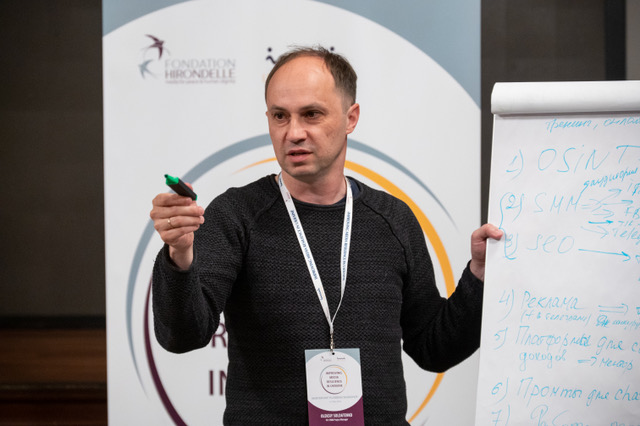
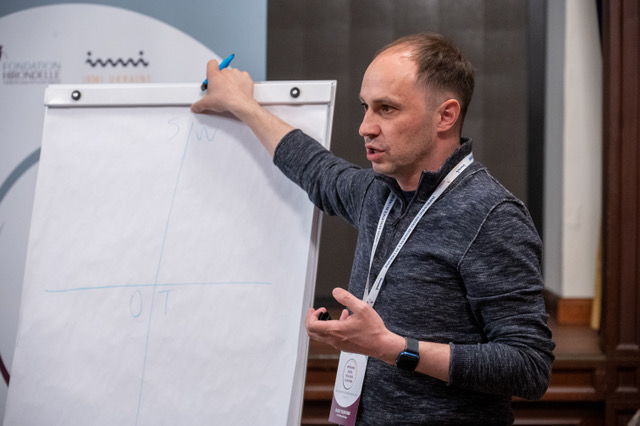
Oleksiy Soldatenko is co-founder and Programs Director of the International Institute for Regional Media and Information (IRMI, Ukraine). He is a media and Public Relations expert, a trainer and training organizer with more than 30 years experience.

Your country was attacked in two steps. All started 2014, with no big international reactions after the first actions by Russian-backed separatists. After 2022 the international community reacted. How you comment the fact, that after the first attacks on your country the media in many countries were silent or all ended with only few short reports from Ukraine and occupied territories? The media did not show so big interest. How you comment this.

I think for the same reason that the international community turned a blind eye to Russia’s occupation of parts of Moldova and Georgia. Even then, many experts were already saying: Ukraine will be next. And in 2014, the Russians occupied Crimea. The world thought that the Kremlin’s appetite would stop there, but the full-scale war that began in February 2022 sobered everyone up. It finally became clear that Russia is not a local threat on the scale of the post-Soviet space. It is a challenge to global security and the system of widely shared values and norms. The threatening rhetoric of Russian public figures and propagandists is now addressed to many countries of the democratic world. In addition, what the Russians are doing in Ukraine is shocking the majority of people. Because no one could have imagined that this was in principle possible in 21st century Europe.

You live in Kharkiv , it is only 30 km from Russian border and not so fare from the city of Belgorod in Russia. It means, you have the possibility to follow Russian propaganda media. What is the feeling when you are listening this propaganda news and reports?

You do not need to be in a particular city to see comments by odious Russian propagandists about the events in Ukraine. And let’s not call it journalism, because journalism is a profession that helps people to make decisions and organise their lives, to realise their human potential. For this purpose, facts are collected and disseminated. Without journalism, society cannot live. With misinformation, it cannot survive. Manipulation of information is a crime. That is why in post-war Germany, some journalists were trialed and many of them were barred from the profession.

How are journalists in your country supporting the resistance against the Russian aggression.

First of all, they remain journalists. Believe me, it is very difficult to try to be impartial and to stay within professional standards when your homes and towns are being destroyed and when the real terror is being committed against civilians. And still, thousands of our colleagues understand the clear borderline between journalism and propaganda. And they do their best not to cross it.

Is it possible to be independent and professional journalist during the war?

It is possible, if you are guided by the public interest. However, when an unjust war is going on in your country, when it has a terrorist character, when civilians are suffering and children are being kidnapped out of the country, depriving them of their families, when nuclear weapons are being blackmailed against a state that voluntarily gave up such weapons in exchange for security guarantees, including from the country that violated them, it is difficult to be impartial. It is difficult to avoid hate speech, to restrain emotions. Journalists in the occupied territories are being killed and persecuted. Our colleague from Melitopol was kidnapped, and we still do not know what happened to her. And this is not the only case. People are stopped and their phones are looked through, and they are severely punished if any information from Ukraine is found. But people need this information, and journalism is alive. It’s hard to tell everything. How newspapers were delivered to bomb shelters, how stringers travelled on bicycles kilometres away from their settlements in search of communications to transmit information to newsrooms. Many outlets that have been moved to relatively safe locations continue to reach their readers in Melitopol and elsewhere. They are transferring to multimedia platforms, learning mobile journalism. Just one of many examples. Bakhmut has been destroyed to the ground, erased from the face of the earth. Its inhabitants are now spread across different cities of Ukraine, and even other countries. But the local newspaper “Vpered” continues to be published for them all, preserving a virtual community. It started a dialogue with its readers about their vision of the city’s future: what it will be like after the victory.

How regional and local media can survive during the war?

It is difficult. Limited access to sources of information due to occupation, specifics of martial law. The crisis of the economy has limited the possibilities of financing. Some newsrooms offices have been destroyed, equipment has been lost. Many of the media lost their experienced staff. Some went to the army. Women have taken their children to safe places. Those who work need to learn new skills and knowledge. They need to think about personal safety during the field missions, to deal with professional burnout, to work with sources that cannot be named, so as not to endanger their colleagues. How to get your publications to readers. How to master new formats to deliver information to their audiences, who are now spread across the country and around the world. There are many issues we are working on and trying to help newsrooms address.

How is to publish a newspaper in a war? To produce radio and TV programme? Is this possible? The conditions are not normal.

The editor of the newspaper Mayak from Kharkiv region told how she worked round the clock to prepare the issue of the newspaper during the first days of the war. The electricity was constantly failing. She left a light lamp on. She woke up when the light came on and worked. She slept when there were no electricity and no bombing. In order to keep the media alive, editors of print media first of all began to master multimedia formats, to create convergent newsrooms, to learn mobile journalism. But if you ask me what is the most important thing in everything, I will tell you: understanding that your readers need you, and the desire to remain journalists.

How international community can help media and journalist in Ukraine in this moment?

The international community is already helping. With finances, professional equipment, equipment that helps ensure stable communication, training, psychological support. And most importantly, with our media understanding that Ukrainian journalists are not left on their own.

Finally, how is the International Institute for Regional Media and Information – IRMI – working now under war conditions.

Since the beginning of the full scale war, together with our foreign partners, we have been helping Ukrainian media. At the beginning, it was purely financial assistance. It was necessary simply to help media outlets to survive. Now we have rethought this work. It has become a complex approach. Not only finances, but also mentoring, capacity development programs, technical support, on-demand consultations. We perform constant needs assessments and adapt our programmes very flexibly to current problems and challenges. We help media outlets to master new formats, work on strategic planning and editorial policies. We are very proud that even in these times many of our media partners are developing codes of ethics and publishing them. We consider this an important step towards building trustful and transparent relations with their readers and viewers.
It is also important to learn how to counter aggressive Russian propaganda aimed at dividing people and deepening cracks in society. It works not only in Ukraine, but also in European communities that have welcomed and protected Ukrainian refugees. In partnership with INCAS, we have studied the situation in six Eastern European countries and developed recommendations on how to counter disinformation and misinformation.
Our main efforts are focused on local and hyperlocal media in eastern and southern Ukraine. Media from Kherson, Bakhmut, Volnovakha and many other cities most affected by the war. Together with the Fondation Hirondelle (Switzerland) and with the support of Swiss Solidarity, we are implementing a comprehensive project to support the sustainability of Ukrainian media. We see our task in ensuring that they not only survive the war, but become stronger. The society needs strong professional media to restore an independent Ukraine, to preserve democratic values and instruments.
We have no doubt that Ukraine will win this war. But it will also have to win the peace. Therefore, together with our partners from Fondation Hirondelle, we are already thinking about the role of media in strengthening social cohesion in Ukraine. There are certain plans that will definitely be implemented in the near future.

28.07.2023 – Kazakh Journalist Released from 20-Day Detention Over Defamation Allegations

July 28, 2023 disabled comments

Kazakh journalist and editor of Saryagash-Inform newspaper, Amangeldy Batyrbekov (Амангелді Батырбеков) was released from jail on 23 July 2023 after serving a 20-day sentence for allegedly publishing false information about an official. Earlier, the court in Saryaghash in Kazakhstan found him guilty of defamation. Batyrbekov considers the court’s decision illegal.

Batyrbekov had faced several politically motivated libel charges with imprisonment in the past. Last year, Batyrbekov’s son was shot and wounded in an assassination attempt connected to the work of the journalist. According to the evidence of cases by South East Europe Media Organisation (SEEMO) this year there were several serious threats and attacks on journalist and media companies in Kazakhstan.

South East Europe Media Organisation (SEEMO) is a regional non-governmental, non-profit network of editors, media executives and leading journalists in Southeast, South, East and Central Europe. SEEMO members are in Albania, Armenia, Azerbaijan, Belarus, Bosnia-Herzegovina, Bulgaria, Croatia, Cyprus, Czech Republic, Estonia, Georgia, Greece, Hungary, Kazakhstan, Kosovo, Kyrgyzstan, Latvia, Lithuania, Malta, Moldova (with the territory of Transdnestria), Montenegro, North Macedonia, Poland, Romania, Russia, Serbia, Slovakia, Slovenia, Tajikistan, Turkmenistan, Türkiye / Turkey, Ukraine and Uzbekistan. Austria, Italy, Vatican and San Marino have a special status in SEEMO. SEEMO has over 3000 individual members, and additional media as corporate members.

#fyp #mediafreedom #seemo #freespeech #southeasteuropemediaorganisation #ngo #journalist #journalistunderattack #kazakhstan #AmangeldyBatyrbekov #journalistin jail #journalistrealeased #journalistattacked #journalistassault #journalistassaulted #SEEMO #pressfreedom #mediafreedom #freemedia