
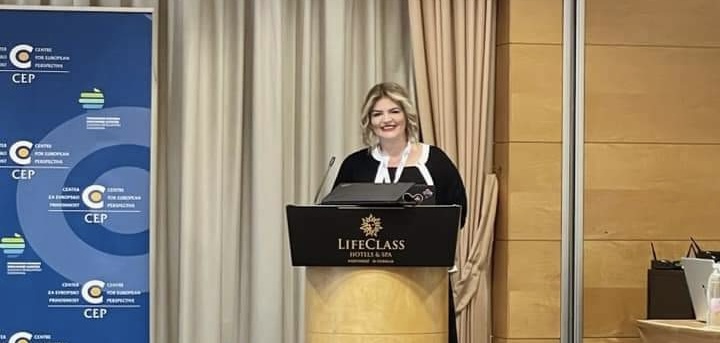
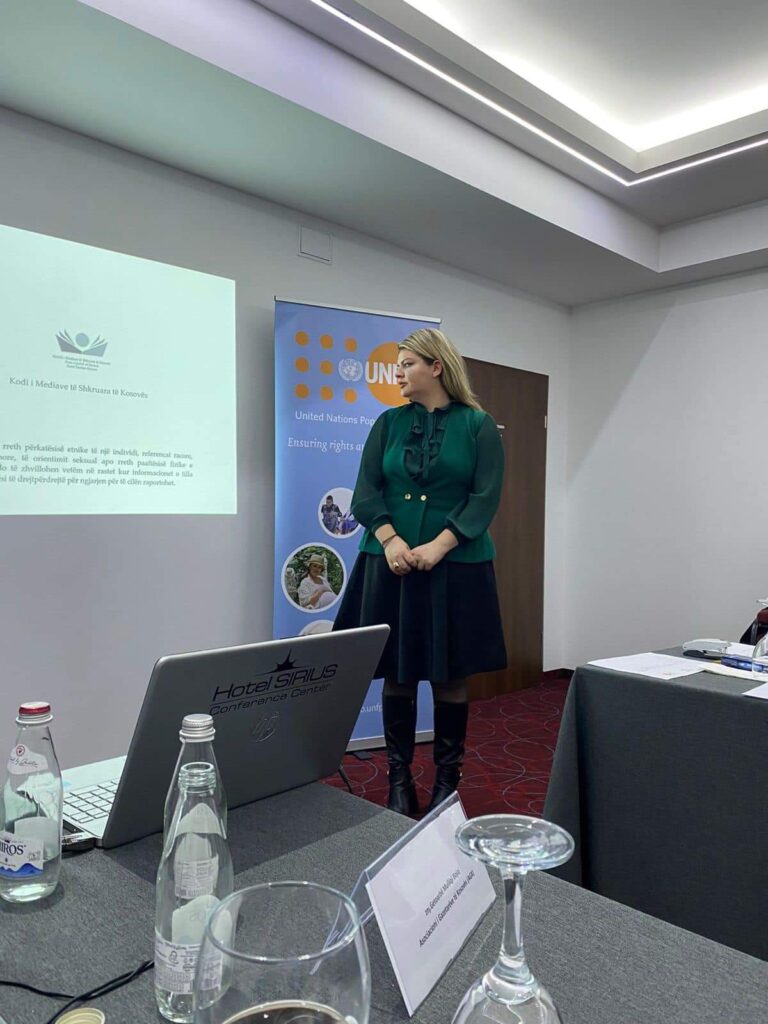
You can read the interview here: https://seemo.org/ressources/interview-with-seemo-member-getoarbe-mulliqi-march-2024/
18.03.2024 – Interview with SEEMO Member Getoarbë Mulliqi (March 2024)
18.03.2024 – SEEMO Stands in Solidarity with Slovak Public Service Media
The South East Europe Media Organisation (SEEMO) expresses concern over the recent developments concerning Radio and Television Slovakia (RTVS – https://www.rtvs.sk/), the public service broadcaster in Slovakia. Amidst proposed legislative changes, SEEMO echoes the sentiments raised by the European Broadcasting Union (EBU – https://www.ebu.ch/home) regarding the potential threat to RTVS’s editorial independence.
On last Friday, 15 March 2024, thousands of Slovaks protested against the government’s plan to reform public broadcasting . Several months ago the Members of the European Parliament presented worried voices about the planned restructuring of Radio and Television of Slovakia and regret the decision of Prime Minister Fico and some government officials to no longer talk to key media outlets.
According to the proposed changes the intention is to separate the public broadcaster RTVS into two entities, separating radio and television. The proposed draft law, if enacted, would introduce significant alterations to the structure and governance of RTVS. Under this legislation, RTVS would be re-branded as Slovak Television and Radio (STaR), allowing the government to overhaul the composition of RTVS’s governing council, including the removal of the current members, including the Director General. The reconstituted council would be composed of individuals appointed by both the Ministry of Culture and the government coalition-controlled Parliament, granting them extensive powers over the appointment and dismissal of key personnel within the broadcaster. The new seven-member council would select its new director, although the current one has a parliamentary mandate until 2027.
In response to these developments, Noel Curran, the Director General of EBU, voiced grave concerns, labeling the proposed changes as a thinly veiled attempt to bring RTVS under state control. Such a move, Curran emphasized, would represent a dangerous regression for democracy and freedom of expression in Slovakia. Independent public service media, he stressed, are fundamental pillars of a healthy society, providing citizens with diverse perspectives and holding those in power accountable.
Furthermore, the proposed legislation raises serious questions about Slovakia’s adherence to international standards and forthcoming EU regulations. As EBU reported “The proposed law would be in breach of various international standards. For example, the Council of Europe Recommendation CM/Rec (2012)1 of the Committee of Ministers to Member States on public service media (PSM) governance states that ‘the first priority for public service media must be to ensure that their culture, policies, processes, and programming reflect and ensure editorial and operational independence’.”
Additionally, the EU’s European Media Freedom Act (EMFA), set to come into force soon, explicitly mandates safeguards to protect the independence of public service media providers.
SEEMO stands firmly with RTVS employees and journalists facing these challenges to their professional autonomy. SEEMO supports EBU’s calls for the Slovak authorities to reconsider the proposed legislation, engage in open public debate, and align with international standards and forthcoming EU laws. Upholding the principles of a free press and independent public service media is essential for the preservation of democratic values and the promotion of informed citizenship in Slovakia.
As Slovakia navigates these critical junctures, SEEMO remains committed to monitoring the situation closely and advocating for the protection of media freedom and editorial independence in Slovakia.
SEEMO is also alarmed about the financial independence of the public radio and TV in Slovakia, especially after in July 2023 the licence fee was abolished by the former government and replaced by a government grant. As result also the annual of the public radio and TV was reduced.
Finally also some other steps have negative influence on the public radio and TV, like the closure of the gallery of Slovak Radio, a cultural area within the broadcaster’s building.
South East Europe Media Organisation (SEEMO) is a regional non-governmental, non profit network of editors, media executives and leading journalists in Southeast, South, East and Central Europe. SEEMO members are in Albania, Armenia, Azerbaijan, Belarus, Bosnia-Herzegovina, Bulgaria, Croatia, Cyprus, Czech Republic, Estonia, Georgia, Greece, Hungary, Kazakhstan, Kosovo, Kyrgyzstan, Latvia, Lithuania, Malta, Moldova (with the territory of Transdnestria), Montenegro, North Macedonia, Poland, Romania, Russia, Serbia, Slovakia, Slovenia, Tajikistan, Turkmenistan, Türkiye / Turkey, Ukraine and Uzbekistan. Austria, Italy, Vatican and San Marino have a special status in SEEMO. SEEMO has over 3000 individual members, and additional media as corporate members.
#fyp #mediafreedom #seemo #freespeech #southeasteuropemediaorganisation #ngo #journalist #slovakia #ebu #RTVS #SEEMO #pressfreedom #mediafreedom #freemedia
15.03.2024 – Campaign of Harassment Against Albanian Journalist Ola Xama: A Threat to Press Freedom and Gender Equality
The relentless smear campaign targeting Albanian investigative journalist Ola Xama, affiliated with the Balkan Investigative Reporting Network (BIRN – https://birn.eu.com/), has once again intensified, sparking widespread concern among observers. Earlier this month, some online platforms unleashed a barrage of personal attacks, including “slut-shaming,” divulging private information, and targeting her family. Such reprehensible tactics not only endanger the safety of the journalist but also undermine press freedom and gender equality.
The harassment against Xama escalated following her investigative report published by BIRN on 13 July 2023, exposing alleged corruption in a public waste management project in Tirana, Albania. You can see the link to Ola Xama’s article here: https://www.reporter.al/2023/07/13/projekti-i-inceneratorit-te-tiranes-u-propozua-nga-erion-veliaj-thote-spak/
The South East Europe Media Organisation (SEEMO) condemns these attacks and called on media outlets to cease their damaging campaign against Ola Xama, which has been ongoing since July 2023.
SEEMO expresses deep concern over this alarming trend, not only in Albania, of media outlets engaging in smear campaigns, emphasizing the urgent need to protect journalists like Xama from such harassment.
Such attacks not only tarnish the reputation of journalists but also impede their ability to report freely on matters of public interest. It is imperative for relevant authorities to investigate these incidents and ensure the safety and security of journalists like Ola Xama.
SEEMO stands in solidarity with Ola Xama and calls for an immediate cessation of these damaging tactics, urging the responsible media entities to uphold the principles of ethical journalism and respect the essential role of journalists in a democratic society.
South East Europe Media Organisation (SEEMO) is a regional non-governmental, non profit network of editors, media executives and leading journalists in Southeast, South, East and Central Europe. SEEMO members are in Albania, Armenia, Azerbaijan, Belarus, Bosnia-Herzegovina, Bulgaria, Croatia, Cyprus, Czech Republic, Estonia, Georgia, Greece, Hungary, Kazakhstan, Kosovo, Kyrgyzstan, Latvia, Lithuania, Malta, Moldova (with the territory of Transdnestria), Montenegro, North Macedonia, Poland, Romania, Russia, Serbia, Slovakia, Slovenia, Tajikistan, Turkmenistan, Türkiye / Turkey, Ukraine and Uzbekistan. Austria, Italy, Vatican and San Marino have a special status in SEEMO. SEEMO has over 3000 individual members, and additional media as corporate members.
#fyp #mediafreedom #seemo #freespeech #southeasteuropemediaorganisation #ngo #journalist #albania #tirana #BIRN #olaxama #journalistattacked #SEEMO #pressfreedom #mediafreedom #freemedia
14.03.2024 – SEEMO Condemns Threats Against Journalist Ksenija Pavkov in Novi Sad, Serbia
Ksenija Pavkov, journalist from N1 TV (https://n1info.rs/) in Serbia has faced a disturbing onslaught of insults and threats, including ones such as threats of slaughter and bone-breaking. These threats stem from her coverage of protests supporting a mother whose children were taken away by the Social Welfare Center (Centar za socijalni rad ) in Novi Sad, Serbia. These protests have seen a disturbing trend of excluding all journalists, regardless of their affiliation, effectively hindering their ability to report on the events unfolding.
Pavkov’s name has been dragged through the mud on various social media platforms these past days, with appalling insults and threats directed towards her simply for doing her job. This wave of hostility follows her report on protests held in support of a woman whose children were removed by the Social Welfare Center in Novi Sad, Serbia. Pavkov’s balanced reporting resulted in a barrage of terrifying threats and comments.
According to the Social Welfare Center, in this case three minor children lived in unsafe and unhygienic conditions in an apartment that was covered with a pile of garbage. The case was discovered by police after a fire broke out in the apartment in November last year and the Social Welfare Center was contacted to react and protect the children. The police filed a criminal complaint against the mother for child abuse. Three local NGOs started an initiative that the children should be returned to the mother. According to the three NGOs this case shows the intention to “kidnap children from their parents, give them abroad for adoption, sell them”.
Despite feeling frightened and unsafe due to these threats, Pavkov remains determined to continue her work as a journalist. However, the situation has prompted N1 to report these threats to the authorities. Pavkov holds little expectation for significant action given previous experiences of safety threats while working.
This atmosphere of distrust and hostility towards journalists is particularly concerning. Both critical and pro-government media representatives have faced rejection and hostility at the same events. This erosion of trust in journalists is a direct consequence of broader societal issues and institutional failures, with journalists bearing the brunt of public frustration and anger.
This situation underscores the urgent need for greater protection of journalists and a concerted effort to address underlying social and institutional challenges. It is imperative that steps are taken to ensure the safety and freedom of journalists to report without fear of reprisal.
The South East Europe Media Organisation (SEEMO) strongly condemns threats and attacks directed towards journalist Ksenija Pavkov during her coverage of protests in Novi Sad, Serbia. Such actions undermine press freedom and the fundamental principles of democracy. Journalists must be able to report without fear of intimidation or violence. SEEMO calls on authorities to thoroughly investigate these threats and ensure the safety of journalists in their line of duty. Freedom of the press is a cornerstone of democracy, and any attempt to silence journalists through intimidation or violence is an assault on the democratic principles we uphold.
South East Europe Media Organisation (SEEMO) is a regional non-governmental, non profit network of editors, media executives and leading journalists in Southeast, South, East and Central Europe. SEEMO members are in Albania, Armenia, Azerbaijan, Belarus, Bosnia-Herzegovina, Bulgaria, Croatia, Cyprus, Czech Republic, Estonia, Georgia, Greece, Hungary, Kazakhstan, Kosovo, Kyrgyzstan, Latvia, Lithuania, Malta, Moldova (with the territory of Transdnestria), Montenegro, North Macedonia, Poland, Romania, Russia, Serbia, Slovakia, Slovenia, Tajikistan, Turkmenistan, Türkiye / Turkey, Ukraine and Uzbekistan. Austria, Italy, Vatican and San Marino have a special status in SEEMO. SEEMO has over 3000 individual members, and additional media as corporate members.
#fyp #mediafreedom #seemo #freespeech #southeasteuropemediaorganisation #ngo #journalist #serbia #novisad #ksenijapavkov #N1 #journalistattacked #SEEMO #pressfreedom #mediafreedom #freemedia
16 October 2017: Open letter – Monitoring and Filtering of Internet Content is Unacceptable
Dear President Juncker,
Dear President Tajani,
Dear President Tusk,
Dear Prime Minister Ratas,
Dear Prime Minister Borissov,
Dear Ministers,
Dear MEP Voss,
Dear MEP Boni,
The undersigned stakeholders represent fundamental rights organisations.
Fundamental rights, justice and the rule of law are intrinsically linked and constitute core values on which the EU is founded. Any attempt to disregard these values undermines the mutual trust between member states required for the EU to function. Any such attempt would also undermine the commitments made by the European Union and national governments to their citizens.
Article 13 of the proposal on Copyright in the Digital Single Market include obligations on internet companies that would be impossible to respect without the imposition of excessive restrictions on citizens’ fundamental rights.
Article 13 introduces new obligations on internet service providers that share and store user-generated content, such as video or photo-sharing platforms or even creative writing websites, including obligations to filter uploads to their services. Article 13 appears to provoke such legal uncertainty that online services will have no other option than to monitor, filter and block EU citizens’ communications if they are to have any chance of staying in business.
Article 13 contradicts existing rules and the case law of the Court of Justice. The Directive of Electronic Commerce (2000/31/EC) regulates the liability for those internet companies that host content on behalf of their users. According to the existing rules, there is an obligation to remove any content that breaches copyright rules, once this has been notified to the provider.
Article 13 would force these companies to actively monitor their users‘ content, which contradicts the ‘no general obligation to monitor‘ rules in the Electronic Commerce Directive. The requirement to install a system for filtering electronic communications has twice been rejected by the Court of Justice, in the cases Scarlet Extended (C 70/10) and Netlog/Sabam (C 360/10). Therefore, a legislative provision that requires internet companies to install a filtering system would almost certainly be rejected by the Court of Justice because it would contravene the requirement that a fair balance be struck between the right to intellectual property on the one hand, and the freedom to conduct business and the right to freedom of expression, such as to receive or impart information, on the other.
In particular, the requirement to filter content in this way would violate the freedom of expression set out in Article 11 of the Charter of Fundamental Rights. If internet companies are required to apply filtering mechanisms in order to avoid possible liability, they will. This will lead to excessive filtering and deletion of content and limit the freedom to impart information on the one hand, and the freedom to receive information on the other.
If EU legislation conflicts with the Charter of Fundamental Rights, national constitutional courts are likely to be tempted to disapply it and we can expect such a rule to be annulled by the Court of Justice. This is what happened with the Data Retention Directive (2006/24/EC), when EU legislators ignored compatibility problems with the Charter of Fundamental Rights. In 2014, the Court of Justice declared the Data Retention Directive invalid because it violated the Charter.
Taking into consideration these arguments, we ask the relevant policy-makers to delete Article 13.
Signatories:
Civil Liberties Union for Europe (Liberties)
European Digital Rights (EDRi)
Access Info
ActiveWatch
Article 19
Associação D3 – Defesa dos Direitos Digitais
Associação Nacional para o Software Livre (ANSOL)
Association for Progressive Communications (APC)
Association for Technology and Internet (ApTI)
Asociación de Internautas
Association of the Defence of Human Rights in Romania (APADOR)
Associazione Antigone
Bangladesh NGOs Network for Radio and Communication (BNNRC)
Bits of Freedom (BoF)
BlueLink Foundation
Bulgarian Helsinki Committee
Center for Democracy & Technology (CDT)
Centre for Peace Studies
Centrum Cyfrowe
Coalizione Italiana Libertà e Diritti Civili (CILD)
Code for Croatia
COMMUNIA
Electronic Frontier Foundation (EFF)
epicenter.works
Estonian Human Rights Centre
Freedom of the Press Foundation
Frënn vun der Ënn
Helsinki Foundation for Human Rights
Hermes Center for Transparency and Digital Human Rights
Human Rights Monitoring Institute
Human Rights Watch
Human Rights Without Frontiers
Hungarian Civil Liberties Union
Index on Censorship
International Partnership for Human Rights (IPHR)
International Service for Human Rights (ISHR)
JUMEN – Human Rights Work in Germany
Justice & Peace
La Quadrature du Net
Media Development Centre
Miklos Haraszti (Former OSCE Media Representative)
Modern Poland Foundation
Netherlands Helsinki Committee
One World Platform
Open Observatory of Network Interference (OONI)
Open Rights Group (ORG)
OpenMedia
Panoptykon
Plataforma en Defensa de la Libertad de Información (PDLI)
Reporters without Borders (RSF)
Rights International Spain
South East Europe Media Organisation (SEEMO)
South East European Network for Professionalization of Media (SEENPM)
Statewatch
The Right to Know Coalition of Nova Scotia (RTKNS)
Xnet
CC: Permanent and Deputy Permanent Representatives of the Members States to the EU
CC: Chairs of the JURI and LIBE Committees in the European Parliament
CC: Shadow Rapporteurs and MEPs in the JURI and LIBE Committees in the European Parliament
CC: Secretariats of the JURI and LIBE Committees in the European Parliament
CC: Secretariat of the Council Working Party on Intellectual Property (Copyright)
CC: Secretariat of the Council Working on Competition
CC: Secretariat of the Council Research Working Party

13.03.2024 – Russian Journalist Roman Ivanov Sentenced to Seven Years in Prison
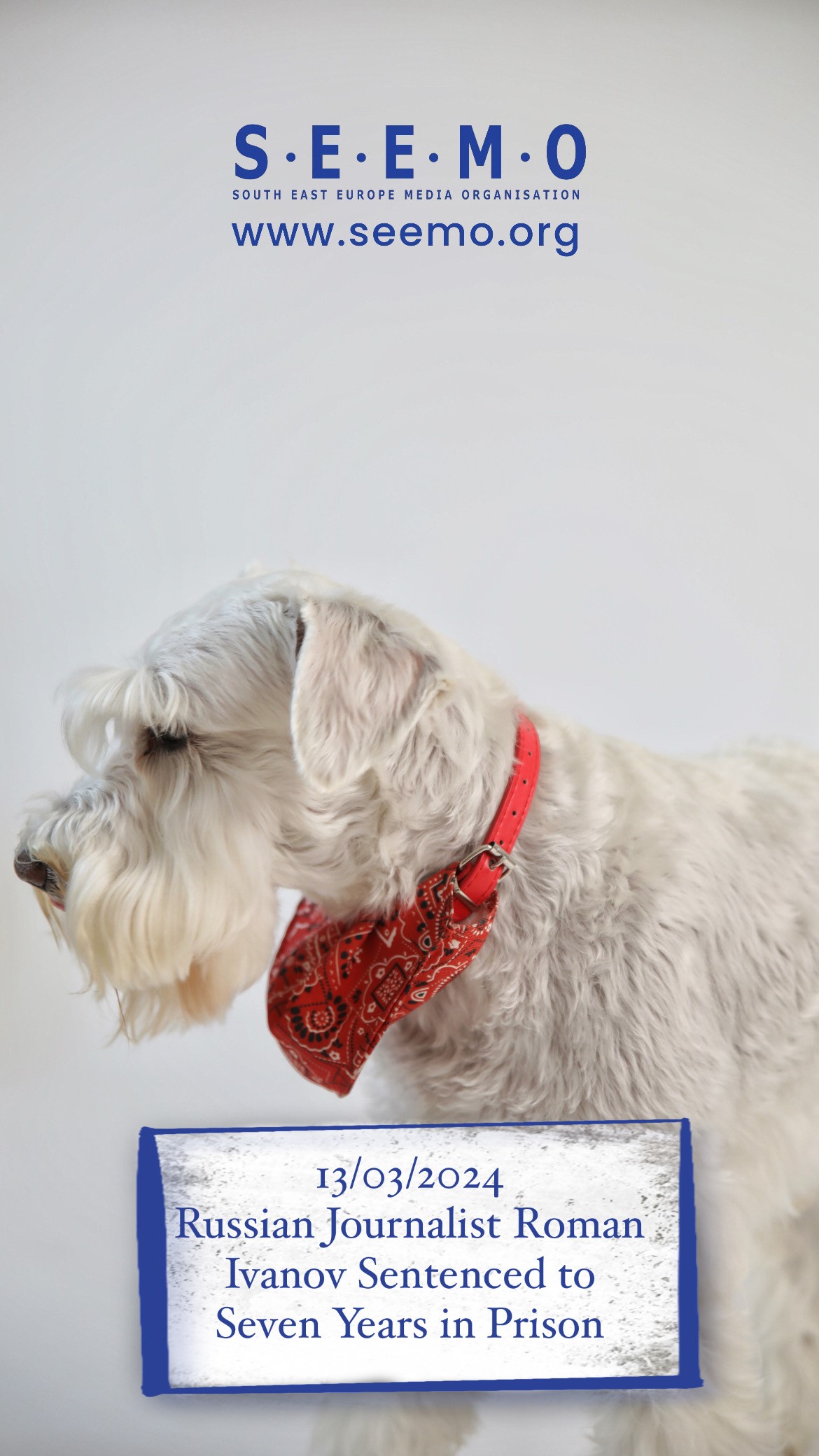
On Wednesday 6 March 2024, a court in the city of Korolyov (Королёв), northeast of Moscow (Москва), Russia, has handed down a seven-year prison sentence to Roman Ivanov (Роман Иванов), a reporter affiliated with the independent news outlet RusNews (https://www.youtube.com/@smirusnews/videos) and the Telegram channel Chestnoe Korolyovskoe (Честное Королёвское – https://t.me/CheKorolev). Ivanov was arrested on 11 April 2023. The verdict comes as Ivanov was convicted on charges of “disseminating false information” regarding the Russian army.
The charges against Ivanov stem from his online posts, particularly on the Russian social media platform VKontakte (Вконтакте) and the messaging app Telegram. These posts included references to a United Nations report on Russian war crimes in Ukraine, as well as discussions about the Bucha (Буча) massacre of civilians and Russian missile attacks within Ukraine. Ivanov, who has consistently maintained his innocence, argued that he was merely fulfilling his journalistic duty.
This case underscores a broader pattern of crackdowns on independent journalism in Russia, especially concerning coverage of the conflict in Ukraine. Notably, Ivanov is not the first RusNews journalist to face legal repercussions for similar offenses. Igor Kuznetsov Vasiljevitsch (Кузнецов Игорь Васильевич), born 1964, working as RusNews reporter, has been in detention since September 2021. Maria Ponomarenko (Мария Пономаренко) from RusNews, received a six-year prison sentence in February 2023 on comparable charges. Ponomarenko also faces additional legal proceedings related to alleged violence against prison staff, potentially leading to an additional five-year term.
The legal landscape surrounding journalism in Russia has become increasingly restrictive, particularly since the onset of Russia’s full-scale invasion of Ukraine. Changes to legislation have empowered authorities to prosecute individuals for discrediting the military or spreading “fake news” about it. These legal mechanisms have been wielded to target journalists and activists critical of the government’s actions in Ukraine.
The South East Europe Media Organisation (SEEMO) condemns the sentencing of journalist Roman Ivanov to seven years in prison for his reporting on Russian war crimes in Ukraine. This harsh verdict reflects a concerning trend of escalating repression against independent journalism in Russia, where journalists face severe consequences for daring to challenge official narratives. Such actions undermine press freedom and perpetuate a climate of fear and censorship. SEEMO calls for Ivanov’s immediate release, the dropping of all charges against him, and an end to the persecution of journalists for their critical work.
South East Europe Media Organisation (SEEMO) is a regional non-governmental, non profit network of editors, media executives and leading journalists in Southeast, South, East and Central Europe. SEEMO members are in Albania, Armenia, Azerbaijan, Belarus, Bosnia-Herzegovina, Bulgaria, Croatia, Cyprus, Czech Republic, Estonia, Georgia, Greece, Hungary, Kazakhstan, Kosovo, Kyrgyzstan, Latvia, Lithuania, Malta, Moldova (with the territory of Transdnestria), Montenegro, North Macedonia, Poland, Romania, Russia, Serbia, Slovakia, Slovenia, Tajikistan, Turkmenistan, Türkiye / Turkey, Ukraine and Uzbekistan. Austria, Italy, Vatican and San Marino have a special status in SEEMO. SEEMO has over 3000 individual members, and additional media as corporate members.
#fyp #mediafreedom #seemo #freespeech #southeasteuropemediaorganisation #ngo #journalist #russia #ukraine #romanivanov #rusnews #journalistarrested #journalistinjail #jailedjournalist #SEEMO #pressfreedom #mediafreedom #freemedia
12.03.2024 – SEEMO Condemns Death Threats Against Journalist
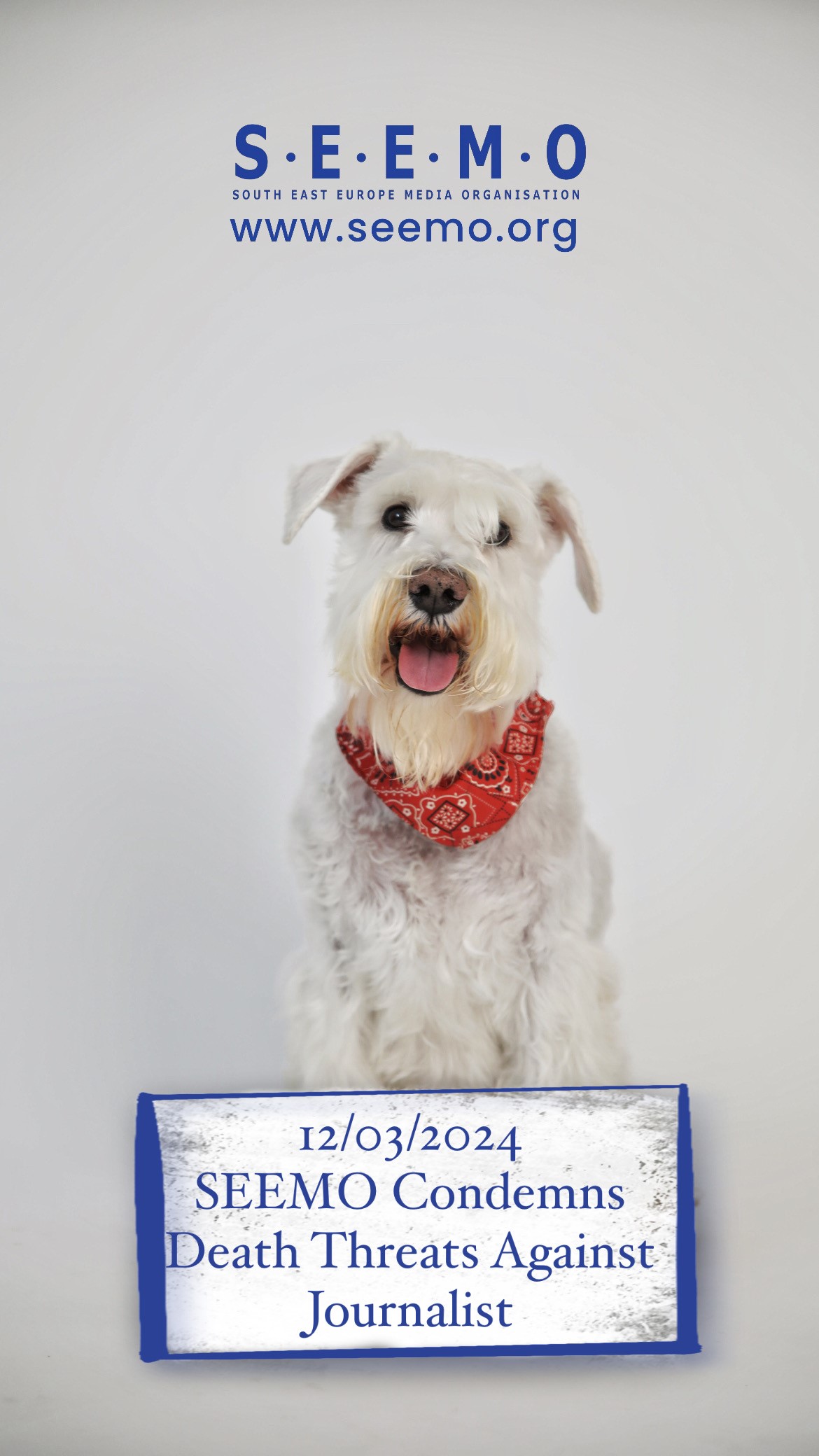
The Independent Journalists’ Association of Vojvodina (Nezavisno Društvo Novinara Vojvodine – NDNV – https://ndnv.org) has reported death threats against its president and Nova.rs journalist Ana Lalić Hegediš to the High-Tech Crime Prosecutor’s Office in Belgrade, Serbia. Lalić Hegediš received these threats following her public stance about nationalism and ultra-nationalism in Serbia and on the construction of a church in Liman, part of Novi Sad, Serbia. She said that churches spring up in Novi Sad like tobacconists, which is not motivated by religious needs. Since she presented her view during an event last week, she is receiving threats, including calls for her to be slain in the center of Novi Sad.
It is not first time that there was a threat against Lalić Hegediš. In 2020 she was arrested over an article she wrote about conditions inside a Serbia hospital during the COVID-19 pandemic and after that she was targeted in an online smear campaign.
The South East Europe Media Organisation (SEEMO) condemns the death threats against Ana Lalić Hegediš. SEEMO emphasizes the need to protect journalists and ensure their safety, particularly in cases where they face intimidation and threats for exercising their right to freedom of expression. The threats against Lalić Hegediš are viewed as a serious attack on press freedom and independent journalism in Serbia. SEEMO calls on the authorities to investigate the matter swiftly and ensure that those responsible for issuing threats are brought to justice. This incident serves as a reminder of the challenges journalists continue to face in Serbia and underscores the importance of upholding press freedom as a fundamental pillar of democracy.
South East Europe Media Organisation (SEEMO) is a regional non-governmental, non profit network of editors, media executives and leading journalists in Southeast, South, East and Central Europe. SEEMO members are in Albania, Armenia, Azerbaijan, Belarus, Bosnia-Herzegovina, Bulgaria, Croatia, Cyprus, Czech Republic, Estonia, Georgia, Greece, Hungary, Kazakhstan, Kosovo, Kyrgyzstan, Latvia, Lithuania, Malta, Moldova (with the territory of Transdnestria), Montenegro, North Macedonia, Poland, Romania, Russia, Serbia, Slovakia, Slovenia, Tajikistan, Turkmenistan, Türkiye / Turkey, Ukraine and Uzbekistan. Austria, Italy, Vatican and San Marino have a special status in SEEMO. SEEMO has over 3000 individual members, and additional media as corporate members.
#fyp #mediafreedom #seemo #freespeech #southeasteuropemediaorganisation #ngo #journalist #serbia #vojvodina #novisad #rebedu #journalistsattacked #SEEMO #pressfreedom #mediafreedom #freemedia